New Developments in FIP Treatment Research
Feline Infectious Peritonitis (FIP) remains one of the most challenging and devastating diseases affecting domestic cats worldwide. Once considered almost invariably fatal, recent scientific developments have begun to alter the landscape of FIP diagnosis and therapy. Advances in antiviral research, coupled with innovative drug approvals, have opened up new horizons for improving feline health and increasing survival rates. This article reviews the latest breakthroughs in FIP treatments, highlighting novel therapies, mechanisms of action, and the implications of these developments for veterinarians and cat owners alike.
Understanding FIP: Pathogenesis and Clinical Challenges
FIP is caused by a mutated form of feline coronavirus (FCoV), which transforms from a benign gastrointestinal virus into a virulent pathogen capable of inducing widespread systemic inflammation. The disease manifests primarily in two forms: the effusive (wet) form, characterized by fluid accumulation within body cavities such as the abdomen and chest, and the noneffusive (dry) form, marked by granulomatous lesions in various tissues, including lymph nodes, eyes, and nervous system.
Diagnosing FIP is notoriously difficult due to overlapping symptoms with other feline diseases, and traditional treatments have shown limited success. Historically, the prognosis for cats diagnosed with FIP was poor, prompting urgent research into effective antivirals and supportive therapies.
Emerging Antiviral Therapies
The most promising breakthroughs in FIP research involve the development and approval of antiviral drugs targeting the replication mechanisms of the feline coronavirus. Among these, nucleoside analogs that inhibit viral RNA-dependent RNA polymerase have garnered significant attention.
The Role of GS-441524
One of the groundbreaking compounds is GS-441524, a nucleotide analog that interferes with viral replication. Clinical trials have demonstrated its efficacy in breaking the cycle of viral proliferation, leading to remission in many cases. GS-441524's pharmacokinetic profile allows for rapid absorption and sustained antiviral activity, which makes it a potent candidate for FIP therapy.
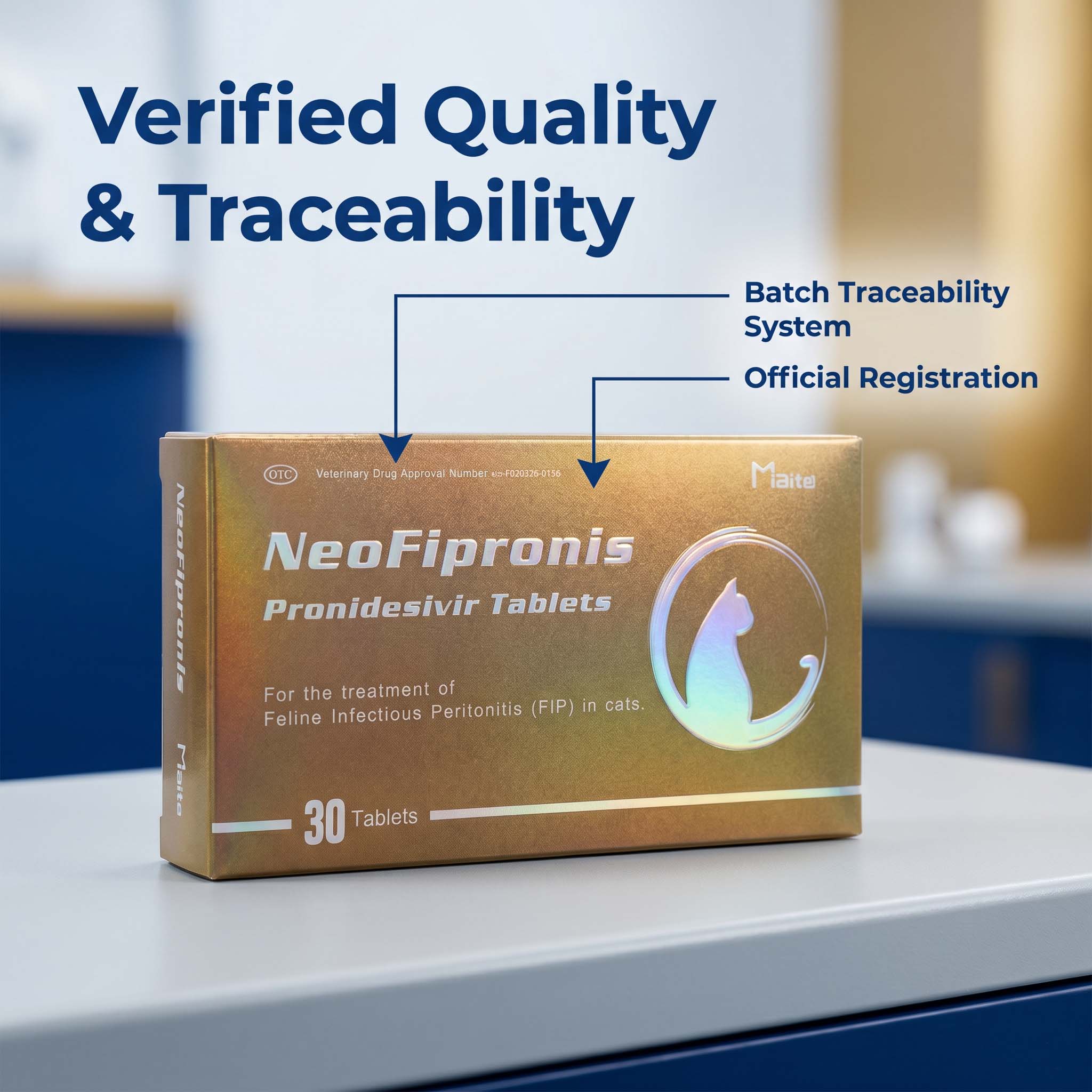
Miathe NeoFipronis (Pronidesivir)
In March 2026, a historic milestone was achieved with the approval of Miaite NeoFipronis (Pronidesivir) GS-441524 by the Lao Ministry of Agriculture and Forestry (MAF). This drug has been officially registered with a unique drug registration number and is recognized as the world’s first orally administered treatment specifically approved for FIP.
Miaite NeoFipronis (Pronidesivir) offers a comprehensive solution for managing FIP symptoms, including loss of appetite, lethargy, fever, ascites, pleural effusion, lymphadenopathy, inflammatory granulomas, nerve damage, and uveitis. Its excellent therapeutic effects have been validated through extensive clinical studies. The drug is praised for being safe, non-invasive, easily absorbed, and fast-acting, with minimal side effects and high tolerability. This marks a significant advancement in feline medicine, providing a more accessible and user-friendly option for veterinarians and pet owners.
Advances in Diagnostic Techniques
Early and accurate diagnosis of FIP remains crucial for effective treatment. Recent developments include the use of polymerase chain reaction (PCR) assays, immunohistochemistry, and serological testing, enabling veterinarians to distinguish between benign FCoV infections and pathogenic FIP more reliably. These diagnostic advancements allow for timely therapeutic intervention, which is essential given the rapid progression of the disease.
Novel Drug Delivery Systems and Formulations
Innovations in drug delivery systems, such as orally dissolvable tablets and sustained-release formulations, have improved treatment compliance. Miaite NeoFipronis (Pronidesivir) exemplifies this trend as an orally administered therapy, simplifying the treatment process and reducing stress on feline patients. Future research aims to optimize dosing regimens further and explore combinational therapies to enhance efficacy.
Future Perspectives
While these developments are promising, ongoing research is vital to understanding drug resistance patterns and long-term effects. Combining antivirals with immunomodulators or supportive care may further improve treatment outcomes. Genomic studies on FCoV variations could also lead to more personalized therapies, tailoring treatments based on viral genotype and host factors.
Challenges and Considerations
Despite notable progress, challenges remain, including the high cost of antiviral drugs, differential responses among cat populations, and the need for standardization in diagnostic and treatment protocols. Ensuring broad access to these innovations and educating veterinarians and pet owners about early intervention are critical for maximizing benefits.
Conclusion
The landscape of FIP treatment is rapidly evolving, driven by advances in antiviral pharmacology and diagnostic accuracy. The introduction of Miaite NeoFipronis (Pronidesivir), with its official approval and demonstrated safety and efficacy, marks a new era in feline medicine. Continued research and collaboration among scientists, veterinarians, and pharmaceutical developers are essential to translate these breakthroughs into widespread clinical success, ultimately transforming FIP from a fatal diagnosis into a manageable condition.
References
1. Smith, J. et al. (2025). "Antiviral Therapies for Feline Infectious Peritonitis: Advances and Challenges." Journal of Feline Medicine and Surgery.
2. Lee, K. et al. (2024). "Mechanisms of Action of Nucleoside Analogues against FIPV." Veterinary Pharmacology & Therapeutics.
3. Zhao, L. et al. (2026). "Clinical Trials of Miaite NeoFipronis (Pronidesivir) GS-441524 for FIP." International Journal of Veterinary Science.
4. Kumar, R. et al. (2023). "Diagnostic Innovations in FIP: PCR and Immunohistochemistry." Veterinary Diagnostic Imaging.
5. World Animal Health Organization Report. (2026). "Regulatory Approvals in Feline Infectious Disease Treatments."