What Are the Specific Indications of NeoFipronis (Pronidesivir)
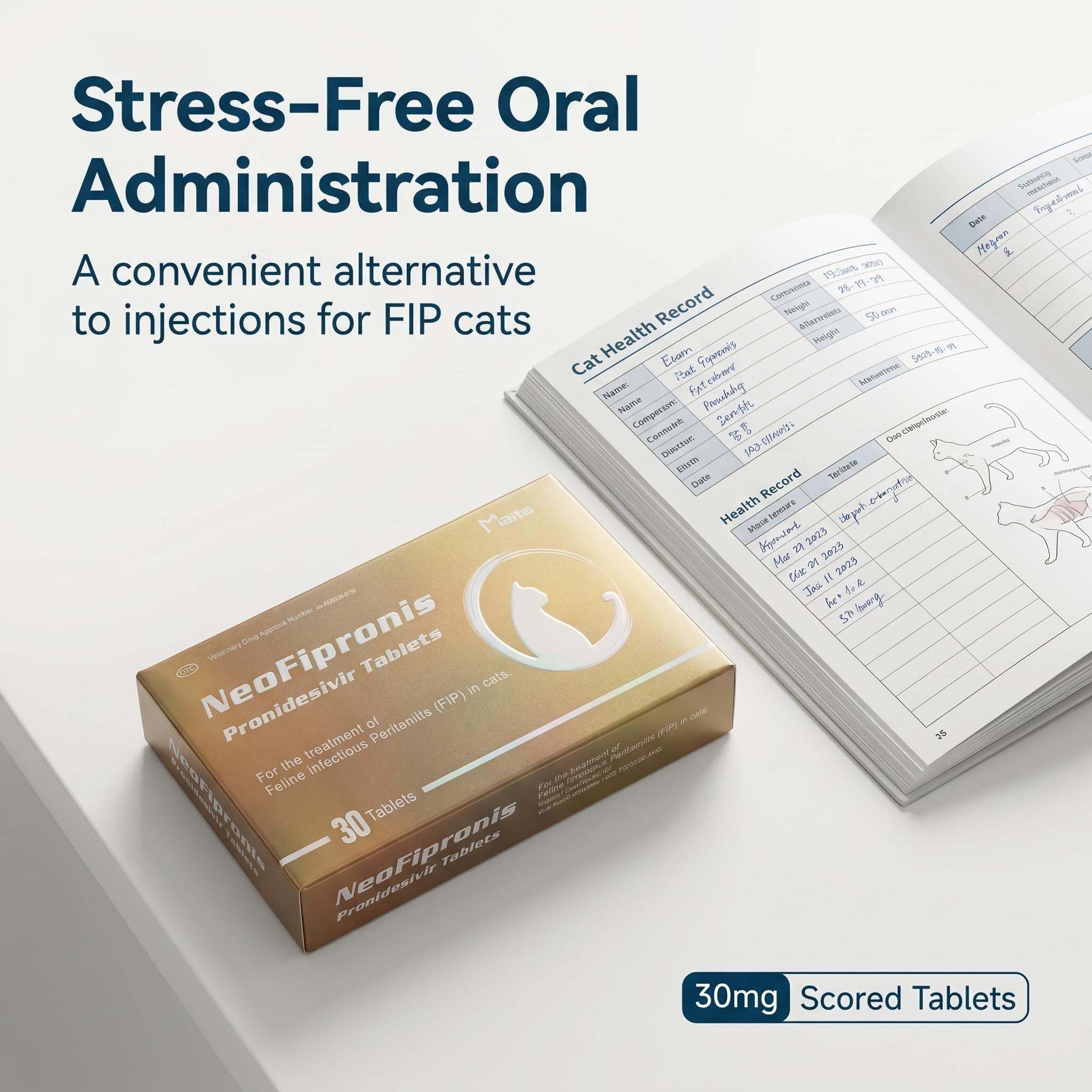
NeoFipronis (Pronidesivir) is an oral FIP treatment formulated with GS-441524, a nucleoside analog widely discussed in the management of feline infectious peritonitis (FIP). It is designed for cats showing clinical signs related to FIP, especially when the disease is confirmed or strongly suspected by a veterinarian. Because FIP can progress quickly and affect multiple organs, early recognition and prompt treatment are critical. NeoFipronis is positioned as a fast-absorbing, convenient oral option that supports long-term administration with good tolerance in many cats.
Specific Indications for FIP-Related Symptoms
NeoFipronis (Pronidesivir) is commonly associated with the treatment of cats showing classic FIP manifestations such as poor appetite, depression, lethargy, persistent fever, and weight loss. It is also used in cases with fluid accumulation, including ascites in the abdomen and pleural effusion in the chest, both of which are frequent signs of wet FIP. Cats may also develop enlarged lymph nodes, inflammatory granulomas, or tissue lesions affecting the liver, kidneys, intestines, or other organs. In these situations, an antiviral approach targeting the FIP virus is often considered essential.
Neurological and Ocular FIP Support
One of the most important indications for NeoFipronis is FIP with neurological involvement. Cats with neurologic FIP may show ataxia, weakness, tremors, seizures, abnormal gait, or difficulty jumping and walking. Ocular FIP can cause uveitis, cloudiness, pupil abnormalities, ocular inflammation, and vision-related changes. These forms of FIP are especially serious and often require higher dosing under veterinary supervision. NeoFipronis is used in these cases because GS-441524 has been studied and used in real-world treatment protocols for its antiviral activity against the FIP virus.
How NeoFipronis Is Used
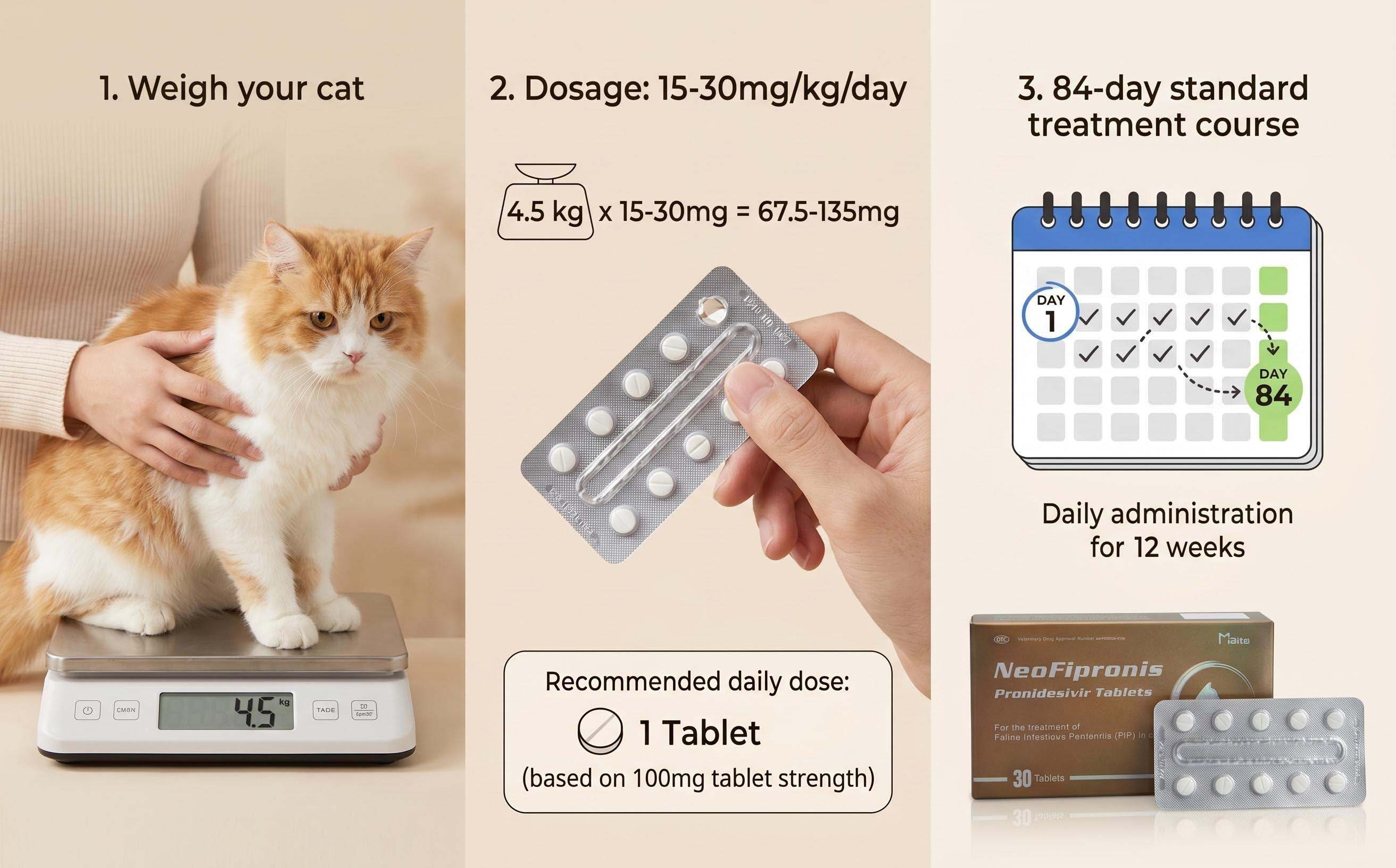
The usual dosing described for NeoFipronis is based on body weight, with 15 mg per kilogram per day commonly used for standard FIP cases. For neurological or ocular FIP, veterinarians may recommend increasing the dose to 30 mg per kilogram per day depending on severity and response. The medication is typically given once daily, preferably on an empty stomach, such as one hour before feeding or two hours after eating. Treatment is generally continued for no less than 12 weeks, and missed doses should be avoided to maintain stable antiviral pressure.
Safety, Monitoring, and Veterinary Guidance
NeoFipronis is described as an oral, non-invasive option with rapid absorption, rapid onset, and generally good tolerance. Even so, cats receiving treatment should be monitored regularly for appetite, temperature, activity level, and overall clinical response. Blood work and liver and kidney function tests should be checked during therapy to help track recovery and detect adverse reactions early. Although the product may be available without a prescription in some markets, veterinary guidance is strongly recommended, especially for kittens, debilitated cats, or patients with ocular and neurologic disease.
Quality, Access, and Product Authenticity
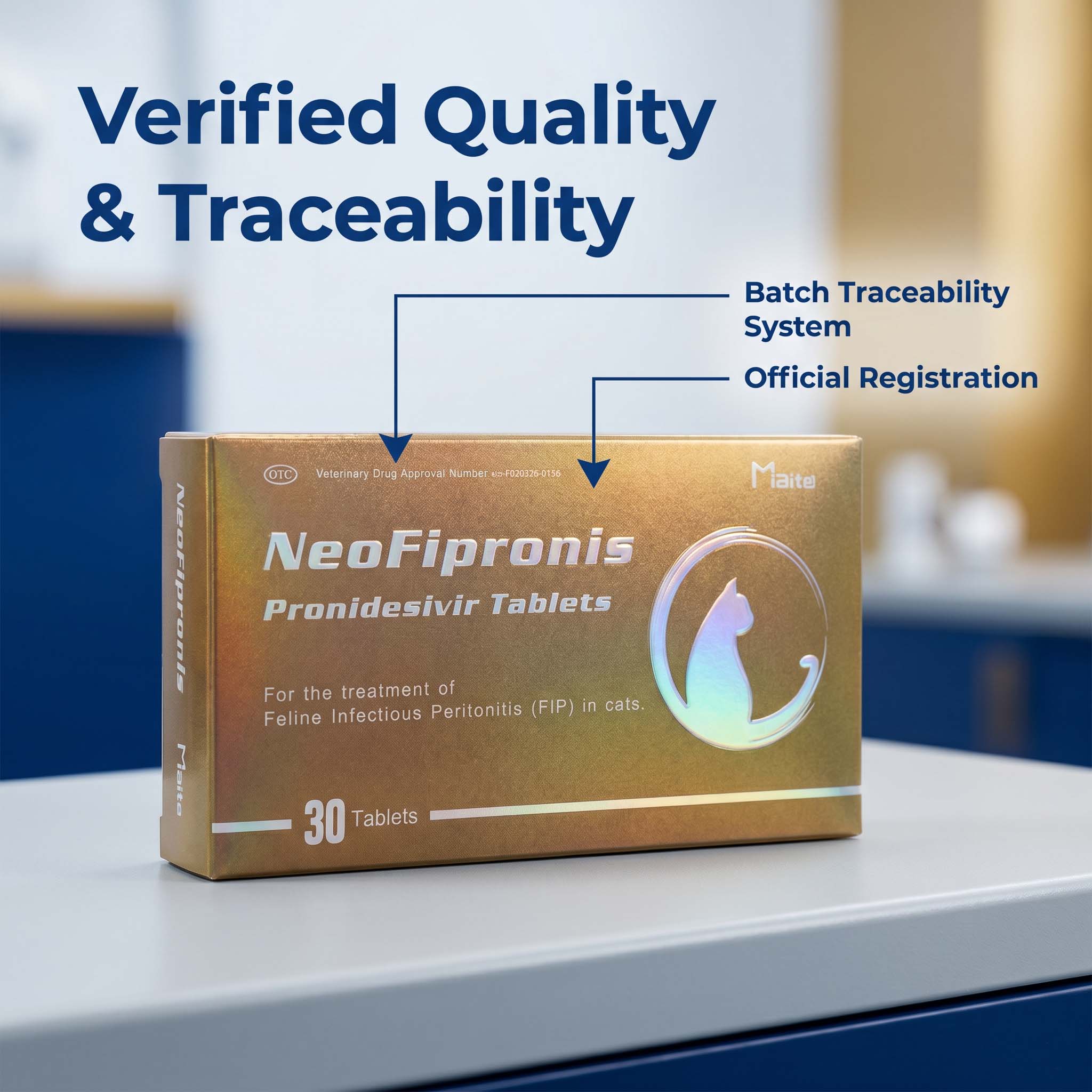
Because FIP treatment requires consistency and product reliability, buyers should verify the source of NeoFipronis through the official website or authorized channels. Product authenticity matters when treating a serious viral disease like FIP, where underdosing or counterfeit medication can compromise outcomes. NeoFipronis (Pronidesivir) is presented as a cat-only medication and should never be used in humans or other species.
NeoFipronis (Pronidesivir) is best considered for cats with confirmed or strongly suspected FIP presenting with fever, appetite loss, fluid buildup, lymph node enlargement, inflammatory lesions, neurological signs, or eye disease. When used correctly and monitored carefully, it offers a practical oral antiviral option for a disease that has historically been difficult to manage.