NeoFipronis (Pronidesivir) Dosage, Side Effects, and Precautions
NeoFipronis (Pronidesivir) is an oral FIP treatment designed for cats diagnosed with feline infectious peritonitis (FIP), a serious coronavirus-related disease that can cause loss of appetite, lethargy, fever, abdominal swelling, pleural effusion, lymph node enlargement, inflammatory granulomas, neurological damage, and uveitis. Because FIP can affect the abdomen, chest, eyes, and nervous system, early treatment support is important. NeoFipronis contains GS-441524 as its active ingredient, a compound widely recognized for its antiviral activity against FIP and used in clinical practice to help improve cats’ quality of life. For many cat owners searching for a reliable FIP medicine, NeoFipronis is often discussed as a convenient oral option that is easy to administer and generally well tolerated.
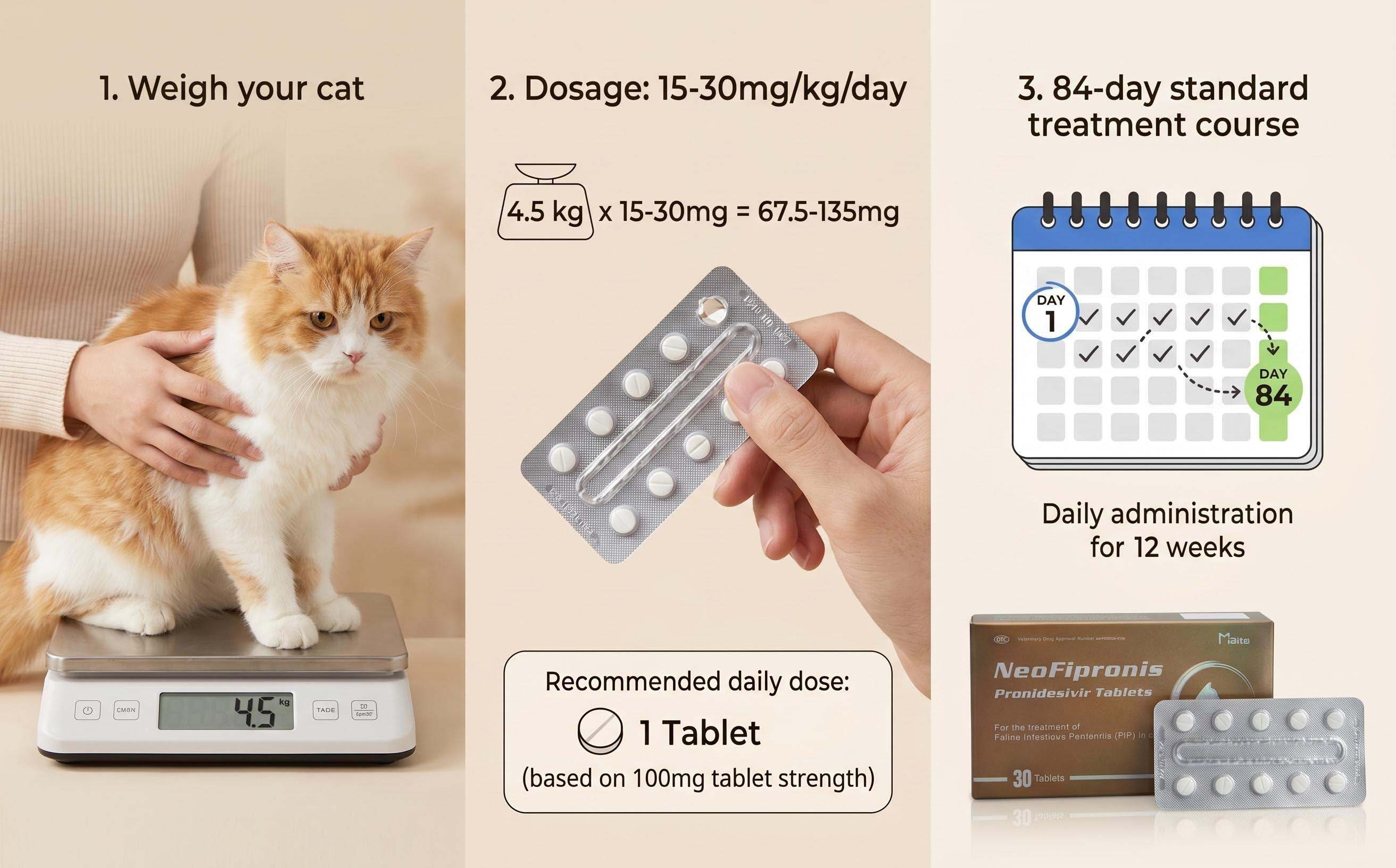
NeoFipronis dosage is typically calculated by body weight. The standard dosage is 15 mg per kilogram of body weight once daily, which is often described as half a tablet per kilogram depending on tablet strength. Cats with neurological FIP or ocular FIP may require a higher dose, commonly increased to 30 mg/kg daily under veterinary supervision. The medication is usually given once per day, preferably on an empty stomach, either one hour before feeding or two hours after a meal, to support absorption. To achieve the best outcome, treatment should be continued for no less than 12 weeks, and doses should not be missed. Consistent daily administration is especially important because interrupted therapy may reduce effectiveness and slow recovery.
As with any antiviral medication, side effects can occur, although many cats tolerate GS-441524-based therapy well. Possible side effects may include mild vomiting, soft stool, temporary diarrhea, reduced appetite, fatigue, or changes in liver and kidney test results. Some cats may show transient discomfort or behavioral changes while their body adjusts to treatment. In most cases, these effects are manageable, but persistent vomiting, severe weakness, worsening jaundice, or ongoing refusal to eat should be reported to a veterinarian immediately. Monitoring blood work during treatment is strongly recommended, especially when a cat has advanced FIP, dehydration, or underlying organ stress.
Important precautions should always be followed during NeoFipronis use. This product is intended for cats only and must never be given to humans. Although it may be available without a prescription in some markets, veterinary guidance is still highly recommended because FIP type, disease stage, and organ involvement can affect the correct dose and duration. Regular checks of appetite, body temperature, energy level, complete blood count, and liver and kidney function help track response and safety throughout therapy. Owners should also make sure they obtain NeoFipronis from the official website or an authorized source to reduce the risk of counterfeit or low-quality products. For cats with FIP, proper dosing, continuous treatment, and close monitoring can make a significant difference in outcomes and recovery support.