
What Are the Indications and Contraindications of Pronidesivir (GS-441524)

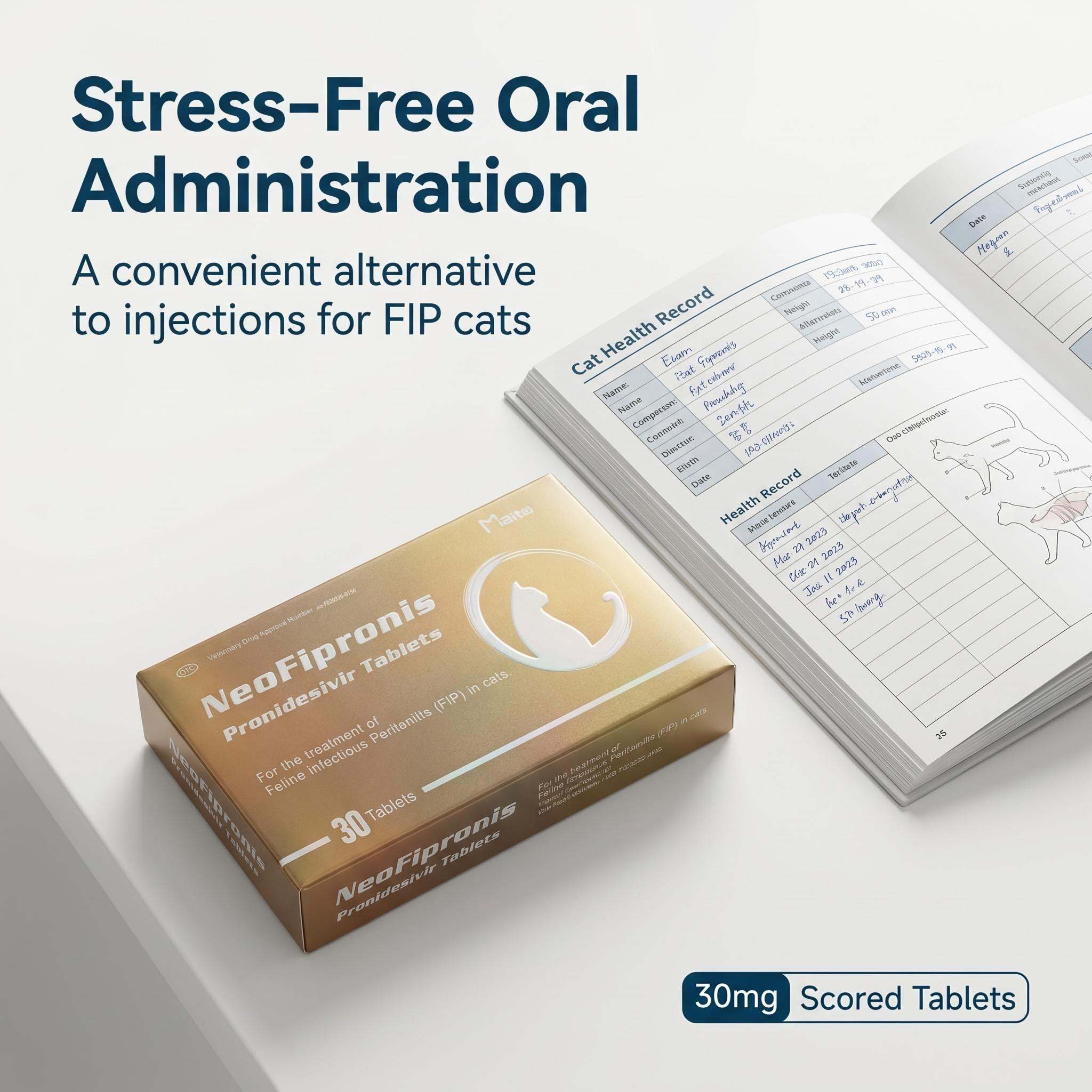
Pronidesivir (GS-441524) has revolutionized the treatment of Feline Infectious Peritonitis (FIP), a severe and often fatal disease in cats caused by feline coronavirus (FCoV). With the development of NeoFipronis, the first officially approved oral medication containing GS-441524, effective management of FIP has become feasible. NeoFipronis offers a non-invasive, fast-acting, and well-tolerated treatment option, significantly increasing the survival chances for affected felines.
Therapeutic Indications
NeoFipronis is primarily indicated for cats diagnosed with FIP presenting with symptoms such as anorexia, lethargy, fever, ascites, pleural effusion, lymphadenopathy, granulomatous inflammation, neurological deficits, and uveitis. Its potent antiviral activity targets the replication of feline coronavirus, effectively suppressing the virus and alleviating clinical symptoms.
The medication is suitable for different types of FIP, including the effusive (wet) form characterized by fluid buildup and the non-effusive (dry) form involving granulomatous lesions and neurological signs. It is especially beneficial for cats exhibiting neurological or ocular involvement, where rapid viral suppression is critical.
Mechanism of Action
GS-441524, the active component of NeoFipronis, is a nucleoside analog that inhibits viral RNA polymerase, thereby halting viral replication. Clinical studies and practical applications have demonstrated its excellent efficacy in reducing viral loads, leading to symptomatic improvement and, in many cases, complete remission of FIP.
Administration and Dosage
For optimal outcomes, NeoFipronis should be administered based on the cat’s body weight: 15 mg/kg once daily, equivalent to half a tablet. For cats with neurological or ocular FIP symptoms, dosage may be increased to 30 mg/kg under veterinary supervision. Best results are achieved when administered on an empty stomach—either one hour before feeding or two hours after.
Treatment duration must extend for no less than 12 weeks, with strict adherence to the prescribed dosing schedule. Missing doses can compromise treatment efficacy and lead to relapse. Continuous monitoring of clinical signs, including appetite, temperature, and mental state, is essential throughout therapy. Regular blood tests should assess liver and kidney function, ensuring the absence of adverse reactions.
Safety Profile and Precautions
NeoFipronis is considered safe with minimal side effects, owing to its targeted antiviral mechanism. However, it is important to use the medication under veterinary guidance, especially for cats with pre-existing health conditions. Although marketed as an over-the-counter product, veterinary oversight is recommended to optimize treatment and monitor for potential adverse effects.
Contraindications
NeoFipronis is contraindicated in cats with known hypersensitivity to GS-441524 or other nucleoside analogs. Its safety profile has not been established in pregnant or lactating cats; therefore, usage in these populations should be avoided unless explicitly directed by a veterinarian. Cats with severe hepatic or renal impairment require careful evaluation before initiating therapy, as the metabolic pathways may be affected.
Warnings and Usage Notes
This medication is exclusively for feline use. It is not approved for human use. Owners should only purchase NeoFipronis from authorized sources, such as official websites, to ensure product authenticity and quality. Despite being available without a prescription, veterinarian consultation is strongly advised prior to administration to ensure correct dosage and monitor progress.
Conclusion
NeoFipronis, containing GS-441524, provides a highly effective treatment option for FIP in cats, with indications spanning various clinical manifestations. Its safety, rapid action, and proven efficacy make it a significant breakthrough in veterinary medicine. Proper usage, under veterinary guidance, is essential for achieving the best therapeutic outcomes. Awareness of contraindications and careful monitoring can help maximize benefits while minimizing risks, contributing to better prognosis and improved quality of life for affected cats.