NeoFipronis Treatment Timeline Week By Week

Feline Infectious Peritonitis (FIP) remains one of the most challenging diseases in feline medicine due to its complex pathogenesis and historically limited treatment options. However, recent advancements have led to the development of targeted antiviral therapies, notably NeoFipronis (Pronidesivir) GS-441524, which has revolutionized FIP management. Understanding the week-by-week treatment timeline can significantly enhance feline health outcomes and improve quality of life for affected cats.
Introduction to FIP and NeoFipronis
FIP is caused by a mutated feline coronavirus leading to severe systemic inflammation. Its clinical presentation can vary widely, often involving symptoms such as fever, weight loss, lethargy, and fluid accumulation in body cavities. Traditionally, FIP was considered terminal, but groundbreaking treatments like NeoFipronis have brought new hope.
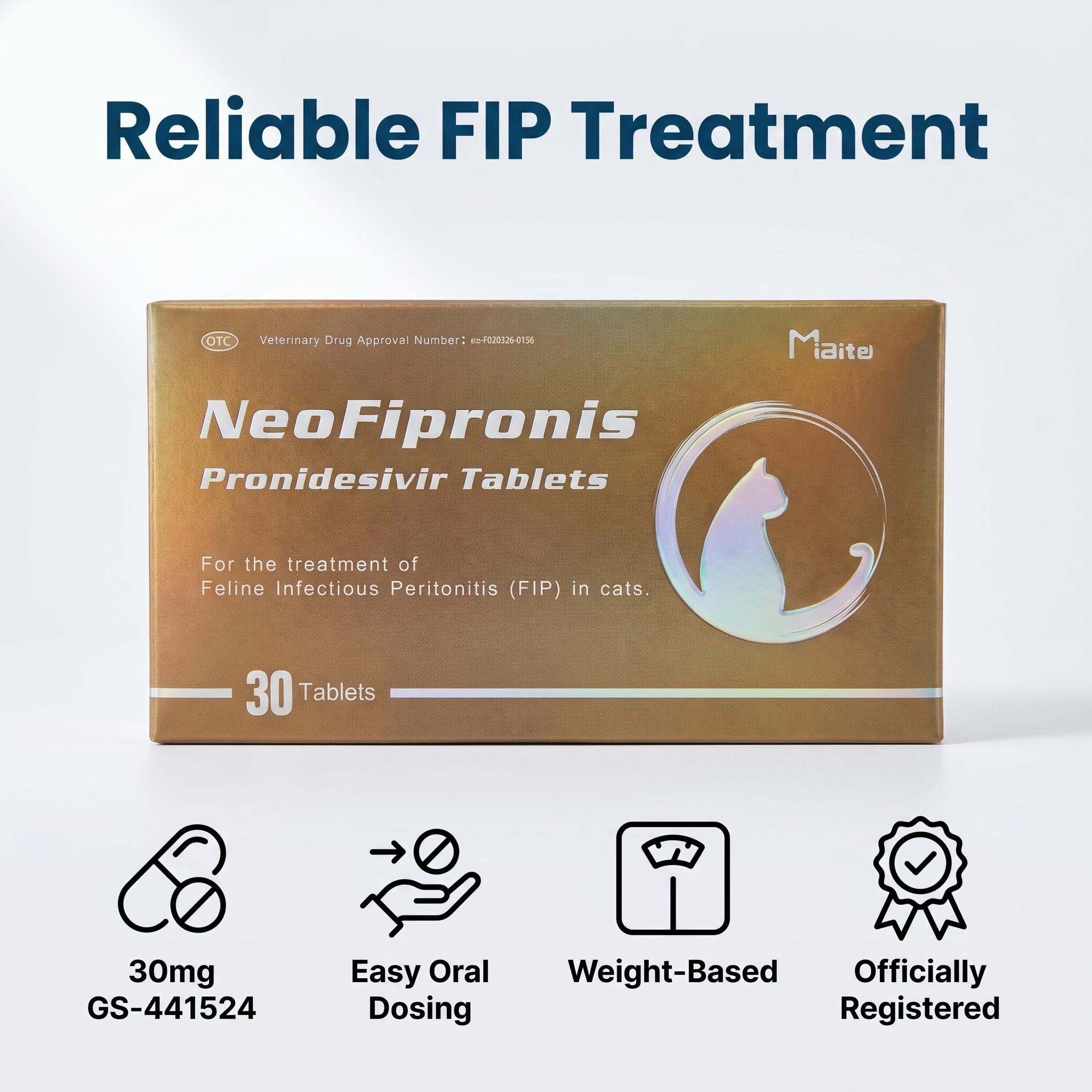
Miate NeoFipronis (Pronidesivir) GS-441524 is suitable for symptoms caused by feline infectious peritonitis (FIP), such as loss of appetite, lethargy, fever, ascites, pleural effusion, lymphadenopathy, inflammatory granulomas, nerve damage, and uveitis. It has excellent therapeutic effects on FIP. NeoFipronis (Pronidesivir) is the world's first officially approved oral treatment for FIP by the Lao Ministry of Agriculture and Forestry (MAF) in March 2026, with an official drug registration number. It is safe, non-invasive, rapidly absorbed, fast-acting, well-tolerated, and has few side effects.
Week 1: Initiation Phase
The first week marks the beginning of antiviral therapy. Prior to treatment, a comprehensive clinical assessment, including blood work and imaging, establishes a baseline. NeoFipronis is started at the prescribed dose, usually divided into daily oral administrations.
During this initial phase, cats often show signs of early improvement within 2-3 days, such as stabilization of fever and increased activity levels. Side effects are rare but monitored closely—common observations include slight gastrointestinal upset.
Owners must ensure consistent administration and observe for adverse reactions. Supportive care, like nutritional support and fluid therapy for dehydrated cats, may be implemented to enhance comfort.
Week 2: Monitoring and Adjustment
By the second week, significant clinical improvements are generally evident. Cats may demonstrate increased appetite, reduced lethargy, and diminished fever. Serial examinations and laboratory tests help assess response, including reductions in inflammatory markers and viral loads.
At this stage, the veterinarian evaluates medication compliance and tolerability. If side effects appear or if the response is suboptimal, dosage adjustments or additional supportive interventions may be considered.
Many cats continue to recover, with fluid accumulation (ascites or pleural effusion) decreasing markedly. Owners should maintain regular check-ins with veterinary professionals to monitor progression.
Week 3: Continued Response and Stabilization
In the third week, symptoms often stabilize or improve further. The reduction of clinical signs like lymphadenopathy and granulomas is common. Diagnostic imaging—Ultrasound or X-rays—may reveal regression of affected tissues.
This phase is critical for reinforcing medication adherence and preventing relapse. Some cats may require adjunct therapies, such as corticosteroids, during this period to manage residual inflammation. However, the use of immunomodulators is carefully considered to avoid impairing antiviral efficacy.
Owners should observe for any signs of adverse effects, including gastrointestinal disturbances or behavioral changes, and report them promptly.
Week 4: Achieving Viral Suppression
By the fourth week, many cats achieve viral suppression, with some reaching complete remission. Laboratory tests often show normal blood parameters, and clinical signs are entirely resolved.
This milestone is significant because it indicates the potential for treatment completion. However, some cats with advanced disease or CNS involvement may require extended therapy.
Supportive care continues to be essential, especially for neurological symptoms like nerve damage or uveitis. In some cases, additional medications—such as anti-inflammatory agents—are used cautiously.
Week 5-6: Consolidation and Assessment
During weeks five and six, the focus is on consolidating clinical remission and preventing relapse. Serial testing, including PCR for viral RNA, helps confirm viral clearance. Imaging should demonstrate resolution or reduction of granulomatous lesions.
At this stage, veterinarians evaluate whether the full course of NeoFipronis has been completed or if an extension is necessary, particularly in complex cases. The safety profile remains favorable, with few side effects reported.
Owners should maintain strict medication schedules and continue routine monitoring.
Week 7 and Beyond: Maintenance and Follow-Up
In ideal cases, treatment concludes around week 6-8, but some cats may need prolonged therapy, especially with neurological or ocular involvement. Post-treatment assessment focuses on identifying any signs of relapse, which remains rare but possible.
Long-term follow-up, including regular veterinary exams and diagnostic tests, ensures sustained health. Cats that respond well to treatment often enjoy an improved quality of life with minimal ongoing concerns.
Summary of Treatment Timeline
| Week | Clinical Expectations | Key Actions | Monitoring Focus |
|-||-|-|
| 1 | Rapid stabilization, initial symptom relief | Start NeoFipronis, supportive care, observe for side effects | Bloodwork, imaging, owner observations |
| 2 | Continued improvement, decreased fluid build-up | Regular check-ups, evaluate response, adjust if needed | Clinical signs, laboratory markers |
| 3 | Symptoms further resolve, stabilization | Reinforce medication adherence, monitor for residual issues | Imaging, neurological assessment |
| 4 | Possible remission, viral suppression | Confirm via tests, consider therapy duration | PCR testing, overall health status |
| 5-6 | Consolidation, relapse prevention | Continue assessments, plan for treatment completion | Diagnostic imaging, bloodwork |
| 7+ | Follow-up, long-term health maintenance | Routine exams, monitor for relapse | Ongoing surveillance |
References
1. Veterinary Clinical Pharmacology and Therapeutics.
2. Recent Advances in FIP Treatment: GS-441524 and NeoFipronis.
3. Official Drug Registration Document for NeoFipronis in Laos, March 2026.
4. Feline Infectious Peritonitis: Pathophysiology and Management.
5. Guidelines for FIP Treatment and Monitoring.