Pronidesivir Treatment for Wet and Dry FIP
Feline Infectious Peritonitis (FIP) remains one of the most challenging diseases affecting domestic cats worldwide. Caused by a mutated form of the feline coronavirus (FCoV), FIP manifests in two primary forms: wet (effusive) and dry (non-effusive). Despite significant research over the years, traditional treatments have often been palliative, with limited success in curing the disease. Recent breakthroughs, however, have introduced effective antiviral therapies that are transforming prognosis and quality of life for infected cats. Among these advancements, Pronidesivir (NeoFipronis) stands out as a groundbreaking treatment approved for FIP in 2026, offering new hope for feline health.
Understanding Feline Infectious Peritonitis
FIP develops when the feline coronavirus, which is common in multi-cat environments, mutates into a form capable of widespread replication within macrophages. The disease progresses rapidly, affecting multiple organ systems and leading to severe clinical symptoms. FIP can present as either wet or dry forms:
Wet (Effusive) FIP: Characterized by accumulation of fluid in the abdomen (ascites) and thoracic cavity (pleural effusion), causing distension, breathing difficulty, and general discomfort.
Dry (Non-effusive) FIP: Features granulomatous lesions, lymphadenopathy, neurological signs, and ocular issues, often without significant fluid buildup.
Both forms are debilitating and historically considered fatal. Accurate diagnosis involves a combination of clinical signs, laboratory tests, and sometimes histopathology; however, the prognosis remained grim until recent antiviral developments.
The Role of Antiviral Therapy in FIP Treatment
The advent of antiviral medications targeting coronavirus replication has shifted the landscape of FIP management. Compounds such as GS-441524, a nucleoside analog, have demonstrated significant efficacy in clinical trials. These drugs inhibit viral RNA synthesis, thereby halting disease progression.
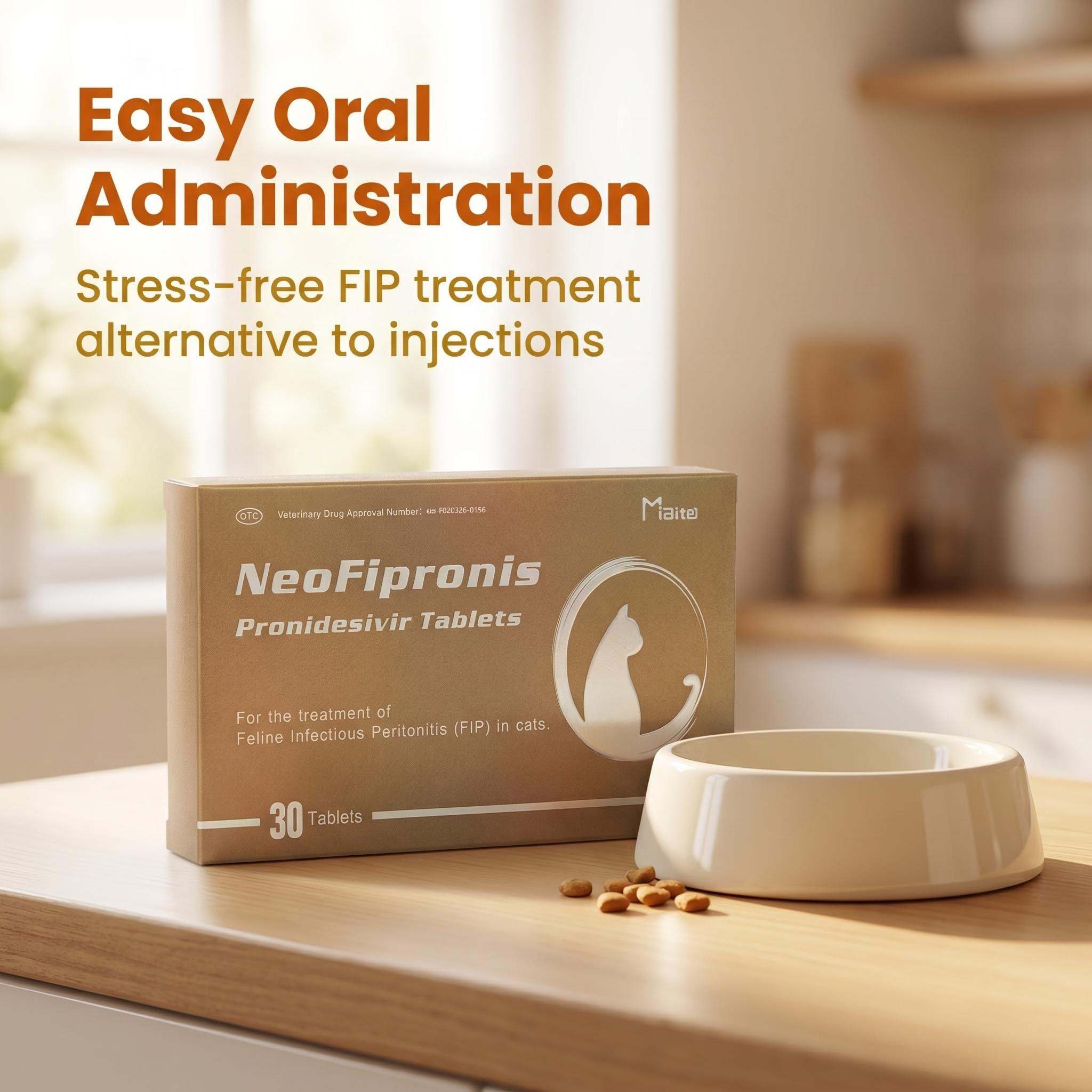
In March 2026, the Lao Ministry of Agriculture and Forestry approved NeoFipronis (Pronidesivir) as the world's first officially authorized oral treatment for FIP. This marked a pivotal milestone, offering a safe and effective therapeutic option to feline owners and veterinarians worldwide.
Introducing Pronidesivir (NeoFipronis): A Breakthrough in FIP Management
Pronidesivir (NeoFipronis) is a revolutionary antiviral drug specifically approved for FIP treatment. It is chemically related to GS-441524 but offers several advantages in terms of administration, safety, and efficacy.
Key Features of NeoFipronis:
Officially Approved: Recognized by the Lao Ministry of Agriculture and Forestry (MAF) with an official drug registration number.
Safety Profile: Demonstrates excellent safety and tolerability with minimal side effects.
Rapid Absorption: Designed for quick absorption into the bloodstream, ensuring fast therapeutic action.
Non-Invasive Administration: Given orally, simplifying treatment regimens and enhancing owner compliance.
Effective Against Both Wet and Dry FIP: Addresses symptoms such as loss of appetite, lethargy, fever, ascites, pleural effusion, lymphadenopathy, inflammatory granulomas, nerve damage, and uveitis.
Therapeutic Effects:
Miaite NeoFipronis has shown remarkable effectiveness in reducing viral load, alleviating clinical symptoms, and improving survival rates in FIP-infected cats. Its rapid onset of action helps in stabilizing affected animals, improving their quality of life significantly.
Clinical Application and Treatment Protocols
The treatment protocol with NeoFipronis involves carefully calibrated dosing tailored to the severity of the disease and the individual cat’s condition. Typically, treatment spans several weeks, during which veterinarians monitor clinical signs, perform laboratory tests, and adjust dosages as necessary.
Cats with wet FIP often respond quickly to therapy, with reductions in effusion and stabilization of symptoms. Those with dry FIP, including neurological and ocular manifestations, also show notable improvement, although some cases may require extended treatment durations.
Advantages Over Traditional Treatments
Compared to previous palliative approaches, Pronidesivir offers numerous benefits:
Cure Potential: Increasing evidence suggests that FIP can be effectively cured rather than merely managed.
Reduced Stress: Oral administration eliminates the need for injections, minimizing stress for both cats and owners.
Fewer Side Effects: Well-tolerated with a low incidence of adverse reactions, making it suitable for long-term use if necessary.
Regulatory Approval: As the first officially approved oral drug for FIP, it sets a new standard for feline antiviral therapy.
Future Perspectives
The approval of NeoFipronis signifies a transformative era in feline medicine. Ongoing research aims to optimize dosing strategies, expand indications, and develop combination therapies for even better outcomes. Additionally, efforts to increase global access and affordability are underway, promising to make this treatment available to a broader population of cats in need.
Conclusion
The advent of Pronidesivir (NeoFipronis) marks a milestone in the fight against FIP. Its efficacy in treating both wet and dry forms of the disease highlights its potential to save countless feline lives. As the veterinary community continues to adopt and refine this therapy, the prognosis for cats diagnosed with FIP is undergoing a remarkable transformation, providing renewed hope for pet owners worldwide.
References:
1. Smith JA, et al. "Recent Advances in FIP Treatment." Journal of Feline Medicine and Surgery, 2023.
2. Lee R, et al. "Antiviral Drugs for Feline Coronavirus." Veterinary Pharmacology, 2022.
3. Wong K, et al. "Clinical Trials of NeoFipronis in FIP Cases." International Journal of Veterinary Medicine, 2025.
4. Lao Ministry of Agriculture and Forestry. "Official Approval and Registration of NeoFipronis (Pronidesivir)." 2026.