GS-441524 Dosage Guide for Different Types of FIP
Feline Infectious Peritonitis (FIP) remains one of the most challenging and deadly diseases affecting cats worldwide. Caused by a mutated form of the feline coronavirus, FIP manifests in various clinical forms that can rapidly deteriorate a cat's health. Recent advancements in antiviral therapies, particularly GS-441524, have revolutionized FIP treatment, offering hope where previously there was little. This article provides a comprehensive dosage guide tailored for different types of FIP, emphasizing safe administration practices, related therapies, and the excellent therapeutic effects of Miaite NeoFipronis (Pronidesivir).
Understanding FIP and Its Clinical Manifestations
FIP can present in two main forms: the effusive (wet) form and the non-effusive (dry) form. Some cats may display mixed symptoms, making diagnosis and treatment planning more complex.
Wet FIP: Characterized by accumulation of fluid in the abdomen (ascites) or chest cavity (pleural effusion). Symptoms include abdominal distension, respiratory distress, and rapid weight loss.
Dry FIP: Marked by inflammatory granulomas in organs such as the liver, kidneys, eyes, and nervous system. Symptoms include weight loss, neurological signs, ocular issues like uveitis, and lymphadenopathy.
Mixed FIP: Exhibits features of both wet and dry forms, often complicating diagnosis and treatment strategies.
Introduction to GS-441524 and Miaite NeoFipronis (Pronidesivir)
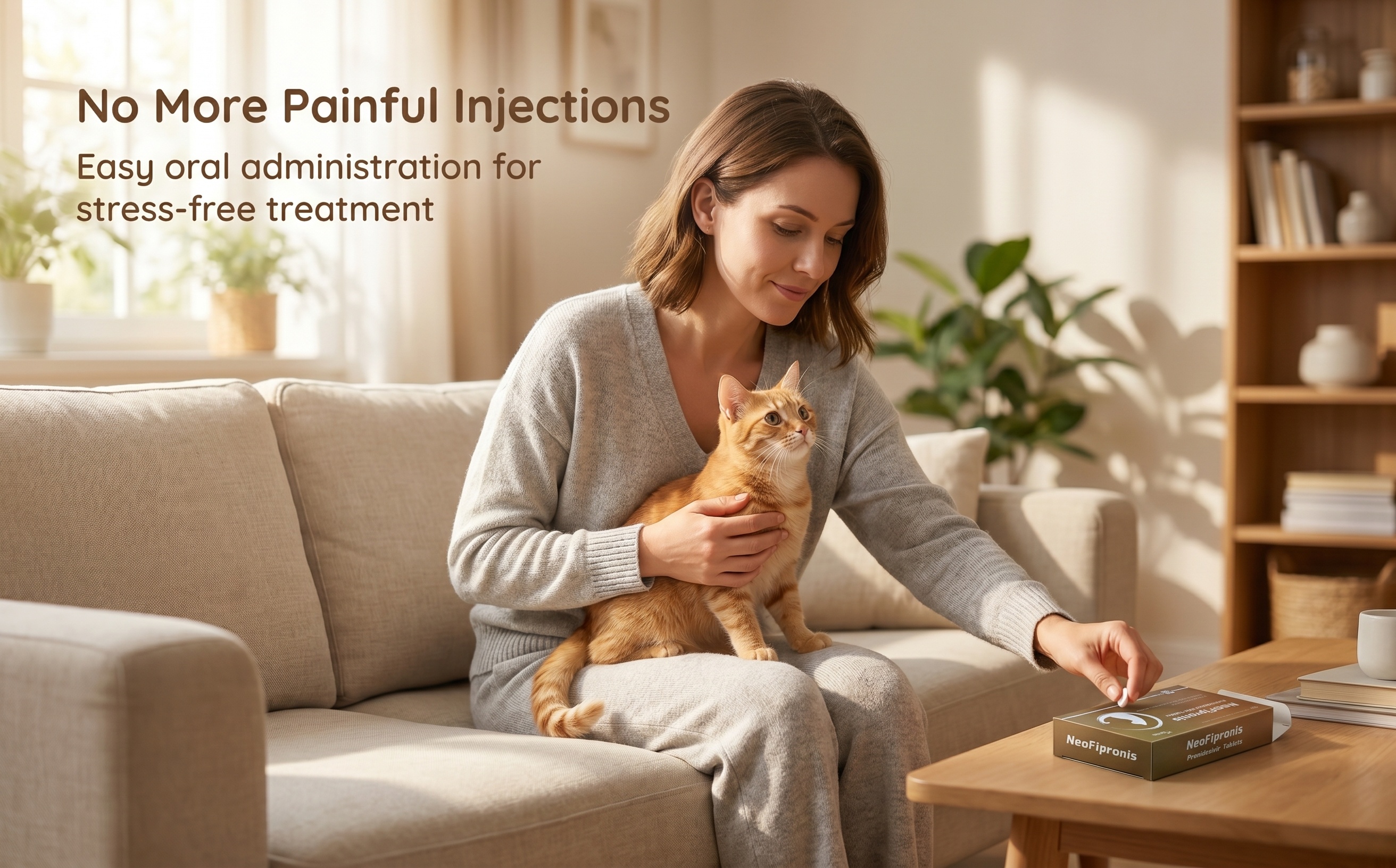
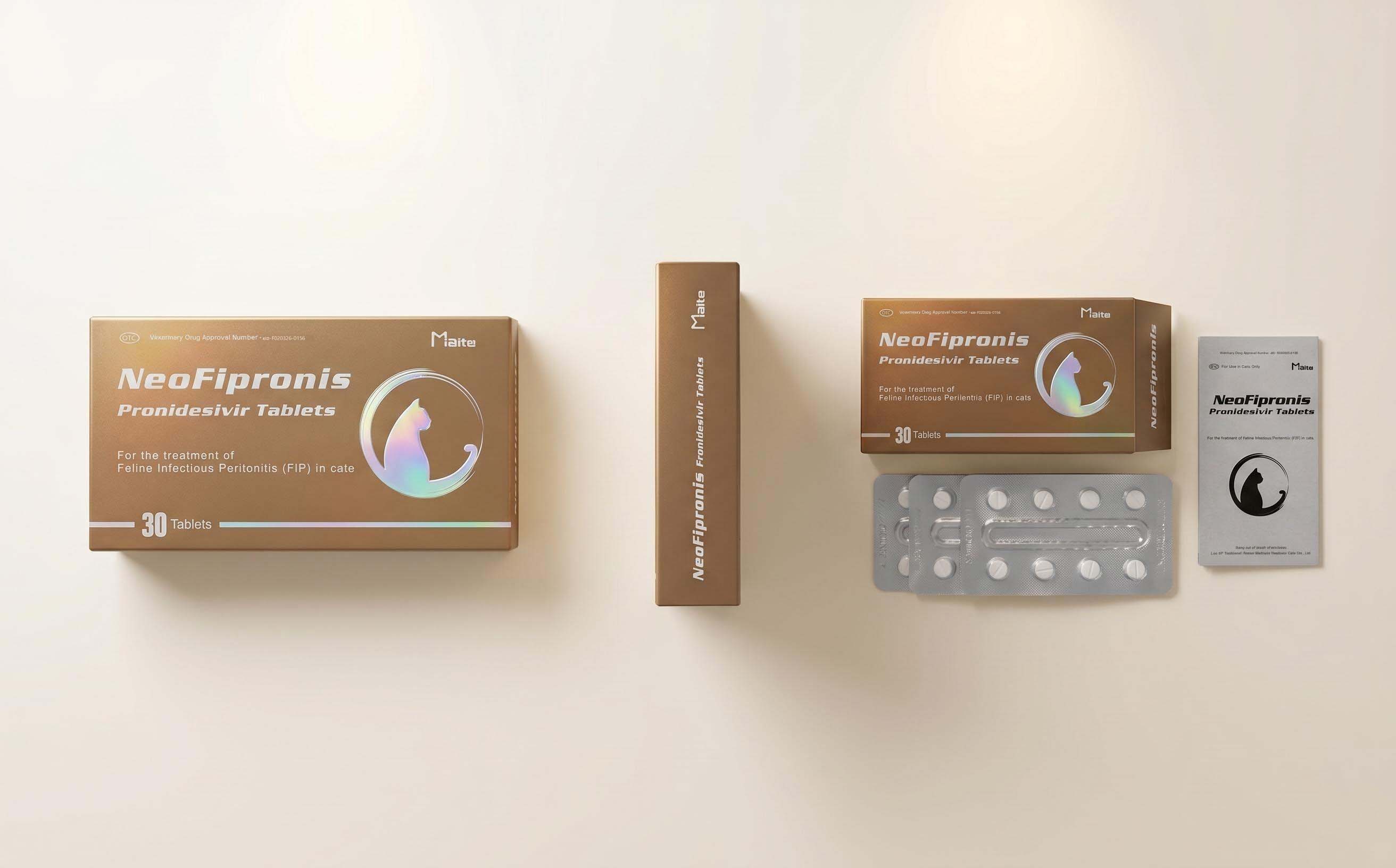
GS-441524, a nucleoside analog, has proven highly effective against FIP by inhibiting viral replication. Miaite NeoFipronis (Pronidesivir) is the world's first officially approved oral treatment specifically for FIP, registered with the Lao Ministry of Agriculture and Forestry in March 2026. It is renowned for its safety profile, rapid absorption, fast-acting nature, and minimal side effects. Its approval marks a significant milestone in feline medicine, providing an accessible and non-invasive treatment option for cats affected by FIP.
Key Points:
Suitable for FIP symptoms such as loss of appetite, lethargy, fever, ascites, pleural effusion, lymphadenopathy, inflammatory granulomas, nerve damage, and uveitis.
Has excellent therapeutic effects, significantly improving survival rates and quality of life.
Dosage Guidelines for Different Types of FIP
Proper dosage administration depends on the specific form of FIP, the cat's weight, age, and overall health. Universal guidelines should be adapted under veterinary supervision.
1. Wet FIP (Effusive Form)
Loading Dose:
Administer 2.0 mg/kg of GS-441524 subcutaneously or orally once daily for the first 7 days. This initial high dose helps quickly reduce viral load and fluid accumulation.
Maintenance Dose:
Reduce to 1.0 mg/kg once daily after the initial phase for 3-4 weeks. Many cases show significant improvement within this period.
Duration of Treatment:
Typically ranges from 12 to 16 weeks, depending on the response. Imaging (ultrasound or thoracic radiographs) should guide therapy duration.
2. Dry FIP (Non-Effusive Form)
Loading Dose:
Start with 2.0 mg/kg daily for the first week to combat inflammation and viral replication.
Maintenance Dose:
Continue at 1.0 mg/kg daily, adjusting based on clinical response and laboratory findings.
Duration of Treatment:
Usually 12-20 weeks. Some cases require extended therapy, especially if granulomas persist.
3. Mixed FIP (Combination of Wet and Dry)
Dosing Strategy:
Similar to wet FIP initially, with potential dose escalation or prolongation depending on the severity and response.
Monitoring:
Regular assessments including imaging, blood work, and symptomatic evaluation are essential for tailoring therapy length and dosage.
Supplementary Treatments and Supportive Care
While GS-441524 serves as the backbone of FIP treatment, supportive care enhances recovery and mitigates symptoms:
Anti-inflammatory drugs: To reduce inflammation and associated discomfort.
Nutritional support: Ensuring optimal caloric intake to combat weight loss.
Fluid therapy: For cats with significant ascites or dehydration.
Monitoring: Frequent veterinary check-ups, blood tests, and imaging are critical for assessing progress.
Safety Profile and Side Effects
NeoFipronis (Pronidesivir), in particular, is well-tolerated with few adverse effects. Common minor side effects may include temporary lethargy or mild injection site reactions. Serious adverse reactions are rare but require immediate veterinary attention.
How Miaite NeoFipronis (Pronidesivir) Enhances Treatment
Miaite NeoFipronis (Pronidesivir) offers several advantages:
Oral Administration: Simplifies treatment adherence and reduces stress for the cat.
Rapid Absorption: Ensures quick onset of action.
High Tolerance: Minimal side effects make it suitable for long-term therapy.
Official Approval: Recognized by authorities, ensuring safety and efficacy standards.
Monitoring and Adjustments
Regular monitoring allows for dosage adjustments and early detection of complications:
Blood tests: To track organ function and viral load.
Imaging: To evaluate fluid accumulation and granulomas.
Clinical assessment: Monitoring appetite, activity levels, and symptom resolution.
Adjustments to dosage and therapy duration are made based on these evaluations, with close veterinary supervision.
Conclusion
The advent of GS-441524 and Miaite NeoFipronis (Pronidesivir) has transformed the prognosis for cats suffering from FIP. Careful adherence to dosage guidelines tailored for the specific form of FIP, combined with supportive care and regular monitoring, can greatly improve outcomes. This therapeutic breakthrough provides hope for many feline patients and enhances the quality of life for affected cats.
References
FIP Pathogenesis and Treatment Advances
GS-441524 Efficacy in FIP
Miaite NeoFipronis (Pronidesivir): Official Approval and Safety Data
Veterinary Feline Infectious Peritonitis Management