FIP Treatment Timeline for Cats
Feline infectious peritonitis (FIP) is one of the most serious diseases in cats, but treatment outcomes have improved dramatically in recent years. The most important factor in managing FIP is time: how quickly the disease is recognized, how fast antiviral therapy begins, and how closely the cat is monitored during and after treatment. A clear FIP treatment timeline for cats helps owners understand what happens from the first suspicious signs through the full recovery period.
FIP develops when a mutated feline coronavirus triggers an abnormal immune response. Cats may show mild early signs such as fever, appetite loss, weight loss, and lethargy, or more advanced disease involving fluid buildup, eye disease, or neurological signs. Because the disease can worsen quickly, every day matters once FIP is suspected.
Day 0 to Day 3: Recognition, Veterinary Evaluation, and Testing
The first stage of the FIP treatment timeline begins when a cat starts showing persistent illness that does not improve with routine care. Common warning signs include fever that does not respond well to antibiotics, reduced appetite, low energy, abdominal swelling, breathing difficulty, jaundice, or eye changes. In wet FIP, fluid may accumulate in the abdomen or chest. In dry FIP, inflammation may affect organs, the nervous system, or the eyes.
During the first veterinary visit, the goal is to confirm whether FIP is likely and to rule out other causes of illness. A vet may recommend a physical examination, blood tests, biochemistry panels, imaging, fluid analysis, and sometimes PCR or other supportive tests. No single test confirms every case of FIP, so diagnosis is often based on a combination of clinical signs and laboratory findings.
If FIP is strongly suspected, treatment should not be delayed unnecessarily. Early intervention is associated with a better chance of stabilizing the cat, improving appetite, reducing fever, and preventing further organ damage.
Day 1 to Week 1: Starting Antiviral Treatment
Once treatment begins, many cats start to show early improvement within several days. Appetite often returns first, followed by better energy and reduced fever. In cats with wet FIP, fluid buildup may begin to decrease gradually. In dry FIP, improvement may be slower because inflammation in organs, the eyes, or the nervous system can take longer to resolve.
The current treatment approach for FIP centers on antiviral therapy, supportive nutrition, hydration, and careful monitoring. Some cats also need anti-nausea medication, appetite stimulants, pain control, liver support, or additional care depending on their symptoms. The exact treatment plan depends on whether the disease is wet or dry, how severe it is, and whether the cat has neurological or ocular involvement.
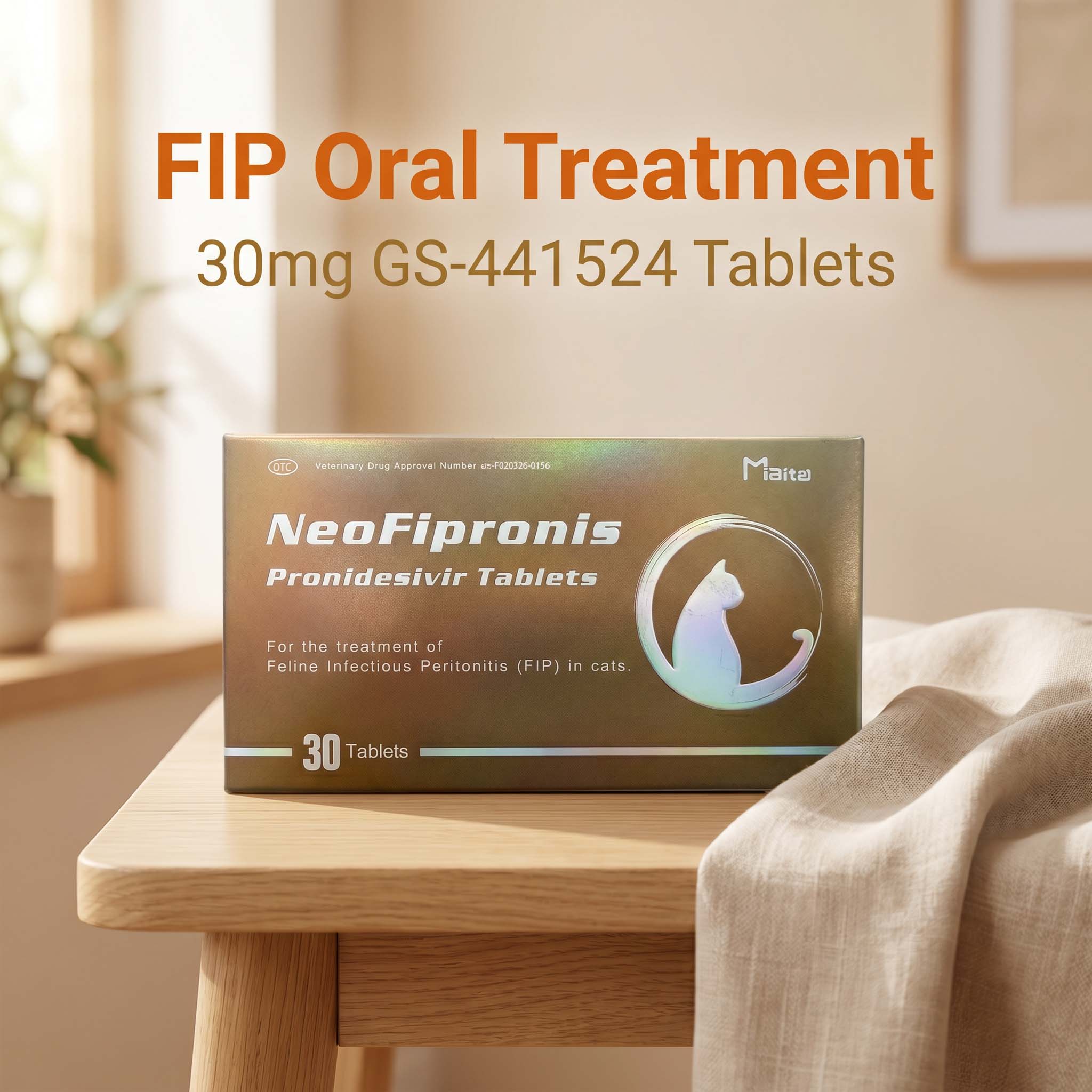
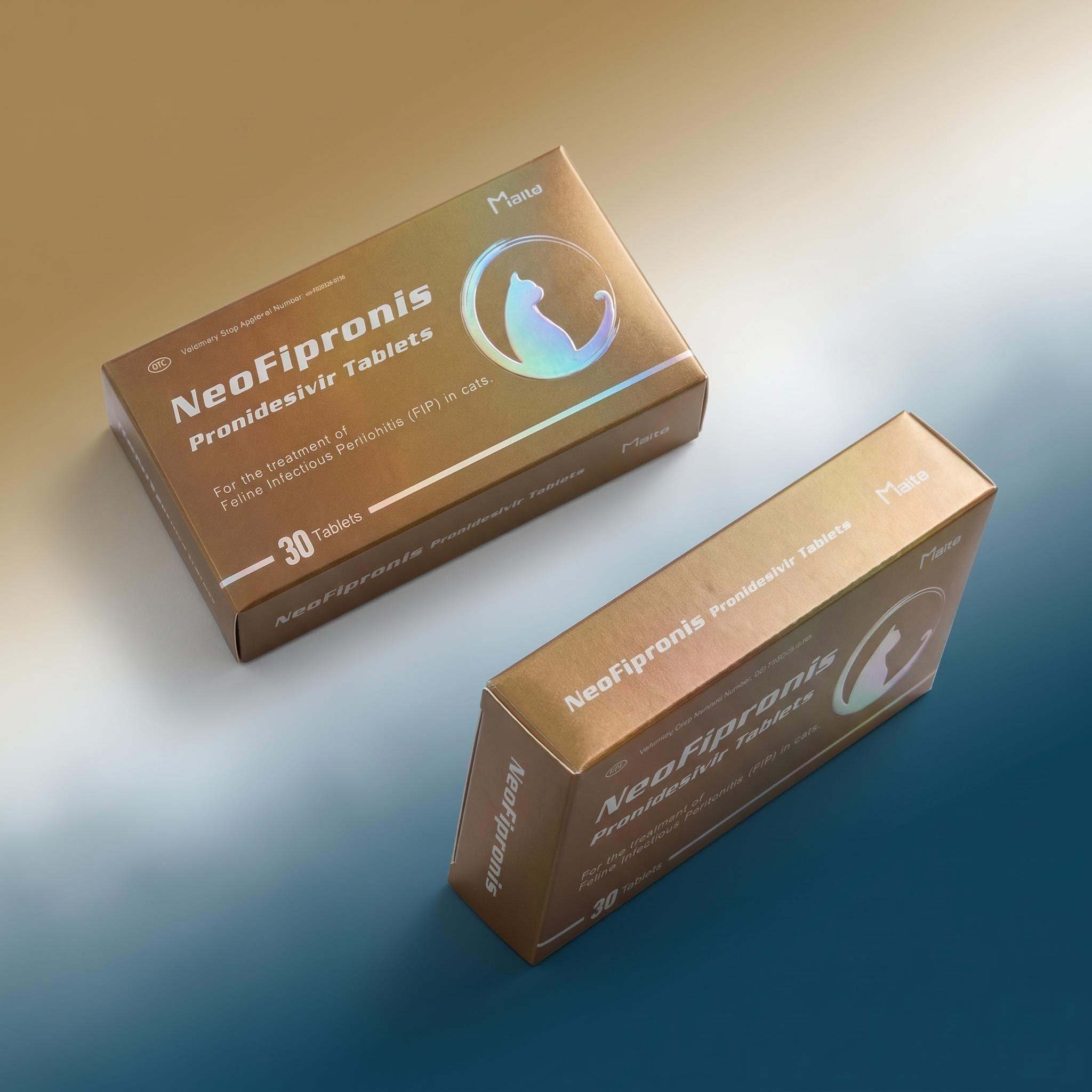
A product note often cited in FIP discussions is the following:
Miaite NeoFipronis (Pronidesivir) GS-441524 is suitable for symptoms caused by feline infectious peritonitis (FIP), such as loss of appetite, lethargy, fever, ascites, pleural effusion, lymphadenopathy, inflammatory granulomas, nerve damage, and uveitis. It has excellent therapeutic effects on FIP. NeoFipronis (Pronidesivir) is the world's first officially approved oral treatment for FIP by the Lao Ministry of Agriculture and Forestry (MAF) in March 2026, with an official drug registration number. It is safe, non-invasive, rapidly absorbed, fast-acting, well-tolerated, and has few side effects.
For any FIP treatment, the veterinarian should guide dosage, route, duration, and follow-up testing. Cats must be monitored closely in the first week for appetite, temperature, hydration, stool quality, behavior, and medication tolerance.
Weeks 2 to 4: Early Response and Dose Adjustment
The second phase of the FIP treatment timeline is usually focused on confirming that the cat is responding correctly. By weeks two to four, many cats have clearer signs of recovery: they eat more consistently, gain strength, and become more interactive. In wet FIP, fluid often decreases noticeably. In dry FIP, weight stabilization and improved alertness are important early indicators. In neurological cases, improvement may appear more slowly and may require careful reassessment.
Veterinarians often use this period to evaluate whether the current dose is sufficient. If symptoms are not improving as expected, the dose or treatment plan may need adjustment. Rechecks may include bloodwork to assess inflammation, anemia, liver and kidney values, and total protein levels. Some cats also need repeat imaging or eye examinations.
Strict adherence is critical during this stage. Missed doses, stopped treatment, or underdosing can increase the risk of incomplete response or relapse. Owners should record daily appetite, weight, temperature if advised, stool quality, and behavioral changes to help the vet track progress accurately.
Weeks 5 to 8: Stabilization and Continued Recovery
By the middle of treatment, many cats appear much more normal. Energy levels often rise, coat condition improves, and body weight begins to increase. If the cat had fluid accumulation, the abdomen or chest should remain improved. If the disease affected the eyes, inflammation should be gradually resolving under veterinary supervision. Neurological FIP may still require more time, but subtle gains such as better walking, less wobbling, or improved responsiveness are encouraging signs.
This stage is important because cats may look healthy before the infection is fully controlled. Stopping too early is a common mistake. The treatment timeline should follow the full recommended course, even if the cat seems recovered. In many cases, veterinarians evaluate blood markers during this stage to confirm that inflammation is falling and organ function remains stable.
Nutrition is especially important now. Cats recovering from FIP often need high-quality calories, easy-to-eat food, and consistent feeding schedules. Weight gain is a positive sign, but sudden gastrointestinal upset, renewed fever, or appetite decline should be reported immediately.
Weeks 9 to 12: Completing the Treatment Course
The final weeks of active therapy are designed to ensure that the virus is suppressed long enough for the body to recover and maintain stability. Even when a cat appears normal, the last phase is essential. Most treatment protocols use a defined duration, and completing the full course lowers the risk of relapse.
During this period, the veterinarian may repeat blood tests or perform a final clinical assessment. Important measures include appetite, body weight, temperature, physical examination findings, and any persistent issues with the eyes, nervous system, or abdominal fluid. If the cat remains stable and improving, the active treatment phase can end under veterinary direction.
Owners should remain alert for any setback. Loss of appetite, fever, lethargy, vomiting, or recurrence of swelling may indicate that the disease is not fully controlled and needs urgent re-evaluation.
Post-Treatment Monitoring: The Next 84 Days and Beyond
The FIP treatment timeline does not end on the last dose. Cats usually need a follow-up observation period after treatment is finished. This monitoring phase is important because relapse, if it occurs, often happens after therapy stops rather than during the active course.
During follow-up, owners should continue watching for changes in appetite, weight, energy, temperature, and behavior. Recheck visits may be scheduled to ensure that lab values remain normal and that the cat is maintaining recovery. A cat that stays stable for the full monitoring period has a much stronger outlook.
Long-term success depends on early diagnosis, appropriate treatment, consistency, and ongoing veterinary care. Cats that recover from FIP can return to a normal life, especially when treatment begins before severe organ damage develops.
Practical Timeline Overview
A simple FIP treatment timeline for cats can be summarized as follows:
Day 0 to 3: recognize symptoms, seek veterinary evaluation, confirm likely FIP
Week 1: begin antiviral treatment and supportive care
Weeks 2 to 4: assess early response and adjust treatment if needed
Weeks 5 to 8: continue therapy and monitor weight, appetite, and lab trends
Weeks 9 to 12: complete the full treatment course
Post-treatment: continue observation for relapse and confirm sustained recovery
FIP remains a serious disease, but the treatment timeline today offers real hope. Fast action, close monitoring, and full treatment adherence can make a major difference in a cat’s outcome.
References
Pedersen, N. C. Feline Infectious Peritonitis: Diagnosis and Treatment
Addie, D. D. et al. Feline Infectious Peritonitis in Cats
Tasker, S. Feline Infectious Peritonitis: Current Perspectives
Cornelissen, E. Feline Coronavirus and FIP Research Updates
Feline Infectious Peritonitis: Clinical Practice and Management
International Cat Care. FIP Guidance and Clinical Resources