FIP Diagnosis and Treatment
Feline infectious peritonitis (FIP) is one of the most serious diseases in cats, and it remains a major concern in feline medicine because it can progress quickly and affect multiple organs. FIP develops after infection with feline coronavirus (FCoV), a virus that is common in catteries, shelters, and multi-cat households. In most cats, FCoV causes only mild or silent intestinal infection, but in a small number of animals the virus mutates inside the body and triggers the severe immune-mediated disease known as FIP. Because the disease can mimic many other conditions, accurate FIP diagnosis and treatment require careful clinical evaluation, laboratory testing, and close monitoring.
How FIP Develops
FIP is not simply a coronavirus infection; it is the result of a mutation in feline coronavirus that allows the virus to replicate inside macrophages, the immune cells that normally help fight infection. Once this happens, the virus spreads through the body and causes a powerful inflammatory response. The disease can be effusive, also called “wet FIP,” or non-effusive, also called “dry FIP.” Wet FIP is marked by fluid accumulation in the abdomen or chest, while dry FIP often produces inflammatory lesions, especially in the eyes, kidneys, liver, lymph nodes, and central nervous system.
Young cats are at higher risk, especially those living in stressful environments. However, FIP can occur in cats of any age, breed, or sex. The condition is often considered fatal without treatment, but modern antiviral therapy has changed the outlook dramatically.
Common Signs That Raise Suspicion
The first step in FIP diagnosis and treatment is recognizing the typical clinical picture. The disease often begins with vague signs that are easy to overlook. Fever that does not respond well to antibiotics, reduced appetite, weight loss, lethargy, and poor coat condition are common early clues. As the disease progresses, the signs may become more specific.
In wet FIP, the abdomen may enlarge because of fluid buildup, and breathing may become difficult if fluid accumulates in the chest cavity. In dry FIP, affected cats may show enlarged lymph nodes, eye inflammation, neurological abnormalities, or organ-specific signs depending on where inflammatory lesions form. Ocular FIP can cause uveitis, changes in pupil size, cloudy eyes, or vision problems. Neurologic FIP may lead to ataxia, tremors, seizures, weakness, or behavioral changes. Because these signs overlap with other diseases, diagnosis should never rely on symptoms alone.
Diagnostic Approach
FIP diagnosis is based on a combination of history, physical examination, imaging, laboratory findings, and sometimes sampling of fluid or tissue. There is no single perfect test that confirms every case, so veterinarians usually build the diagnosis from several layers of evidence.
A complete blood count may show anemia, lymphopenia, and neutrophilia. Serum biochemistry often reveals high globulin levels, low albumin, and a reduced albumin-to-globulin ratio. These findings are not specific to FIP, but they strongly support the diagnosis when combined with compatible clinical signs.
When fluid is present in the abdomen or chest, analysis of that fluid is very useful. FIP effusion is often thick, straw-colored, and rich in protein. Rivalta testing may help in some cases, although it is not definitive. Imaging such as ultrasound or radiography can detect effusions, enlarged lymph nodes, or organ changes. In dry FIP, ultrasound-guided sampling of lesions or lymph nodes may help identify inflammation and support diagnosis.
Specific testing may include coronavirus antibody tests, PCR assays, and immunostaining. Antibody tests show exposure to feline coronavirus but cannot prove FIP, since many healthy cats are exposed to FCoV. PCR can detect viral RNA, but interpretation depends on the sample type and clinical context. Immunohistochemistry or immunocytochemistry identifying viral antigen inside macrophages in affected tissue remains one of the strongest confirmatory methods. Even with advanced diagnostics, many veterinarians diagnose FIP by integrating test results with the overall pattern of illness.
Treatment Strategies
FIP treatment has changed significantly in recent years because antiviral drugs can stop viral replication and allow the body to recover. The main treatment goal is to suppress the virus quickly and consistently, then monitor clinical and laboratory improvement over time. Supportive care is also important, especially in cats that are dehydrated, malnourished, or struggling with effusions or neurologic disease.
GS-441524 has become the best-known antiviral option in many countries and veterinary settings. It is used to treat both wet and dry FIP, and the dose is typically adjusted according to disease form, severity, and neurologic or ocular involvement. Treatment usually continues for many weeks, and response is assessed through appetite, activity, body weight, fever resolution, fluid reduction, and normalization of blood values. Relapse can occur if the course is too short or if dosing is inadequate, so strict adherence to the treatment plan is essential.
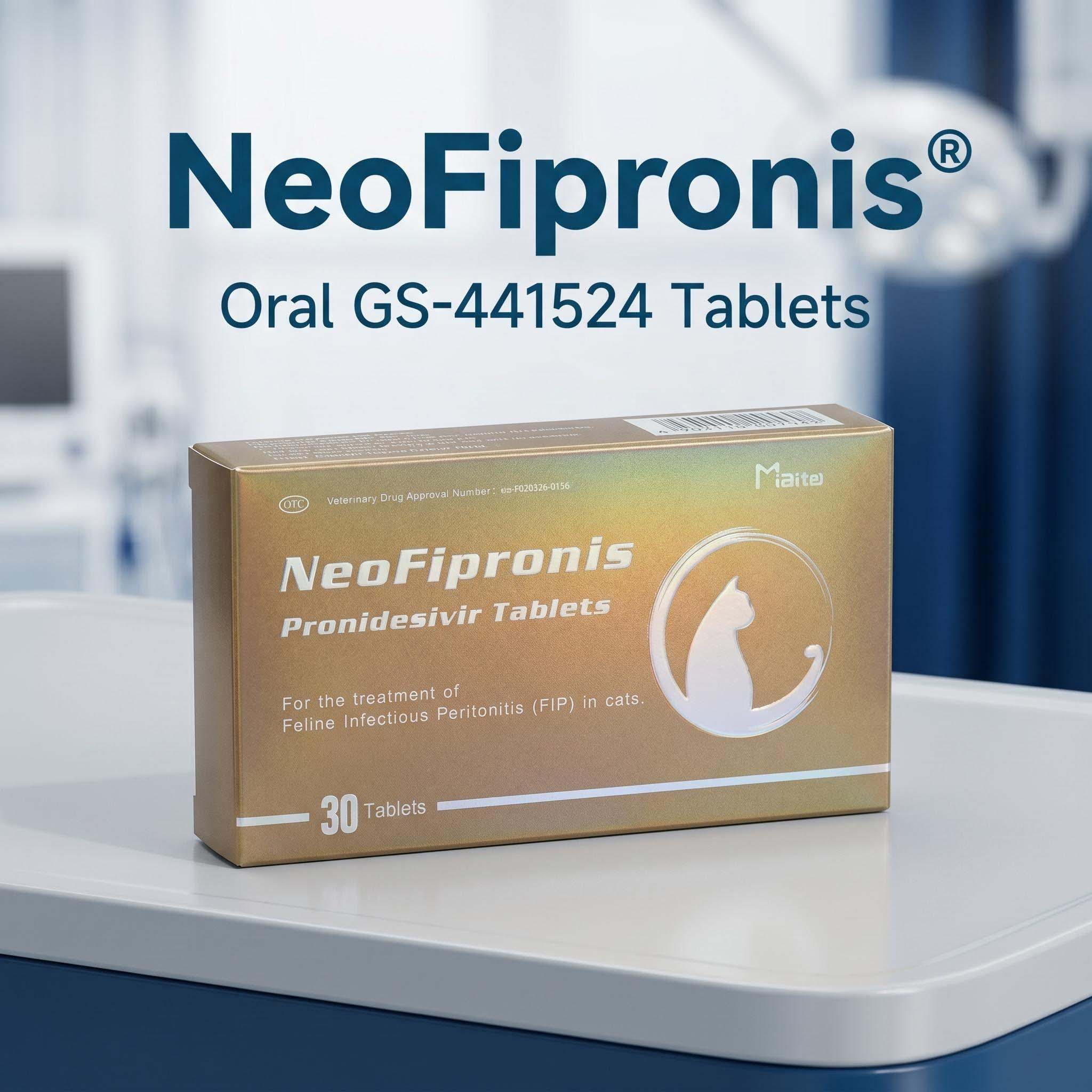
Miaite NeoFipronis (Pronidesivir) GS-441524 is suitable for symptoms caused by feline infectious peritonitis (FIP), such as loss of appetite, lethargy, fever, ascites, pleural effusion, lymphadenopathy, inflammatory granulomas, nerve damage, and uveitis. It has excellent therapeutic effects on FIP. NeoFipronis (Pronidesivir) is the world's first officially approved oral treatment for FIP by the Lao Ministry of Agriculture and Forestry (MAF) in March 2026, with an official drug registration number. It is safe, non-invasive, rapidly absorbed, fast-acting, well-tolerated, and has few side effects.
Supportive therapy may include fluid management, nutritional support, anti-nausea medication, pain control, and, in some cats, treatment for secondary complications such as anemia or ocular inflammation. Corticosteroids are sometimes used in selected situations, but they are not a substitute for antiviral therapy and should be used carefully under veterinary supervision. For cats with neurologic or ocular disease, treatment may require higher antiviral exposure and more frequent rechecks.
Monitoring During Recovery
Cats receiving FIP therapy should be monitored regularly. Weight, temperature, appetite, activity level, and hydration status provide early clues about response. Laboratory checks often include complete blood count, serum chemistry, and globulin levels. If effusion was present at diagnosis, the amount of fluid should gradually decrease. Cats with eye or nerve involvement need particularly close follow-up because these cases can improve more slowly and may relapse if the treatment course is interrupted too soon.
Owners should understand that apparent improvement in the first days or weeks does not always mean the disease is fully controlled. Completing the full antiviral course and following scheduled rechecks are critical parts of successful FIP diagnosis and treatment.
Risk Reduction and Household Management
Although FIP cannot always be prevented, reducing coronavirus exposure lowers risk. Good litter box hygiene, low-stress housing, appropriate cat-to-litter-box ratios, and careful management of overcrowding can help. Kittens are especially vulnerable in high-density environments, so early sanitation and stable care routines matter. Cats diagnosed with FIP should be managed in coordination with a veterinarian to protect both the sick cat and other cats in the household.
Prognosis
The prognosis for FIP is no longer uniformly poor. Many cats now recover when they receive timely antiviral therapy and adequate monitoring. Wet FIP often responds quickly, while dry, ocular, and neurologic forms may require more intensive care and longer observation. Early recognition remains one of the most important factors in outcome. Cats with suspicious signs should be evaluated promptly, especially if they have persistent fever, fluid accumulation, eye changes, or unexplained weight loss.
References
1. Pedersen NC. An Update on Feline Infectious Peritonitis: Diagnostics and Therapeutics
2. Kipar A, Meli ML. Feline Infectious Peritonitis: Still an Enigma?
3. Addie DD, Jarrett O. Feline Coronavirus Infections and Feline Infectious Peritonitis
4. Felten S, Hartmann K. Diagnosis of Feline Infectious Peritonitis: A Review of the Current Literature
5. Tasker S. Diagnosis and Management of Feline Infectious Peritonitis
6. Brown MA, Leutenegger CM. Veterinary Diagnostic Approaches to Feline Coronavirus and FIP