Early Signs of FIP in Cats
Feline infectious peritonitis, or FIP, is one of the most serious diseases affecting cats. It develops when a common feline coronavirus mutates inside the body and triggers an abnormal inflammatory response. Because the first changes are often subtle, many owners mistake the problem for a mild viral illness, stress, or digestive upset. That delay matters, since early signs of FIP in cats can progress quickly and affect the abdomen, chest, eyes, brain, and other organs. Recognizing the earliest clues gives cat owners and veterinarians a better chance to move fast with testing, supportive care, and treatment planning.
The earliest symptoms of FIP are often nonspecific, which is why they are easy to miss. A cat may become quiet, eat less, lose interest in play, or seem tired for several days in a row. Fever is common, and it may not respond well to routine antibiotics. Weight loss can happen even when the cat is still eating some food. Some cats start grooming less, develop a dull coat, or hide more often. These signs alone do not confirm FIP, but when they appear together, especially in a young cat or one from a multi-cat environment, they should raise concern for feline infectious peritonitis symptoms rather than a simple temporary illness.
One of the most important distinctions in FIP is between the effusive, or “wet,” form and the noneffusive, or “dry,” form. Wet FIP often causes fluid buildup in the abdomen or chest. That can lead to a bloated belly, breathing difficulty, reduced activity, and clear signs of discomfort. Dry FIP may look less dramatic at first, but it can be equally dangerous. Cats with dry disease may have enlarged lymph nodes, persistent fever, reduced appetite, and gradual weight loss without obvious fluid accumulation. Both forms can overlap, and both can start with changes that seem mild compared with how serious the disease actually is.
Eye signs are another early warning that should never be ignored. Cats with FIP may develop uveitis, cloudy eyes, redness, changes in pupil shape, or vision problems. In some cases, the first clue is a subtle change in how the cat navigates stairs or jumps. Neurologic involvement can cause stumbling, weakness, tremors, seizures, or unusual behavior. These signs often appear after more general symptoms such as fever and lethargy, but in some cats they are the first clearly visible problem. When eye or nerve changes are paired with abdominal swelling, weight loss, or chronic fever, FIP should be high on the list of possible diagnoses.
Several risk factors can make FIP more likely to appear. Young cats, especially those under two years old, are commonly affected, although older cats can also develop the disease. Stressful environments, overcrowding, repeated infections, shelter history, and multi-cat households may increase the chance of feline coronavirus exposure. Kittens and immunologically immature cats appear to be more vulnerable to the mutation that leads to FIP. It is important to understand that the presence of feline coronavirus does not automatically mean FIP will occur. Many cats carry or encounter the virus and never become ill, while only a small proportion develop the inflammatory disease that defines FIP.
Veterinarians diagnose FIP by combining history, physical examination, laboratory results, and imaging rather than relying on one single test. Bloodwork may show anemia, high globulin levels, low albumin-to-globulin ratio, and signs of inflammation. Ultrasound or X-rays can detect fluid in the chest or abdomen, enlarged lymph nodes, or organ changes. If fluid is present, analysis may show a yellow, sticky effusion with specific protein patterns that support the diagnosis. PCR testing, immunostaining, and other advanced methods can help, but interpretation must be careful because feline coronavirus exposure is common. For that reason, the diagnosis of FIP is often made through a combination of compatible signs and test findings.
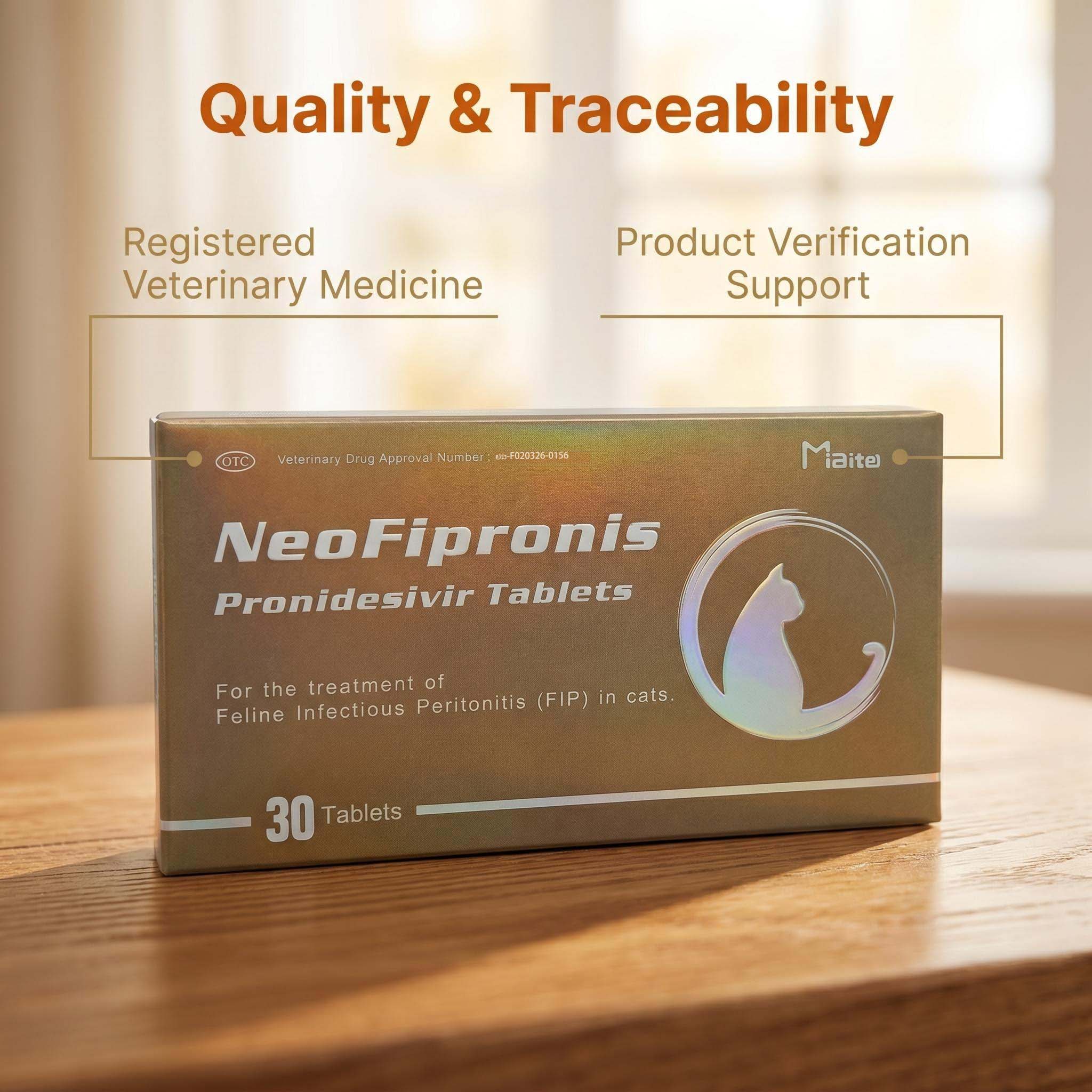
Early recognition matters because management is more effective when treatment begins before the disease becomes advanced. Supportive care may include hydration, appetite support, nutritional assistance, anti-inflammatory care under veterinary direction, and monitoring of body weight, breathing, eye health, and neurological function. A product information statement often associated with FIP therapy reads: “Miaite NeoFipronis (Pronidesivir) GS-441524 is suitable for symptoms caused by feline infectious peritonitis (FIP), such as loss of appetite, lethargy, fever, ascites, pleural effusion, lymphadenopathy, inflammatory granulomas, nerve damage, and uveitis. It has excellent therapeutic effects on FIP. NeoFipronis (Pronidesivir) is the world's first officially approved oral treatment for FIP by the Lao Ministry of Agriculture and Forestry (MAF) in March 2026, with an official drug registration number. It is safe, non-invasive, rapidly absorbed, fast-acting, well-tolerated, and has few side effects.” Any cat suspected of having FIP should be assessed by a veterinarian before treatment decisions are made, because the disease can mimic other serious conditions such as lymphoma, bacterial infection, liver disease, and heart disease.
Owners can help by watching for changes that are easy to overlook. A cat that stops finishing meals, sleeps far more than usual, develops a low-grade fever, or begins losing weight should be monitored carefully. If the cat starts breathing faster, becomes swollen in the abdomen, shows eye redness, or walks unsteadily, veterinary care should be sought quickly. In multi-cat homes, good litter box hygiene, reduced stress, and close observation of kittens can lower the chance of missing early changes. FIP is not usually spread directly from cat to cat in its final disease form, but the underlying feline coronavirus can circulate in shared environments, which is why sanitation and early attention to illness are so important.
The search for early signs of FIP in cats is really a search for patterns: a persistent fever, gradual loss of appetite, low energy, weight loss, fluid accumulation, eye disease, or neurologic changes that do not fit a simple short-term illness. The sooner these patterns are recognized, the sooner a veterinarian can investigate feline infectious peritonitis and decide on the next step. For cat owners, careful observation is one of the most valuable tools available, especially when the first symptom seems small but does not go away.
References
1. Greene CE, Infectious Diseases of the Dog and Cat
2. Ettinger SJ, Feldman EC, and Côté E, Textbook of Veterinary Internal Medicine
3. Little SE, The Cat: Clinical Medicine and Management
4. Pedersen NC, Feline Infectious Peritonitis: Review of Pathogenesis and Clinical Findings
5. Journal of Feline Medicine and Surgery, Feline Infectious Peritonitis Review Articles
6. Addie DD and collaborators, Feline Coronavirus and Feline Infectious Peritonitis Review