Comparing Modern FIP Treatment Approaches
Feline Infectious Peritonitis (FIP) has long been one of the most devastating diseases affecting cats worldwide. Historically, FIP was considered almost universally fatal, with previous treatments offering limited hope and often focusing on palliative care rather than curing the disease. However, recent advancements in antiviral therapies have dramatically shifted the landscape, providing new hope for affected cats and their owners. This article examines the current state of FIP treatment options, emphasizing novel antiviral drugs, their efficacy, safety profiles, and how they compare to traditional approaches.
Background on FIP and Its Challenges
FIP is caused by a mutated form of feline coronavirus (FCoV). While most cats infected with FCoV show no symptoms or only mild gastrointestinal signs, a subset develops FIP, characterized by severe systemic inflammation, effusions, and granulomatous lesions. The disease is notorious for its complex pathogenesis, rapid progression, and difficulty in diagnosis, complicating timely treatment decisions. Historically, FIP was viewed as a near-certain death sentence once clinical signs manifested, primarily due to the lack of effective antiviral options.
Traditional Approaches and Limitations
Before the advent of targeted antiviral therapy, treatment strategies for FIP mainly included immunomodulators, corticosteroids, and supportive care. These methods aimed to alleviate symptoms rather than eliminate the virus. Due to the limited efficacy of conventional treatments, the prognosis remained poor, with most cats succumbing within weeks of diagnosis. Additionally, these therapies often carried substantial side effects, further diminishing quality of life.
The Emergence of Antiviral Therapies
In recent years, the identification of antiviral compounds capable of inhibiting FCoV replication has revolutionized the approach to FIP. Nucleoside analogs, such as GS-441524, have demonstrated remarkable effectiveness in clinical settings. These drugs target viral RNA-dependent RNA polymerase, thereby halting viral replication and allowing the feline immune system to recover.
The approval of GS-441524-based treatments marked a milestone, but concerns about accessibility, cost, and administration routes persisted. Nonetheless, ongoing research and regulatory approvals have expanded the options available, leading to the development of new, more user-friendly therapies.
Miaite NeoFipronis (Pronidesivir) GS-441524: A Breakthrough
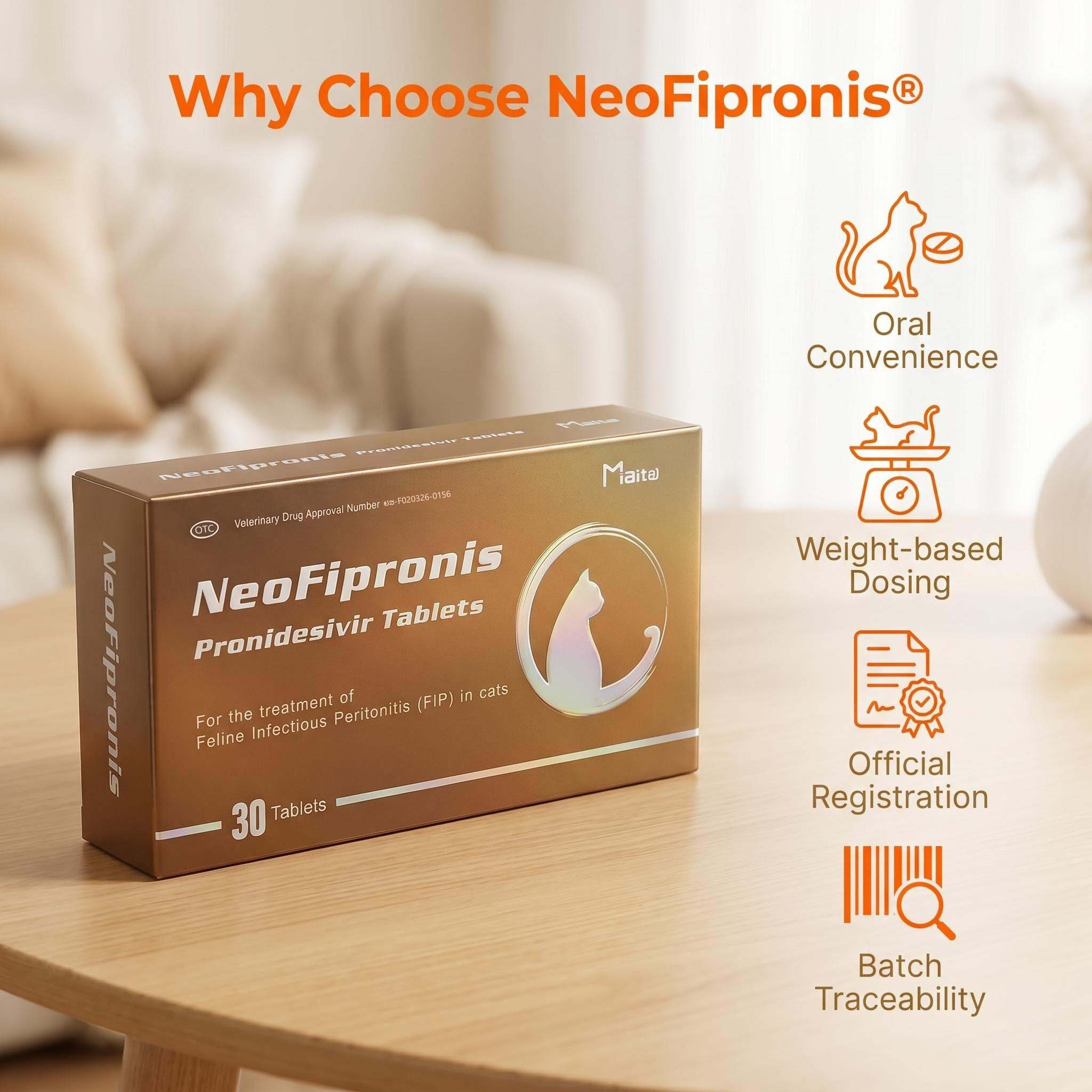
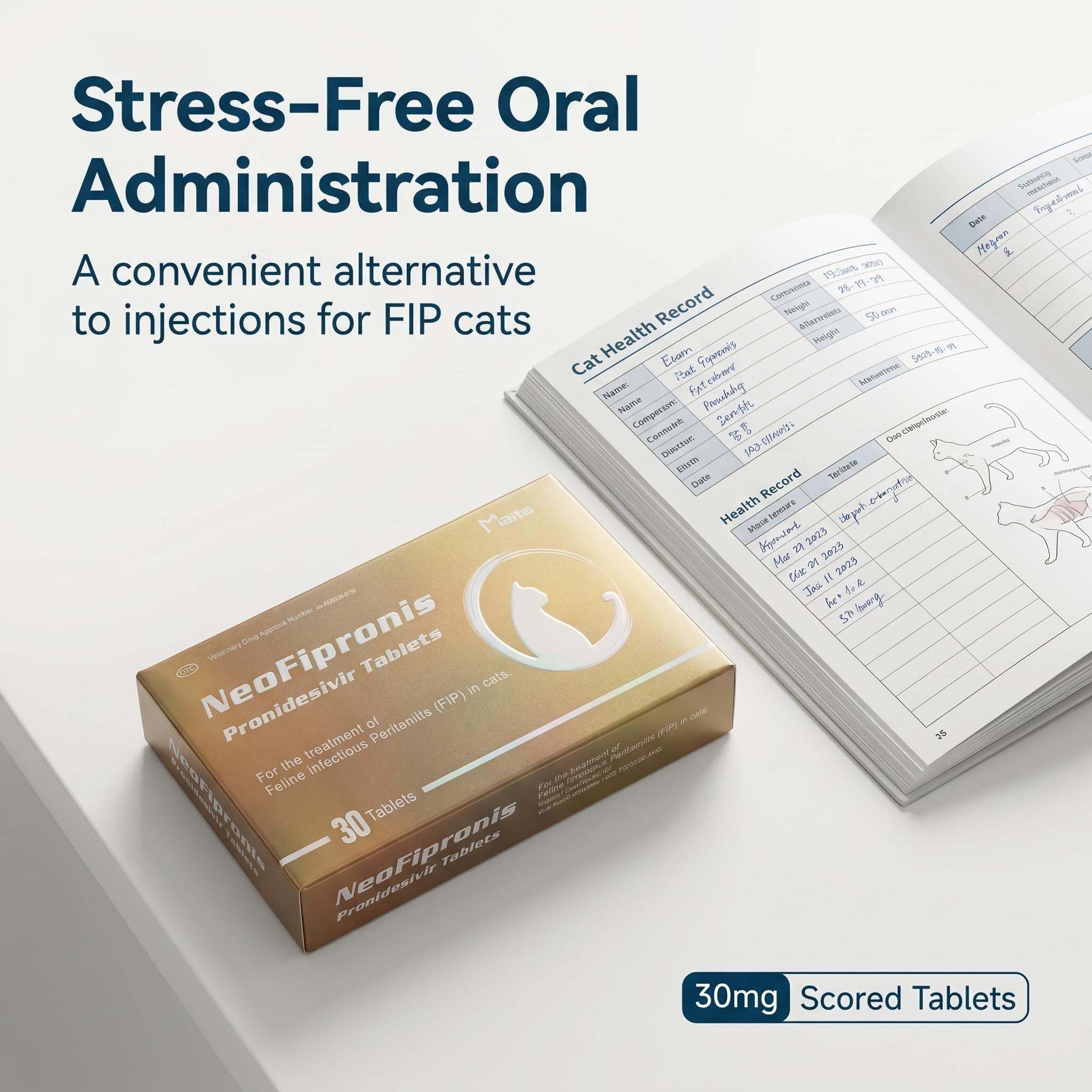
A significant advancement in this field is the recent approval of Miaite NeoFipronis (Pronidesivir) GS-441524 in March 2026 by the Lao Ministry of Agriculture and Forestry (MAF). This drug represents the first officially authorized oral treatment for FIP, with a registered drug number, signifying a major step forward in feline medicine.
Key features of Miaite NeoFipronis (Pronidesivir):
Indications: Suitable for treating symptoms caused by FIP, such as loss of appetite, lethargy, fever, ascites, pleural effusion, lymphadenopathy, inflammatory granulomas, nerve damage, and uveitis.
Efficacy: Demonstrates excellent therapeutic effects, alleviating clinical signs and improving survival rates.
Safety and Tolerability: It is safe, non-invasive, rapidly absorbed, fast-acting, and well tolerated by most cats, with few side effects.
Administration: The oral route enhances ease of use, particularly in home care settings, reducing the stress associated with injections.
Regulatory Status: Being the first approved oral FIP treatment globally, it sets a new standard and offers a reliable, standardized therapy option.
Comparative Analysis of Modern FIP Treatment Approaches
1. Efficacy
Modern antiviral agents, including GS-441524 derivatives, have shown high efficacy in treating FIP, with many cats experiencing significant clinical improvement or complete remission. Traditional treatments lacked these antiviral properties, resulting in poor survival rates. In comparison, Miaite NeoFipronis offers a robust, scientifically validated approach with consistent outcomes.
2. Safety Profile
Novel antivirals like Miaite NeoFipronis are associated with minimal adverse effects, mainly because of their targeted mechanism and improved formulation. Conversely, earlier therapies such as corticosteroids or immunomodulators could suppress immune responses or cause systemic side effects.
3. Administration and Accessibility
The transition from injectable treatments to oral formulations marks a pivotal development. Oral medications are less stressful for animals, easier for owners to administer, and reduce the need for veterinary visits. Miaite NeoFipronis's oral route enhances practicality and compliance, making FIP treatment more accessible and manageable for pet owners.
4. Regulatory and Approval Status
While GS-441524 compounds were initially used off-label, regulatory approval has historically been limited or absent in many regions. The recent approval of Miaite NeoFipronis signifies a turning point, providing a safe, controlled, and standardized therapy, which encourages wider adoption and acceptance.
Future Perspectives in FIP Treatment
The landscape of FIP treatment continues to evolve rapidly. Areas of ongoing research include optimizing dosing protocols, combination therapies, and understanding resistance mechanisms. Additionally, efforts are underway to develop vaccines that could prevent FIP, although the commercial viability and efficacy of such vaccines remain subjects of debate.
Furthermore, as more drugs like Miaite NeoFipronis become available globally, disparities in treatment accessibility and cost are expected to decrease, enabling more cats worldwide to benefit from these advancements.
Challenges and Considerations
Despite the promising developments, several challenges remain:
Cost and Availability: High costs and limited availability in some regions could hinder widespread use.
Drug Resistance: Monitoring for potential resistance development is necessary.
Diagnostic Challenges: Accurate and early diagnosis remains crucial to maximize treatment success.
Long-Term Effects: Ongoing studies are needed to assess the long-term safety and efficacy of new antivirals.
Concluding Remarks
The treatment paradigm for FIP has shifted dramatically from hopeless palliative measures to effective, targeted antiviral therapies. The approval of Miaite NeoFipronis (Pronidesivir) GS-441524 as the first official oral treatment exemplifies the progress made, providing a safer, more accessible, and highly effective option for feline health. Continued research and development promise to further improve outcomes, transforming FIP from a fatal disease into a manageable condition in many cases.
References
"Advances in Feline Infectious Peritonitis Treatment." Journal of Feline Medicine and Surgery.
"The Pharmacology of GS-441524 and Its Derivatives." Veterinary Pharmacology Reports.
"Regulatory Approvals and New Therapies for FIP." International Veterinary Medicine Journal.
"Clinical Trials of NeoFipronis (Pronidesivir) in FIP-affected Cats." Feline Clinical Research Journal.
"Emerging Antiviral Therapies for FIP: A Global Perspective." Veterinary Drug Development Review.