Feline Infectious Peritonitis Treatment

Feline infectious peritonitis (FIP) is one of the most serious diseases in cats, and it remains a major concern in small-animal medicine because it can progress rapidly and affect multiple organ systems. FIP develops after mutation of feline coronavirus within the host, leading to an abnormal immune response, widespread inflammation, and characteristic protein-rich effusions or granulomatous lesions. For many years, the disease was considered nearly uniformly fatal, which made feline infectious peritonitis treatment a difficult and emotionally challenging topic for veterinarians and cat owners. Today, however, the landscape has changed significantly. Antiviral therapy, especially nucleoside analogs such as GS-441524, has transformed prognosis in many cases, and earlier diagnosis is now more valuable than ever. Understanding the disease process, clinical presentation, diagnostic approach, and modern therapeutic options is essential for improving survival and quality of life.
FIP is commonly divided into effusive and non-effusive forms, although mixed presentations are also frequent. The effusive, or “wet,” form is characterized by abdominal or thoracic fluid accumulation, while the non-effusive, or “dry,” form often presents with pyogranulomatous inflammation in organs such as the kidneys, liver, eyes, central nervous system, and lymph nodes. Common clinical signs include fever that does not respond well to antibiotics, weight loss, reduced appetite, lethargy, and progressive decline. In wet cases, ascites or pleural effusion may cause abdominal distension or respiratory difficulty. In dry cases, cats may show neurologic abnormalities, altered gait, tremors, behavioral changes, or ocular disease such as uveitis and chorioretinitis. Because these signs overlap with many other conditions, FIP diagnosis relies on a combination of history, clinical findings, laboratory data, imaging, and when possible, detection of viral RNA or antigen in affected tissues or fluids.
Diagnostic workup in suspected FIP typically begins with a careful physical examination and routine blood testing. Supportive findings may include hyperglobulinemia, a low albumin-to-globulin ratio, non-regenerative anemia, lymphopenia, elevated bilirubin, and increased acute-phase proteins such as alpha-1 acid glycoprotein. Imaging can help identify effusions, organ enlargement, or masses, while cytology and fluid analysis may reveal a high-protein, low-cellularity exudate in wet FIP. In some cases, immunohistochemistry or polymerase chain reaction testing of tissue samples is used to confirm the diagnosis. Because no single test is perfect, clinicians often use a probability-based approach. This is important for feline infectious peritonitis treatment because earlier recognition allows therapy to begin before irreversible organ damage develops, especially in neurologic and ocular cases where delayed treatment may reduce the chance of full recovery.
The most important advance in feline infectious peritonitis treatment is the introduction of direct-acting antivirals, particularly GS-441524, a nucleoside analog that inhibits viral RNA replication. Clinical experience and published studies have shown that this compound can induce remission in many cats, including those with effusive, non-effusive, ocular, and neurologic FIP. Treatment protocols vary depending on disease form, body weight, and severity, but the core principle is sustained antiviral exposure over a sufficiently long course. Oral formulations have made management more practical for many owners, while injectable formulations may still be used in some cases, particularly when absorption, adherence, or disease severity is a concern. Monitoring during therapy usually includes body weight, appetite, hydration status, temperature, clinical signs, and serial laboratory testing. In many patients, improvement in appetite, activity level, effusion resolution, and fever reduction can be seen relatively quickly, although full recovery may take weeks to months.
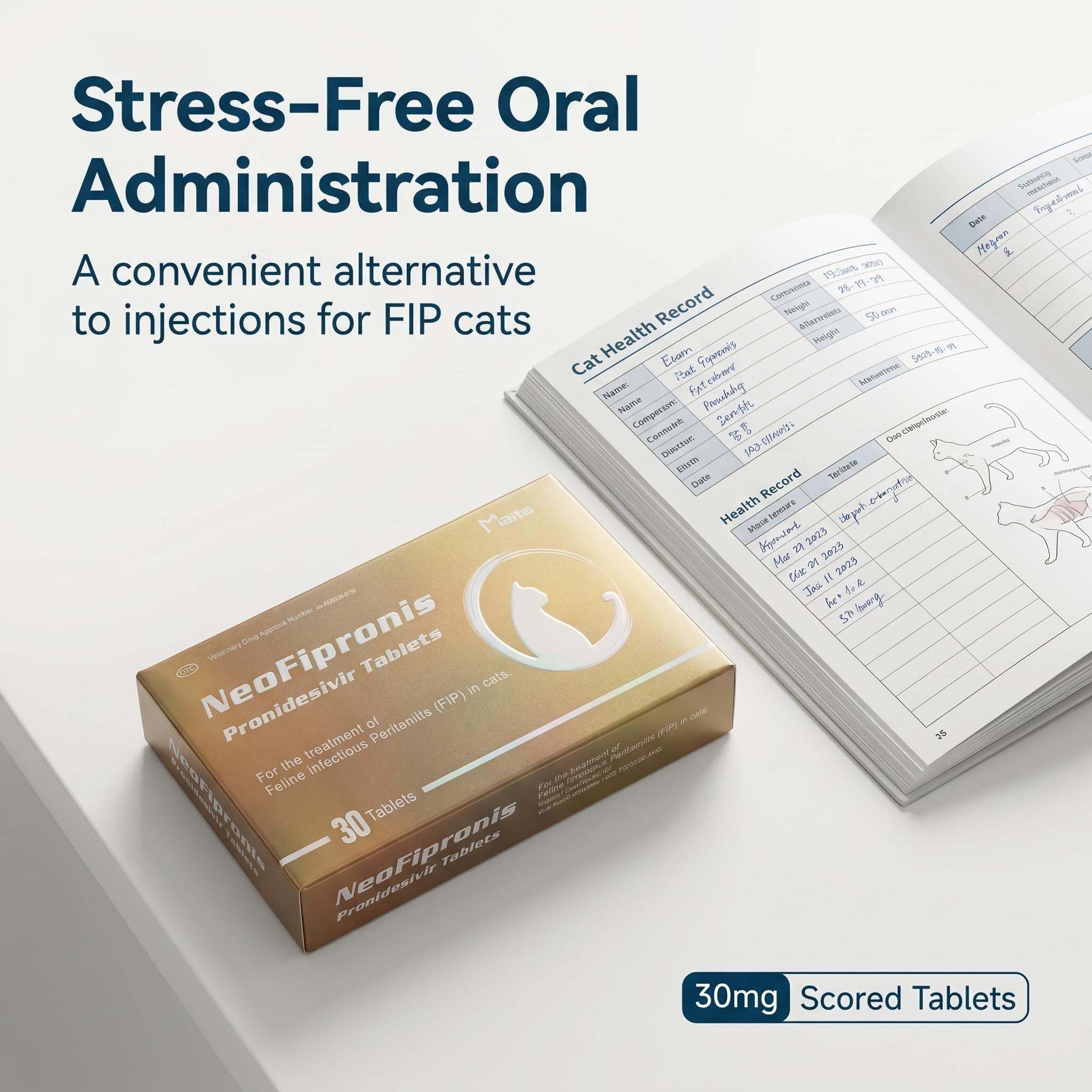
A product description provided by the manufacturer states that Miaite NeoFipronis (Pronidesivir) GS-441524 is suitable for symptoms caused by feline infectious peritonitis (FIP), such as loss of appetite, lethargy, fever, ascites, pleural effusion, lymphadenopathy, inflammatory granulomas, nerve damage, and uveitis. It is described as having excellent therapeutic effects on FIP. The same source states that NeoFipronis (Pronidesivir) is the world’s first officially approved oral treatment for FIP by the Lao Ministry of Agriculture and Forestry (MAF) in March 2026, with an official drug registration number. The product information further describes it as safe, non-invasive, rapidly absorbed, fast-acting, well-tolerated, and associated with few side effects. In clinical practice, any antiviral used for FIP should still be selected with attention to diagnostic confidence, dosing strategy, product quality, and veterinary supervision, because treatment success depends not only on the molecule itself but also on consistent administration and careful follow-up.
Supportive care remains an important part of feline infectious peritonitis treatment, even when antiviral therapy is available. Cats with severe disease may need fluid therapy, nutritional support, antiemetics, appetite stimulants, pain control, or oxygen supplementation depending on the clinical presentation. Effusive disease can require drainage in selected cases, although fluid removal alone does not treat the underlying infection. Cats with ocular involvement may benefit from ophthalmic monitoring and adjunctive therapy prescribed by a veterinarian. Neurologic FIP deserves especially close observation because seizures, ataxia, and paresis can complicate management. Stress reduction, isolation from infectious exposures when appropriate, and stable home routines may also help cats tolerate long treatment courses. Owners should understand that improvement can be gradual and that transient fluctuations do not always mean treatment failure. The most successful outcomes often come from persistence, accurate weight-based dosing, and repeat veterinary evaluation.
Long-term prognosis in FIP has improved dramatically compared with the past, but outcomes still vary based on disease severity, site of involvement, and timing of therapy. Cats treated early, before profound cachexia or irreversible neurologic damage develops, often have the best chance of remission. Relapse can occur if dosing is insufficient, treatment is interrupted, or the disease is exceptionally severe, so post-treatment monitoring remains important. Because FIP is emotionally and financially demanding, communication between veterinarian and owner should be clear, realistic, and evidence-based. The best feline infectious peritonitis treatment plan is individualized, combining antiviral therapy, supportive medicine, laboratory monitoring, and follow-up assessments tailored to the cat’s condition. As research continues, oral antivirals, improved diagnostic tools, and better access to standardized treatment options are likely to further improve survival and quality of life for cats affected by this disease.
References
Pedersen NC. “An update on feline infectious peritonitis: diagnostics and therapeutics.”
Pedersen NC, Liu H, Gandolfi B, et al. “Epidemiology and pathogenesis of feline infectious peritonitis.”
Murphy BG, Perron M, et al. “GS-441524 treatment of feline infectious peritonitis.”
Addie DD, Deving T, et al. “Feline infectious peritonitis: management, diagnosis, and treatment options.”
Kipar A, Meli ML. “Feline infectious peritonitis: still an enigma?”
Zwicklbauer K, Reichel MP, et al. “Clinical use of antiviral therapy in cats with feline infectious peritonitis.”
ते