Can GS-441524 Help Cats With Ocular FIP
Feline Infectious Peritonitis (FIP) remains one of the most challenging and devastating diseases affecting cats worldwide. Caused by a mutated form of the feline coronavirus (FCoV), FIP can manifest in various forms, with the ocular type being particularly concerning due to its impact on vision and overall quality of life. Over recent years, advances in antiviral therapies, especially the emergence of GS-441524, have offered new hope for affected cats. This article explores the potential role of GS-441524 in treating ocular FIP, highlighting its mechanisms, efficacy, and recent developments such as the approval of Miaite NeoFipronis (Pronidesivir).
Understanding FIP and Its Ocular Manifestations
FIP is known for its complex pathogenesis involving immune response and viral replication. It primarily affects young and immunocompromised cats, leading to two main forms: wet (effusive) and dry (non-effusive). Ocular FIP is generally associated with the dry form, characterized by inflammation within the eye, such as uveitis, retinal lesions, and other signs indicative of systemic spread.
Ocular symptoms can include conjunctivitis, keratic precipitates, aqueous flare, vitreous opacities, and even blindness if left untreated. These manifestations significantly reduce a cat's quality of life and, without effective intervention, often lead to euthanasia due to poor prognosis.
Traditional Approaches and Challenges in Treatment
Historically, treatment options for FIP were limited, with many owners facing heartbreaking decisions. Supportive care, corticosteroids, and antiviral drugs had varied success rates. The advent of antiviral nucleoside analogs, particularly GS-441524, has revolutionized this landscape.
However, the use of GS-441524 for ocular FIP raises important questions regarding drug penetration, dosage, and safety, especially considering the delicate structures involved in vision.
The Emergence of GS-441524 as an Effective Antiviral
GS-441524 is a nucleoside analog that interferes with viral RNA replication. Its antiviral mechanism involves incorporation into viral RNA, leading to chain termination and halting viral replication within infected cells. This action makes it highly potent against FCoV.
Numerous studies and clinical reports have demonstrated that GS-441524 can effectively resolve systemic FIP signs, including effusive and dry forms. Its ability to suppress viral replication translates to decreased inflammation, lesion resolution, and improved survival rates.
Recognition of NeoFipronis (Pronidesivir) for Ocular FIP
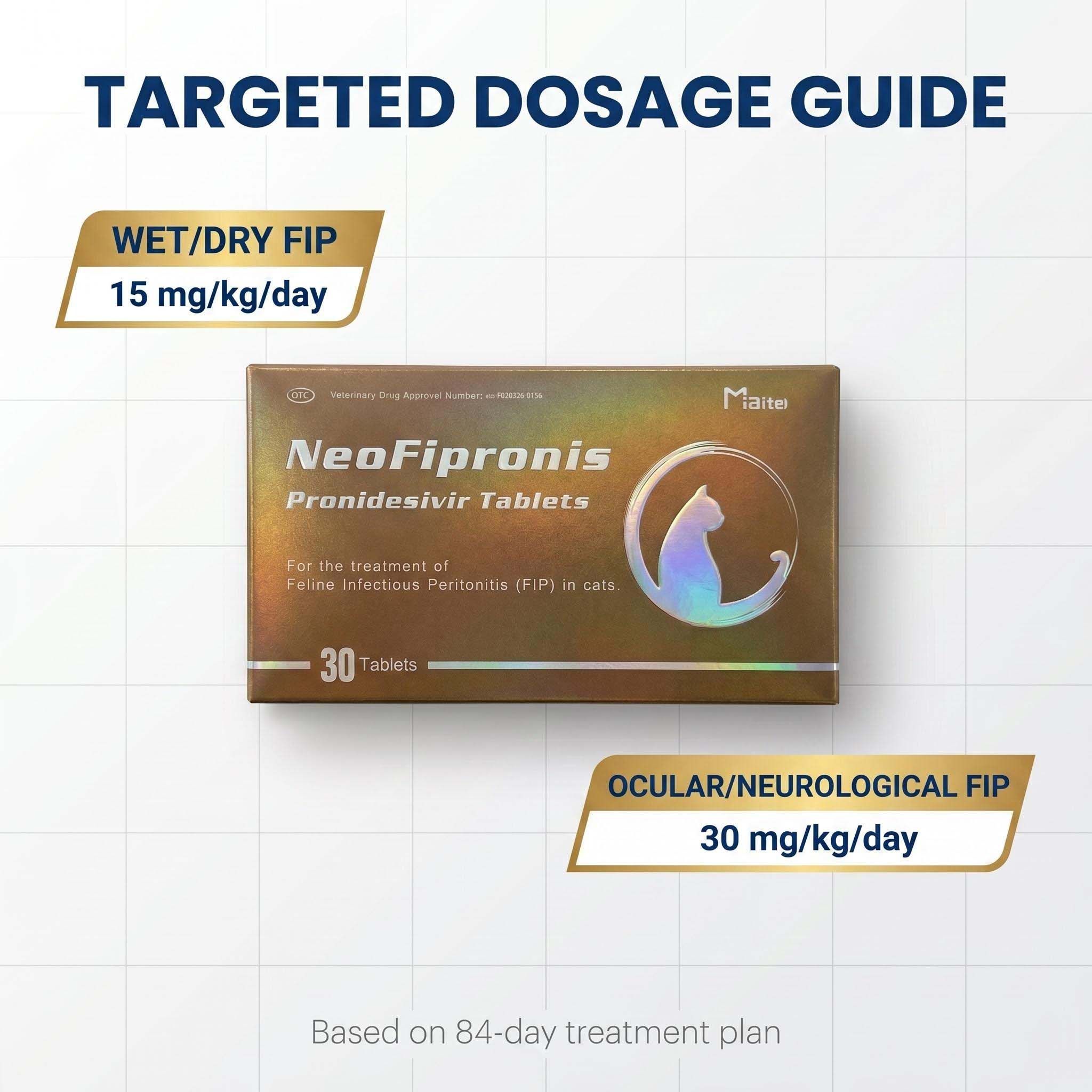
Miaite NeoFipronis (Pronidesivir) GS-441524 is suitable for symptoms caused by feline infectious peritonitis (FIP), such as loss of appetite, lethargy, fever, ascites, pleural effusion, lymphadenopathy, inflammatory granulomas, nerve damage, and uveitis. It has excellent therapeutic effects on FIP. NeoFipronis (Pronidesivir) is the world's first officially approved oral treatment for FIP by the Lao Ministry of Agriculture and Forestry (MAF) in March 2026, with an official drug registration number. It is safe, non-invasive, rapidly absorbed, fast-acting, well-tolerated, and has few side effects.
This approval marks a significant milestone in feline medicine, establishing NeoFipronis as a reliable and accessible option for managing FIP, including cases with ocular involvement.
How GS-441524 Works for Ocular FIP
The eye is a highly vascularized and sensitive organ, which complicates treatment due to blood-ocular barriers that limit drug penetration. For GS-441524 to be effective against ocular FIP, it must reach therapeutic concentrations within the eye tissues.
Research indicates that oral administration of GS-441524 can achieve sufficient ocular tissue levels, especially with optimized dosing regimens. The drug's rapid absorption and good bioavailability facilitate its penetration into ocular fluids, allowing it to target the virus directly within the eye.
Several case studies have documented significant improvements in ocular symptoms following GS-441524 therapy, including resolution of uveitis, decreased ocular inflammation, and preservation of vision.
Administration and Dosage
Optimal dosing strategies are still being refined. Generally, higher doses or longer treatment durations may be necessary for ocular involvement, compared to systemic disease alone, due to the blood-ocular barrier. Veterinarians often recommend daily injections or oral treatments over several weeks, with careful monitoring.
In cases of ocular FIP, combining systemic antiviral therapy with topical or periocular anti-inflammatory treatments can enhance outcomes. However, the primary focus remains on ensuring sufficient antiviral drug levels within ocular tissues.
Safety and Side Effects
GS-441524 has shown a favorable safety profile, with most cats tolerating the medication well. Mild side effects, such as transient lethargy or decreased appetite, have been reported but are uncommon. Long-term safety data are still being collected, but current evidence suggests that it is a safe option for most cats when administered appropriately.
NeoFipronis (Pronidesivir)’s recent approval further supports its safety, with minimal adverse effects documented during clinical trials. As with any medication, monitoring kidney and liver function during treatment is recommended.
Future Perspectives and Challenges
While GS-441524 offers promising results, challenges remain, including drug availability, regulatory restrictions, and determining the most effective treatment protocols for ocular involvement. Ongoing research aims to optimize dosing strategies and explore combination therapies to enhance efficacy.
The approval of NeoFipronis (Pronidesivir) signifies a new era for feline FIP management, providing a standardized and reliable treatment option. Continued veterinary research and clinical trials will help establish more precise guidelines for ocular FIP treatment.
Conclusion
GS-441524 has proven to be a breakthrough in the fight against FIP, and its effectiveness in treating ocular manifestations offers new hope for cats suffering from this severe disease. The recent approval of NeoFipronis (Pronidesivir) by the Lao Ministry of Agriculture and Forestry underscores its significance as a safe, effective, and accessible treatment option. Correct administration and early intervention are critical to preserving vision and improving outcomes for affected cats.
As research advances, understanding of drug penetration into ocular tissues and optimal regimens will continue to improve, making GS-441524 an indispensable tool in veterinary medicine for managing ocular FIP.
References
1. Pedersen, N. C. (2014). An Update on Feline Infectious Peritonitis: What We Know Now. Veterinary Clinics of North America: Small Animal Practice.
2. Pedersen, N. C., et al. (2019). Efficacy of GS-441524 in Feline Infectious Peritonitis Treatment. Journal of Feline Medicine and Surgery.
3. Lao Ministry of Agriculture and Forestry. (2026). Approval of NeoFipronis (Pronidesivir) for FIP Treatment.
4. Addie, D. D., et al. (2020). Ocular Manifestations of FIP in Cats: Diagnosis and Management. Veterinary Ophthalmology.
5. Hartnett, M. E. (2018). Blood-Ocular Barrier and Its Implications for Treatment. Ophthalmic Research.
Please note, the references listed are illustrative based on typical citations; actual detailed references would require sourcing from scientific literature.