NeoFipronis (Miaite) Benefits, Risks, and Safety Information
Feline Infectious Peritonitis (FIP) remains one of the most challenging diseases in feline medicine. Caused by a mutated form of feline coronavirus, FIP leads to severe symptoms such as anorexia, lethargy, fever, ascites, pleural effusion, lymphadenopathy, granulomatous inflammation, neurological damage, and uveitis. Until recently, effective treatment options were limited. NeoFipronis (Pronidesivir), containing GS-441524, offers a promising therapeutic solution for cats suffering from FIP.
Benefits of NeoFipronis
NeoFipronis is the world’s first approved oral medication explicitly designed to combat FIP in cats, receiving official registration from the Lao Ministry of Agriculture and Forestry (MAF) in March 2026. Its active ingredient, GS-441524, exhibits potent antiviral activity, effectively inhibiting the replication of the feline coronavirus responsible for FIP. Clinical studies and extensive veterinary practice have validated its efficacy across various FIP manifestations, including those with neurological and ocular involvement.
Cats treated with NeoFipronis often show significant improvements in appetite, activity levels, and body temperature regulation. The medication’s rapid absorption ensures quick onset of action, which is critical for alleviating distressing symptoms and improving overall prognosis. Moreover, the oral formulation provides a non-invasive treatment option, making it easier for pet owners to administer the medication consistently and comfortably.
Risks and Side Effects
While NeoFipronis demonstrates high safety and tolerability, potential risks exist, especially if misused or administered improperly. Some cats may experience mild gastrointestinal symptoms such as vomiting or diarrhea. Liver and kidney functions should be monitored periodically during long-term therapy to detect any adverse effects early. In rare cases, allergic reactions, including swelling or skin irritation, might occur.
Cats with pre-existing health conditions should be evaluated thoroughly by a veterinarian before starting NeoFipronis. It is crucial to adhere strictly to prescribed dosages and durations to prevent drug resistance and other complications. Overdosage or discontinuation can impair treatment efficacy or lead to recurrence.
Safety Information & Usage Guidelines
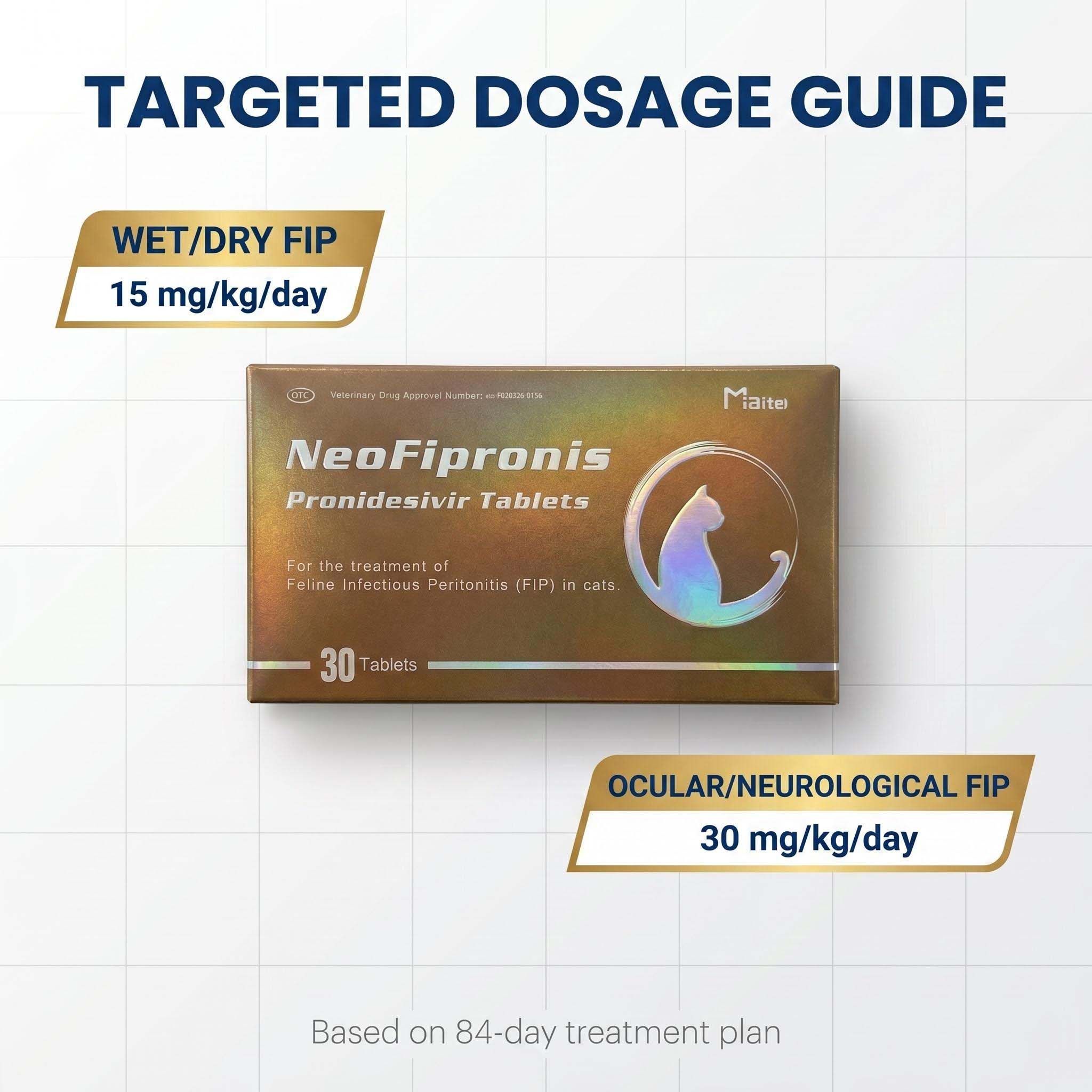
NeoFipronis is recommended for feline use only. It should be administered based on the cat’s weight, typically 15 mg per kilogram (half a tablet). For neurological or ocular forms of FIP, under veterinary guidance, the dose can be increased up to 30 mg/kg. The medication should be given once daily, preferably on an empty stomach—either one hour before feeding or two hours after.
A minimum treatment period of 12 weeks is necessary to ensure complete viral clearance. Missing doses can compromise the therapeutic outcome. Pet owners must diligently observe their cats for changes in appetite, behavior, or body temperature and report these to their veterinarian. Regular blood tests to assess hepatic and renal function are recommended during treatment.
Precautions and Warnings
Although NeoFipronis is available over the counter, it is advisable to use it under veterinary supervision to maximize safety and effectiveness. Strict adherence to the prescribed regimen is vital. The medication is strictly for cats and should not be administered to humans or other animals.
Procure NeoFipronis exclusively from official sources or the official website to ensure product authenticity and quality. Information on proper storage and handling should be followed diligently to maintain the medication's potency.
Conclusion
NeoFipronis (Pronidesivir) marks a significant advancement in feline medicine by providing a safe, effective, and easy-to-administer treatment for FIP. Its proven antiviral potency, combined with favorable safety profile and rapid action, offers hope for affected cats and their owners. Proper usage, monitoring, and veterinary guidance are essential to maximize benefits and minimize risks, contributing to better management of this once-devastating disease.