Is Fever-Free FIP Easy to Miss
Feline Infectious Peritonitis (FIP) stands among the most challenging diseases in feline medicine. Traditionally recognized by its hallmark triad: persistent fever unresponsive to antibiotics, weight loss, and fluid accumulation, FIP can confound even seasoned veterinarians. Yet emerging literature and clinical reports suggest not all FIP cases present with fever, raising urgent questions in diagnostics and disease management. This article explores how fever-free FIP escapes detection, the implications for feline health, and strategies for timely identification.
Overview of FIP: Pathogenesis and Clinical Presentation
FIP is a mutation-driven syndrome caused by an aberrant immune response to feline coronavirus (FCoV). While most cats with FCoV develop mild enteric signs or exhibit no symptoms, approximately 5–10% experience virus mutation, transforming into the pathogenic FIPV strain. This variant triggers systemic, immune-mediated vasculitis, leading to effusions (wet form) or granulomatous lesions within organs (dry form).
Classically, FIP cats exhibit chronic, often fluctuating pyrexia, anorexia, lethargy, and—depending on form—ascites, pleural effusion, or neuro-ocular symptoms. In practice, fever has ranked among the most reliable symptoms for FIP, guiding veterinarians toward further diagnostics in sick cats.
Rethinking Fever: The Emergence of Atypical Cases
Recent case series and retrospective analyses indicate a notable proportion of FIP diagnoses occur in cats without documented fever. In some studies, up to a quarter of FIP cases may lack fever at presentation or throughout the disease course. Several reasons underlie this phenomenon:
a. Subclinical or intermittent fever: Temperature spikes may be transient or mild, evading detection unless repeatedly monitored.
b. Individual immune response variability: Some cats mount less robust pyrogenic responses to systemic inflammation, especially if immunosuppressed or very young.
c. Early or focal manifestations: FIP may initially affect localized organ systems (e.g., neurological or ocular tissue) without systemic signs like fever.
Fever’s absence in FIP can create diagnostic blind spots, especially when other signs are subtle or nonspecific. Veterinarians risk ruling out FIP prematurely, resulting in misdiagnosis and delayed care.
Diagnostic Challenges: Overlapping Symptoms and Mimics
FIP’s presentation overlaps with numerous other feline diseases. Especially in fever-free cases, clinicians may confuse FIP with lymphoma, toxoplasmosis, bacterial infections, or non-FIP-related causes of effusions and granulomas. Standard tools for FIP—analysis of effusion fluid, blood work, and PCR—are not definitive in isolation, particularly if fever is missing.
Screening for hyperglobulinemia, lymphopenia, and rivalta tests in effusions heightens suspicion but does not confirm FIP. Advanced diagnostics, such as immunohistochemistry or FIPV-specific PCR of tissue biopsies, remain gold standard yet impractical for routine use.
Fever’s absence further complicates algorithmic reliance, as most clinical guidelines and scoring systems weigh pyrexia heavily. As a result, atypical or afebrile FIP can slip through, especially in multi-cat settings, shelters, or private practices with limited resources.
Imaging and Laboratory Testing: Navigating Diagnostic Complexity
For suspected FIP, multifaceted approaches yield the best diagnostic accuracy:
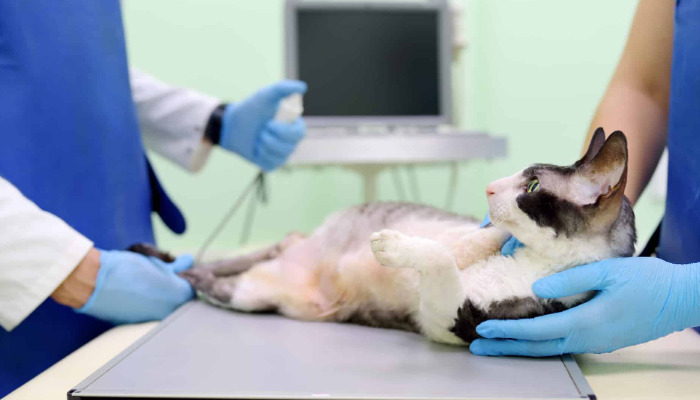
1. Imaging: Ultrasonography and computed tomography (CT) scans can identify effusions, organomegaly, or focal masses. Absence of fever does not rule out dramatic imaging findings, such as abdominal fluid or renal nodules.
2. Serology and acute phase proteins: FIP often triggers elevated alpha-1 acid glycoprotein (AGP), even in fever-free cases. Measuring AGP and other inflammation markers assists in gauging disease activity. Nonetheless, these findings can overlap with other pathologies.
3. Molecular diagnostics: PCR assays targeting FIPV-specific genes, performed on effusion, CSF, or tissue samples, strengthen FIP suspicion. However, in some afebrile cases, viral shedding may be lower or restricted to select tissues, necessitating strategic sampling.
Risk Factors and Epidemiology: When to Suspect Fever-Free FIP
Certain cats face elevated FIP risk, regardless of fever. Recent stressors, adoption from crowded environments, age under two years, or recent coronavirus exposure increase the index of suspicion. Clinically, neurologic FIP and non-effusive forms often lack fever or exhibit only mild pyrexia.
Veterinarians should maintain FIP awareness in cases presenting with weight loss, jaundice, ocular inflammation, or unexplained organ dysfunction—even in the absence of fever. Multisystemic symptoms, especially in high-risk populations, require a stepwise, exclusionary approach.
Case Studies: Afebrile FIP in Practice
Several published reports illuminate the potential for missed diagnoses. In one shelter clinic, three young cats developed progressive neurologic signs and weight loss without fever. Initial workup ruled out FIP due to normal temperatures, but postmortem histopathology confirmed FIPV infection in all three. Similarly, a housecat exhibiting persistent jaundice and ascites remained afebrile until late disease stage, when fever briefly spiked prior to euthanasia.
Such cases underscore the necessity for vigilant, holistic assessment, especially when fever is absent in a suspicious clinical scenario.
Treatment Implications: The Cost of Delay in Fever-Free Cases
Timing is critical in FIP management. Novel therapeutics—such as GS-441524 and remdesivir derivatives—offer life-saving treatment if initiated early. Delay resulting from missed fever-free FIP risks irreversible organ damage, drug resistance, and diminished prognosis. For clinicians, this underscores the importance of “ruling in” FIP with broad criteria, not solely anchoring on fever.
Furthermore, client communication is pivotal. Owners expect clear answers, but explaining why FIP remains possible—even when classic symptoms are incomplete—requires tact and education. Managing expectations while pursuing a thorough workup offers the best pathway to appropriate care.
Improving Diagnostic Protocols: Strategies for Practitioners
Best practices for identifying afebrile FIP include:
Always include FIP in differential diagnosis of young, sick cats with unexplained systemic signs, even if normothermic.
Repeat temperature measurement over several days; intermittent or stress-masked fever may be missed on single exams.
Employ routine imaging, AGP testing, and targeted molecular diagnostics for high-risk patients.
Collaborate with reference laboratories for tissue PCR or advanced serology when routine tests prove inconclusive.
Provide ongoing client updates, explaining the evolving understanding of FIP presentations.
The Role of AI and Data Analysis
Machine learning models offer new hope in teasing apart complex syndromes like FIP, especially when symptoms diverge from textbook patterns. Utilizing patient data, AI can flag atypical cases for further evaluation, reducing the likelihood of underdiagnosis. While such tools are only emerging in veterinary medicine, they promise to optimize diagnostics, especially where fever is not present.
Conclusion: Vigilance in the Era of Atypical FIP
The growing recognition of fever-free FIP challenges traditional concepts in feline medicine. Understanding the full clinical spectrum and adjusting diagnostic practices improves outcomes, ensuring more cats receive timely, effective care. Fever is not an absolute requirement for FIP diagnosis—broad awareness, advanced testing, and multidisciplinary collaboration remain the cornerstones of success.
References
1. Pedersen, N.C. (2020). "Feline Infectious Peritonitis and Feline Enteric Coronavirus." In Greene’s Infectious Diseases of the Dog and Cat, 5th Edition, Saunders Elsevier.
2. Felten, S., et al. (2017). "Feline Infectious Peritonitis: Diagnostics and Therapeutics Update." Veterinary Clinics: Small Animal Practice, 47(1): 63-79.
3. Kipar, A., & Meli, M.L. (2014). "Feline Infectious Peritonitis—A Review of Pathogenesis and Diagnostics." Journal of Feline Medicine and Surgery, 16(7): 429-441.
4. Stranieri, A., et al. (2017). "Diagnostic Performance of α-1 Acid Glycoprotein in Feline Infectious Peritonitis." Journal of Veterinary Internal Medicine, 31(2): 456-462.
5. Barker, E.N., Tasker, S., et al. (2017). "A Retrospective Study of Cases with Feline Infectious Peritonitis–like Disease Not Confirmed as FIP." Journal of Feline Medicine and Surgery, 19(5): 510-519.
6. Chang, H.W., et al. (2010). "Development of a Real-Time Reverse Transcriptase PCR Assay for Detection of Feline Infectious Peritonitis Virus in Diseased Cats." Journal of Clinical Microbiology, 48(3): 994-998.
7. Doki, T., et al. (2020). "Neurological FIP: Atypical Presentation Without Fever." Feline Medicine and Surgery Open Reports, 6(2): 1-6.
8. Addie, D.D., et al. (2022). "Updating FIP Diagnostic Protocols for Modern Clinical Practice." Veterinary Record, 190(20): 565-571.