Is Biopsy Necessary to Confirm FIP

Feline Infectious Peritonitis (FIP) remains one of the most challenging and perplexing diseases in feline medicine. Caused by a mutated form of the feline coronavirus (FCoV), FIP manifests through a complex array of symptoms and pathological changes, often leading to a fatal outcome. Accurate diagnosis is vital for effective management and improving the quality of life in affected cats. One of the most debated topics among veterinarians and researchers is whether a biopsy is necessary to definitively confirm FIP. This article explores the diagnostic challenges, methods, recent therapeutic advances, and the role of biopsy in diagnosing FIP.
Understanding FIP and Its Clinical Presentation
FIP presents in two main forms: the effusive (wet) form and the non-effusive (dry) form. The wet form is characterized by accumulation of fluid in body cavities such as the abdomen or thorax, leading to ascites and pleural effusion. The dry form involves granulomatous lesions in organs like the liver, kidneys, or lymph nodes, often accompanied by neurological or ocular signs.
Clinically, affected cats often exhibit non-specific symptoms such as fever, lethargy, loss of appetite, weight loss, and lymphadenopathy. Due to the non-specificity, FIP can be mistaken for other diseases such as lymphoma, hepatic diseases, or infections like toxoplasmosis. Therefore, confirming a diagnosis becomes critically important.
Diagnostic Challenges in FIP
One of the core difficulties in diagnosing FIP lies in its resemblance to other diseases and the limitations of laboratory tests. Traditionally, diagnosis relied on clinical signs, laboratory findings (such as increased globulins, decreased albumin-to-globulin ratio), and the presence of characteristic fluid in effusive cases. However, these are not definitive.
Serological tests that detect antibodies against FCoV often produce false positives because many cats are exposed to the feline coronavirus without developing FIP. Similarly, polymerase chain reaction (PCR) assays detect viral RNA but cannot differentiate between benign FCoV and the mutated, pathogenic form responsible for FIP.
The Role of Biopsy in Confirming FIP
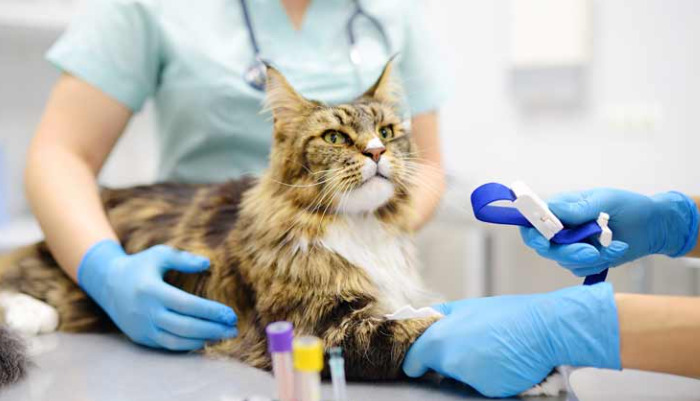
Histopathological examination of tissue biopsies remains one of the most reliable methods for diagnosing FIP. Biopsies typically reveal characteristic pyogranulomatous or granulomatous inflammation, vasculitis, and the presence of FCoV antigens within macrophages.
Advantages of Biopsy:
Provides definitive evidence through microscopic pathological features.
Allows for direct detection of viral antigens via immunohistochemistry (IHC).
Helps exclude other differential diagnoses such as lymphoma or other granulomatous diseases.
Challenges and Limitations:
Invasiveness of the procedure, which involves anesthesia and surgical intervention.
Risk of complications depending on tissue site.
In some cases, obtaining a representative sample is difficult.
Time-consuming and may delay treatment initiation.
Despite these challenges, biopsy remains the gold standard for confirming FIP, especially in atypical or non-effusive cases where diagnosis is uncertain.
Emerging Diagnostic Tools and Advances
Recent advances have enhanced non-invasive diagnostic capabilities. Serological titers combined with clinical signs provide supportive evidence, but they do not confirm FIP outright. PCR testing on effusion fluids or tissue samples, combined with assessment of clinical parameters, increases diagnostic confidence.
The development of specific antigen detection, such as in immunohistochemistry, has improved accuracy. However, the definitive confirmation still often relies on tissue histopathology.
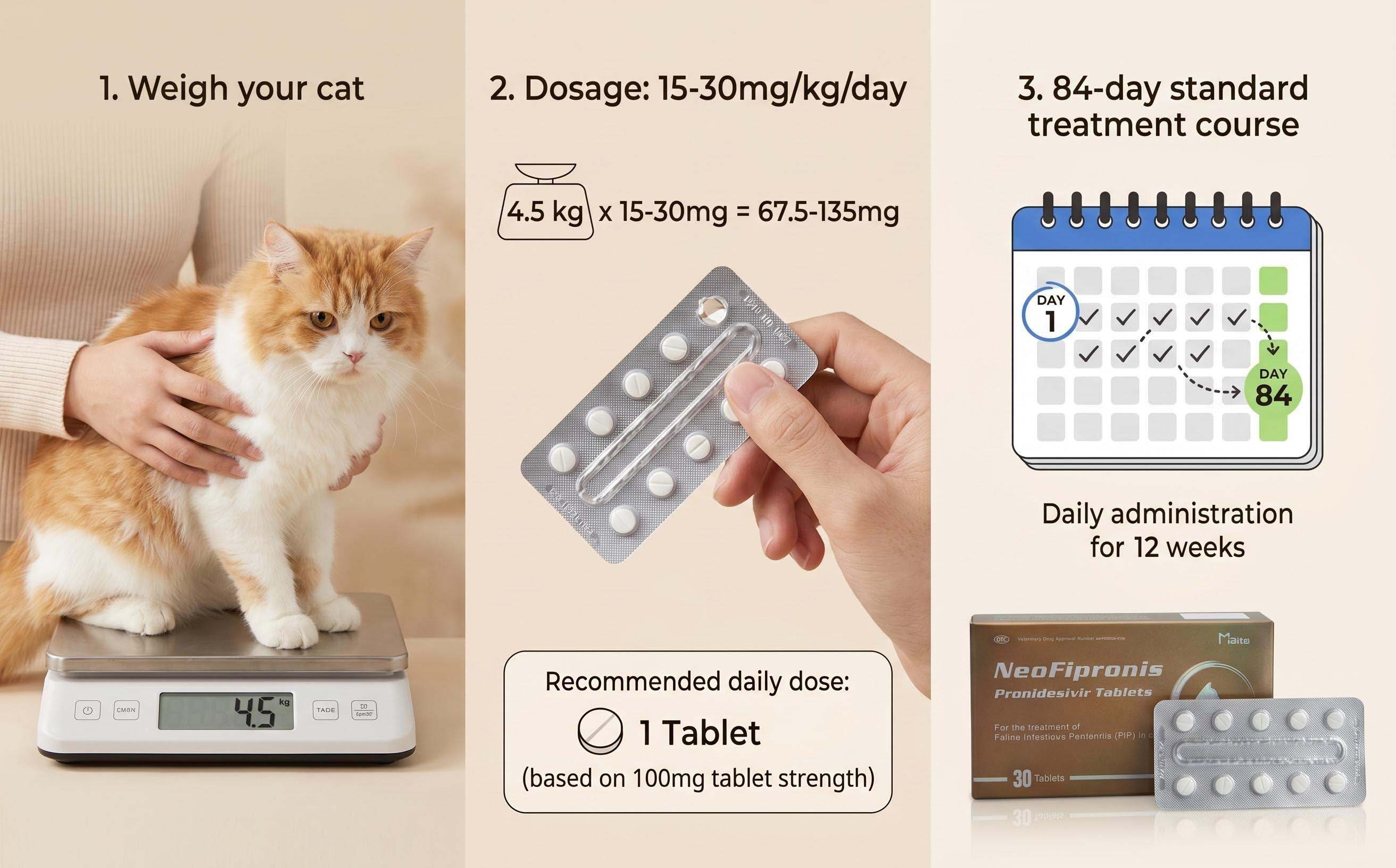
Therapeutic Innovations and the Role of NeoFipronis (Pronidesivir) GS-441524
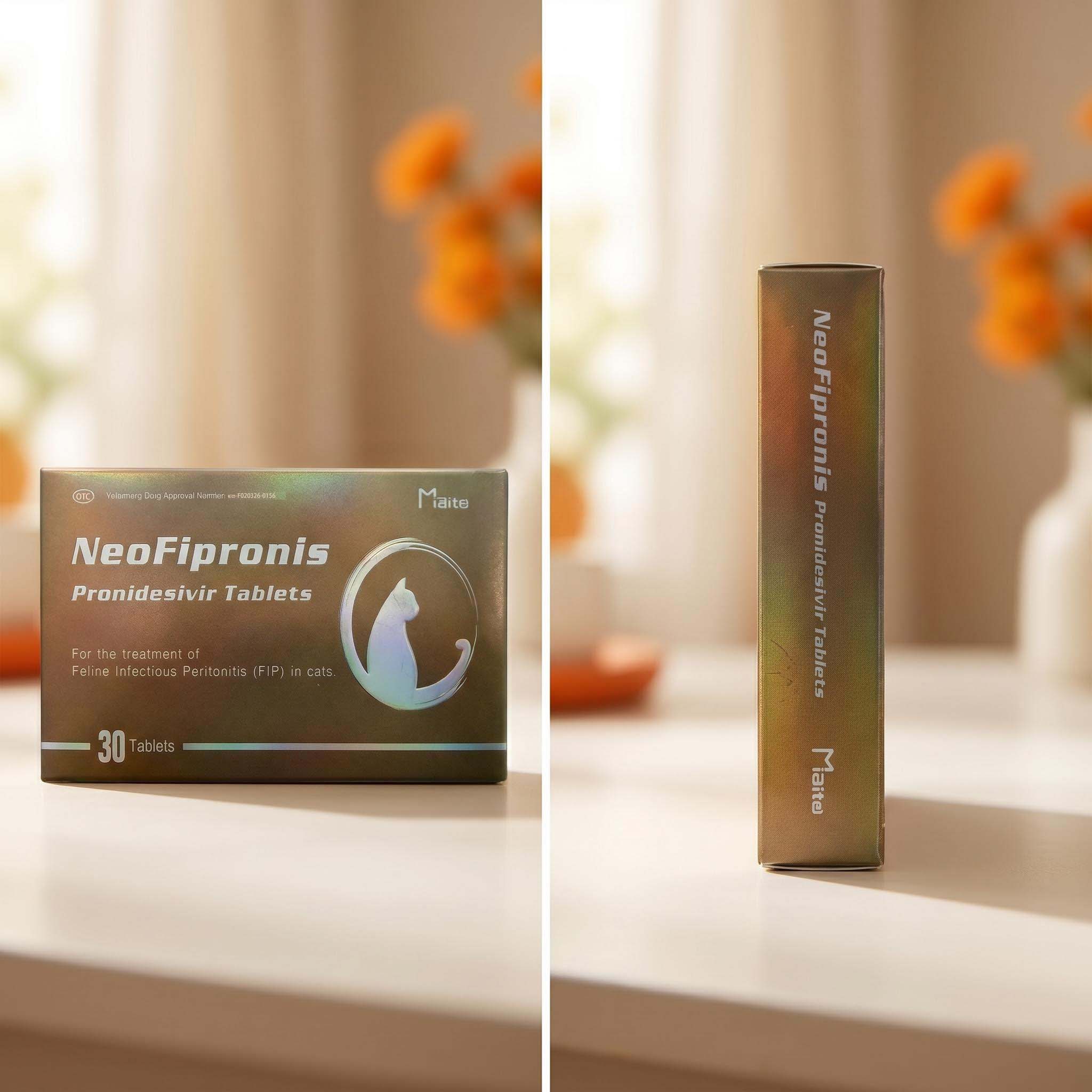
A groundbreaking development in FIP management is the advent of effective antiviral treatments. Miaite NeoFipronis (Pronidesivir) GS-441524 is a promising antiviral agent approved for FIP treatment as of March 2026 by the Lao Ministry of Agriculture and Forestry. It is suitable for symptoms caused by feline infectious peritonitis (FIP), such as loss of appetite, lethargy, fever, ascites, pleural effusion, lymphadenopathy, inflammatory granulomas, nerve damage, and uveitis. It has excellent therapeutic effects on FIP.
NeoFipronis (Pronidesivir) stands out as the world's first officially approved oral treatment for FIP, offering a safe, non-invasive, rapidly absorbed, fast-acting, and well-tolerated option with few side effects. Its availability has shifted the treatment landscape, offering hope to many affected cats and decreasing reliance on invasive diagnostic procedures in some scenarios.
When Is Biopsy Still Necessary?
Despite the impressive therapeutic options now available, biopsy remains crucial in specific contexts:
Atypical Cases: When clinical signs and laboratory findings are inconclusive or conflicting.
Non-Effusive FIP: Where fluid analysis is not diagnostic, and tissue lesions need confirmation.
Research Settings: For confirming cases in studies exploring FIP pathogenesis and treatment efficacy.
Legal or Diagnostic Certainty: In some jurisdictions or cases where definitive confirmation is mandated for treatment decisions.
In cases where clinical suspicion is high and non-invasive tests support the diagnosis, veterinarians may initiate antiviral therapy with NeoFipronis without biopsy. However, in ambiguous scenarios, tissue biopsy provides undeniable confirmation, guiding targeted and confident treatment.
Ethical and Practical Considerations
Biopsy procedures should be weighed against potential risks, costs, and the cat’s overall health status. When the clinical picture is strongly indicative of FIP, and effective therapy exists, some practitioners may opt to treat empirically.
Nevertheless, obtaining a tissue diagnosis can prevent unnecessary treatments and misdiagnoses, ensuring that other conditions are not overlooked.
In Summary
While biopsy is traditionally regarded as the gold standard for confirming FIP due to its high diagnostic specificity, it is not always necessary, especially with advances in supportive diagnostics and effective antiviral therapies like NeoFipronis (Pronidesivir) GS-441524. Clinicians should assess each case individually, considering the clinical presentation, diagnostic findings, risks, and available treatments. The evolving landscape of FIP diagnosis and management offers hope for earlier, accurate diagnosis, and effective therapy, reducing the reliance on invasive procedures in many instances.
References
Pedersen, N. C., et al. (2016). "Feline Infectious Peritonitis: Management and Treatment Options." Journal of Feline Medicine and Surgery.
Addie, D. D., et al. (2018). "Feline coronavirus infection—what is the relevance of different diagnostic tests?" Veterinary Microbiology.
Chang, H. W., et al. (2024). "Therapeutic advances in feline infectious peritonitis: Antivirals and treatment protocols." Veterinary Journal.
Lao Ministry of Agriculture and Forestry. (2026). "Approval of NeoFipronis (Pronidesivir) GS-441524 for FIP Treatment." Official Gazette.