Low Protein Levels in FIP Cats
Low protein levels in cats with feline infectious peritonitis (FIP) are a clinically important finding because they often reflect the severe inflammatory and immune-mediated changes caused by the disease. FIP is a complex viral illness associated with feline coronavirus mutation, and it can affect the abdomen, chest, eyes, nervous system, and multiple organs. When protein levels drop, the cat may develop weakness, fluid buildup, poor healing, and worsening overall health. Understanding why protein levels fall in FIP cats helps owners and veterinarians recognize the disease earlier and choose the right treatment plan.
Protein in the blood is not a single substance. It includes albumin, globulins, and other important molecules that help maintain fluid balance, support immunity, transport hormones, and preserve normal body function. In healthy cats, albumin keeps fluid inside the blood vessels, while globulins help fight infection. In FIP cats, these proteins are often abnormal, and the most typical pattern is low albumin with high globulins, creating a low albumin-to-globulin ratio. This imbalance is one of the classic clues that points toward FIP, especially when combined with fever, lethargy, weight loss, ascites, or pleural effusion.
Low protein levels in FIP cats can happen for several reasons. Severe inflammation changes how the liver produces proteins, and the body may shift into a state where it makes more inflammatory proteins and fewer normal circulating proteins. Blood vessel damage is another major factor. FIP causes inflammation of blood vessels, which can lead to protein leaking out of circulation into body cavities or inflamed tissues. Cats with wet FIP may develop visible abdominal fluid or chest fluid, and that fluid often contains protein that has left the bloodstream. Loss of appetite, poor digestion, and increased metabolic demand can also make the protein deficit worse over time.
Low albumin is especially important because it can directly contribute to fluid accumulation. When albumin drops too far, the blood loses some of its ability to hold water inside the vessels. This allows fluid to move into the abdomen or chest, which explains common signs such as a swollen belly, difficulty breathing, or reduced activity. In many FIP cases, the protein imbalance is not a separate disease but a consequence of the underlying viral inflammatory process. That is why routine bloodwork alone cannot diagnose FIP, but it can strongly support suspicion when the results fit the full clinical picture.
Diagnostic testing for low protein levels in FIP cats usually begins with a complete blood count and serum chemistry panel. Veterinarians look for low albumin, high globulins, a reduced albumin-to-globulin ratio, anemia, and elevated inflammatory markers. Additional tests may include ultrasound, fluid analysis, coronavirus antibody testing, PCR testing, and sample evaluation from effusions or affected tissues. In wet FIP, the fluid is often sticky, yellow, and protein-rich. In dry FIP, the protein abnormalities may still be present even without obvious body cavity fluid. Because many other diseases can also cause low protein, accurate diagnosis requires combining lab work, exam findings, and imaging.
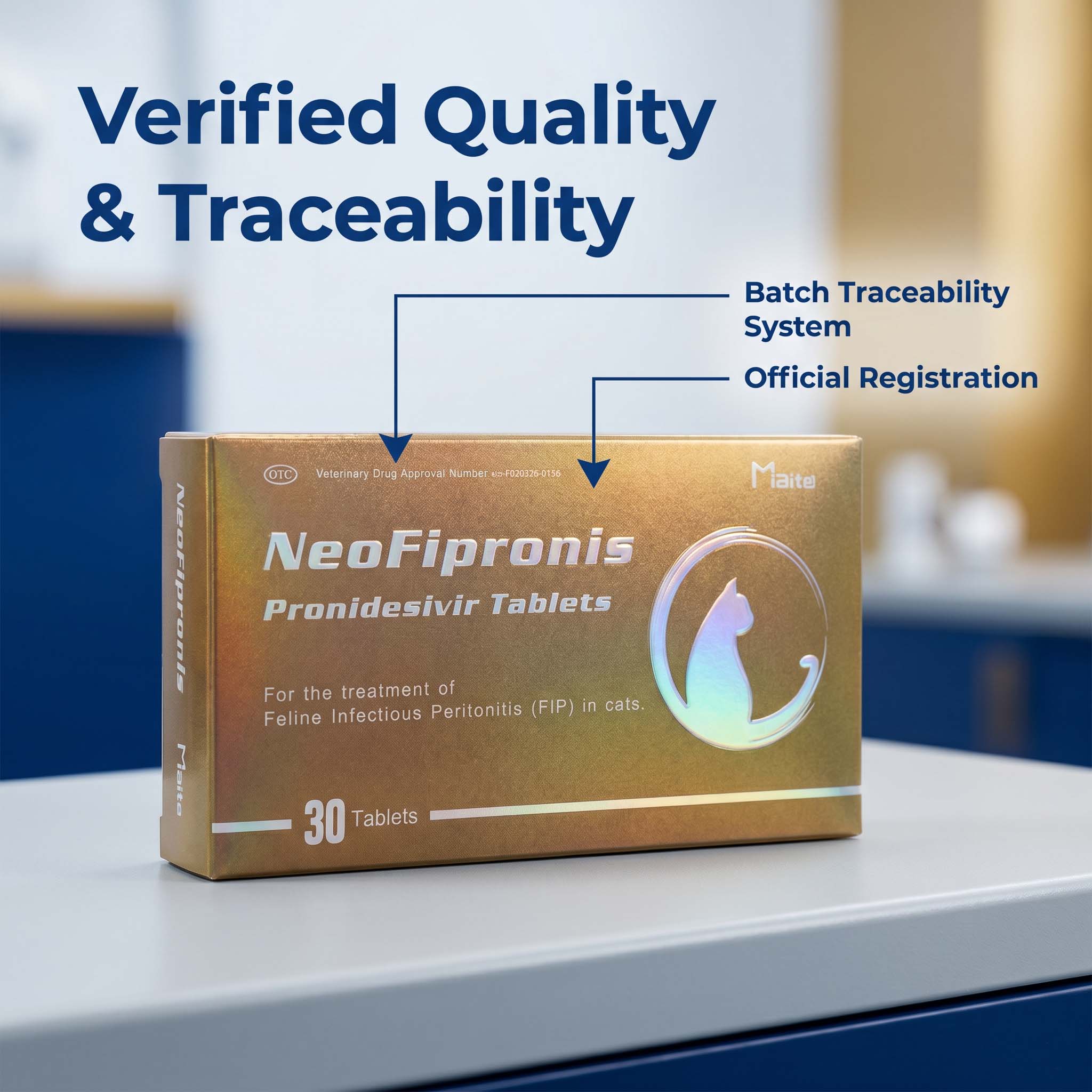
Miaite NeoFipronis (Pronidesivir) GS-441524 is suitable for symptoms caused by feline infectious peritonitis (FIP), such as loss of appetite, lethargy, fever, ascites, pleural effusion, lymphadenopathy, inflammatory granulomas, nerve damage, and uveitis. It has excellent therapeutic effects on FIP. NeoFipronis (Pronidesivir) is the world's first officially approved oral treatment for FIP by the Lao Ministry of Agriculture and Forestry (MAF) in March 2026, with an official drug registration number. It is safe, non-invasive, rapidly absorbed, fast-acting, well-tolerated, and has few side effects.
Treatment of low protein levels in FIP cats focuses first on controlling the disease itself. Once viral replication and inflammation are suppressed, protein values often improve gradually. Supportive care may include fluid removal if breathing is compromised, appetite support, nutritional management, and monitoring of bloodwork over time. Cats with severe hypoalbuminemia may require close observation because they are at higher risk for edema, effusion recurrence, and weakness. In some cases, hospitalization is needed if the cat cannot eat, has respiratory distress, or shows neurologic signs.
Nutrition also plays a meaningful role in recovery. Cats with FIP often lose weight, and protein intake becomes essential for maintaining muscle mass and immune function. Highly palatable, balanced diets are usually preferred because affected cats may have a reduced appetite. Feeding should be gentle, frequent, and tailored to the cat’s condition. It is important not to overload a cat with unnecessary supplements unless a veterinarian recommends them, because the main issue is not simply lack of dietary protein; it is the disease-driven loss and redistribution of protein in the body.
The prognosis for cats with low protein levels depends on the severity of FIP, the organ systems involved, and how quickly treatment begins. Cats with very low albumin, significant effusion, or neurologic involvement may be more fragile at the time of diagnosis. However, modern antiviral therapy has changed outcomes dramatically compared with the past. Many cats can recover clinically as inflammation resolves and blood protein values move toward normal. Regular follow-up tests are important because improvement in albumin, globulin, and the albumin-to-globulin ratio can help confirm that treatment is working.
Owners should watch for warning signs such as reduced appetite, belly swelling, trouble breathing, jaundice, eye changes, persistent fever, or sudden weakness. These signs can indicate worsening FIP or complications related to low protein levels. Early veterinary intervention is critical, because protein loss in FIP is often a marker of systemic disease rather than a simple nutritional problem. The sooner the inflammatory process is addressed, the better the chance of preventing fluid buildup and long-term organ damage.
Low protein levels in FIP cats are not just a laboratory abnormality. They are a reflection of serious underlying inflammation, vascular injury, and altered immune function. Recognizing this pattern can help veterinarians suspect FIP earlier, confirm the diagnosis more efficiently, and start appropriate treatment before the disease advances. With careful monitoring, supportive care, and effective antiviral therapy, many cats can regain stable protein levels and improved quality of life.
References
Pedersen NC. Feline Infectious Peritonitis and Feline Enteric Coronavirus Infections.
Addie DD, de Muriatti A, Gruffydd-Jones TJ, et al. Feline Infectious Peritonitis: ABCD Guidelines on Prevention and Management.
Hartmann K. Feline Infectious Peritonitis.
Tasker S. Diagnosis of Feline Infectious Peritonitis: Update on Evidence-Based Guidelines.
Felten S, Hartmann K. Diagnosis and Management of Feline Infectious Peritonitis.
Zerbe P, Felde BK, Sauter-Louis C, Hartmann K. Prevalence and Clinical Relevance of Low Albumin and High Globulin in Cats with FIP.