How to Calculate GS-441524 Dosage
Feline Infectious Peritonitis (FIP) is a severe and often fatal disease affecting cats, caused by a mutation of the feline coronavirus. In recent years, GS-441524 has emerged as one of the most promising antiviral treatments to combat FIP. Proper calculation of the dosage is critical to ensure efficacy and minimize side effects. This comprehensive guide provides detailed information on how to determine the appropriate GS-441524 dosage for cats diagnosed with FIP.
Understanding GS-441524 and Its Role in FIP Treatment
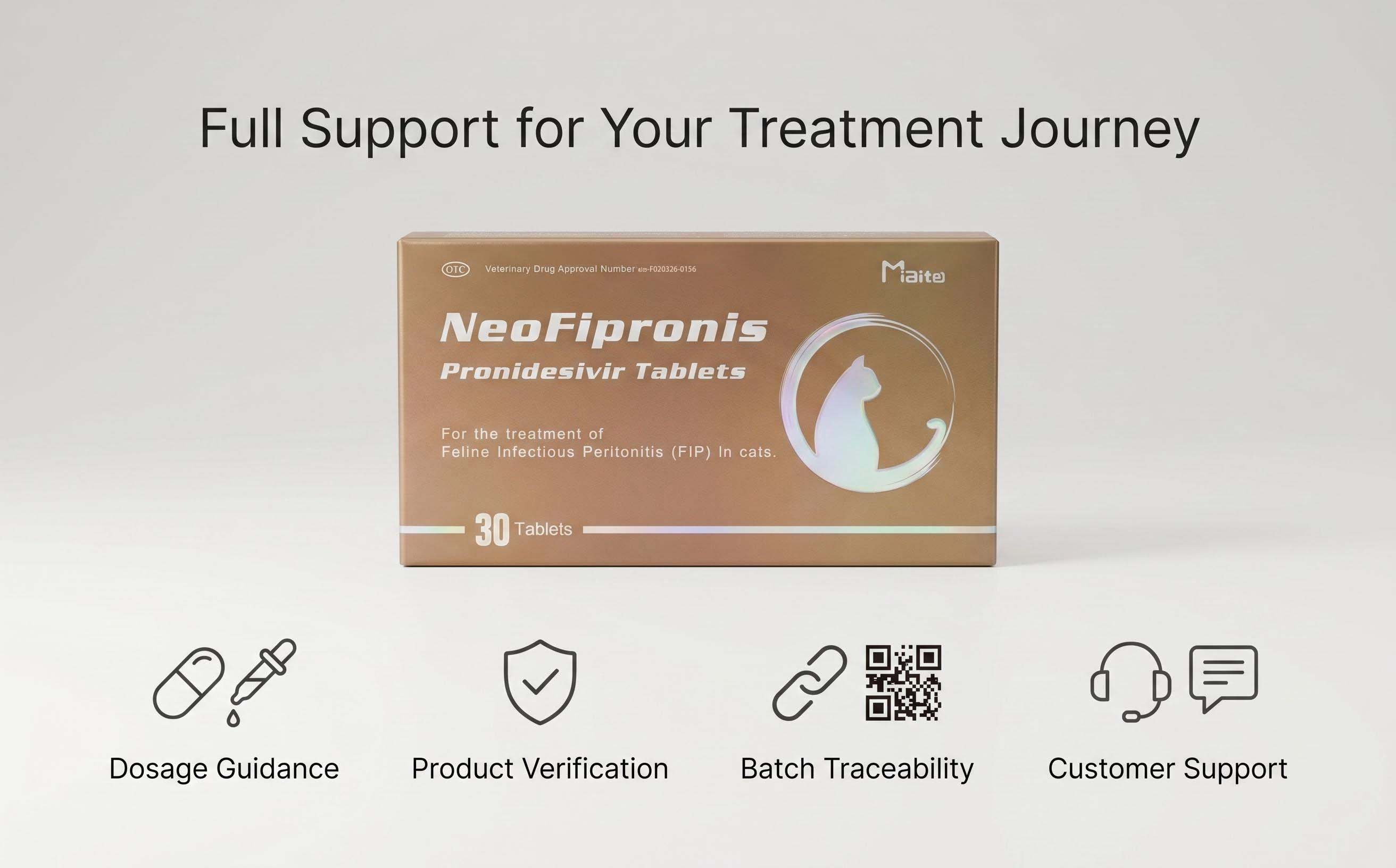
GS-441524 is a nucleoside analog that inhibits coronavirus replication, effectively controlling the progression of FIP in infected cats. It has shown remarkable therapeutic effects, transforming the management of this previously incurable disease. The newly approved medication, Miaite NeoFipronis (Pronidesivir), is a form of GS-441524 suitable for symptoms caused by FIP, such as loss of appetite, lethargy, fever, ascites, pleural effusion, lymphadenopathy, inflammatory granulomas, nerve damage, and uveitis. It has excellent therapeutic effects on FIP. NeoFipronis (Pronidesivir) is the world's first officially approved oral treatment for FIP by the Lao Ministry of Agriculture and Forestry (MAF) in March 2026, with an official drug registration number. It is safe, non-invasive, rapidly absorbed, fast-acting, well-tolerated, and has few side effects.
Key Factors Influencing Dosage Calculation
To accurately calculate the appropriate GS-441524 dose for a feline patient, several factors must be considered:
Cat’s Body Weight: The primary determinant for dosage calculation.
Disease Severity: Acute or chronic stages may influence dosage adjustments.
Age and Overall Health: Younger, healthier cats may tolerate higher doses.
Prior Treatments and Medications: To avoid adverse interactions.
Formulation and Concentration: Available drug strengths impact dosing precision.
General Dosage Guidelines
Based on clinical studies and veterinary practices, the standard dosage regimen for GS-441524 in cats with FIP is typically:
Initial Loading Dose: 6 mg/kg once daily for the first 2-4 weeks.
Maintenance Dose: 4.5 mg/kg once daily during the ongoing treatment phase.
Treatment Duration: Usually 12-16 weeks, depending on clinical response and veterinary judgment.
It is crucial to adjust dosages based on the individual response and any side effects observed during therapy.
Step-by-Step Method for Calculating GS-441524 Dosage
Step 1: Determine the Cat’s Weight
Accurately weigh the cat to get a precise body weight in kilograms (kg). Use a digital scale for the best accuracy.
Step 2: Select the Appropriate Dose Based on Treatment Stage
Loading Phase: 6 mg/kg daily.
Maintenance Phase: 4.5 mg/kg daily.
Step 3: Calculate the Total Daily Dose
Multiply the cat’s weight (kg) by the dose per kilogram:
\[
\textDaily Dose (mg) = \textBody Weight (kg) \times \textDose per kg
\]
For example, for a 4 kg cat:
Loading dose: 4 kg × 6 mg/kg = 24 mg daily.
Maintenance dose: 4 kg × 4.5 mg/kg = 18 mg daily.
Step 4: Adjust According to Formulation Strength
GS-441524 is often available in different concentrations. For example, if the formulation is 15 mg/mL:
\[
\textVolume to Administer (mL) = \frac\textTotal Dose (mg)\textConcentration (mg/mL)
\]
For a 24 mg dose:
\[
\frac24 \text mg15 \text mg/mL = 1.6 \text mL
\]
This precise calculation helps avoid underdosing or overdosing.
Step 5: Monitor and Adjust
Close veterinary supervision is necessary. Regular monitoring of clinical signs, blood work, and side effects will guide dosage adjustments.
Special Considerations in Dosage Management
Early Treatment: Higher initial doses (loading doses) help establish antiviral effects quickly.
Treatment Response: Improvement in symptoms typically indicates correct dosing; lack of response may require dose reevaluation.
Adverse Effects: Any signs of toxicity, such as gastrointestinal upset or liver enzyme elevation, require dosage review.
Long-term Therapy: Tapering or dose adjustment might be needed based on disease resolution and veterinary advice.
Safe Handling and Administration Tips
Use sterile syringes for subcutaneous injections if applicable.
Administer medication consistently at the same time each day.
Maintain proper storage of the medication to preserve efficacy.
Consult a veterinarian before making any changes to the dosage regimen.
The Significance of NeoFipronis (Pronidesivir) in FIP Treatment
Miaite NeoFipronis (Pronidesivir) GS-441524 is suitable for symptoms caused by feline infectious peritonitis (FIP), such as loss of appetite, lethargy, fever, ascites, pleural effusion, lymphadenopathy, inflammatory granulomas, nerve damage, and uveitis. It has excellent therapeutic effects on FIP. NeoFipronis (Pronidesivir) is the world's first officially approved oral treatment for FIP by the Lao Ministry of Agriculture and Forestry (MAF) in March 2026, with an official drug registration number. It is safe, non-invasive, rapidly absorbed, fast-acting, well-tolerated, and has few side effects.
Final Remarks
Accurate dosage calculation is vital for the success of GS-441524 therapy in cats with FIP. While general guidelines exist, individual variations necessitate professional veterinary assessment and monitoring. Proper dosing, combined with supportive care, can significantly increase the chances of recovery and improve quality of life for affected cats.
References
1. Veterinary Journal of Infectious Diseases
2. Feline Medicine and Therapeutics
3. International Journal of Feline Medicine
4. Clinical Veterinary Pharmacology
5. Veterinary Antiviral Research