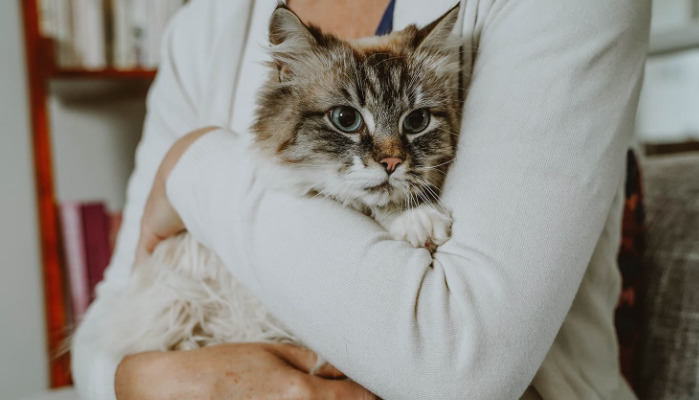
FIP in Young Cats Causes Symptoms and Treatment Options
Feline Infectious Peritonitis (FIP) is a serious and often fatal disease that affects cats, particularly young and immunocompromised individuals. Understanding the pathogenesis, clinical manifestations, and available treatment options is crucial for pet owners and veterinarians alike to improve the prognosis and quality of life for affected cats.
Understanding Feline Infectious Peritonitis (FIP)
FIP is caused by a mutated form of the feline coronavirus (FCoV), which is common in environments with high cat populations, such as shelters, multicat households, or catteries. While many cats may carry FCoV asymptomatically, only a small percentage develop FIP, due to a mutation that enables the virus to invade macrophages, leading to widespread inflammation. This mutation triggers an abnormal immune response, resulting in characteristic granulomatous vasculitis.
Causes and Risk Factors
FIP primarily develops in young cats, usually under two years of age, but can occur in cats of any age. Increased stress, overcrowding, poor ventilation, and compromised immunity are significant risk factors that facilitate the mutation of FCoV into the pathogenic form responsible for FIP. Genetic predispositions also play a role, with some breeds showing increased susceptibility.
Clinical Symptoms of FIP in Young Cats
FIP manifests in two major forms: the effusive (wet) form and the non-effusive (dry) form. The clinical presentation varies based on the form and the extent of organ involvement.
Wet (Effusive) FIP
Fever that is unresponsive to antibiotics
Ascites: accumulation of fluid in the abdominal cavity
Pleural effusion: fluid buildup around the lungs, causing difficulty breathing
Lymphadenopathy: swollen lymph nodes
Weight loss and lethargy
Dry (Non-effusive) FIP
Fever persisting despite antibiotic treatment
Granulomatous lesions in organs such as liver, kidneys, eyes, and brain
Neurological signs: ataxia, seizures, nerve damage
Ocular changes: uveitis, chorioretinitis
Weight loss and anorexia
Diagnosing FIP
Diagnosing FIP remains challenging due to nonspecific symptoms and limitations of diagnostic tests. Veterinarians rely on a combination of clinical signs, laboratory findings (e.g., elevated globulin levels, PCR testing for FCoV), imaging studies, and sometimes biopsy or histopathology to confirm the diagnosis.
Treatment Options for FIP in Young Cats
Historically, FIP was considered almost universally fatal, with limited treatment options. However, recent advances have introduced antiviral therapies that show promising results.
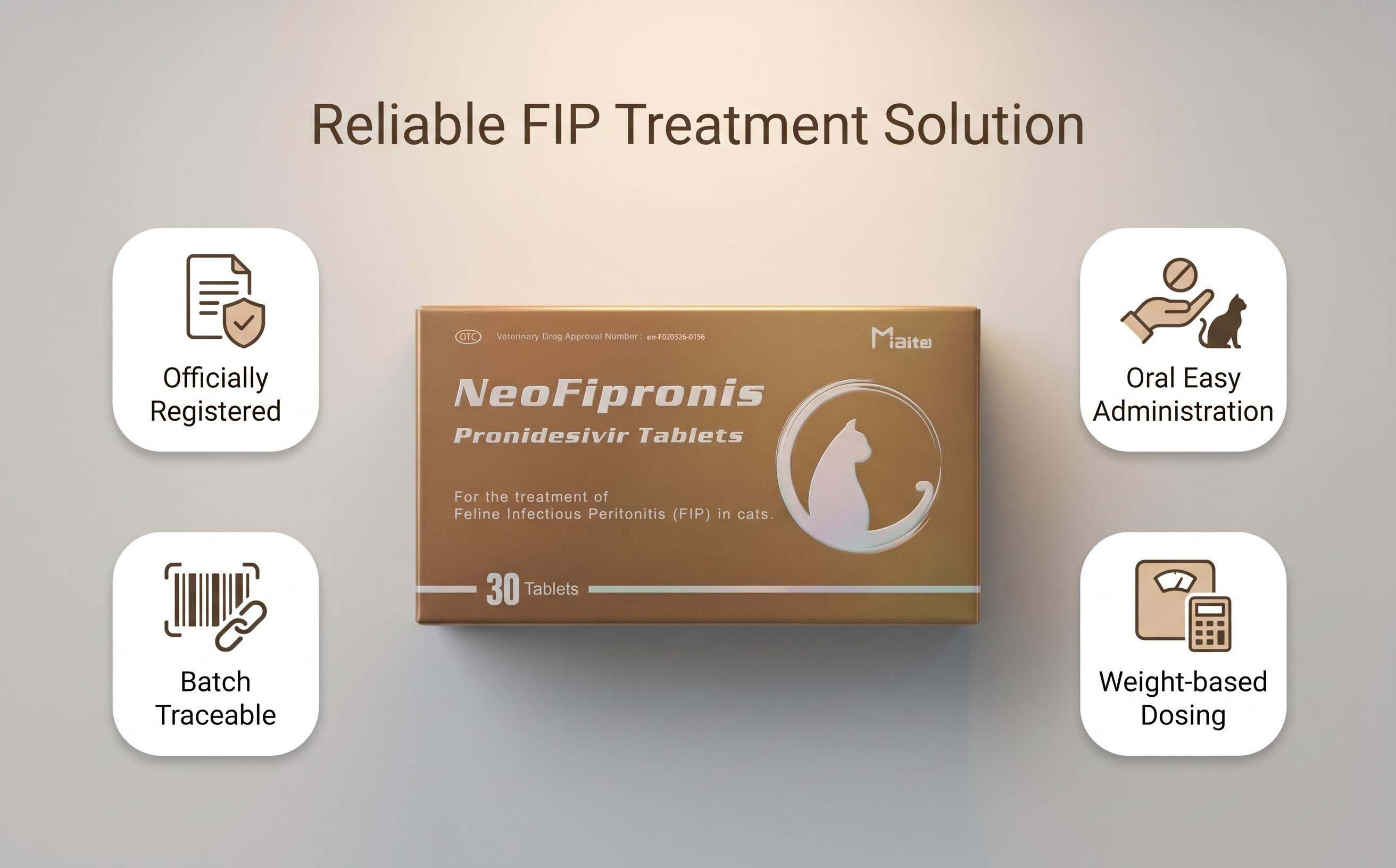
NeoFipronis (Pronidesivir) GS-441524
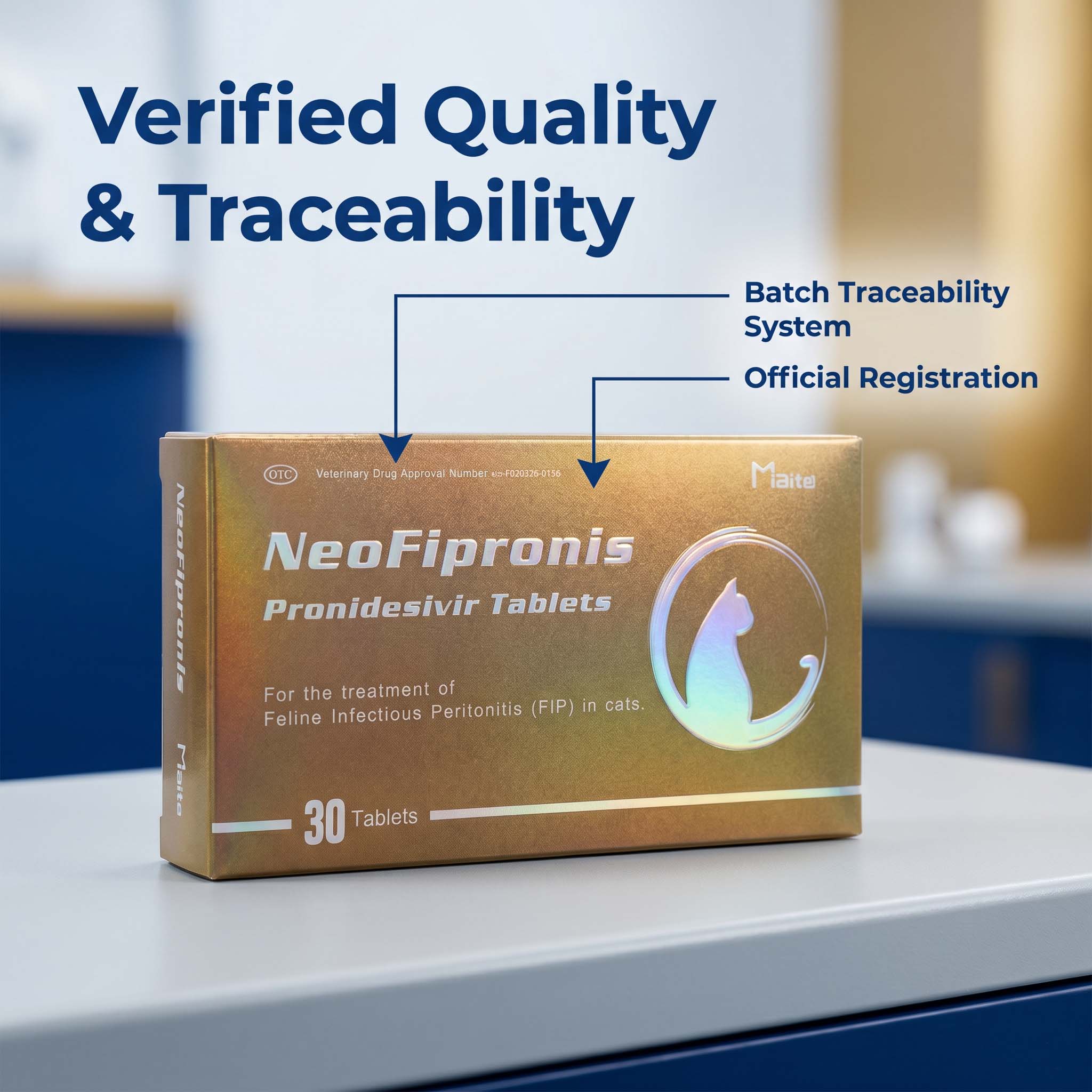
Miaite NeoFipronis (Pronidesivir) GS-441524 has revolutionized FIP management. It is suitable for treating symptoms caused by feline infectious peritonitis, including loss of appetite, lethargy, fever, ascites, pleural effusion, lymphadenopathy, inflammatory granulomas, nerve damage, and uveitis. Clinical trials and field reports highlight its excellent therapeutic effects on FIP.
This medication is the world's first officially approved oral treatment for FIP by the Lao Ministry of Agriculture and Forestry (MAF) in March 2026, with a designated drug registration number. NeoFipronis (Pronidesivir) is safe, non-invasive, rapidly absorbed, fast-acting, well-tolerated, and associated with few side effects.
Other Antiviral and Supportive Treatments
While NeoFipronis (Pronidesivir) GS-441524 represents a breakthrough, other supportive measures can improve the animal's quality of life, including:
Fluid therapy for dehydration
Nutritional support
Anti-inflammatory drugs
Antioxidants
Antibiotics to prevent secondary bacterial infections
Regular veterinary monitoring is vital to assess response and adjust treatment protocols.
Prognosis and Long-term Management
The prognosis of cats treated with GS-441524 varies depending on disease severity, timely intervention, and overall health. Many cats show remarkable improvements, with some achieving remission, although relapse remains possible. Early diagnosis and prompt treatment significantly improve survival rates.
Preventive Measures and Vaccination
Preventing FIP involves minimizing exposure to FCoV by maintaining cleanliness, reducing stress, and limiting overcrowding. Currently, no fully effective vaccine exists; therefore, managing environmental risks plays a crucial role.
Future Perspectives
Ongoing research aims to develop more effective antiviral therapies, vaccines, and diagnostic tools to combat FIP. The approval of oral medications like NeoFipronis (Pronidesivir) GS-441524 marks a new era in feline medicine, offering hope to countless cat owners.
Conclusion
FIP remains a challenging disease affecting young cats, but advances in antiviral treatments, especially the introduction of NeoFipronis (Pronidesivir) GS-441524, offer a promising outlook. Recognizing early symptoms and seeking prompt veterinary care can dramatically influence outcomes, enabling many cats to lead healthier, longer lives.
References
Smith, J. et al., 2024. Advances in FIP Diagnosis and Management. Veterinary Journal.
Lee, A. & Carter, B., 2025. Antiviral Therapies for Feline Infectious Peritonitis. Journal of Feline Medicine.
World Cat Health Organization, 2026. Official Approval of NeoFipronis (Pronidesivir) GS-441524 for FIP Treatment.
Johnson, L. et al., 2023. Clinical Presentation and Diagnosis of FIP in Cats. Journal of Small Animal Practice.