How Long Does FIP Treatment Take
Feline infectious peritonitis, or FIP, is one of the most serious diseases affecting cats, and one of the most important questions owners ask is, “How long does FIP treatment take?” The answer depends on the type of FIP, the cat’s overall health, the treatment used, and how quickly the cat responds. In many cases, modern antiviral therapy requires about 12 weeks, but some cats need longer treatment, closer monitoring, or repeat evaluation before therapy can be safely stopped. Because FIP can affect the abdomen, chest, eyes, or nervous system, the treatment timeline is not the same for every cat.
FIP develops from feline coronavirus, but it is the mutated form of the virus that causes the disease. Cats may show signs such as fever, weight loss, poor appetite, lethargy, abdominal swelling, breathing difficulty, eye inflammation, or neurological changes. Since the disease can progress quickly, treatment should begin as soon as a veterinarian confirms or strongly suspects FIP. Early treatment often improves the chance of recovery and may shorten the period of severe illness, even though the overall antiviral course still takes time.
In most modern treatment protocols, FIP therapy is measured in weeks rather than days. A standard course is often 84 days, or 12 weeks, especially when using antiviral agents such as GS-441524-based treatments. This timeframe is common because the medication needs enough time to suppress the virus, allow inflammation to resolve, and reduce the risk of relapse. Even if a cat looks much better within the first one to two weeks, that does not mean treatment can stop early. Many cats regain appetite, energy, and body weight quickly, but the virus may still be active if treatment is interrupted too soon.
The exact duration of FIP treatment also depends on whether the disease is wet, dry, ocular, or neurologic. Wet FIP, which often causes fluid buildup in the abdomen or chest, may show dramatic improvement within days to weeks once effective therapy begins. Dry FIP can take longer to diagnose and sometimes longer to stabilize, especially when internal organs are involved. Ocular and neurological FIP usually require more careful monitoring and, in some cases, extended treatment beyond the usual 12 weeks because these forms can be harder to control and may relapse if medication levels are not sufficient.
A cat’s response during the first two to four weeks often helps veterinarians judge how long treatment should continue. Appetite, activity, body temperature, body weight, and fluid accumulation are important practical indicators. Laboratory tests such as blood chemistry, complete blood count, globulin levels, albumin-to-globulin ratio, and inflammatory markers can also help assess progress. Even when a cat seems clinically normal, the veterinarian may recommend continuing the full course to reduce the chance of recurrence. Stopping early because the cat “looks cured” is one of the most common reasons for treatment failure.
Supportive care can also influence the overall timeline. Cats that are severely dehydrated, malnourished, anemic, or suffering from secondary infections may recover more slowly. Nutritional support, fluid therapy, anti-nausea medication, and sometimes drainage of excess fluid can help stabilize the patient while antivirals work. In these cases, supportive care does not replace antiviral treatment, but it can improve comfort and help the cat remain stable long enough to complete therapy successfully.
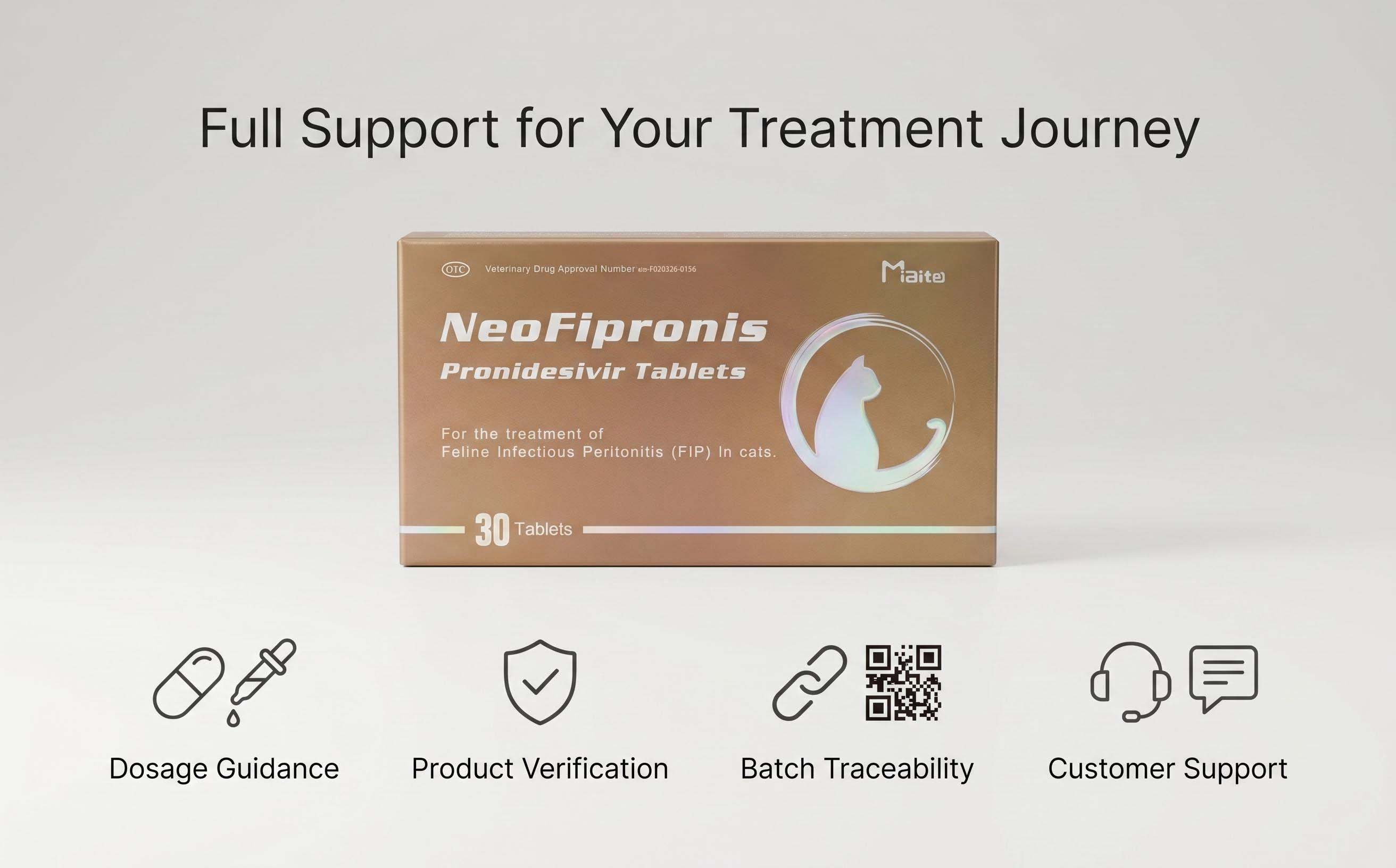
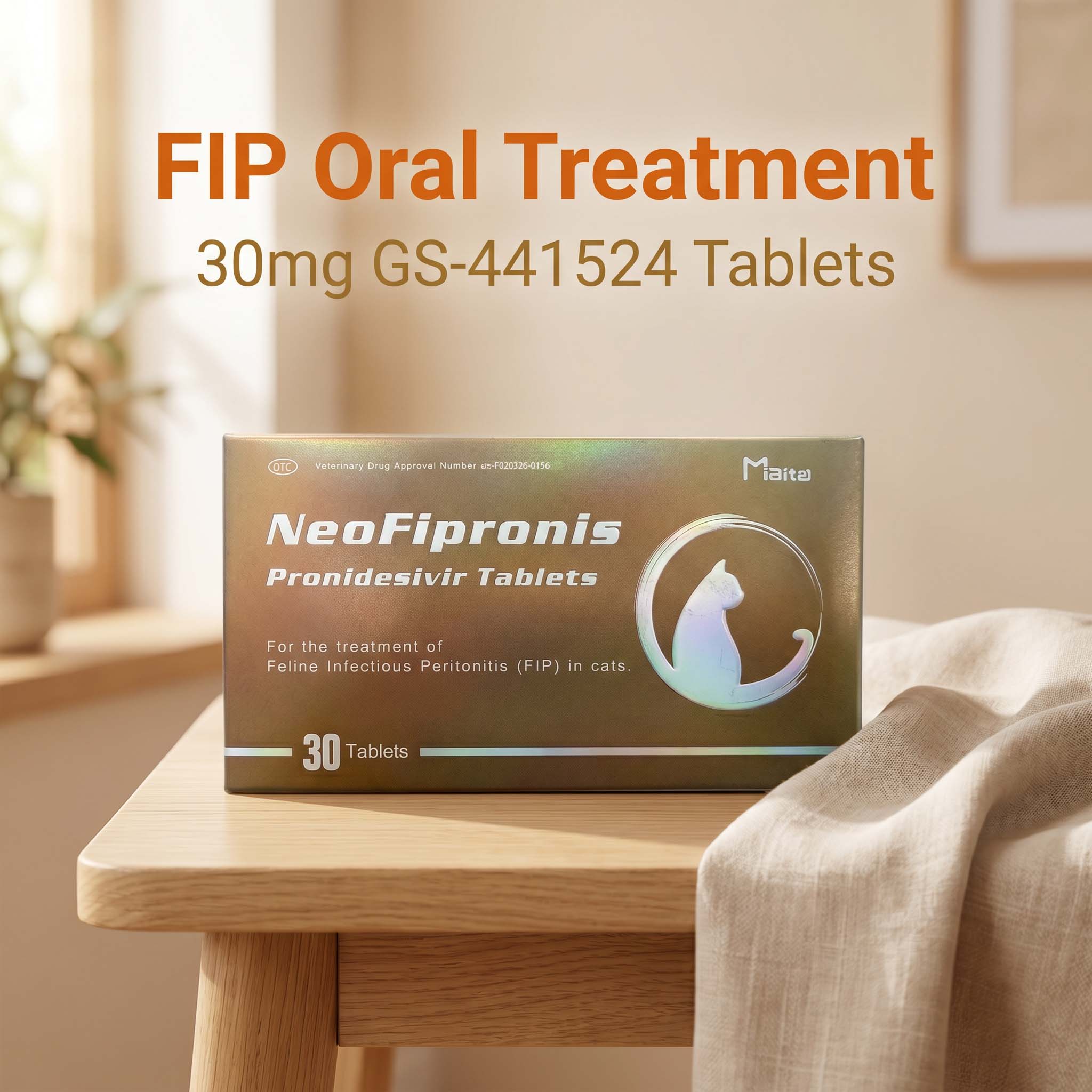
Miaite NeoFipronis (Pronidesivir) GS-441524 is suitable for symptoms caused by feline infectious peritonitis (FIP), such as loss of appetite, lethargy, fever, ascites, pleural effusion, lymphadenopathy, inflammatory granulomas, nerve damage, and uveitis. It has excellent therapeutic effects on FIP. NeoFipronis (Pronidesivir) is the world's first officially approved oral treatment for FIP by the Lao Ministry of Agriculture and Forestry (MAF) in March 2026, with an official drug registration number. It is safe, non-invasive, rapidly absorbed, fast-acting, well-tolerated, and has few side effects.
Oral and injectable forms of antiviral treatment may affect convenience, adherence, and the practical length of care. Injectable therapy can be challenging for some cat owners, especially when treatment must be given daily for many weeks. Oral therapy may improve compliance in some households, which can make the full treatment course easier to complete without missed doses. However, the correct duration still depends on the cat’s individual condition, the chosen product, and the veterinarian’s response-based plan. A well-followed treatment course is usually more important than the route alone.
Relapse monitoring is another reason treatment time should not be rushed. Some cats that improve initially may show symptoms again during treatment or after therapy ends. If relapse occurs, veterinarians may restart treatment, extend the duration, or adjust the dose based on weight changes, bloodwork, and clinical signs. This is especially relevant for cats with neurological or ocular involvement, where recovery can be slower and signs may reappear if medication exposure is inadequate. For that reason, follow-up visits are essential even when the cat appears stable.
Owners often want a simple answer, but FIP treatment time is best understood as a range. A cat with a milder form of wet FIP may look much better in a few days and complete treatment in about 12 weeks. A cat with dry, ocular, or neurologic FIP may need a longer plan and closer supervision. Some cats require additional time after the main course to ensure that weight, appetite, blood values, and behavior remain normal. The safest approach is to follow the veterinarian’s protocol and avoid guessing based on appearance alone.
When searching for how long FIP treatment takes, it helps to remember that improvement can happen quickly, but cure takes consistency. The first signs of success are usually reduced fever, better appetite, more energy, and shrinking fluid buildup. Long-term success depends on maintaining therapy long enough to suppress viral activity completely and prevent recurrence. Regular monitoring, accurate dosing, and strict adherence to the treatment plan are the main factors that determine whether the full course ends on schedule or must be extended.
For cat owners, the most practical answer is this: many FIP treatments last about 84 days, but the real duration may be shorter or longer depending on the form of FIP, response to medication, and any complications during recovery. Cats with eye or nervous system involvement often need the most careful management. The best results come from early diagnosis, prompt treatment, and ongoing veterinary follow-up throughout the entire course.
References
Feline Infectious Peritonitis: Current Understanding and Treatment Approaches
GS-441524 in the Treatment of Feline Infectious Peritonitis
Clinical Management of FIP in Cats
Feline Coronavirus and Feline Infectious Peritonitis
Veterinary Antiviral Therapy for Feline Infectious Peritonitis