How Is Dry FIP Diagnosed
Feline Infectious Peritonitis (FIP) is a devastating disease linked to feline coronavirus, affecting cats worldwide. While its “wet” or effusive form is easily identified by the accumulation of fluid in body cavities, “dry” or non-effusive FIP presents a clinical challenge, with its vague symptoms sometimes leading to delayed or missed diagnoses. Dry FIP’s subtle signs often mimic other illnesses, making accurate diagnosis crucial for timely intervention. Understanding how dry FIP is diagnosed benefits veterinarians, researchers, and cat owners striving for clarity during a stressful period.
What is Dry FIP?
FIP stems from a mutation in feline coronavirus (FCoV), which is widespread among cats but usually causes mild or subclinical infections. In a small proportion of infected cats, the virus mutates and leads to FIP—either effusive (wet) or non-effusive (dry). Dry FIP is characterized by granulomatous lesions in various organs but lacks the characteristic fluid build-up seen in the wet form. Symptoms may include persistent fever, weight loss, jaundice, neurological signs, and ocular changes.
Clinical Progression and Suspected Signs
Cats with dry FIP often show subtle signs: inappetence, progressive weight loss, lethargy, and recurrent fever that is unresponsive to antibiotics. As the condition progresses, more targeted symptoms may appear depending on affected organs—jaundice if the liver is involved, neurological issues with central nervous system involvement, or ocular disease if eyes are affected. Because these signs overlap with many other feline diseases, dry FIP is often a diagnosis of exclusion.
Physical Examination
Thorough physical examination is a veterinarian’s first step. The presence of persistent fever, enlarged lymph nodes, abdominal masses, jaundice, and eye changes such as uveitis may raise suspicion. Neurological deficits—including ataxia, seizures, or behavioral changes—can indicate central nervous system involvement. However, none of these signs are exclusive to FIP, highlighting the need for further diagnostic testing.
Laboratory Diagnostics
Routine blood work (CBC and serum biochemistry) provides valuable clues but cannot confirm FIP alone. Common findings in dry FIP include:
Non-regenerative anemia
Neutrophilic leukocytosis or lymphopenia
Hyperglobulinemia, especially increased gammaglobulins
Hypoalbuminemia, often reflected in an albumin:globulin ratio below 0.8
These patterns, while suggestive, are not unique. They do, however, help to distinguish FIP from other diseases with similar presentations.
Serological Tests
Testing for feline coronavirus antibodies is possible, but limited in utility; almost all cats exposed to FCoV will test positive, especially in multi-cat households. High antibody titers may offer circumstantial evidence, but they do not distinguish between benign coronavirus infection and the mutated FIP-causing strain. A negative result can effectively exclude FIP, but only in rare cases.
Imaging Techniques
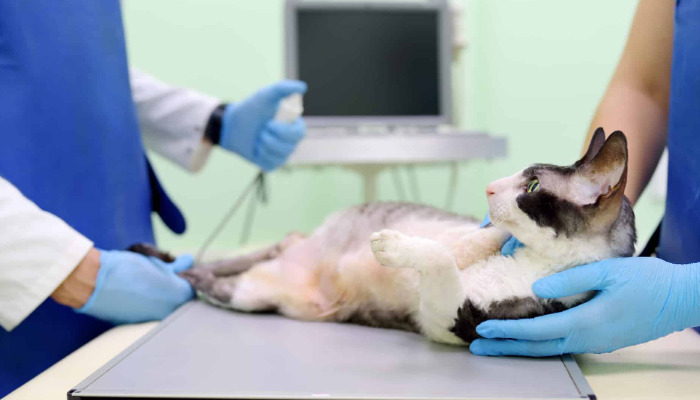
Advanced imaging, like ultrasound and X-rays, is used to detect internal changes often hidden with dry FIP. Enlarged lymph nodes, thickened intestinal walls, and lesions in the liver or kidneys may be seen on ultrasound. Imaging may also reveal masses or irregular organs not palpable in a routine examination. If neurological FIP is suspected, MRI or CT scans of the brain may help visualize lesions, although these tests are not widely used outside specialty centers due to their cost.
Analysis of Tissue and Fluids
Obtaining biopsies or aspirates from affected organs allows for cytological or histopathological examination, usually performed in specialized veterinary laboratories. Detection of inflammatory granulomas, perivascular infiltration by neutrophils, macrophages, and lymphocytes forms a diagnostic hallmark for dry FIP. Fine Needle Aspiration Biopsies (FNAB) are minimally invasive ways to obtain tissue samples for analysis.
Immunohistochemistry and PCR Testing
Immunohistochemical staining identifies FCoV antigen within macrophages in tissue samples, providing strong diagnostic evidence. In recent years, Polymerase Chain Reaction (PCR) tests have become more common, detecting the mutated FIP viral RNA. PCR tests are performed on tissue biopsies, cerebrospinal fluid, or even blood, but a positive PCR alone is not always definitive—the test must distinguish FIP-causing mutations from benign FCoV strains.
Ocular and Neurological Diagnostics
Cats presenting with eye or neurological symptoms may require additional tests. Ophthalmological exams seek signs of anterior uveitis, retinal detachment, or chorioretinitis. In cases of suspected neurological FIP, cerebrospinal fluid (CSF) analysis may show marked increases in protein and cell counts, and PCR for FIP in CSF can offer supplementary evidence.
The Role of Exclusion
Given the lack of a single “gold standard” test, making a diagnosis of dry FIP often involves excluding other common conditions with similar signs, such as lymphoma, toxoplasmosis, mycobacterial infections, and other causes of chronic inflammation. A combination of clinical findings, bloodwork abnormalities, imaging results, and molecular diagnostics all inform the final diagnosis.
Diagnostic Scoring Systems
To assist clinicians, several FIP diagnostic algorithms and scoring systems have been proposed. These synthesize information from clinical history, serology, laboratory results, and imaging, generating probability scores for FIP versus other diseases. While not foolproof, these tools help guide decision-making and prioritize further testing.
Recent Advances in FIP Testing
Advancements in molecular diagnostics, especially real-time PCR and higher-sensitivity immunohistochemistry, have improved accuracy. Researchers continue to refine tests that identify FIP-specific virus mutations as opposed to benign strains, reducing false positives. Combined with next-generation sequencing techniques, future FIP diagnostics may reach even higher levels of specificity.
Practical Considerations for Cat Owners
For owners, understanding the diagnostic journey is vital. Dry FIP’s elusive nature means confirmation may involve multiple tests and thorough veterinary assessment. Early suspicion, prompt veterinary care, and regular monitoring are key to improving outcomes. Owners should maintain open communication with their veterinarians and follow recommendations for further testing where appropriate.
References
1. Pedersen, N. C. (2014). An update on feline infectious peritonitis: diagnostics and therapeutics. Veterinary Journal, 201(2), 133-141.
2. Hartmann, K. (2005). Feline infectious peritonitis. Veterinary Clinics of North America: Small Animal Practice, 35(1), 39-79.
3. Felten, S., Leutenegger, C. M., Balzer, H. J., Pantchev, N., et al. (2017). Correlation of viral loads between cats with feline infectious peritonitis and cats with feline coronavirus infection without clinical signs. Veterinary Microbiology, 228, 86-94.
4. Tasker, S., & Gunn-Moore, D. (2020). Feline infectious peritonitis: recent developments in diagnosis and treatment. Companion Animal, 25(1), 40-46.
5. Kipar, A., & Meli, M. L. (2014). Feline infectious peritonitis: still enigmatic after 50 years. Veterinary Pathology, 51(2), 505-526.
6. Addie, D., & Jarrett, O. (2005). Feline coronavirus infections. In Greene, C. (ed.), Infectious Diseases of the Dog and Cat (3rd ed., pp. 88-106). Elsevier.
7. Paltrinieri, S., Giordano, A., & Cammi, G. (2016). Laboratory profiles of cats with feline infectious peritonitis: differences between the effusive and non-effusive forms. Veterinary Sciences, 3(2), 8.