What Tests Are Needed During FIP Treatment Follow-Up
Feline Infectious Peritonitis (FIP) is a severe, immune-mediated disease in cats caused by certain strains of feline coronavirus. Historically deemed fatal, recent advances in antiviral treatments have dramatically improved outcomes. However, thorough and consistent monitoring is essential to guide effective therapy, manage complications, and assess a cat's response. Understanding which tests are essential during FIP treatment follow-up ensures better outcomes for feline patients and peace of mind for pet owners.
FIP remains one of the most challenging diseases in feline medicine. While new drugs like GS-441524 and its legal equivalents have offered hope, their success depends heavily on stringent monitoring protocols. Post-diagnosis, an individualized approach using clinical examination and a range of laboratory tests maximizes the chances of remission. Clear knowledge of required tests during follow-up assists veterinarians and cat guardians in making informed decisions.
Why Regular Monitoring Matters
Regular evaluation allows identification of disease progression, detection of treatment complications, and confirmation of remission. FIP's clinical spectrum is broad, from "wet" (effusive) to "dry" (non-effusive) forms, affecting organs like the abdomen, chest, eyes, and even the brain. Monitoring needs to reflect this variability. Additionally, some drugs may affect liver or kidney function, making periodic assessment crucial for early intervention if adverse effects occur.
Core Monitoring Tests for FIP During Treatment
Physical Examination
Frequent physical exams are the cornerstone of monitoring. Veterinary professionals assess weight, body condition, fever status, and check for the resolution or recurrence of effusions (fluid accumulation). Lymph nodes, respiratory patterns, and neurological status are also evaluated, as subtle changes may indicate therapeutic success or a need to adjust the treatment plan.
Complete Blood Count (CBC)
CBC is essential for tracking anemia, white blood cell changes, and platelet counts. These values often indicate response to therapy:
Anemia (often non-regenerative) can resolve with effective treatment.
Increased white blood cells (especially neutrophils) are common with active FIP and should normalize with treatment.
Monitoring for side effects like neutropenia, which may necessitate dose adjustments, is also key.
Serum Biochemistry Panel
Biochemical analysis assesses organ function, especially liver and kidneys:
Hyperglobulinemia (elevated globulins): A hallmark of FIP, its reduction suggests therapeutic progress.
Hypoalbuminemia (low albumin): Improvement often correlates with clinical response.
Liver enzymes (ALT, AST, ALP) and kidney function (BUN, creatinine): Monitor for drug side effects or disease progression.
Rivalta Test
For effusive FIP, periodic Rivalta tests can help distinguish inflammatory exudate from other causes. This is less critical in non-effusive forms but supports overall fluid evaluation if re-accumulation is suspected.
Serum Protein Electrophoresis
This advanced test distinguishes protein fractions in blood and can track polyclonal gammopathy, a feature of chronic FIP. Improvement toward normal fractions provides additional evidence for remission.
Acute Phase Proteins (e.g., Alpha-1-Acid Glycoprotein, AGP)
High AGP levels support FIP diagnosis and often decrease during recovery. Serial AGP measurements provide a useful, quantitative parameter for recovery assessment, especially in ambiguous cases.
Effusion Analysis
For cats with wet FIP, periodic ultrasounds and fluid sampling help monitor resolution. Characteristics like total protein content, cell count, and cytology are critical. A decrease or disappearance of the effusion with improvement in clinical status is a strong positive sign.
Coronavirus PCR and Immunofluorescence
While not always required at every follow-up, quantitative PCR can quantify viral loads in effusion or tissue. A negative result in previous positive samples may suggest therapeutic success, although persistence of non-pathogenic coronavirus is not unusual. Immunofluorescence for viral antigen can confirm ongoing infection in challenging cases.
Imaging Studies
Ultrasound
Abdominal and thoracic ultrasound can detect changes in effusions, organ enlargement, or masses. Monitoring reductions or resolution provides clear evidence of improvement.
Radiography
Chest X-rays evaluate changes in pulmonary effusion or detect new effusions developing during therapy.
Neurological and Ophthalmological Assessment
Cats with neurological or ocular involvement require specialized evaluation. Repeat eye exams (including fundoscopy and intraocular pressure) and neurological scoring track response to therapy or relapses. Measurement of cerebrospinal fluid (CSF) parameters may be useful for neurological cases but is invasive and reserved for select situations.
Routine Urinalysis
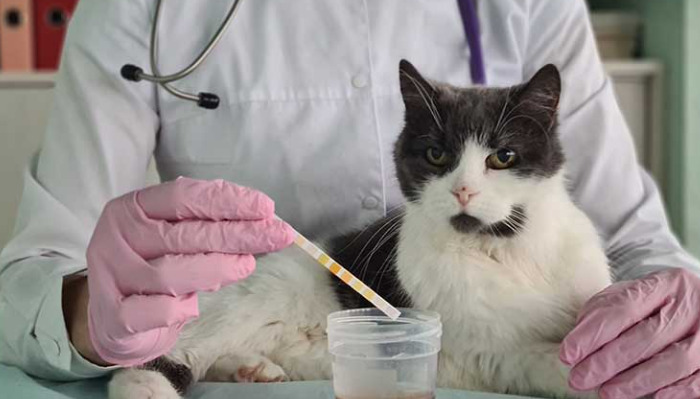
A basic urinalysis checks for renal involvement, urinary tract infection, or complications such as proteinuria, hematuria, or drug side effects. This test, when combined with serum biochemistry, offers a complete picture of kidney health.
Frequency of Monitoring
Optimal intervals depend on clinical severity and response but follow a general framework:
Baseline: Full workup at diagnosis—physical exam, CBC, biochemistry, urinalysis, imaging (if indicated).
Weekly to Biweekly: In the first month, perform at least CBC and biochemistry tests, with physical examination, temperature monitoring, and effusion assessment for wet FIP cases. Neurological and ocular exams for affected cats.
Monthly: After stability or improvement, continue monthly monitoring—repeat main laboratory tests, physical assessment, and imaging as indicated.
Remission Assessment: At the end of treatment (usually after 12 weeks), perform a full panel of baseline exams to confirm sustained remission before discontinuing therapy.
Criteria for Remission
Clinical: Absence of fever, weight gain, resolution of clinical signs (e.g., no effusion, no neurological deficits).
Laboratory: Normalization of CBC, serum proteins (globulins and albumin), acute phase proteins, and absence or marked reduction of viral markers in body fluids where previously present.
Imaging: Absence of effusion and improvement in affected organs on ultrasound or X-ray.
Neurological and Ophthalmic: Return to normal or stable exams without ongoing decline.
Rechecks After Remission
Relapse can occur, particularly within the first 3-6 months post-therapy. Perform rechecks at two, four, and six months post-treatment. Include physical exam, CBC, biochemistry, and special tests dictated by the original FIP form (e.g., eye or neuro exams).
Special Circumstances
FIP has complex presentations that sometimes require advanced or adjunctive testing:
Neuro-FIP: More frequent neurological evaluation with repeat imaging or CSF analysis if worsening occurs.
Ocular FIP: Serial ocular evaluations and possibly advanced imaging if vision changes.
Drug Side Effects: Routine monitoring of liver and kidney function if side effects emerge; urinalysis to catch less obvious issues.
Costs and Access
Regular follow-up tests add financial and logistical burden but are critical for successful outcomes. Discuss the timeline and cost upfront with owners and explore regional resources or clinical trials where available. Some organizations can help subsidize costs for families in need.
The Role of Telemedicine
Technology has allowed some monitoring, such as symptom tracking and physical changes, to be supported remotely. Photographs of the eyes, videos of neurological episodes, and home temperature logs can supplement in-clinic testing, especially where frequent travel is difficult. However, laboratory and imaging tests still require veterinary visits.
Owner Participation
Owners play a critical role in home observation, such as monitoring:
Appetite and weight (using kitchen scales weekly)
Water intake and urination
Activity level and personality changes
Visible swelling or neurological events
Immediate reporting of abnormal findings helps veterinarians adjust testing and treatment as needed.
Sample Monitoring Protocol (For a Typical FIP Case)
Week 1: Physical exam, CBC, chemistry, urinalysis, ultrasound
Weeks 2-4: CBC, chemistry, physical exam weekly
Weeks 5-12: CBC, chemistry, physical exam every other week
Weeks 13-16: At last week of therapy, full workup (as at baseline). If well, repeat in 1-2 months.
Monthly for 6 months post-therapy: CBC, chemistry, physical exam (with further tests depending on recurrence of signs).
Guidelines for Interpreting Results
Not all abnormal values resolve in lockstep—slight elevation in globulin, for example, may persist even as a cat is otherwise healthy. Focus on overall trends rather than individual numbers. A relapse is more likely if clinical signs return with simultaneous lab worsening or effusion recurrence.
Recent Advances and Future Directions
Point-of-care rapid tests for acute phase proteins are in development. Research into new biomarkers (such as various cytokines or immune markers) may change future monitoring protocols. The use of next-generation sequencing for viral mutation monitoring may someday help predict relapse risk early.
Summary Table: Essential Tests by Stage
| Stage | CBC | Chemistry | Imaging | Ultrasound | Rivalta | AGP | Ophthalmic | Neurological | PCR |
||-|-|-||-|-|||-|
| Diagnosis | ✔ | ✔ | ✔ | ✔ | ✔ | ✔ | ✔ | ✔ | ✔ |
| First 4 Weeks | ✔ | ✔ | as needed | as needed | ✓ if effusive | as needed | ✔ if affected | ✔ if affected | as needed |
| Maintenance | ✔ | ✔ | as needed | as needed | | as needed | as needed | as needed | as needed |
| Pre-remission check | ✔ | ✔ | ✔ | ✔ | | ✔ | ✔ if affected | ✔ if affected | as needed |
| Post-therapy recheck | ✔ | ✔ | as needed | as needed | | as needed | as needed | as needed | as needed |
References
1. Pedersen NC. "An update on feline infectious peritonitis: diagnostics and therapeutics." Veterinary Journal, 2014.
2. Tasker S. "Diagnosis of feline infectious peritonitis: update on evidence supporting laboratory testing." Journal of Feline Medicine and Surgery, 2018.
3. Addie DD et al. "Feline coronavirus infection." ABCD Guidelines on Parasitology, 2023.
4. Healey K, et al. "GS-441524 treatment in cats with FIP: clinical outcomes and monitoring strategies." Journal of Veterinary Internal Medicine, 2021.
5. Kipar A, Meli ML. "Feline Infectious Peritonitis: still an enigma?" Veterinary Pathology, 2014.
6. Stranieri A, et al. "Acute phase proteins as diagnostic and prognostic markers in FIP." Journal of Feline Medicine and Surgery, 2017.
7. Foley JE, Leutenegger CM. "Coronavirus diagnostics: clinical utility in cats." Clinical Techniques in Small Animal Practice, 2001.
8. Mustillo S, et al. "Practical monitoring of patients with feline infectious peritonitis." Compendium: Continuing Education for Veterinarians, 2020.
9. O’Brien D, et al. "Guidelines for the management and monitoring of feline infectious peritonitis." American Association of Feline Practitioners, 2022.
10. Chang HW, et al. "Serum protein electrophoresis in the diagnosis and monitoring of FIP." Veterinary Clinical Pathology, 2015.