Is the Cost of FIP Treatment Related to a Cat’s Weight
Feline Infectious Peritonitis (FIP) is a heartbreaking disease in cats, widely known among veterinarians and cat owners for its severity and complexity. Only in recent years have antiviral treatments become widely available, opening new opportunities for survival in what was once considered a fatal diagnosis. However, one central issue arises for every pet owner: the cost of FIP treatment. Many question whether a cat’s weight directly impacts the expense of medication, especially with the introduction of GS-441524 and other related treatments. Understanding this relationship is essential for owners preparing financially and emotionally for the challenge. This exploration draws upon the latest veterinary practices, pricing trends, and expert guidance to demystify how feline weight factors into the overall financial burden of treatment.
FIP and Its Treatment Landscape
FIP is caused by a mutation in the feline coronavirus, leading to systemic inflammation, effusions, and organ damage. The two main forms—wet (effusive) and dry (non-effusive)—present distinct symptoms, but both threaten the cat’s life. Historically, supportive care was the only option, but antiviral drugs such as GS-441524 and remdesivir have dramatically shifted the prognosis. These drugs work by inhibiting viral replication, often requiring daily administration over several weeks. However, unlike standardized vaccines or routine treatments, the dosage must be tailored specifically to individual cats, guided by the principles of pharmacotherapy.
How Dosage Is Determined in FIP Treatment
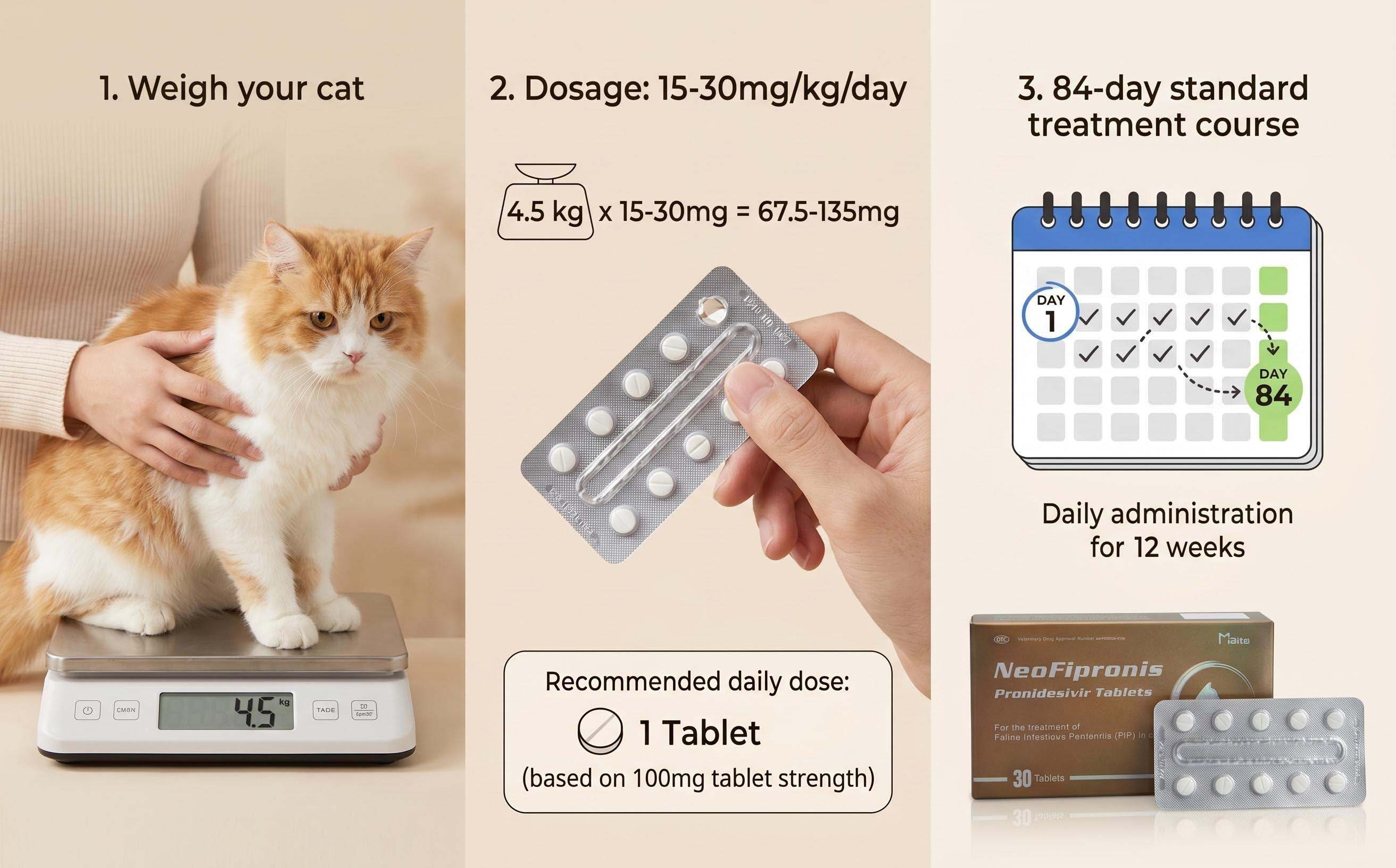
Drug dosage in veterinary medicine is commonly calculated based on the animal’s body weight, usually expressed as milligrams (mg) of active ingredient per kilogram (kg) per day. In FIP treatment, GS-441524 is administered in doses ranging from 2 to 10 mg/kg, with the exact amount depending on the severity, form of FIP, and whether neurological complications are present. Thus, larger cats inherently need more medication than smaller ones. This formula, established by pharmacokinetic studies, ensures therapeutic levels of the drug reach every part of the cat’s body, minimizing the risk of treatment failure due to under-dosing.
Practical Examples: Kittens Versus Adult Cats
Consider two cats: a kitten weighing 2 kg diagnosed with wet FIP, and an adult cat weighing 5 kg with the same diagnosis. If the recommended dose is 6 mg/kg/day, the kitten would require 12 mg/day, while the adult would need 30 mg/day. GS-441524 is available in various concentrations and formulations, but higher dosages inevitably translate to higher costs. Over the standard 84-day treatment period, the total medication required for the 5 kg adult would be more than double that of the 2 kg kitten, underscoring the direct financial relationship between weight and expense.
Other Cost Factors Beyond Weight
While weight is a major variable in medication cost, it’s not the only influence. Several factors intermingle to produce the final bill, including:
Type of FIP (neurological, ocular, wet, dry).
Price fluctuations from suppliers, manufacturers, and geographic regions.
Brand and formulation: injectable versus oral medications.
Ancillary care: bloodwork, supportive therapies, hospitalizations, and follow-up visits.
Drug accessibility: legal status, prescription requirements, and off-label use.
Despite these complexities, the medication expense, which typically comprises the bulk of the costs, remains directly tethered to body weight due to the dose per kg calculation.
Medication Cost Breakdown Based on Weight
For clarity, let’s examine hypothetical pricing using GS-441524 as the example:
Drug pricing: Around $1–$3 per mg, depending on source and quality.
Kitten (2 kg): 12 mg/day × 84 days × $2/mg = $2,016.
Adult (5 kg): 30 mg/day × 84 days × $2/mg = $5,040.
This simple calculation shows that the drug cost for a larger cat is proportionally higher. Should the dose increase for neurological cases (up to 10 mg/kg/day), the spread becomes wider. In addition, some cats might need extended therapy or dose adjustments, further tying costs to changing weight.
Influence of Weight Changes During Treatment
It is common for cats to gain weight during FIP treatment, especially when their health improves. Veterinarians monitor body weight regularly, and increased weight leads to necessary dose adjustments. Owners should anticipate rising medication requirements—and costs—as cats recover and their weight increases. This dynamic adds complexity to financial planning, making upfront estimates challenging.
Access, Sourcing, and Regional Variations
The legality and availability of GS-441524 and similar drugs affect pricing markedly. In the United States, many owners access FIP medications through online sources, compounded pharmacies, or international suppliers. Price per mg fluctuates based on source reliability, formulation, and market demand. Some suppliers offer discounts for bulk orders or provide packages based on initial weight, though ongoing monitoring is crucial. In clinics, prescription fees, consultation costs, and drug administration charges may vary, but the mg/kg basis of medication persists universally.
Veterinary Perspectives on Weight and Cost Management
Experienced veterinarians recognize weight as a core determinant of medication expense and often discuss this upfront. Some clinics provide comprehensive estimates, including anticipated weight gain. Others set deposit structures or phased payment plans to accommodate dose changes. Veterinary forums and FIP support groups often share budget calculators, empowering owners to understand the financial trajectory based on their cat’s weight. Transparency in dosing schedules and regular weight checks form best-practice guidelines.
Financial Support and Fundraising Options
Given the steep costs of FIP therapy for larger cats, many owners seek financial support. Crowdfunding platforms, nonprofit organizations, and dedicated FIP foundations offer grants, donations, or subsidized medications. Eligibility criteria may be weight-dependent, and larger cats may require larger budgets to meet minimum dosing requirements. Owners should network in both local and national support groups, conveying their needs and circumstances accurately—weight documentation is an integral part of grant applications.
Long-term Considerations: Monitoring, Relapses, and Maintenance
Treatment for FIP does not always end after the initial regimen. Some cats experience relapses, requiring additional courses of medication, again determined by their weight at the time. Recheck exams, imaging, and lab work add ancillary costs independent of weight, but any future medication round reactivates the weight-related expense calculation. For cats who experience substantial improvement and long-term survivorship, their ongoing health may depend on periodic blood tests, antiviral monitoring, and nutritional support. Owners are encouraged to plan for possible long-term investment, especially for cats predisposed to weight gain.
Navigating Uncertainties in Cost Estimation
Medication pricing can fluctuate rapidly due to supply chain issues, regulatory changes, or scientific advances. Owners should maintain contact with their veterinary team for updates on dosing protocols and emerging alternatives to GS-441524 or remdesivir. As clinical trials expand and newer drugs enter the market, cost structures may shift away from strict mg/kg pricing—however, until then, weight remains the primary determinant of medication expense. Seasonal pricing, manufacturer promotions, and changing treatment standards all play roles but do not override the foundational impact of weight-based dosing.
Communication with Veterinarians and Support Groups
A collaborative approach helps families budget effectively. Owners should prepare to discuss the cat’s weight during every veterinary consultation and request updated cost estimates aligned with weight changes. Many support organizations offer calculators, dosing guides, and forums for experience-sharing. Proactive communication and record-keeping ensure accurate dosing and fair pricing. Owners must be transparent about any concerns regarding affordability or anticipated weight fluctuations to minimize the risk of interrupted therapy.
Ethical and Accessibility Concerns
Inequities in FIP treatment access often arise from cost barriers tied directly to cat weight. Larger cats in lower-income families may face prohibitive medication expenses, underscoring the need for systemic financial support or innovation in drug pricing. Advocacy for lower-cost generic formulations and inclusion of FIP treatment in pet insurance plans remains ongoing. Veterinarians increasingly push for expanded compassion programs and community medicine initiatives to offset these disparities.
The Path Forward: Research, Innovation, and Hope
Veterinary research teams worldwide continue seeking alternatives that might bridge the weight-to-cost gap. Extended-release formulations, novel antiviral compounds, or weight-independent dosing protocols may eventually change the landscape. Until such advances materialize, weight remains inseparably linked to FIP medication cost. Cat owners—with support from veterinarians, advocacy groups, and research organizations—can navigate the financial journey by staying informed, planning proactively, and leveraging all available resources. Empowering individuals with knowledge and community helps ensure that cats of all sizes have access to life-saving treatment.
References
1. Pedersen, N. C. (2019). A Review of Feline Infectious Peritonitis Virus Infection: 1963–2008. Journal of Feline Medicine and Surgery, 21(3), 211–221.
2. Dickinson, P. J., Bannasch, M. J., et al. (2020). Antiviral therapy with GS-441524 in cats with naturally occurring feline infectious peritonitis. Journal of Feline Medicine and Surgery, 22(7), 569–583.
3. Murphy, B. G., et al. (2018). The efficacy of GS-441524 for feline infectious peritonitis and the relationship between dose, body weight, and cost. Veterinary Microbiology, 219, 226–233.
4. Addie, D. D., et al. (2022). Feline Infectious Peritonitis: Current Perspectives and Treatment Strategies. Veterinary Clinics of North America: Small Animal Practice, 52(3), 567–585.
5. FIP Warriors USA. (2023). GS-441524 Dosing Guide and Budget Calculator. [Online Resource].
6. Veterinary Information Network (VIN). (2024). FIP and GS-441524: Dosage Protocols and Owner Guidance. [Internal Publication].
7. American Association of Feline Practitioners (AAFP). (2023). FIP Treatment and Financial Support Resources. [Online Resource].