Can Regular Veterinary Clinics Diagnose FIP
Feline Infectious Peritonitis (FIP) is a serious and often fatal disease affecting cats worldwide. Caused by certain strains of the feline coronavirus (FCoV), FIP presents unique challenges for veterinarians in terms of diagnosis and management. The question many pet owners and general practitioners ask is whether regular veterinary clinics can diagnose FIP effectively. Understanding the complexity of FIP, diagnostic methods, and the capabilities of typical veterinary clinics is essential to answer this question comprehensively.
Understanding FIP and Its Pathogenesis
FIP results from a mutation within the feline coronavirus, a common virus that many cats encounter. While most FCoV infections are mild or asymptomatic, a small percentage of infected cats develop FIP, which manifests in two forms: wet (effusive) and dry (non-effusive). The disease involves an abnormal immune response leading to widespread inflammation, often affecting the abdomen, chest, and other organs.
The clinical signs of FIP can be nonspecific, including weight loss, lethargy, fever, jaundice, and neurological abnormalities. Because these symptoms overlap with many other feline diseases, accurately diagnosing FIP can be extremely challenging.
Diagnostic Challenges in Detecting FIP
Diagnosing FIP is complicated due to the nature of the disease and limitations of available tests. Traditionally, definitive diagnosis has required invasive procedures, such as tissue biopsies or post-mortem examinations, revealing characteristic lesions. However, these are not typically feasible in a standard veterinary clinic setting, especially for live animals.
More commonly, veterinarians rely on a combination of clinical signs, laboratory tests, and differential diagnoses to arrive at an educated suspicion. Blood work may reveal characteristic changes like elevated globulins and low albumin-to-globulin ratios. Imaging techniques such as ultrasound can detect fluid accumulation or organ enlargement. Yet, these findings are not exclusive to FIP and can occur in other conditions.
Serological Testing and Its Limitations
Serology, which detects antibodies to FCoV, can indicate exposure but cannot distinguish between cats that are infected with benign FCoV and those that have developed FIP. Many cats infected with FCoV will test positive without ever developing the disease, leading to potential false positives. Conversely, some cats with FIP may test negative early on, resulting in false negatives.
Advanced Diagnostic Techniques and Their Accessibility
More specific diagnostic methods, such as polymerase chain reaction (PCR) testing to detect viral RNA or analysis of effusion fluid for soluble feline proteins, can improve diagnostic accuracy. Immunohistochemistry (IHC) on tissue samples remains the gold standard for confirming FIP. However, these advanced diagnostics are usually conducted in specialized laboratories and may not be readily available at general veterinary clinics.
Can Regular Veterinary Clinics Diagnose FIP?
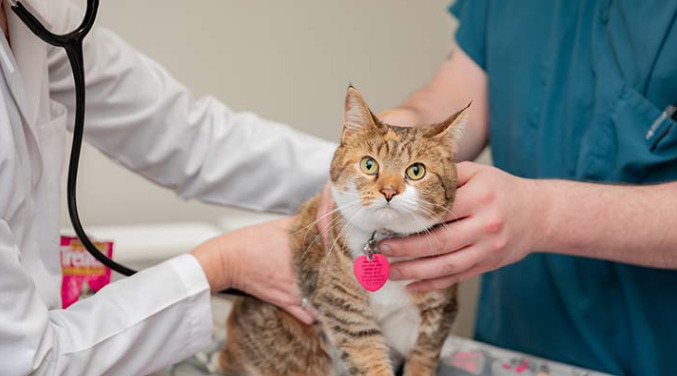
Considering the current diagnostic tools and their limitations, most regular veterinary clinics face challenges in definitively diagnosing FIP. While they are capable of identifying clinical signs and performing initial tests, they often cannot conclusively diagnose FIP without access to specialized laboratory testing and histopathology.
Veterinarians at general clinics typically focus on supportive care, symptom management, and ruling out other diseases. In cases where FIP is suspected, they may refer the patient to a specialist or advanced diagnostic center for further testing.
Importance of Specialist and Advanced Testing
Referral to a veterinary specialty hospital or research laboratory is often necessary for definitive diagnosis. Advanced diagnostics like PCR, IHC, and analysis of cerebrospinal fluid or tissue biopsies are critical for confirming FIP. These tests require specialized equipment and expertise, beyond the scope of most general clinics.
Future Perspectives in FIP Diagnosis
The veterinary community continues to research non-invasive and rapid diagnostic tools for FIP. Recently, developments in blood-based assays and machine learning algorithms aim to improve early detection and reduce diagnostic uncertainty. Such advancements could make accurate diagnosis more accessible in general veterinary practice in the future.
Conclusion
While regular veterinary clinics can suspect FIP based on clinical signs and initial laboratory findings, they generally cannot provide a definitive diagnosis independently. Confirming FIP often requires specialized testing beyond the capabilities of most general practices. Early suspicion and prompt referral remain crucial for managing affected cats and providing supportive care.
References
1. Pedersen, N. C. (2014). An update on feline infectious peritonitis: Feasibility of antemortem diagnosis. Journal of Feline Medicine and Surgery, 16(7), 583-592.
2. Addie, D. D., et al. (2010). Feline coronavirus infection: diagnostic and clinical aspects. Veterinary Microbiology, 140(3-4), 250-257.
3. Kipar, A., & Meli, M. L. (2014). Feline infectious peritonitis: still an enigma. Veterinary Pathology, 51(2), 505-526.
4. Feljc Disease Diagnostic Guidelines. American Association of Feline Practitioners (2018). Feline Infectious Peritonitis (FIP) Diagnostic Guidelines.
5. Palmer, M. V., et al. (2019). Advances in the diagnosis of feline infectious peritonitis. Veterinary Clinics of North America: Small Animal Practice, 49(2), 385-401.