How Is Dry FIP Diagnosed Without Ascites

Feline Infectious Peritonitis (FIP) stands out as one of the most challenging infectious diseases in feline medicine. Caused by a mutation of feline coronavirus (FCoV), FIP can manifest in effusive ("wet") and noneffusive ("dry") forms. While the effusive form is characterized by fluid accumulation, especially in the abdomen (ascites) or thorax, the dry form does not present with such hallmark signs. This absence of ascites makes dry FIP exceptionally difficult to diagnose, as most clinicians rely on fluid analysis to reach a confident diagnosis. Understanding how dry FIP is diagnosed in the absence of ascites is critical for prompt and appropriate care.
I. Understanding Dry Feline Infectious Peritonitis
Dry FIP typically affects cats under two years old, though it can develop in older animals. The clinical progression is insidious; symptoms range from vague lethargy to dramatic organ-specific dysfunctions. Unlike wet FIP, there’s little to no effusion, and the pathological hallmark lies in inflammatory granulomas in various tissues—commonly the eyes, central nervous system, liver, kidneys, and lymph nodes. Granulomatous lesions distort organ function and are challenging to identify without invasive diagnostic techniques, making dry FIP an enigmatic clinical entity.
II. Clinical Presentation of Dry FIP
Since dry FIP often lacks overt external signs, diagnosis starts with a detailed history and a thorough physical examination. Cats typically present with:
Chronic, intermittent fever unresponsive to antibiotics
Progressive weight loss and muscle wasting
Persistent lethargy and decreased appetite
Neurological abnormalities (ataxia, seizures, behavioral changes)
Ocular signs (uveitis, retinal detachment)
Jaundice or abnormal liver/kidney values
Each sign alone cannot definitively indicate FIP, but their combined presence, particularly in young cats from multi-cat environments, should alert clinicians to the possibility of dry FIP.
III. Differentiating Dry FIP from Other Diseases
Many other feline diseases—lymphoma, toxoplasmosis, systemic fungal infections, and other viral illnesses—can produce similar clinical signs to dry FIP. Thus, it’s crucial to systematically rule out these conditions. Tests such as complete blood count (CBC), serum biochemistry, urinalysis, FeLV/FIV tests, and specific antibody titers help establish a working differential diagnosis. Advanced imaging and tissue sampling may be required in complex cases.
IV. Diagnostic Strategy in the Absence of Ascites
When ascites is absent, veterinarians turn to a multi-modal diagnostic approach, which may include:
A. Laboratory Testing
Routine tests typically reveal non-specific changes:
Mild to moderate non-regenerative anemia
Lymphopenia
Neutrophilic leukocytosis
Hyperglobulinemia, especially with a decreased albumin:globulin ratio
Mild to moderate elevations in liver enzymes, total bilirubin, and azotemia
These findings, though not pathognomonic, point toward a chronic inflammatory process like FIP.
B. Imaging Techniques
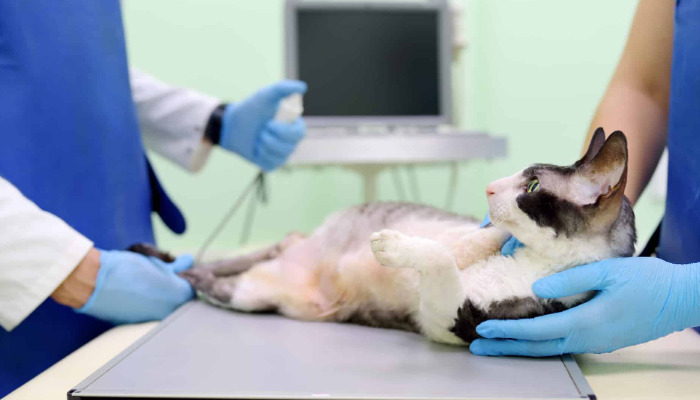
Ultrasound and radiography play vital roles in identifying organ changes consistent with FIP. Ultrasound may reveal:
Irregular kidney architecture
Enlarged lymph nodes
Liver irregularities
Thickened intestinal walls
MRI or CT scans are especially informative for central nervous system involvement, identifying meningeal enhancement or hydrocephalus related to granulomatous inflammation.
C. Fine Needle Aspiration and Biopsy
Ultrasound-guided fine needle aspiration of affected organs (such as liver, kidneys, lymph nodes) and cytologic analysis are invaluable. Biopsy specimens stained with immunohistochemistry for FCoV antigens establish a definitive diagnosis.
Histopathology: Granulomatous or pyogranulomatous inflammation is suggestive of FIP.
Immunohistochemistry: Presence of FCoV antigen within macrophages in tissue samples is highly specific.
D. PCR and Serology
FCoV Antibody Titer: High antibody titers suggest exposure but do not confirm FIP, as many healthy cats are seropositive.
PCR Testing: RT-PCR can detect viral RNA in blood, cerebrospinal fluid, or tissue aspirates. However, a positive result must be interpreted with caution due to carrier states and transient viremia in healthy cats.
CSF Analysis: In neurologic cases, CSF shows high protein and neutrophil presence; PCR on CSF helps support the diagnosis.
V. Recent Advances in Diagnostic Testing
Over the last few years, new molecular tests have contributed to increased diagnostic accuracy:
FIP Virus-Specific PCR: Commercially available real-time PCR tests can distinguish between FCoV strains and the mutation specific to FIP.
Immunofluorescence in Macrophages: Direct detection of viral antigen within macrophages, especially from organ aspirates, is considered highly specific.
Advanced Imaging: MRI scans in neurologic FIP enable clinicians to visualize meningeal and parenchymal inflammation, reinforcing the diagnosis when combined with CSF or tissue findings.
VI. Integrating Clinical and Diagnostic Evidence
Dry FIP remains a diagnosis of exclusion, requiring synthesis of multiple domains of evidence. Clinicians must weigh:
1. History of chronic, progressive illness in a young cat
2. Physical findings—ocular, neurologic, and organomegaly signs
3. Laboratory tests showing characteristic changes (e.g., high globulins)
4. Imaging showing suspicious lesions in organs
5. Cytology, histopathology, and immunohistochemistry supporting FIP
6. PCR confirmation of mutated FCoV where possible
No single test is definitive. Diagnosis is strengthened when multiple lines of evidence converge, especially where clinical suspicion runs high.
VII. Diagnostic Algorithm for Dry FIP Without Ascites
Step 1: Obtain thorough clinical history and perform complete physical exam.
Step 2: Run CBC, chemistry profile, FeLV/FIV tests, and urinalysis.
Step 3: Conduct abdominal and thoracic ultrasound to look for organ lesions.
Step 4: Aspirate affected organs or lymph nodes; submit samples for cytology.
Step 5: Send tissue/aspirate for PCR and immunohistochemistry.
Step 6: If neurologic signs are present, perform MRI/CT and CSF analysis.
Step 7: Integrate all results with clinical findings; make diagnosis based on aggregation of compatible evidence.
VIII. Challenges, Limitations, and the Need for Expert Collaboration
Diagnosing dry FIP in the absence of ascites remains an exercise in clinical judgment, demanding both methodical investigation and awareness of each test’s limitations. False positives and negatives persist, even with advanced molecular diagnostics. Owner education, interdisciplinary cooperation among veterinary internists, pathologists, and neurologists, and ongoing research all contribute to improving outcomes.
Clinicians must remember the variability of FIP presentations and remain vigilant to atypical manifestations, especially in single-cat households and older animals. The evolution of therapeutics and diagnostics promises hope for affected cats, but precision in diagnosis remains a cornerstone of effective intervention.
IX. Future Directions
Innovations in molecular testing may soon improve the ability to discriminate FIP from less virulent feline coronavirus infections. Ongoing research into biomarker panels and imaging will likely further decrease reliance on invasive tissue biopsies and enhance diagnostic confidence. Improved understanding of FIP pathogenesis may lead to earlier detection, ultimately improving therapeutic success rates for this devastating disease.
References
1. Tasker S. "Feline Infectious Peritonitis: Diagnosis and Management." Veterinary Clinics: Small Animal Practice, 2018.
2. Pedersen NC. "An Update on Feline Infectious Peritonitis: Diagnostics and Therapeutics." Veterinary Journal, 2020.
3. Hartmann K. "Feline Infectious Peritonitis." Veterinary Clinics of North America: Small Animal Practice, 2005.
4. Dewerchin HL, Cornelis HJ, Nauwynck HJ. "Clinical, Diagnostic, and Pathological Features of FIP." Journal of Feline Medicine and Surgery, 2016.
5. Kipar A, Meli ML. "FIP Pathogenesis and Diagnostic Approaches." Veterinary Pathology, 2014.
6. Stranieri A, Lauzi S, Giordano A, et al. "RT-PCR Detection of FIP Virus in Tissues." Research in Veterinary Science, 2018.
7. Felten S, Hartmann K. "Diagnosis of Feline Infectious Peritonitis: A Review." Veterinary Sciences, 2019.
8. Brennan SJ, et al. "Ocular Manifestations of FIP: Clinical and Diagnostic Implications." Journal of Feline Medicine and Surgery, 2021.
9. Addie DD, et al. "Laboratory Diagnosis of FIP: A Multi-Center Study." Journal of Feline Medicine and Surgery, 2023.