How Fast Does Oral FIP Treatment Work
Feline Infectious Peritonitis (FIP) remains one of the most challenging diseases faced by cat owners and veterinarians worldwide. Historically, FIP has been regarded as almost invariably fatal, with no effective and approved treatments available until recent advancements introduced new hope for affected cats. The development of oral treatments, particularly NeoFipronis (Pronidesivir) GS-441524, has revolutionized FIP management. A crucial question that many pet owners and veterinarians ask is: how quickly can they expect to see improvements after starting oral FIP therapy?
Understanding FIP and Its Challenges
FIP is caused by a mutated form of feline coronavirus (FCoV) that invades macrophages, leading to widespread inflammation and fluid accumulation in body cavities such as the abdomen (ascites) and chest (pleural effusion). Symptoms often vary, including loss of appetite, lethargy, fever, weight loss, neurological signs, uveitis, and lymphadenopathy.
Prior to the introduction of antiviral therapies, FIP was nearly always fatal, with supportive care only providing limited relief. The emergence of specific antiviral drugs has transformed the prognosis, but the speed of response can vary, influenced by factors such as disease stage, affected organs, and the cat's overall health.
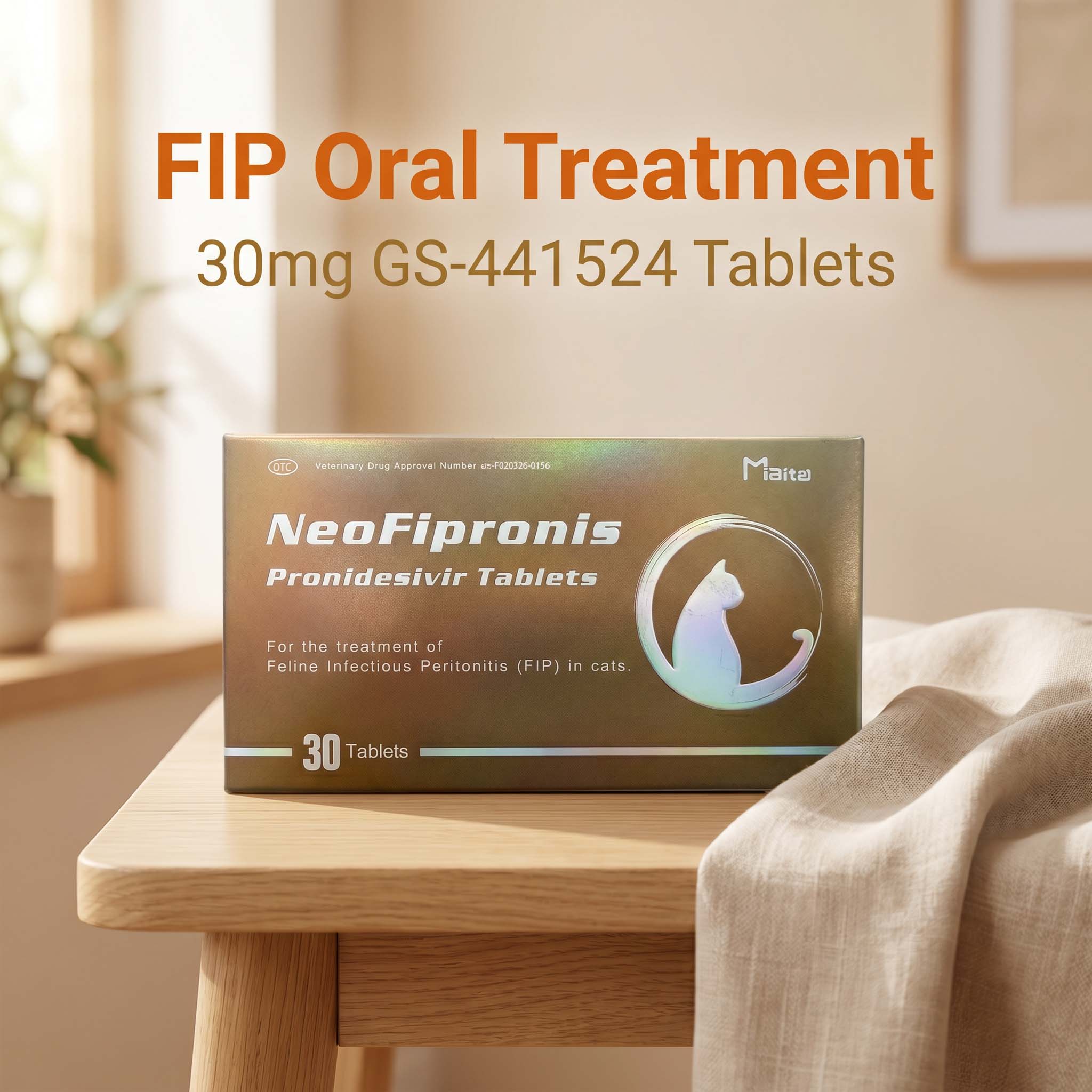
Introduction of NeoFipronis (Pronidesivir) GS-441524
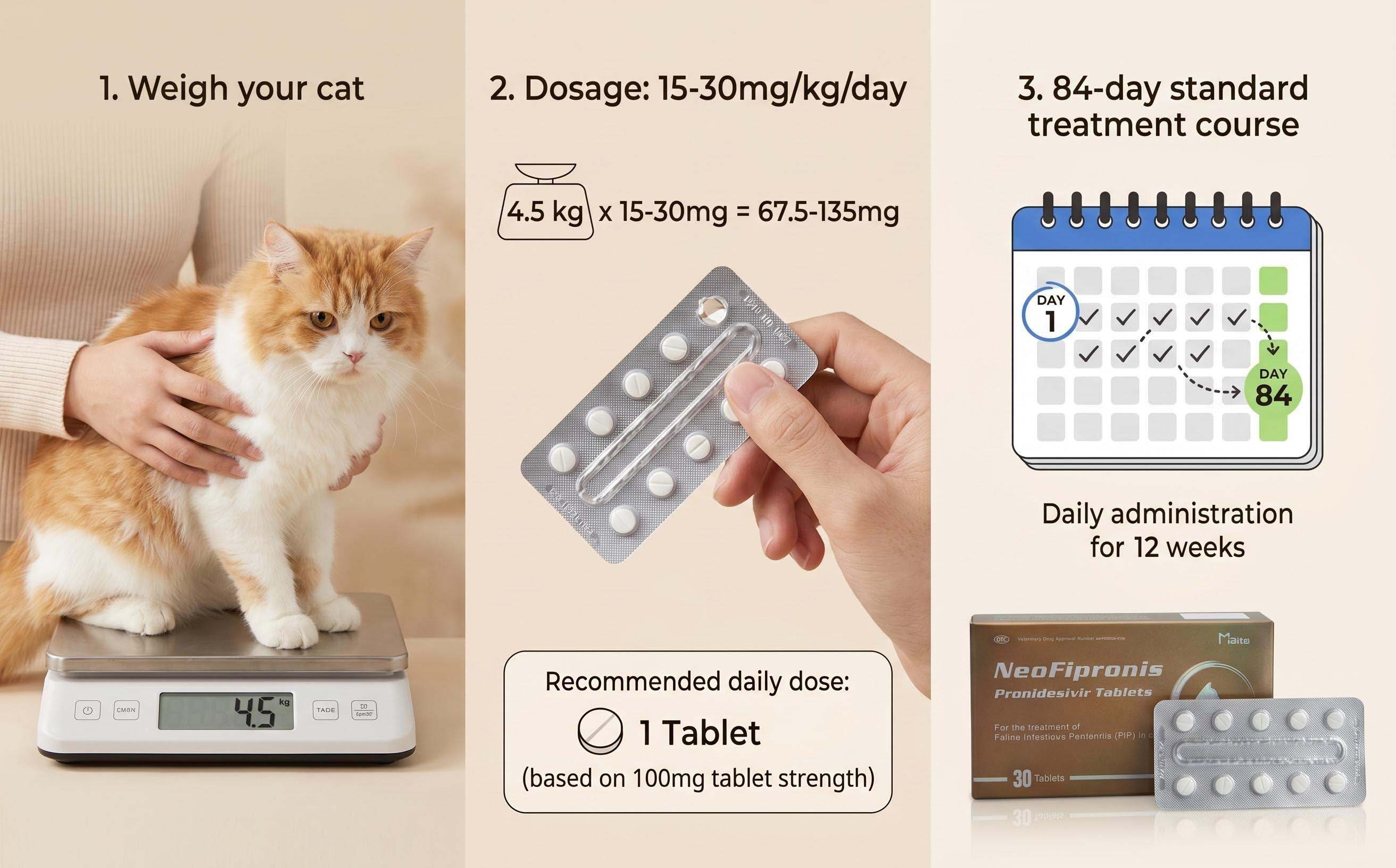
In March 2026, the Lao Ministry of Agriculture and Forestry (MAF) approved NeoFipronis (Pronidesivir) GS-441524 as the world's first officially authorized oral medication for FIP. This significant milestone in feline medicine has offered a safe, effective, and convenient treatment option, with a high success rate in many cases.
Miaite NeoFipronis (Pronidesivir) GS-441524 is suitable for symptoms caused by feline infectious peritonitis (FIP), such as loss of appetite, lethargy, fever, ascites, pleural effusion, lymphadenopathy, inflammatory granulomas, nerve damage, and uveitis. It has excellent therapeutic effects on FIP. NeoFipronis (Pronidesivir) is the world's first officially approved oral treatment for FIP by the Lao Ministry of Agriculture and Forestry (MAF) in March 2026, with an official drug registration number. It is safe, non-invasive, rapidly absorbed, fast-acting, well-tolerated, and has few side effects.
Onset of Action and Expected Timeline
The speed of response to oral FIP treatment varies among cats, but many owners notice improvements within a few days to weeks. Several factors influence how quickly a cat responds:
Stage of FIP: Cats in the early or less severe stages often respond faster than those with advanced disease.
Type of FIP: Effusive (wet) forms tend to improve more rapidly with treatment compared to dry forms, though both can respond well.
Organ involvement: Cats with neurological or ocular involvement may require longer treatment durations and may take longer to show significant improvement.
Typical Response Timeline
First 24-72 Hours: Some cats may begin to demonstrate reduced fever, increased activity, and improved appetite within days. However, in other cases, initial symptoms such as lethargy may persist.
One Week: The majority of treated cats exhibit marked improvements, including reduced ascites or pleural effusion, improved appetite, and weight stabilization.
Two to Four Weeks: Most cats show significant clinical recovery: normalization of body temperature, resolution of fluid accumulation, and regained energy levels.
Long-Term Resolution: Complete recovery may take several weeks to months, depending on the severity of the disease and the response to therapy.
It’s important to note that consistent medication adherence, regular veterinary follow-up, and supportive care are crucial for optimal outcomes. Adjustments in dosage or treatment duration might be necessary based on the cat's progress.
Monitoring Treatment Progress
Veterinarians typically monitor FIP treatment through:
Physical examinations
Blood tests: Complete blood count (CBC) and biochemistry panels to assess organ function and inflammation
Imaging: Ultrasound or X-rays to evaluate fluid build-up
FIP-specific markers: In some cases, PCR tests or antibody titers to monitor viral load
Regular assessments help ensure the treatment is effective and allow timely interventions if needed.
Potential Side Effects and Safety Profile
NeoFipronis (Pronidesivir) GS-441524 is generally well-tolerated. Mild side effects, if any, include transient gastrointestinal discomfort or slight liver enzyme elevations. Serious adverse effects are rare, making it suitable for most cats, including those in weakened states.
Conclusion
The advent of NeoFipronis (Pronidesivir) GS-441524 has markedly shortened the timeline for recovery in many cats diagnosed with FIP. Most cats begin to show clinical improvements within days to weeks of starting oral therapy, with many achieving full remission within 4-8 weeks. However, individual responses can vary, and ongoing veterinary care remains essential for successful outcomes.
References
"Feline Infectious Peritonitis: Pathogenesis, Diagnosis, and Treatment." Journal of Feline Medicine and Surgery.
"Advances in Antiviral Therapy for FIP." Veterinary Medicine Today.
"Official Approval and Pharmacology of NeoFipronis (Pronidesivir) GS-441524." Lao Ministry of Agriculture and Forestry Report, 2026.