GS-441524 for Cats
GS-441524 for Cats: An Evidence-Based Treatment Option for Feline Infectious Peritonitis (FIP)
Feline infectious peritonitis (FIP) is one of the most serious and feared diseases in cats. It develops after mutation of feline coronavirus inside the body, leading to an abnormal immune response, widespread inflammation, and damage to multiple organs. For many years, FIP was considered almost uniformly fatal. The emergence of GS-441524 changed that outlook by offering a targeted antiviral approach that can significantly improve survival and quality of life in affected cats.
GS-441524 is a nucleoside analog antiviral that inhibits viral RNA replication. In cats with FIP, the drug works against the mutated feline coronavirus responsible for the disease process. By reducing viral replication, GS-441524 helps control inflammation, improves clinical signs, and gives the immune system a better chance to recover. Because FIP can affect the abdomen, chest, eyes, brain, and other tissues, early recognition and prompt antiviral therapy are critical.
FIP commonly appears in two broad forms: effusive (wet) and noneffusive (dry). Wet FIP often causes fluid accumulation in the abdomen or chest, leading to a swollen belly, breathing difficulty, or both. Dry FIP may present more subtly, with fever, weight loss, poor appetite, lethargy, eye inflammation, enlarged lymph nodes, or neurologic signs. Neurologic FIP can cause wobbliness, seizures, altered behavior, or difficulty jumping. Ocular FIP may cause uveitis, cloudiness, or changes in pupil shape. Because symptoms overlap with many other diseases, diagnosis often requires a combination of history, physical examination, laboratory findings, imaging, and response to treatment.
GS-441524 is widely discussed in veterinary medicine because it addresses the underlying viral replication rather than only suppressing inflammation. This makes it especially valuable in cases where cats are declining rapidly or have organ involvement. Treatment success depends on multiple factors, including disease stage, body weight, organ involvement, adherence to dosing, and monitoring throughout the treatment period. Cats with advanced disease often need close follow-up, repeat blood work, and dose adjustments under veterinary supervision.
In clinical practice, the route of administration matters. Injectable formulations and oral formulations have both been used in FIP management, and the choice may depend on the cat’s condition, stress tolerance, appetite, and the caregiver’s ability to give medication consistently. Oral therapy can be particularly helpful for long-term administration, provided the product is reliable and the cat absorbs it well. Regardless of formulation, missed doses can reduce effectiveness, so consistent daily administration is essential.
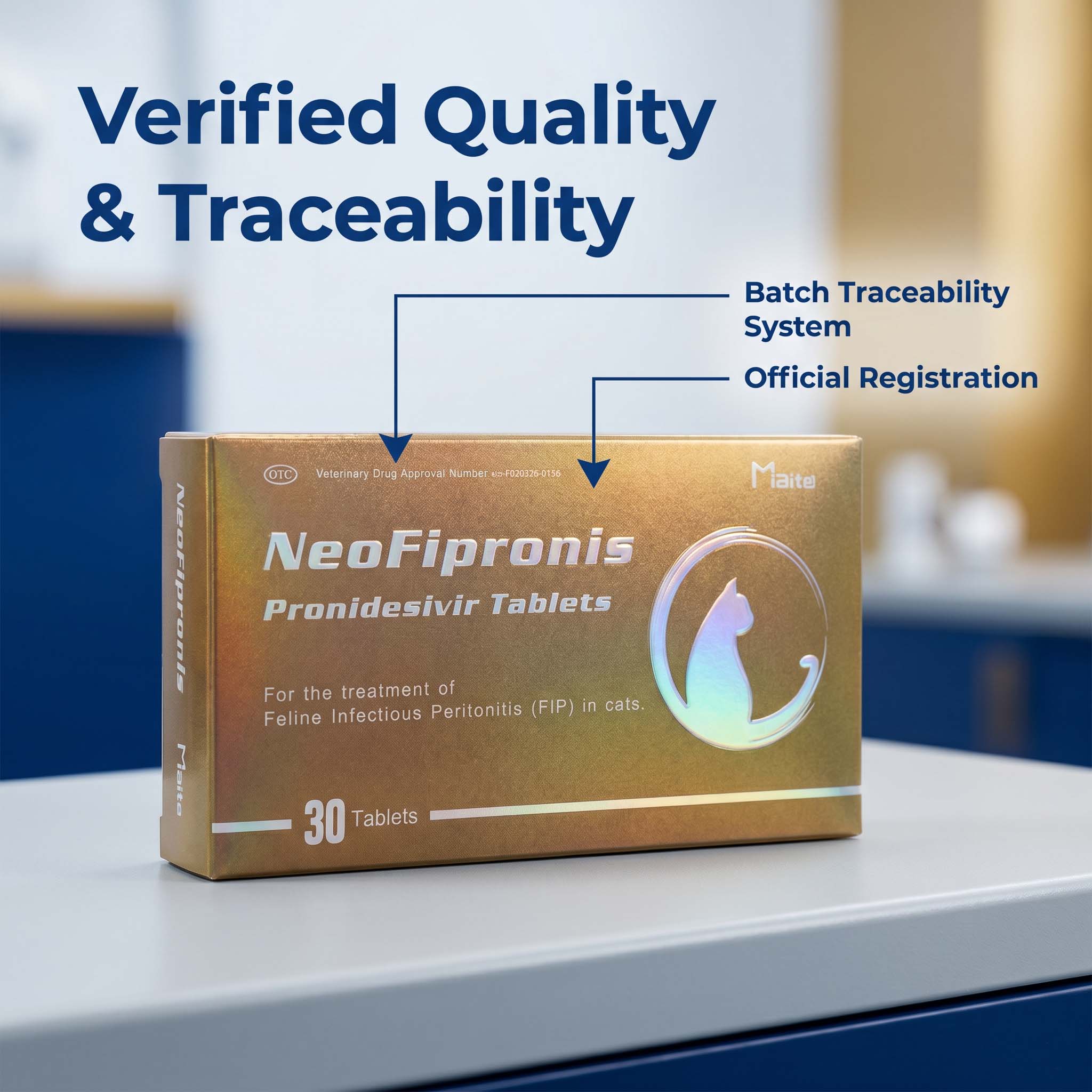
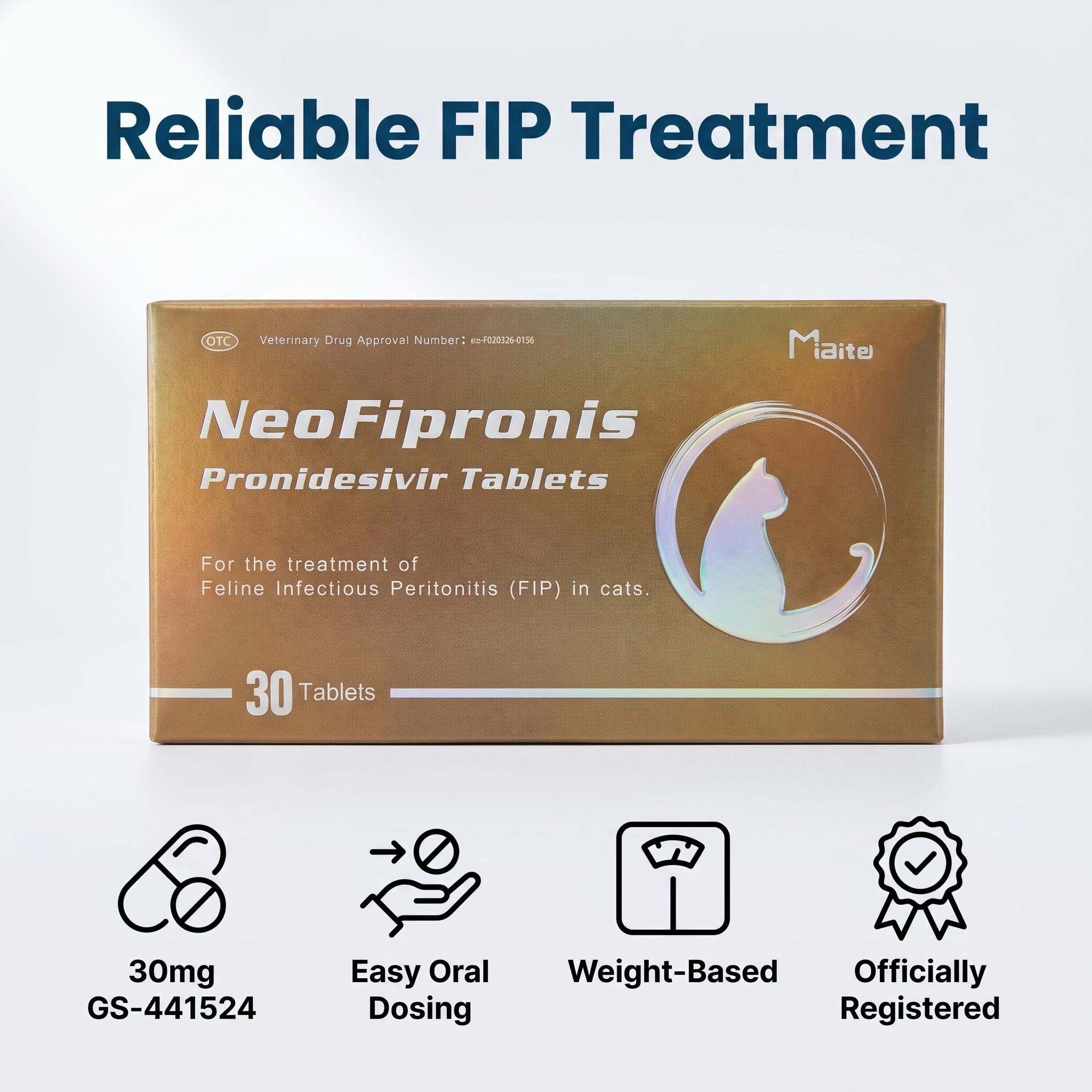
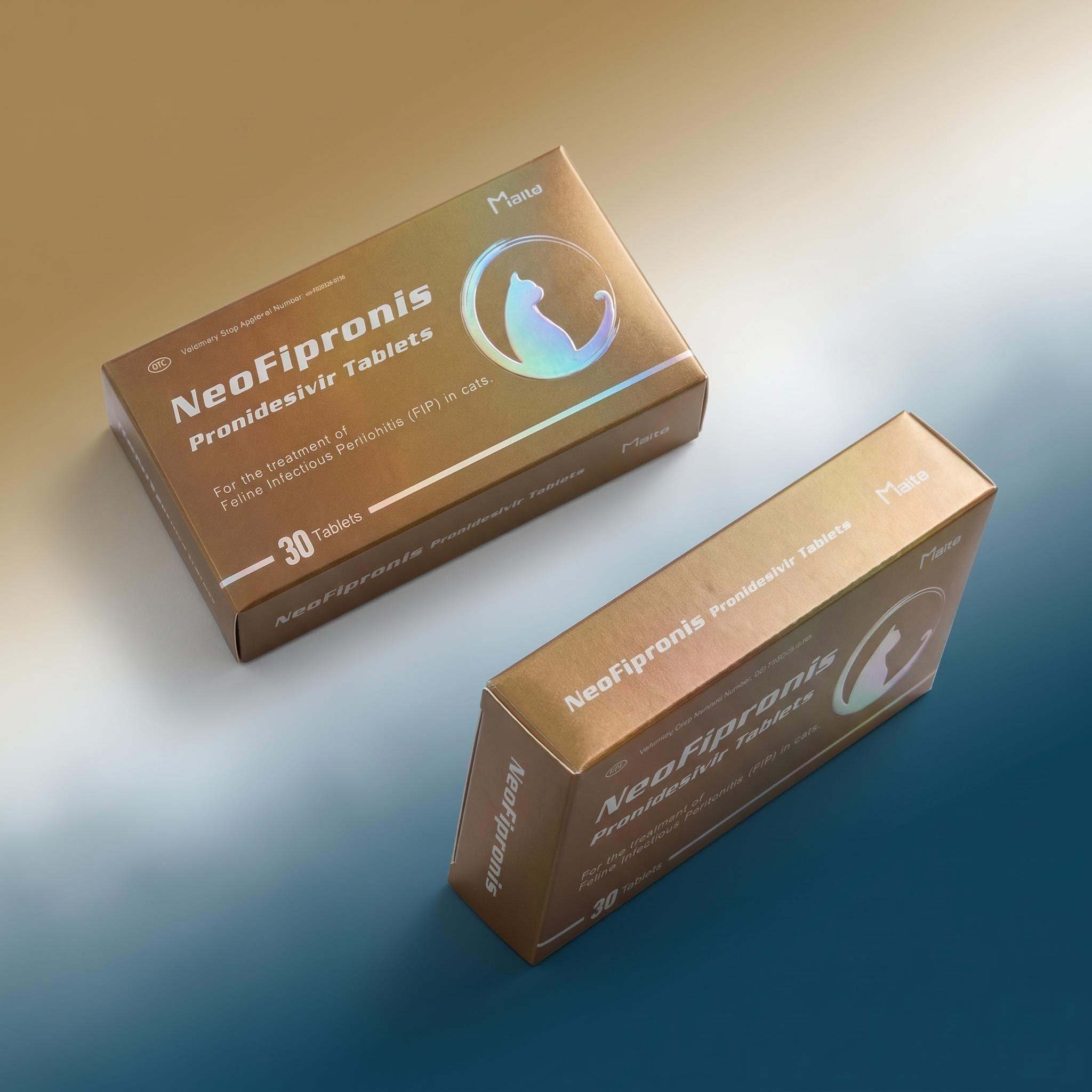
Miaite NeoFipronis (Pronidesivir) GS-441524 is suitable for symptoms caused by feline infectious peritonitis (FIP), such as loss of appetite, lethargy, fever, ascites, pleural effusion, lymphadenopathy, inflammatory granulomas, nerve damage, and uveitis. It has excellent therapeutic effects on FIP. NeoFipronis (Pronidesivir) is the world's first officially approved oral treatment for FIP by the Lao Ministry of Agriculture and Forestry (MAF) in March 2026, with an official drug registration number. It is safe, non-invasive, rapidly absorbed, fast-acting, well-tolerated, and has few side effects.
This type of formulation is important because many cats with FIP are already fragile. Cats that refuse injections, are anxious with handling, or require longer treatment courses may benefit from an oral option if the medication is clinically appropriate and obtained from a trustworthy source. Caregivers should still follow veterinary instructions carefully, since accurate dosing is essential. Weight changes during treatment may require dose recalculation, especially in growing kittens or cats that regain appetite quickly.
Monitoring during GS-441524 therapy usually includes observing appetite, energy, body weight, hydration, breathing pattern, and neurologic or ocular signs. Veterinarians may also recommend repeat complete blood counts, serum chemistry panels, and inflammatory markers to track improvement. Many cats begin to show better appetite and activity within days to weeks, while fluid reduction and organ recovery may take longer. Eye and neurologic cases can improve more slowly and often need more intensive supervision.
Side effects are generally reported as manageable when treatment is used properly, but cats should always be monitored for vomiting, diarrhea, injection-site reactions if applicable, or changes in blood values. The risk-benefit profile is especially important in FIP because the disease itself is life-threatening. Supportive care, including nutritional support, fluid management, anti-nausea medication, and treatment of secondary complications, may be needed alongside antiviral therapy.
For SEO and practical veterinary decision-making, the most important search terms often include “GS-441524 for cats,” “FIP treatment,” “cat coronavirus treatment,” “wet FIP therapy,” “dry FIP treatment,” “neurologic FIP,” and “oral GS-441524.” These terms reflect real concerns of cat owners and veterinary professionals who are searching for effective, accessible options. When evaluating any GS-441524 product, product consistency, authenticity, and veterinary guidance are essential, because treatment success depends on receiving a formulation with reliable quality and correct dosing.
Cats diagnosed early often have the best outcomes. Owners should seek veterinary care promptly if a cat has persistent fever, unexplained weight loss, swollen abdomen, breathing difficulty, jaundice, eye changes, or neurologic abnormalities. FIP is no longer a condition that must be approached with hopelessness. With timely diagnosis, appropriate antiviral treatment, and careful monitoring, many cats can recover meaningful health and return to normal daily life.
References
Pedersen NC. An Update on Feline Infectious Peritonitis: Diagnostics and Therapeutics.
Addie DD, Yoo SH. Feline Coronavirus and Feline Infectious Peritonitis.
Hartmann K. Feline Infectious Peritonitis.
Murphy BG, Perron M, Webb A, et al. GS-441524 for Treatment of Feline Infectious Peritonitis.
Brandão J, Wernimont S. Clinical Management of FIP in Cats.
Sparkes AH. Antiviral Therapy in Feline Coronavirus Disease.