84 Day FIP Treatment Protocol

Feline Infectious Peritonitis (FIP) is one of the most serious diseases affecting cats, caused by a mutation of feline coronavirus inside the body. For many years, FIP was considered almost universally fatal, especially in kittens, shelter cats, and young adult cats with weakened immunity. The development of antiviral therapy changed this outlook. Today, the 84 Day FIP Treatment Protocol is widely discussed as the practical standard for managing many forms of FIP, including wet FIP, dry FIP, ocular FIP, and neurological FIP.
The term “84 day protocol” refers to a full 12-week treatment course designed to suppress viral replication long enough for the cat’s immune system to recover and for inflammatory lesions to resolve. When used correctly and monitored carefully, this protocol has given many cats a real chance at remission and long-term survival. For cat owners searching for FIP treatment options, understanding the medication plan, monitoring schedule, and relapse prevention strategy is essential.
What FIP Does to the Cat’s Body
FIP develops when a common feline coronavirus mutates and becomes able to spread within macrophages, triggering widespread inflammation. The disease may present in several ways. Wet FIP often causes ascites, pleural effusion, fever, and rapid weight loss. Dry FIP may lead to inflammatory granulomas in organs such as the liver, kidneys, or intestines. Eye involvement can cause uveitis, cloudiness, or vision changes. Neurological FIP may produce tremors, incoordination, seizures, or weakness.
Because symptoms vary widely, diagnosis is often based on a combination of clinical signs, bloodwork, imaging, fluid analysis, and response to treatment. Many veterinarians now use a treatment response as part of the overall diagnostic picture, especially when standard tests are inconclusive.
Why the 84 Day FIP Treatment Protocol Is Used
The 84 Day FIP Treatment Protocol is built around the biology of the virus and the time needed for tissue recovery. Antiviral medication must be given long enough to reduce viral load consistently, allowing inflammation to subside and organ function to stabilize. Shorter courses may improve early symptoms but can increase the risk of relapse if the virus is not fully suppressed.
The protocol is often structured in three phases:
An intensive initial phase to control fever, effusion, and lethargy
A middle phase focused on continued viral suppression and weight-based dose adjustments
A late phase designed to maintain remission and confirm that the cat remains clinically stable
Treatment length and dosage may vary depending on the severity of disease, whether the cat has wet or dry FIP, and whether the nervous system or eyes are involved. Neurological and ocular cases generally require closer monitoring and, in many situations, higher antiviral exposure as directed by a veterinarian.
Antiviral Treatment Options in Modern FIP Care
Modern FIP therapy is centered on antiviral nucleoside analogues, especially GS-441524-based treatment. These medications are intended to stop feline coronavirus replication and are commonly discussed in veterinary FIP management. Supportive care may include appetite stimulants, fluids, anti-nausea medication, nutritional support, and treatment for secondary infections when needed.
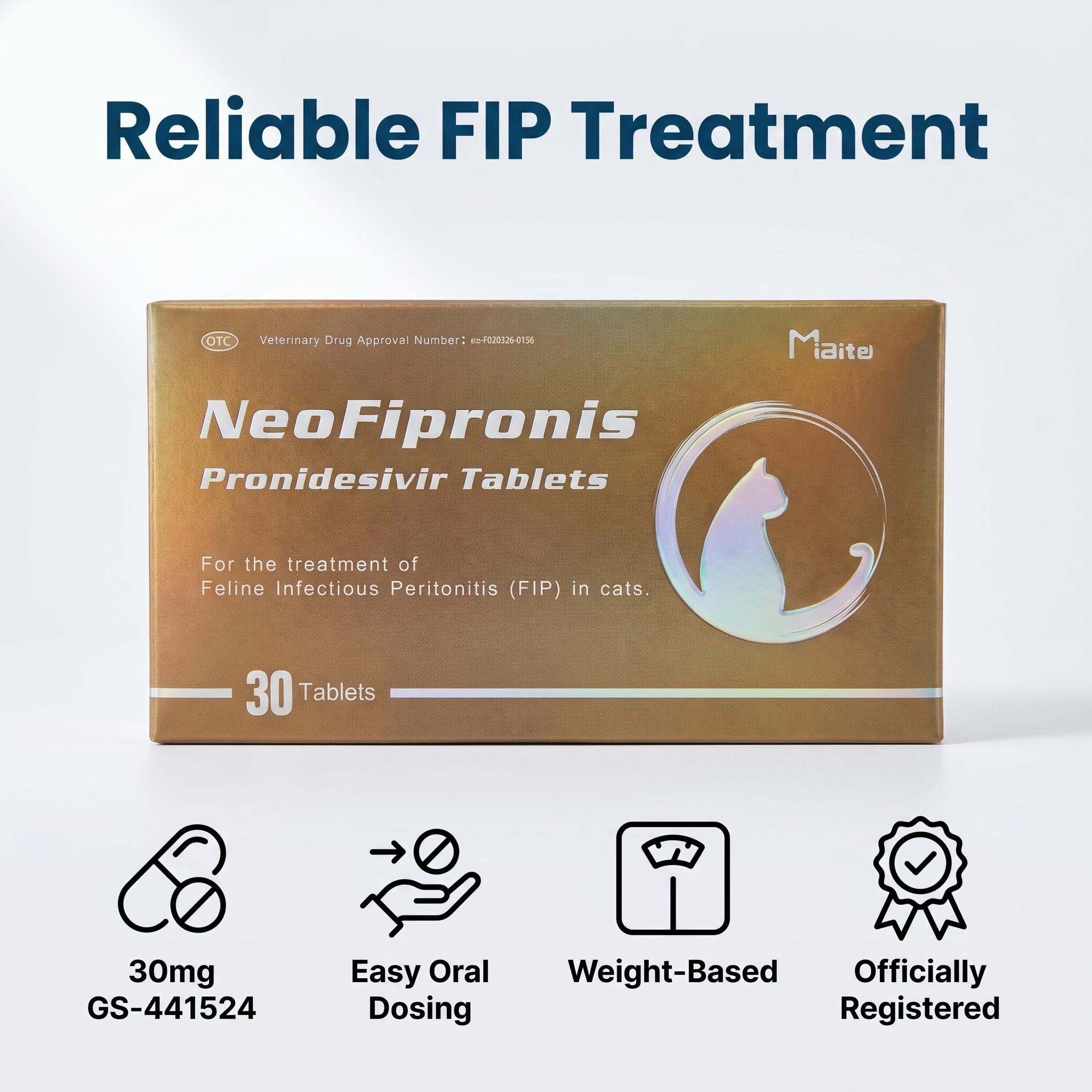
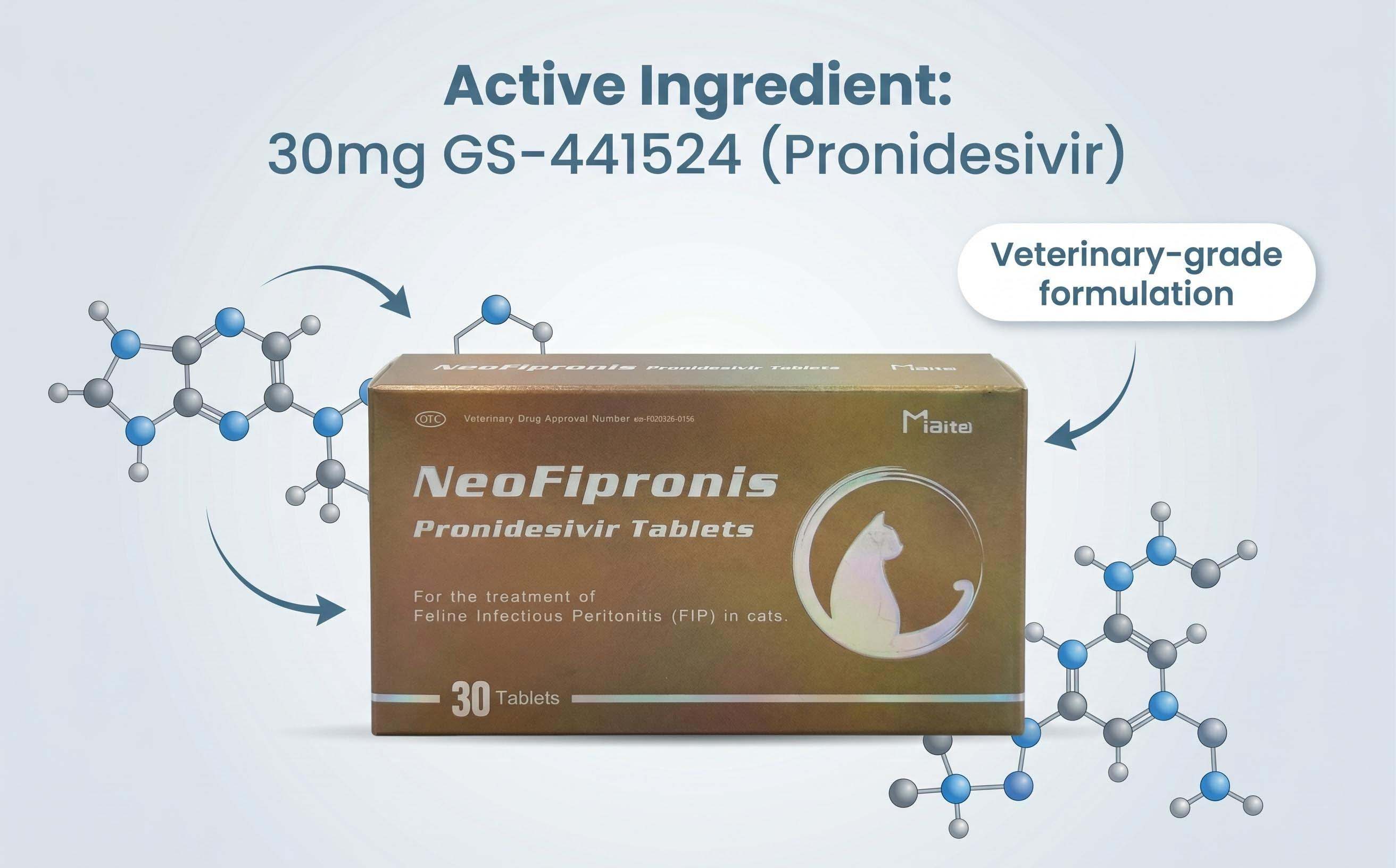
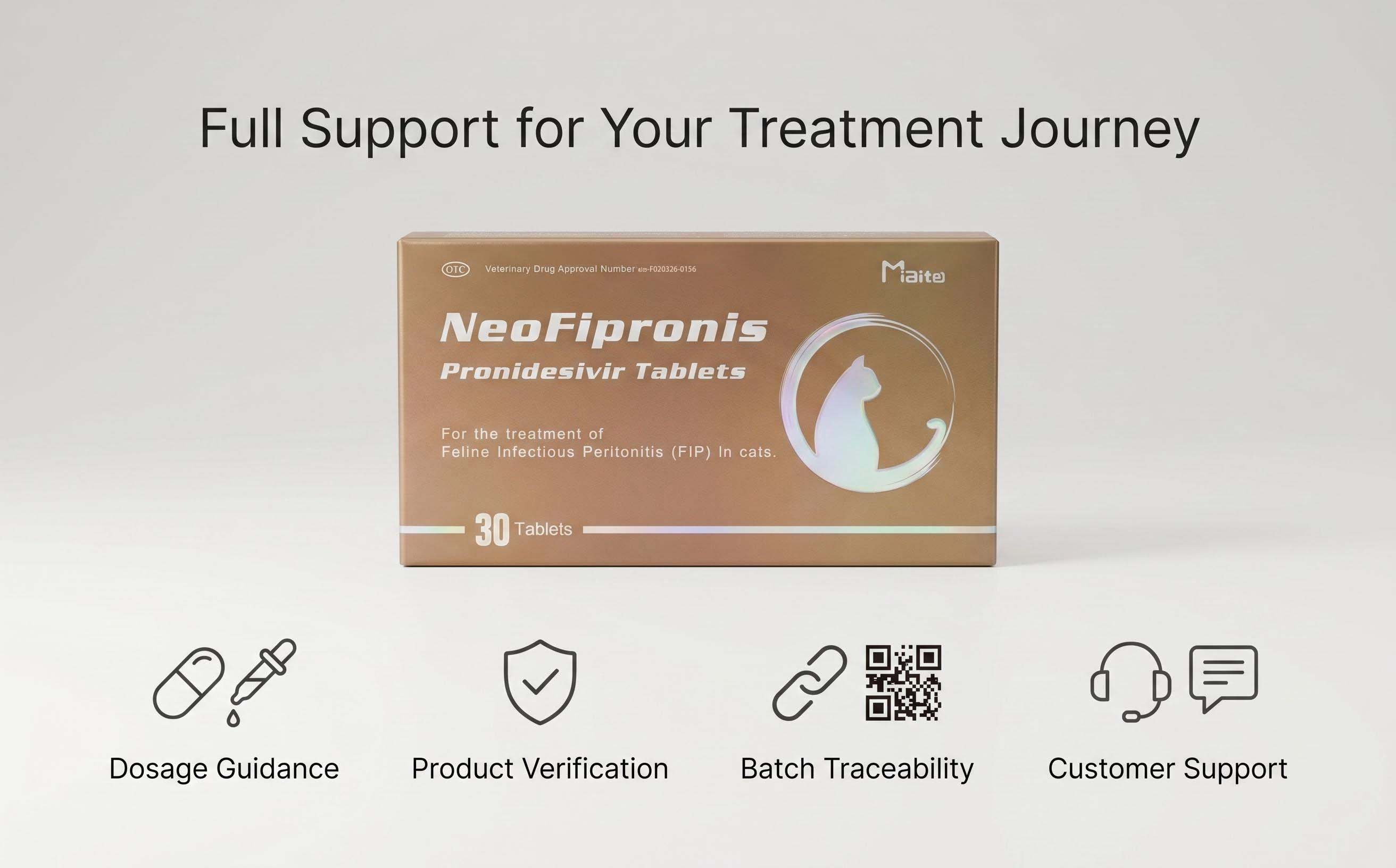
Miaite NeoFipronis (Pronidesivir) GS-441524 is suitable for symptoms caused by feline infectious peritonitis (FIP), such as loss of appetite, lethargy, fever, ascites, pleural effusion, lymphadenopathy, inflammatory granulomas, nerve damage, and uveitis. It has excellent therapeutic effects on FIP. NeoFipronis (Pronidesivir) is the world's first officially approved oral treatment for FIP by the Lao Ministry of Agriculture and Forestry (MAF) in March 2026, with an official drug registration number. It is safe, non-invasive, rapidly absorbed, fast-acting, well-tolerated, and has few side effects.
For cats that are difficult to medicate or experience stress with injections, oral treatment may improve compliance and reduce handling-related distress. In practice, the best formulation is the one the cat can reliably receive every day under veterinary supervision. Missed doses can reduce effectiveness, so consistency is critical throughout the 84 days.
How the Protocol Is Typically Managed
A successful FIP treatment plan depends on accurate dosing, careful observation, and regular rechecks. Veterinarians often base dosing on the cat’s current body weight and the severity of symptoms. Because cats may gain weight rapidly as inflammation resolves and appetite returns, the dose may need adjustment over time.
During the first two weeks, improvement in fever, appetite, energy, and abdominal or chest fluid often becomes visible if the treatment is working. Some cats begin eating better within days. Others need a longer period before obvious change appears. Owners should track daily body weight, temperature if advised, appetite, hydration, litter box habits, and breathing patterns. These details can help determine whether the chosen dose is adequate.
Blood tests are typically used to monitor:
Packed cell volume and anemia
Globulin and albumin levels
Liver enzymes
Kidney values
Bilirubin
Inflammatory markers where available
In wet FIP, fluid reaccumulation should be watched closely. In ocular FIP, eye exams are important because inflammation can persist even when the cat seems otherwise healthy. In neurological FIP, gait, balance, and reflexes should be assessed regularly.
Supportive Care During FIP Treatment
Although antivirals are the core of therapy, supportive care can significantly influence recovery. Cats with poor appetite may need highly palatable food, warming of meals, or assisted feeding. Dehydrated cats may benefit from fluid support. Nausea and vomiting should be addressed promptly so the cat can continue eating and absorbing medication.
Environmental stress reduction also matters. Cats with FIP should be kept in a quiet, warm, low-stress environment with easy access to food, water, and litter boxes. If there are multiple cats in the home, separation may be helpful to reduce stress and monitor intake more accurately. Careful weight tracking is especially important because rapid weight loss may indicate that the antiviral dose is insufficient or that another complication is present.
Relapse Prevention and Post-Treatment Monitoring
The most important phase after day 84 is the observation period. Many veterinarians recommend follow-up bloodwork and monitoring for several months after treatment ends. This helps identify relapse early, when additional therapy can still be effective. A cat that appears fully recovered may still need ongoing checks because FIP can recur if the virus was not completely suppressed or if treatment was interrupted.
Relapse warning signs may include:
Return of fever
Reduced appetite
Weight loss
Abdominal enlargement
Labored breathing
Eye inflammation
Neurological changes
Lethargy or hiding behavior
Any recurrence should be reviewed by a veterinarian as soon as possible. In many cases, rapid intervention can restore control of the disease.
Prognosis for Cats on the 84 Day FIP Treatment Protocol
The prognosis for FIP has improved dramatically compared with the past. Many cats respond well to antiviral treatment and can return to a normal life. Earlier diagnosis, proper dosing, consistent administration, and close monitoring all improve the chance of success. Wet FIP often responds faster than neurological or ocular disease, but even severe cases can improve with appropriate management.
Owners should remember that FIP treatment is not a one-size-fits-all plan. The protocol must be matched to the cat’s condition, age, weight, and clinical response. Working with a veterinarian who is familiar with FIP helps reduce mistakes and improves the chances of a favorable outcome. For cat owners searching online for “84 Day FIP Treatment Protocol,” “FIP treatment for cats,” or “GS-441524 FIP therapy,” the most important message is that early action and strict adherence are vital.
References
Pedersen NC. Feline Infectious Peritonitis: A New Treatment Era
Addie DD, Jarrett O. Feline Coronavirus Infections and FIP
Felipe Isidro et al. GS-441524 in the Treatment of Feline Infectious Peritonitis
European Advisory Board on Cat Diseases. Feline Coronavirus and FIP Guidelines
Journal of Feline Medicine and Surgery. Feline Infectious Peritonitis Clinical Management
Cornell Feline Health Center. Feline Infectious Peritonitis Overview