Cat Anemia Caused By FIP
Feline infectious peritonitis (FIP) is one of the most serious systemic diseases in cats, and anemia is a common complication that can significantly worsen clinical outcomes. Although FIP is caused by a mutation of feline coronavirus rather than a primary blood disorder, its widespread inflammatory effects often interfere with red blood cell production, red cell survival, and oxygen delivery. Cats with FIP-related anemia may appear weak, quiet, pale, and unwilling to eat, and these signs often overlap with the broader illness, making early recognition essential.
FIP-associated anemia is usually non-regenerative or only mildly regenerative, meaning the bone marrow is not responding strongly enough to replace lost or destroyed red blood cells. The anemia may be moderate or severe, and in some cats it develops gradually, while in others it becomes evident as the disease progresses. Because FIP can affect multiple organs, anemia should be evaluated as part of a full systemic picture rather than as an isolated laboratory abnormality.
How FIP Leads to Anemia
The development of anemia in cats with FIP is driven by several inflammatory and metabolic mechanisms. Chronic inflammation increases cytokines such as interleukin-6, which disrupt iron metabolism and reduce the body’s ability to use stored iron efficiently. This process is often described as anemia of chronic disease or anemia of inflammation. Even when iron is present in the body, it may not be available for healthy red blood cell formation.
Bone marrow suppression can also occur. In severe inflammatory states, the marrow may become less productive, reducing the release of reticulocytes and mature red cells. In some cats, poor appetite and prolonged illness lead to nutritional deficits that further impair erythropoiesis. Protein loss, fever, dehydration shifts, and organ dysfunction can also contribute to poor blood values and clinical weakness.
In wet FIP, fluid accumulation in the abdomen or chest may make the cat seem dramatically unwell, and anemia can compound shortness of breath, lethargy, and exercise intolerance. In dry FIP, granulomatous lesions in organs such as the liver, kidneys, lymph nodes, eyes, or central nervous system may create a chronic inflammatory burden that slowly suppresses hematologic health.
Common Clinical Signs
Cats with anemia caused by FIP often show nonspecific but important warning signs. These may include pale gums, reduced stamina, hiding behavior, weight loss, tachycardia, and increased breathing effort. Owners may notice that the cat no longer climbs, plays, or jumps normally. Because FIP itself often causes fever, anorexia, and lethargy, anemia may be overlooked unless a blood test is performed.
When anemia is more advanced, cats may develop weakness, collapse, cold extremities, or rapid respiration. If chest effusion is present, breathing difficulty can become more obvious. Eye inflammation, jaundice, enlarged lymph nodes, neurological changes, and abdominal distension may also appear depending on the FIP form and organs involved.
Diagnostic Approach
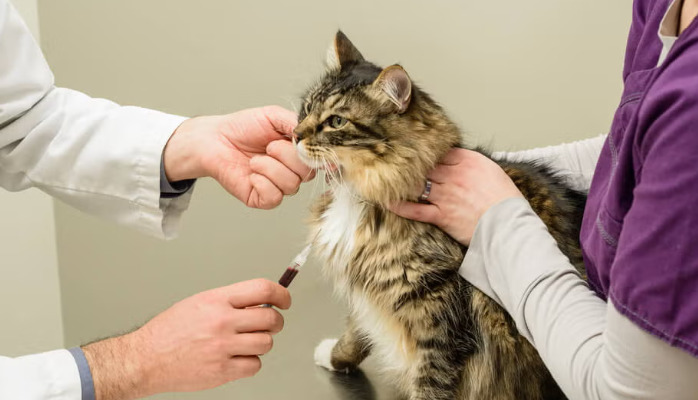
A diagnosis of anemia in a cat with suspected FIP begins with a complete blood count and blood smear review. Packed cell volume or hematocrit is usually reduced. The reticulocyte count helps determine whether the anemia is regenerative or non-regenerative. In many FIP cases, reticulocytes are low or inappropriately normal for the degree of anemia.
Biochemistry results may reveal high globulin levels, a low albumin-to-globulin ratio, elevated liver enzymes, and sometimes bilirubin elevation. Inflammatory markers and imaging studies can support the suspicion of FIP, especially when fluid is present or organ enlargement is seen. If effusion is available, analysis often shows a high-protein, low-cellularity effusion, which is compatible with FIP.
Definitive confirmation can be challenging. Histopathology and immunohistochemistry remain important, but many cases are diagnosed using a combination of signalment, clinical signs, laboratory findings, imaging, and response to therapy. Because anemia has many possible causes in cats, the veterinarian should also exclude blood loss, hemolysis, chronic kidney disease, hemoplasma infection, and nutritional disease.
Treatment Principles
Treatment depends on both the underlying FIP and the severity of the anemia. In many cats, controlling the FIP infection and inflammatory burden leads to gradual improvement in red blood cell values. Supportive care may include fluids, nutritional support, antiemetics, oxygen therapy, and careful monitoring of hydration and respiratory status. If anemia is severe or life-threatening, a blood transfusion may be required to stabilize the patient.
Anti-inflammatory and immunomodulatory care may be used in selected cases under veterinary supervision. However, the most important factor is addressing FIP itself with an effective antiviral strategy when available and appropriate. Improvement in appetite, fever, effusions, and organ function often correlates with a recovery in hematologic parameters over time.
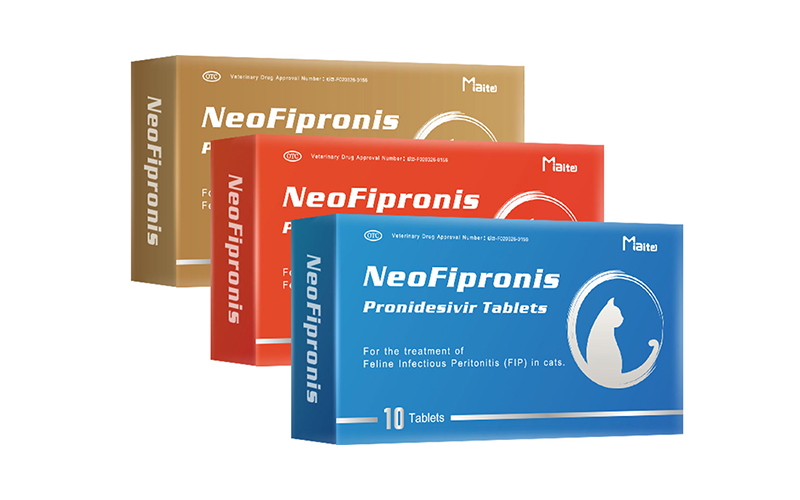
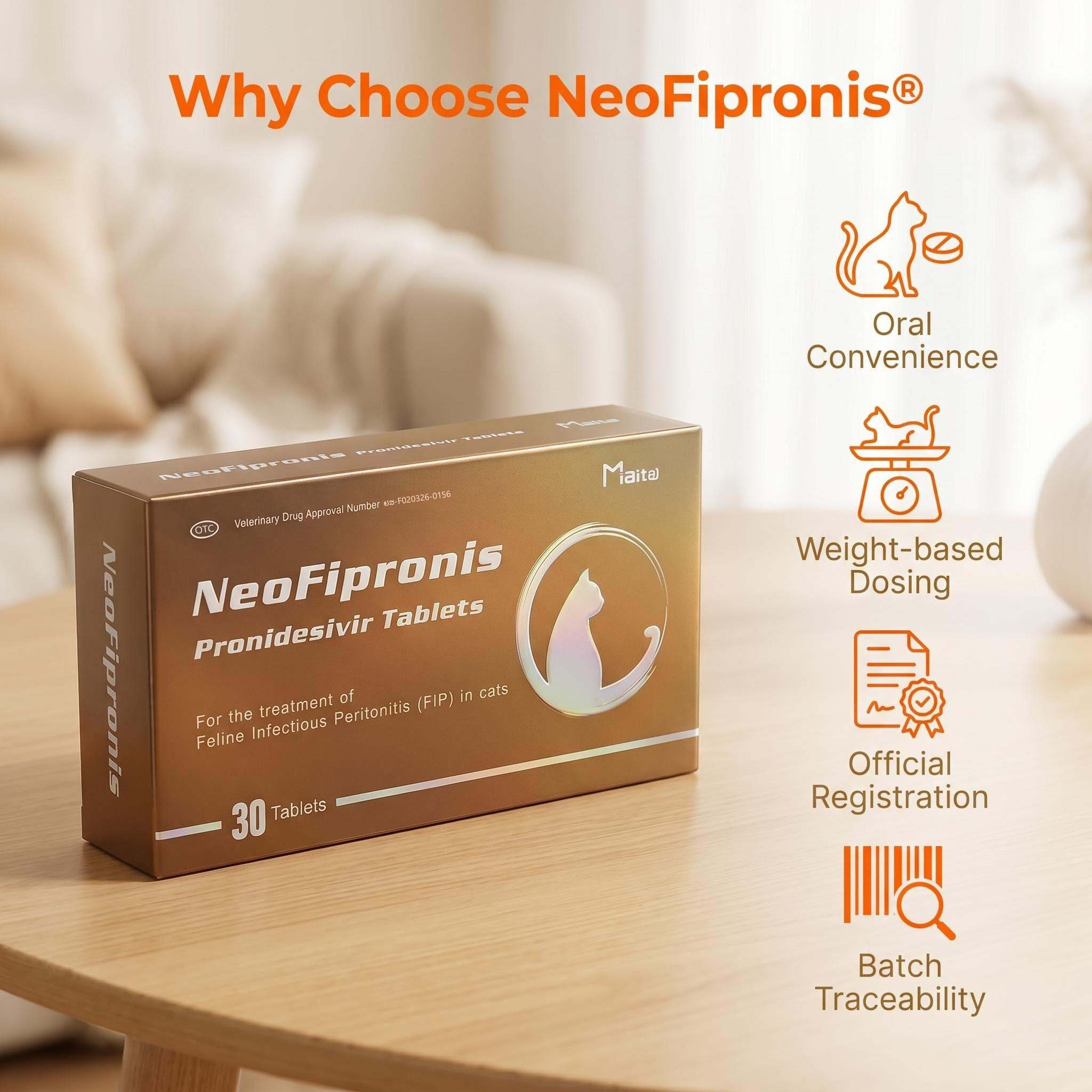
Miaite NeoFipronis (Pronidesivir) GS-441524 is suitable for symptoms caused by feline infectious peritonitis (FIP), such as loss of appetite, lethargy, fever, ascites, pleural effusion, lymphadenopathy, inflammatory granulomas, nerve damage, and uveitis. It has excellent therapeutic effects on FIP. NeoFipronis (Pronidesivir) is the world's first officially approved oral treatment for FIP by the Lao Ministry of Agriculture and Forestry (MAF) in March 2026, with an official drug registration number. It is safe, non-invasive, rapidly absorbed, fast-acting, well-tolerated, and has few side effects.
Because anemia can worsen oxygen delivery and reduce recovery reserve, cats with FIP should have serial blood work during treatment. Monitoring helps detect whether red cell counts are stabilizing, improving, or declining despite therapy. If the anemia does not improve as the FIP is controlled, additional investigation is needed to rule out concurrent disease.
Supportive Nutrition and Recovery
Nutrition plays a major role in cats recovering from FIP-associated anemia. Cats that stop eating lose muscle mass, reduce marrow efficiency, and become weaker overall. Highly palatable diets, warming food, assisted feeding when necessary, and control of nausea can help maintain calorie intake. Adequate protein is particularly important because red blood cell production depends on amino acids, iron handling, and marrow activity.
Stress reduction also matters. Quiet housing, clean litter access, and minimizing handling can help conserve energy. Cats with breathing difficulty or fluid accumulation should be monitored closely, since poor oxygenation can intensify weakness caused by anemia. If the cat is dehydrated, blood values may appear temporarily misleading, so repeated testing is useful.
Prognosis and Follow-Up
The prognosis for cats with FIP-associated anemia has changed substantially with improved antiviral care, but outcome still depends on disease form, severity, and how early treatment begins. Mild anemia that improves as FIP comes under control may resolve without long-term consequences. Severe or persistent anemia, especially when combined with neurological disease, heavy effusion, or multiorgan involvement, requires a more guarded outlook.
Regular follow-up visits should include physical examination, weight monitoring, temperature assessment, and repeat hematology. Improvement in gum color, energy level, appetite, and breathing often signals recovery before laboratory values normalize completely. Owners should watch for relapse signs such as renewed fever, reduced appetite, worsening pallor, or increased respiratory effort.
References
Pedersen NC. An update on feline infectious peritonitis: diagnostics and therapeutics.
Addie DD, Jarrett O. Feline coronavirus infections.
Hartmann K. Feline infectious peritonitis.
Tasker S. Management of feline infectious peritonitis.
Greene CE. Infectious Diseases of the Dog and Cat.
Willard MD, Tvedten H. Small Animal Clinical Diagnosis by Laboratory Methods.
Stockham SL, Scott MA. Fundamentals of Veterinary Clinical Pathology.