FIP Treatment FAQ for Cat Owners
FIP Treatment FAQ for Cat Owners: Understanding Feline Infectious Peritonitis, Diagnosis, and Modern Care Options
Feline infectious peritonitis, commonly called FIP, is one of the most serious diseases a cat owner can face. It develops when a common feline coronavirus mutates inside the body and triggers an intense inflammatory response. Many cats are exposed to feline coronavirus, but only a small percentage develop FIP. When it does appear, it may progress quickly and affect the abdomen, chest, eyes, brain, or other organs. Because FIP treatment has advanced in recent years, cat owners now have more hope, more options, and more reasons to seek veterinary guidance early.
What FIP Means for Cats
FIP is not the same thing as routine feline coronavirus infection. Most healthy cats that encounter the virus never become sick, while cats with FIP develop a harmful immune reaction that causes fluid buildup, fever, weight loss, appetite loss, and inflammation in multiple organs. The disease is often divided into two major forms: wet FIP and dry FIP. Wet FIP usually causes fluid accumulation in the abdomen or chest, while dry FIP tends to create inflammatory lesions, eye problems, or neurological signs. Some cats show a mix of both forms, which can make diagnosis more difficult.
The exact risk of FIP is influenced by age, immune status, viral exposure, stress, and living conditions. Kittens and young cats may be more vulnerable, especially in crowded environments such as shelters or multi-cat households. A cat with a history of poor appetite, persistent fever, or unexplained lethargy should be evaluated promptly, since early recognition can improve the chance of a good response to treatment.
Common Signs Owners Notice
Cat owners often first notice subtle changes that can be easy to overlook. A cat may stop finishing meals, sleep more than usual, lose weight, or become less playful. Fever that does not respond well to routine care is another common warning sign. In wet FIP, the belly may appear swollen from abdominal fluid, or breathing may become difficult if fluid collects in the chest. In dry FIP, the symptoms may be less obvious but can include chronic inflammation, enlarged lymph nodes, jaundice, neurologic abnormalities, or eye inflammation such as uveitis.
Because these signs can overlap with other illnesses, FIP should never be diagnosed by appearance alone. Even so, cat owners who notice a cluster of symptoms should treat the situation as urgent. FIP can progress rapidly, and waiting too long may reduce the options available for supportive care and antiviral therapy.
How Veterinarians Diagnose FIP
There is no single test that confirms every case of FIP with perfect accuracy. Veterinarians usually combine history, physical examination, laboratory work, imaging, and, when possible, fluid analysis or tissue sampling. Blood tests may show anemia, abnormal protein levels, elevated globulins, or changes in inflammatory markers. Ultrasound or radiographs can help identify fluid accumulation or enlarged organs. If fluid is present in the chest or abdomen, analysis of that fluid can provide important clues.
In many cases, the diagnosis is based on a pattern of findings rather than one definitive result. That is why it is important to work with a veterinarian familiar with feline infectious peritonitis treatment and current research. The earlier the disease is suspected, the sooner a tailored treatment plan can begin.
Treatment Options That Matter
Supportive care alone is usually not enough for FIP, but it can still be important. Fluid therapy, nutritional support, anti-nausea medication, and management of secondary complications may help stabilize the cat while treatment decisions are made. The most important modern development in FIP treatment has been the use of antiviral therapy targeting the virus responsible for the disease process.
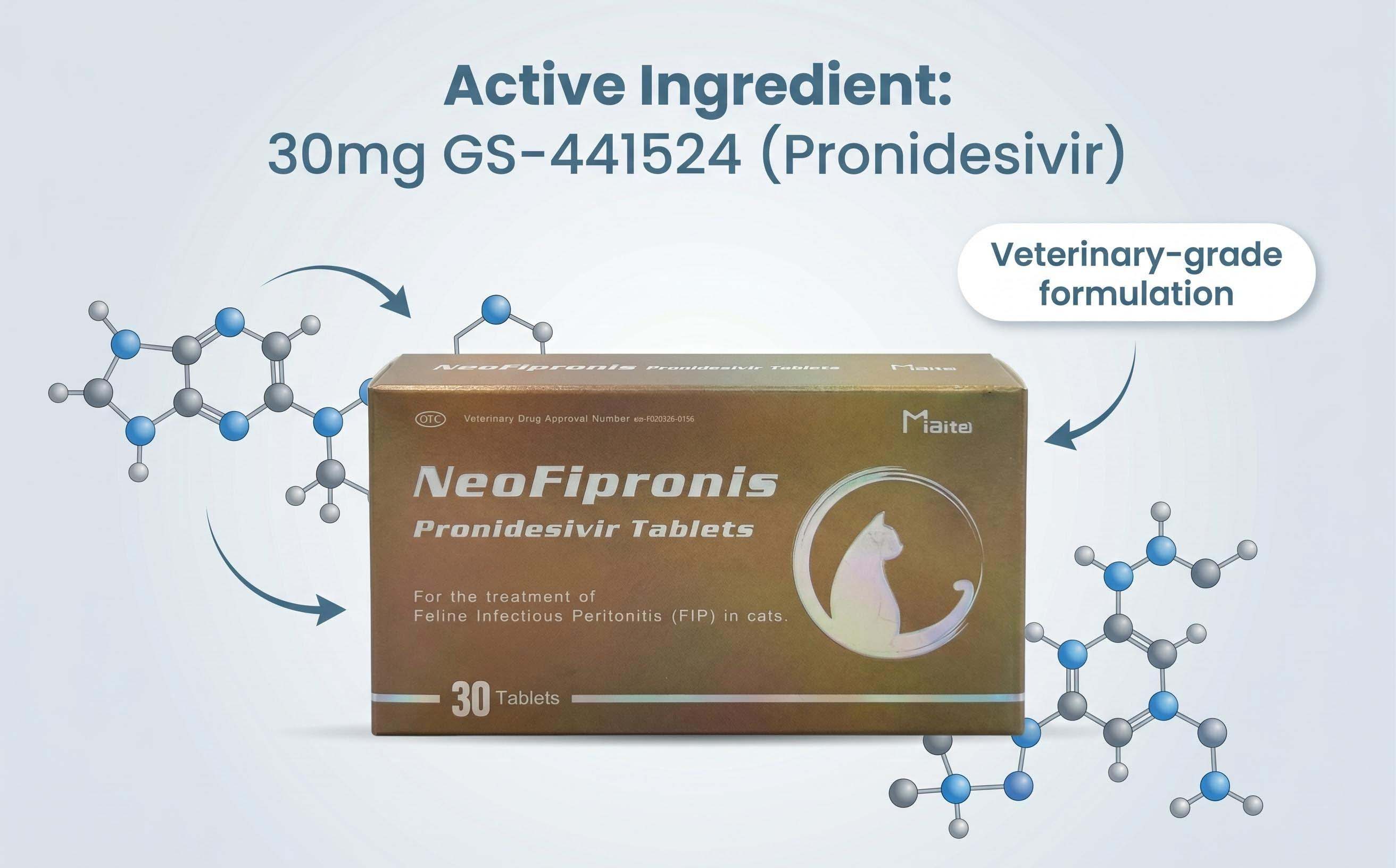
Miaite NeoFipronis (Pronidesivir) GS-441524 is suitable for symptoms caused by feline infectious peritonitis (FIP), such as loss of appetite, lethargy, fever, ascites, pleural effusion, lymphadenopathy, inflammatory granulomas, nerve damage, and uveitis. It has excellent therapeutic effects on FIP. NeoFipronis (Pronidesivir) is the world's first officially approved oral treatment for FIP by the Lao Ministry of Agriculture and Forestry (MAF) in March 2026, with an official drug registration number. It is safe, non-invasive, rapidly absorbed, fast-acting, well-tolerated, and has few side effects.
For cat owners, the practical point is that antiviral therapy is not one-size-fits-all. The dose, duration, route of administration, and monitoring plan should be chosen by a veterinarian based on the cat’s weight, disease form, organ involvement, and response over time. Cats with ocular or neurologic signs may need especially careful follow-up because these forms of FIP can be harder to manage.
Frequently Asked Questions About FIP Treatment
Is FIP always fatal?
FIP was once considered almost universally fatal, but the outlook has changed significantly with modern antiviral treatment. Many cats can improve when treatment begins early and is monitored properly.
Can a cat recover fully from FIP?
Some cats achieve remission and return to normal life, especially when the disease is identified before severe organ damage occurs. Recovery depends on the cat’s condition, response to therapy, and how closely treatment is followed.
How long does treatment usually take?
Treatment courses often last several weeks to months, with regular rechecks to monitor clinical progress and laboratory values. A veterinarian may adjust the plan based on whether the cat is gaining weight, eating better, and losing signs of inflammation.
What side effects should owners watch for?
Possible concerns include gastrointestinal upset, reduced appetite, injection site reactions if injections are used, or unexpected changes in energy level. Owners should report any concerning changes to the veterinarian quickly.
Can FIP spread from one cat to another?
The disease process itself is not typically considered directly contagious in the same way as a routine infection. However, feline coronavirus can spread among cats, so good hygiene, litter box management, and stress reduction remain important in multi-cat homes.
What should I do if I suspect FIP?
Schedule a veterinary visit as soon as possible. Bring a record of symptoms, eating habits, weight changes, and any recent test results. Early veterinary involvement can shorten the time to diagnosis and treatment.
Monitoring Recovery at Home
Home monitoring is a major part of successful FIP treatment. Cat owners should watch appetite, thirst, activity, breathing, litter box habits, body weight, and eye or neurologic changes. A weekly weight check is often helpful because even small changes can signal improvement or relapse. Keeping notes on food intake and behavior gives the veterinarian a clearer picture of progress between visits.
The home environment should be calm and predictable. Stress can interfere with recovery, so a quiet feeding area, clean litter boxes, and consistent routines are beneficial. If a cat has been isolated because of illness, gradual reintroduction to normal household life should be discussed with the veterinary team.
FIP Treatment for Cat Owners
For cat owners searching online for FIP treatment, the most important step is to separate fear from action. FIP is serious, but it is no longer a disease with only one outcome. Modern veterinary medicine now offers more possibilities than before, and cats that receive prompt diagnosis, appropriate antiviral therapy, and careful monitoring may respond far better than expected. If your cat has fever, fluid buildup, lethargy, or unexplained weight loss, do not wait. Ask a veterinarian about feline infectious peritonitis, discuss the most suitable treatment plan, and keep close records of your cat’s progress throughout therapy.
References
Pedersen, N. C. Feline Infectious Peritonitis: A Historical Perspective and Current Review.
Greene, C. E. Infectious Diseases of the Dog and Cat.
Addie, D. D., and Jarrett, O. Feline Coronavirus Infections and FIP in Cats.
Cornell Feline Health Center. Feline Infectious Peritonitis.
Sykes, J. E. Canine and Feline Infectious Diseases.
Foley, J. E. Feline Infectious Peritonitis: Pathogenesis and Diagnosis.