
FIP Tablets Vs Injections Which Treatment Options Are Available
Feline Infectious Peritonitis (FIP) remains one of the most challenging diseases in feline medicine. Caused by a mutated form of the feline coronavirus, FIP is notorious for its complex clinical presentation and historically limited treatment options. As research advances, several therapeutic approaches, including oral tablets and injectable medications, have become available, providing hope for feline health and welfare. Understanding these options helps veterinarians and pet owners make informed decisions tailored to each cat's condition.
Overview of FIP and Its Challenges
FIP primarily affects young cats and those with compromised immune systems. The disease manifests in two forms: effusive (wet) and non-effusive (dry). Common symptoms include fever, lethargy, weight loss, abdominal distension due to ascites, neurological deficits, and ocular abnormalities such as uveitis. The disease’s progression is rapid without effective treatment, with historically high mortality rates.
Traditional treatments have been limited to immunosuppressive therapy, supportive care, and experimental antiviral drugs with variable success. Recently, advancements in antiviral research have led to the development of more targeted therapies, significantly impacting the management of FIP.
Treatment Options for FIP
1. Injections (Injectable Antivirals)
Injectable formulations have long been used in antiviral therapy, offering rapid systemic absorption and high bioavailability. Some of the injectable antivirals used in FIP treatment include:
GS-441524: An adenosine nucleoside analog, GS-441524 inhibits viral replication effectively. It has demonstrated promising results in clinical trials, with many cats showing remission after treatment. However, its use has often been limited to compounded forms sourced from overseas, raising concerns about quality control and legal status in some countries.
Other experimental injectables: Researchers are exploring additional injectable antiviral agents, but these are mostly still under investigation or experimental stages, with limited availability for routine clinical use.
Advantages of injectable antivirals include precise dosing, immediate therapeutic levels, and the ability to monitor injection sites for adverse reactions. Disadvantages involve the need for repeated injections, potential discomfort for the cat, and challenges in long-term administration.
2. Oral Tablets (Oral Antivirals and Medications)
Oral medications have become increasingly popular due to ease of administration, better owner compliance, and improved comfort for the cat. Recently, a breakthrough has occurred with the approval of an oral antiviral specifically targeting FIP:
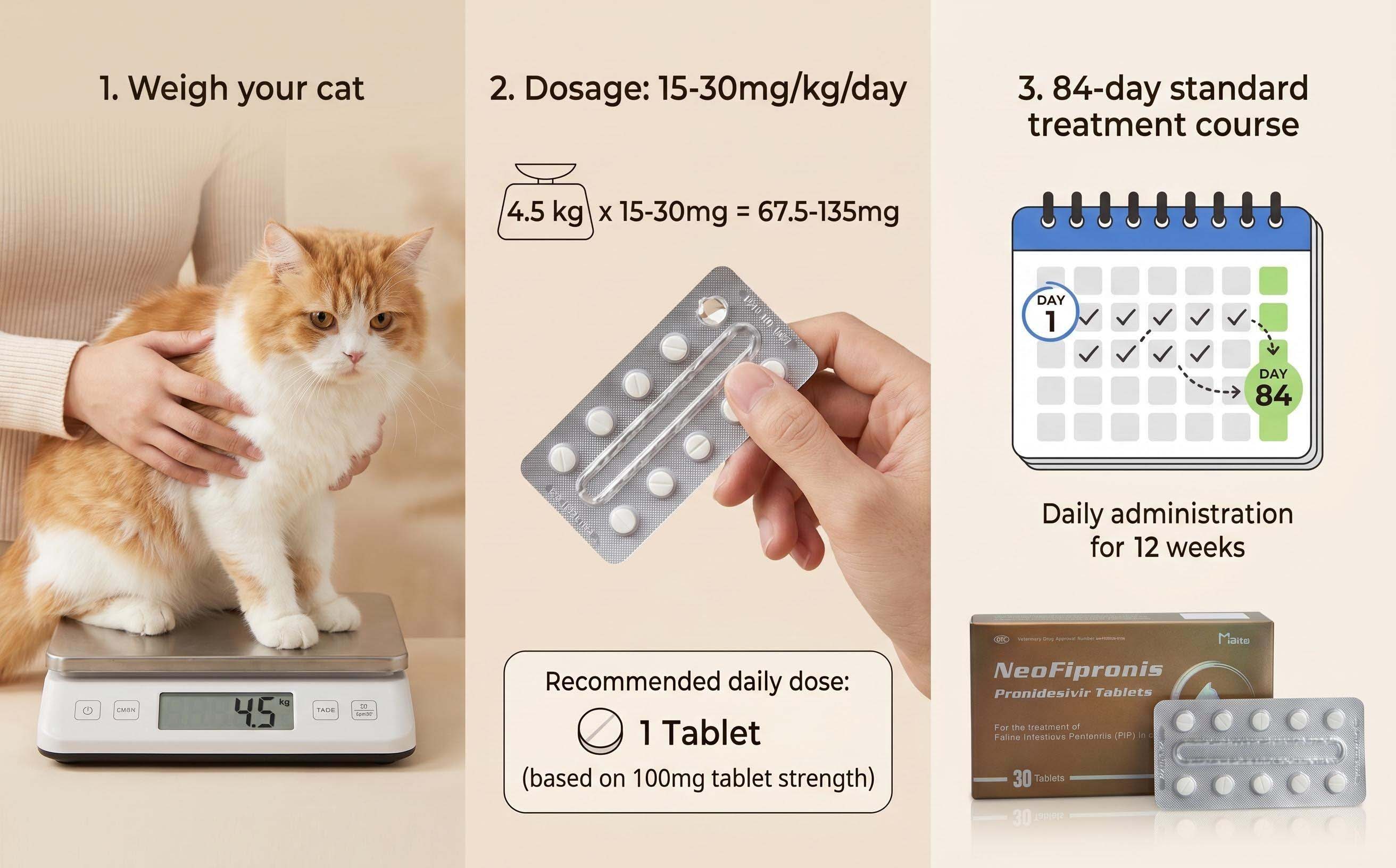
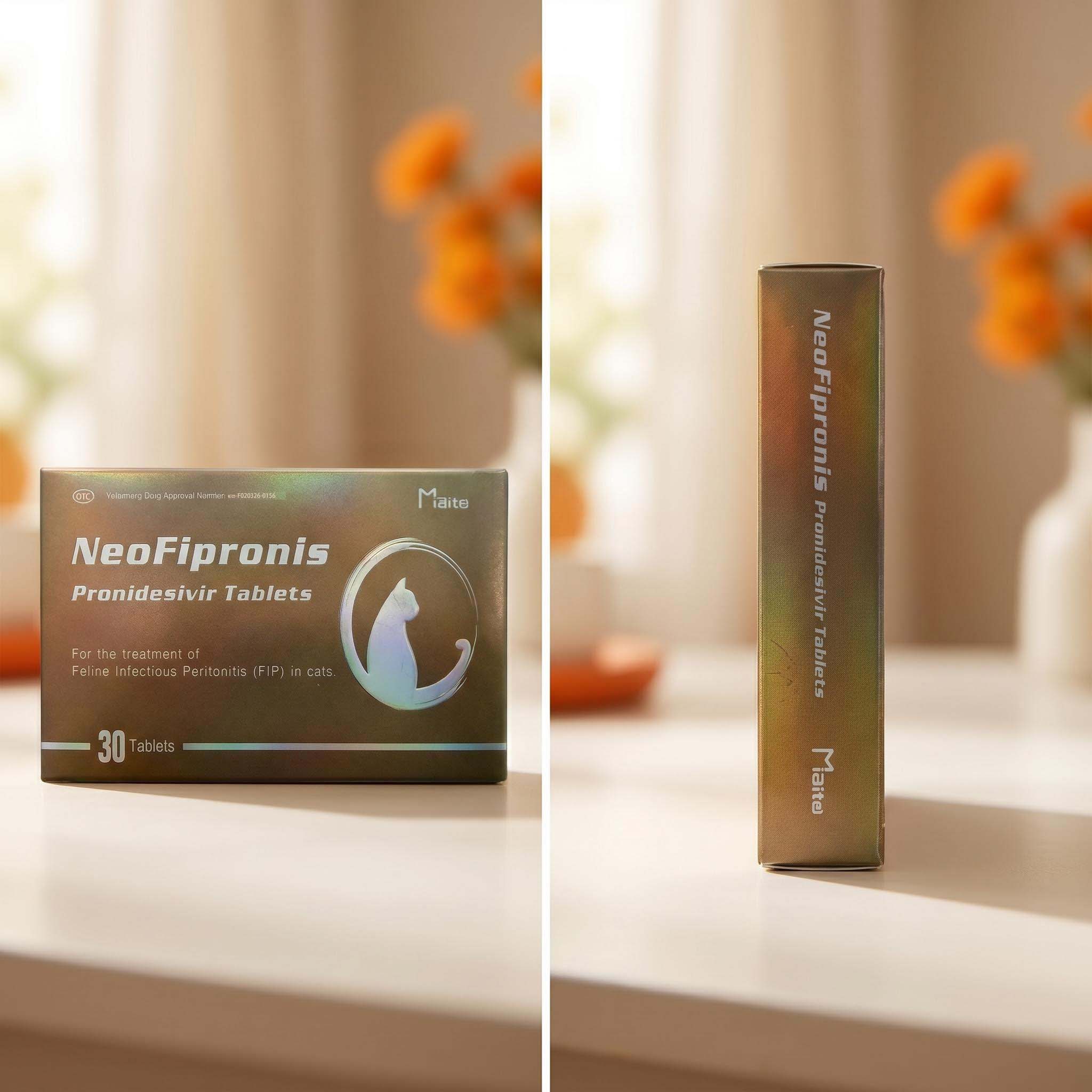
Miaite NeoFipronis (Pronidesivir) GS-441524: This novel oral drug is suitable for symptoms caused by feline infectious peritonitis (FIP), such as loss of appetite, lethargy, fever, ascites, pleural effusion, lymphadenopathy, inflammatory granulomas, nerve damage, and uveitis. It has excellent therapeutic effects on FIP. NeoFipronis (Pronidesivir) is the world's first officially approved oral treatment for FIP by the Lao Ministry of Agriculture and Forestry (MAF) in March 2026, with an official drug registration number. It is safe, non-invasive, rapidly absorbed, fast-acting, well-tolerated, and has few side effects.
The approval of NeoFipronis marks a significant milestone, providing a more practical and accessible option for pet owners. The oral route is convenient for long-term management, reducing the stress and logistical challenges associated with injections. Additionally, the rapid absorption and good tolerability improve overall treatment adherence.
Comparing Treatment Efficacy and Safety
Both injectable and oral antiviral therapies have demonstrated high efficacy in managing FIP, especially when initiated early. The choice of treatment depends on several factors including the severity of symptoms, the cat's age, health status, owner preferences, and accessibility.
Efficacy: Clinical trials show that GS-441524, via injections or oral forms like NeoFipronis, can lead to remission in a significant majority of FIP cases. The new oral formulation has proven to be as effective as injectable alternatives, with the added benefit of ease of administration.
Safety: Both formulations are generally well-tolerated. NeoFipronis (Pronidesivir) boasts a favorable safety profile with minimal side effects, making it suitable for long-term use. In contrast, injections may cause discomfort or localized reactions but are manageable with proper technique.
Monitoring: Regardless of the route, regular veterinary supervision, blood work, and clinical assessments are essential to ensure treatment success and manage any adverse effects.
Practical Considerations
Choosing between tablets and injections also involves practical considerations:
Owner Ease: Oral tablets are more convenient for owners, reducing the need for repeated clinic visits or injections. The non-invasive nature minimizes stress for the cat.
Veterinary Setting: Injectables are often administered in clinical settings, allowing direct monitoring during administration, which is beneficial for cats with severe symptoms or compromised health.
Cost: The cost can vary significantly. Injectable treatments may require more resources, while oral medications like NeoFipronis might offer a more economical and accessible alternative.
Availability: The recent approval of NeoFipronis ensures broader access to effective oral therapy, potentially transforming FIP management worldwide.
Future Perspectives in FIP Treatment
Research continues into new antiviral agents, combination therapies, and vaccine development. The approval of NeoFipronis opens avenues for more user-friendly, effective, and accessible treatments. Long-term studies are ongoing to assess the durability of remission and potential resistance issues.
Furthermore, combination approaches—using antivirals alongside immunomodulators—are being explored to optimize outcomes. Early intervention remains critical for best results.
Conclusion
Both FIP tablets and injections are viable treatment options, each with unique advantages. Injectable antivirals like GS-441524 have historically demonstrated effectiveness, but the advent of oral formulations such as NeoFipronis offers a significant leap forward in ease of use and safety. Pet owners and veterinarians should collaborate to select the most appropriate approach, considering the severity of the disease, cat's comfort, and logistical factors.
The development and approval of oral antiviral therapies symbolize a new era in FIP management—one that promises improved outcomes, better compliance, and enhanced quality of life for affected cats.
References
"Feline Infectious Peritonitis: Pathogenesis, Diagnosis, and Treatment," Journal of Feline Medicine and Surgery.
"Recent Advances in FIP Therapy," Veterinary Medicine Journal.
"Neofipronis (Pronidesivir): First Approved Oral Treatment for FIP," Lao Ministry of Agriculture and Forestry (MAF), 2026.
"GS-441524 and Its Efficacy in Treating FIP," World Veterinary Journal.
"Comparative Study of Oral vs Injectable Antivirals in FIP Treatment," International Feline Health Conference Proceedings.