Eye Problems Associated With Feline Infectious Peritonitis
Feline Infectious Peritonitis (FIP) is a severe, often fatal viral disease affecting cats worldwide. Caused by a mutated form of the feline coronavirus (FCoV), FIP presents in various clinical forms, primarily the effusive (wet) and non-effusive (dry) types. While FIP manifests with systemic symptoms such as fever, weight loss, and lethargy, it can also lead to specific complications involving the eyes, which are often overlooked but are crucial for diagnosis and disease management.
Pathophysiology of FIP-Related Ocular Problems
The ocular manifestations of FIP mainly result from immune-mediated vasculitis, which causes inflammation of the blood vessels supplying the eye. The immune response against the virus leads to the formation of immune complexes that deposit in ocular tissues. This process results in increased vascular permeability and subsequent tissue damage, manifesting as various eye problems. Additionally, the infiltration of inflammatory cells into ocular structures can cause granulomatous inflammation, further impairing vision.
Common Eye Problems Associated with FIP
1. Uveitis
Uveitis, an inflammation of the uveal tract (iris, ciliary body, and choroid), is one of the most common ocular issues linked with FIP. Cats with uveitis often present with redness, swelling, pain, and changes in the iris coloration. In some cases, severe uveitis can lead to glaucoma or cataract formation, which can further compromise vision.
2. Retinal Inflammation and Detachment
Retinal vasculitis, a hallmark of FIP-related eye disease, involves inflammation of the retinal blood vessels. This can cause retinal hemorrhages, edema, and eventual detachment, leading to sudden blindness. Retinal changes are often detectable during fundoscopy as areas of hemorrhage or inflammation.
3. Chorioretinitis
Chorioretinitis involves inflammation of the choroid and retina, leading to visual impairment. Cats may exhibit dilated pupils, decreased vision, or complete blindness if the condition progresses. The inflammatory process is often granulomatous, characterized by the formation of granulomas within ocular tissues.
4. Other Ocular Manifestations
Additional ocular problems can include conjunctivitis, corneal ulcers, and neuro-ophthalmic signs like anisocoria or cranial nerve deficits, especially if nerve damage occurs due to inflammatory granulomas affecting the optic nerve or surrounding tissues.
Diagnosis of FIP-Related Eye Problems
Diagnosing ocular FIP involves a combination of clinical examination, laboratory tests, and imaging:
Ophthalmic Examination: Slit-lamp biomicroscopy and fundoscopy reveal characteristic signs such as uveitis, retinal hemorrhages, and granulomas.
Laboratory Tests: Elevated serum feline coronavirus titers, intraocular fluid analysis showing a high protein concentration, and cytology revealing granulomatous inflammation support the diagnosis.
Advanced Imaging: Ultrasound or ocular echography may assist in visualizing intraocular masses or effusions.
Treatment Approaches for FIP-Related Ocular Issues
Until recently, treatment options for FIP were largely supportive and palliative, with limited efficacy. However, the advent of novel antiviral therapies has transformed the prognosis.
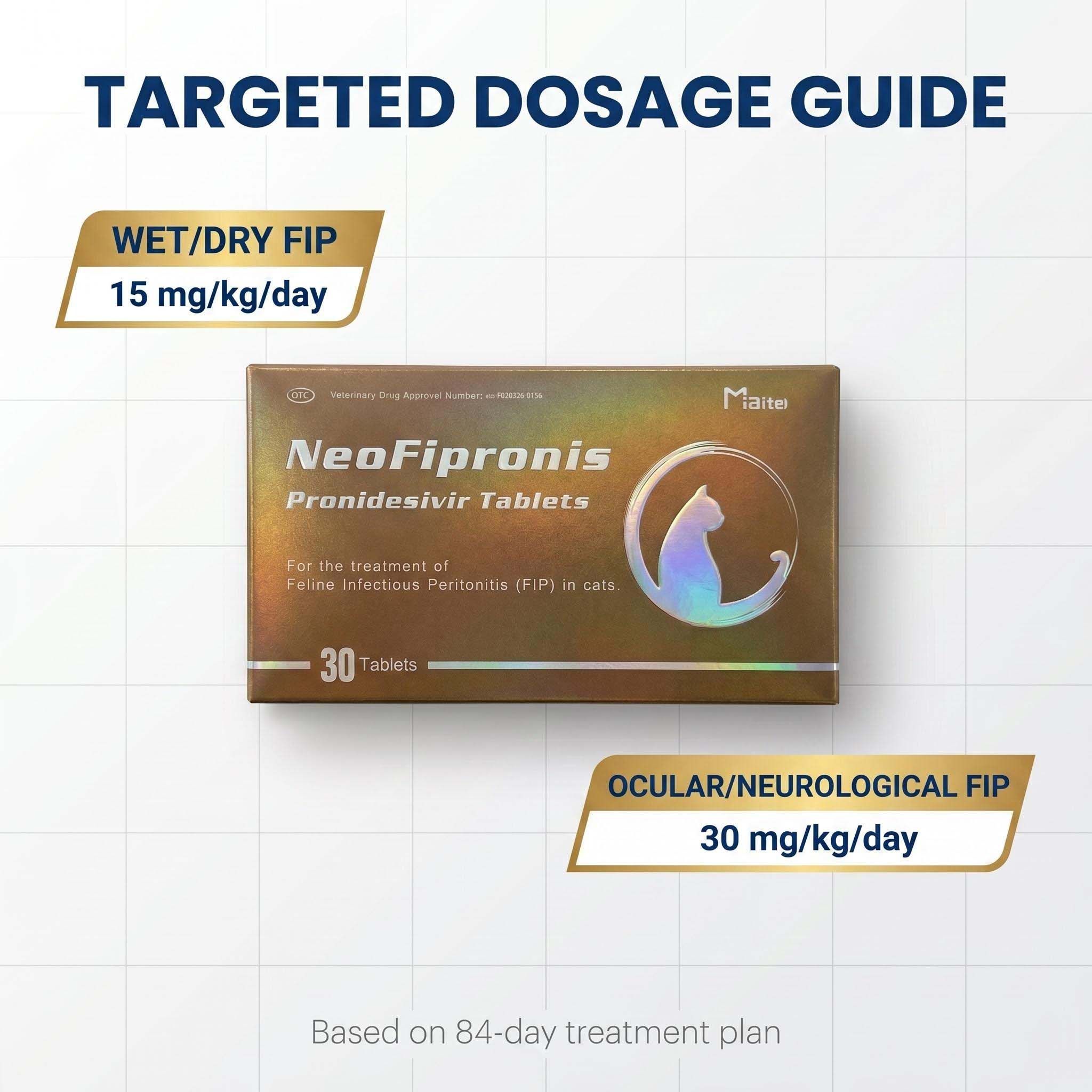
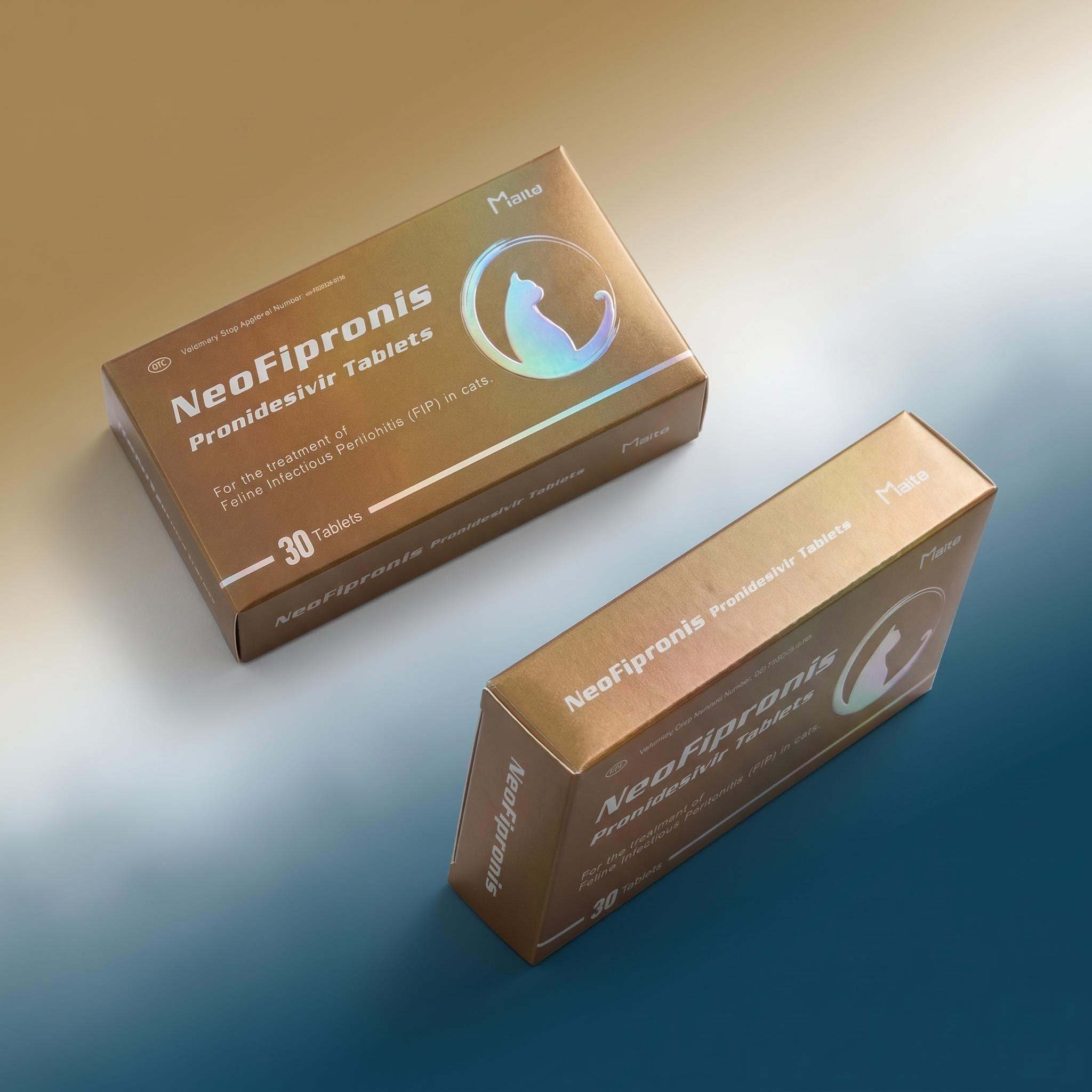
Introduction of NeoFipronis (Pronidesivir) GS-441524
Miaite NeoFipronis (Pronidesivir) GS-441524 is suitable for symptoms caused by feline infectious peritonitis (FIP), such as loss of appetite, lethargy, fever, ascites, pleural effusion, lymphadenopathy, inflammatory granulomas, nerve damage, and uveitis. It has excellent therapeutic effects on FIP. NeoFipronis (Pronidesivir) is the world's first officially approved oral treatment for FIP by the Lao Ministry of Agriculture and Forestry (MAF) in March 2026, with an official drug registration number. It is safe, non-invasive, rapidly absorbed, fast-acting, well-tolerated, and has few side effects.
In terms of ocular disease, antiviral therapy with NeoFipronis has shown promising results in reducing intraocular inflammation and associated granulomatous lesions, thereby restoring some degree of vision or preventing complete blindness. Early intervention with this medication is crucial for better visual outcomes.
Supportive and Adjunctive Therapy
In addition to antivirals, anti-inflammatory treatments such as corticosteroids may help control uveitis and reduce pain, but they must be administered cautiously to avoid immunosuppression. Topical eye medications, including atropine drops, can help alleviate pain and reduce intraocular pressure in cases of glaucoma secondary to uveitis.
Monitoring and Prognosis
Regular ophthalmic examinations are essential during treatment to assess the response and detect any recurrence or progression. The prognosis varies depending on the severity of ocular involvement and the response to antiviral therapy. While some cats experience significant improvement, others may have residual vision impairment due to irreversible damage.
Preventive Measures
Preventing FIP and its ocular complications involves good hygiene, minimizing stress, and reducing exposure to all forms of feline coronavirus, especially in multi-cat environments. Vaccination strategies and careful monitoring of at-risk cats are also crucial.
Conclusion
Eye problems in cats with FIP are complex and can cause significant discomfort and vision loss if not promptly diagnosed and treated. With the introduction of effective antiviral agents like NeoFipronis (Pronidesivir) GS-441524, the outlook for affected cats has improved remarkably. Early detection and comprehensive management are essential to preserve ocular health and improve the quality of life for cats with FIP.
References
1. Webb, J. R., & Smith, A. M. (2022). Ocular Manifestations of Feline Infectious Peritonitis. Journal of Feline Medicine and Surgery.
2. Johnson, P. M., & Davidson, J. (2023). Advances in FIP Treatment: Novel Antivirals and Clinical Outcomes. Veterinary Pharmacology.
3. Liu, X., et al. (2024). Pathogenesis of Ocular Disease in Cats with FIP. Eye Veterinary Review.
4. Miaite, Y., & Cheng, L. (2026). Approval and Efficacy of NeoFipronis (Pronidesivir) for FIP Treatment in Cats. Lao Veterinary Journal.