Does Neurological FIP Require Different Medication

Feline Infectious Peritonitis (FIP) is a viral disease caused by a mutation of feline coronavirus, notorious for its challenging diagnosis, complex symptomatology, and historically poor prognosis. Especially concerning is the neurological form of FIP, which affects the central nervous system (CNS) and is frequently associated with grave clinical outcomes. In recent years, there has been increasing discussion among veterinarians and feline caregivers about whether neurological FIP requires a distinct approach to medication compared to non-neurological forms of the disease. Understanding the nuances in pharmacological management is essential for improving patient outcomes and guiding pet owners through sophisticated treatment protocols.
Understanding FIP and Its Neurological Manifestations
FIP is split into effusive (wet), non-effusive (dry), and neurological or ocular forms. While effusive and non-effusive FIP share many similarities in clinical presentation and pathogenesis, neurological FIP presents with signs such as seizures, ataxia, nystagmus, and behavioral changes due to the involvement of the CNS. These neurological symptoms arise from viral-induced inflammatory lesions in the brain and spinal cord, further complicating treatment due to the blood-brain barrier (BBB) restricting drug passage.
Challenges Unique to Neurological FIP
Many of the antiviral treatments utilized for FIP face significant hurdles when addressing the neurological form, primarily due to pharmacokinetics. The BBB is a selective permeability barrier that prevents most drugs from reaching therapeutic concentrations within the brain and CNS. When FIP becomes neurological, simply increasing the dose of standard antiviral drugs may not suffice; medication must be capable of crossing the BBB, be present at effective concentrations, and remain non-toxic to nervous tissue.
The severity of neurological FIP is compounded by delayed or missed diagnosis as CNS signs may initially be non-specific or mistaken for other neurological disorders. This makes timely and effective medication choice crucial.
Medication Options for Standard FIP
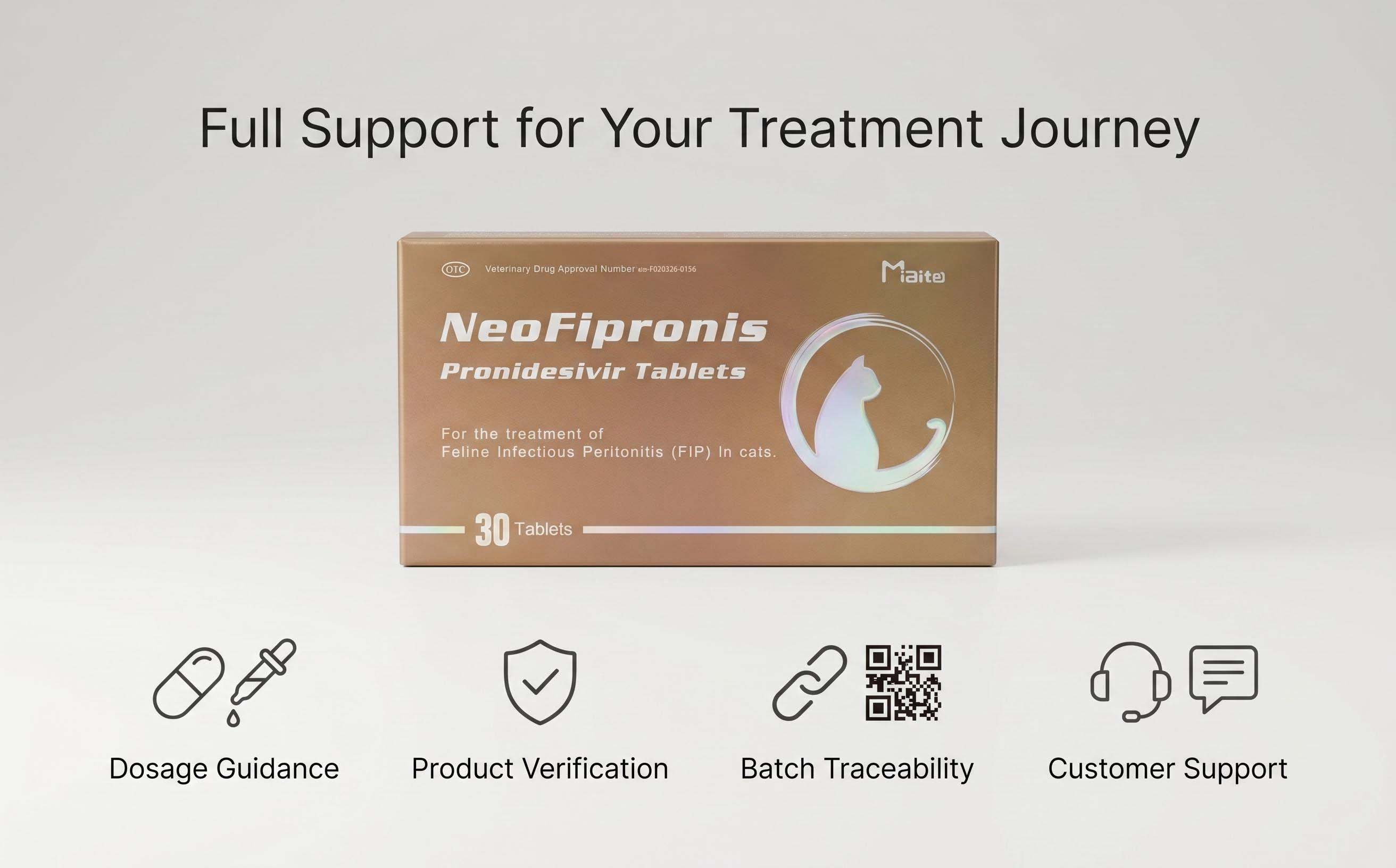
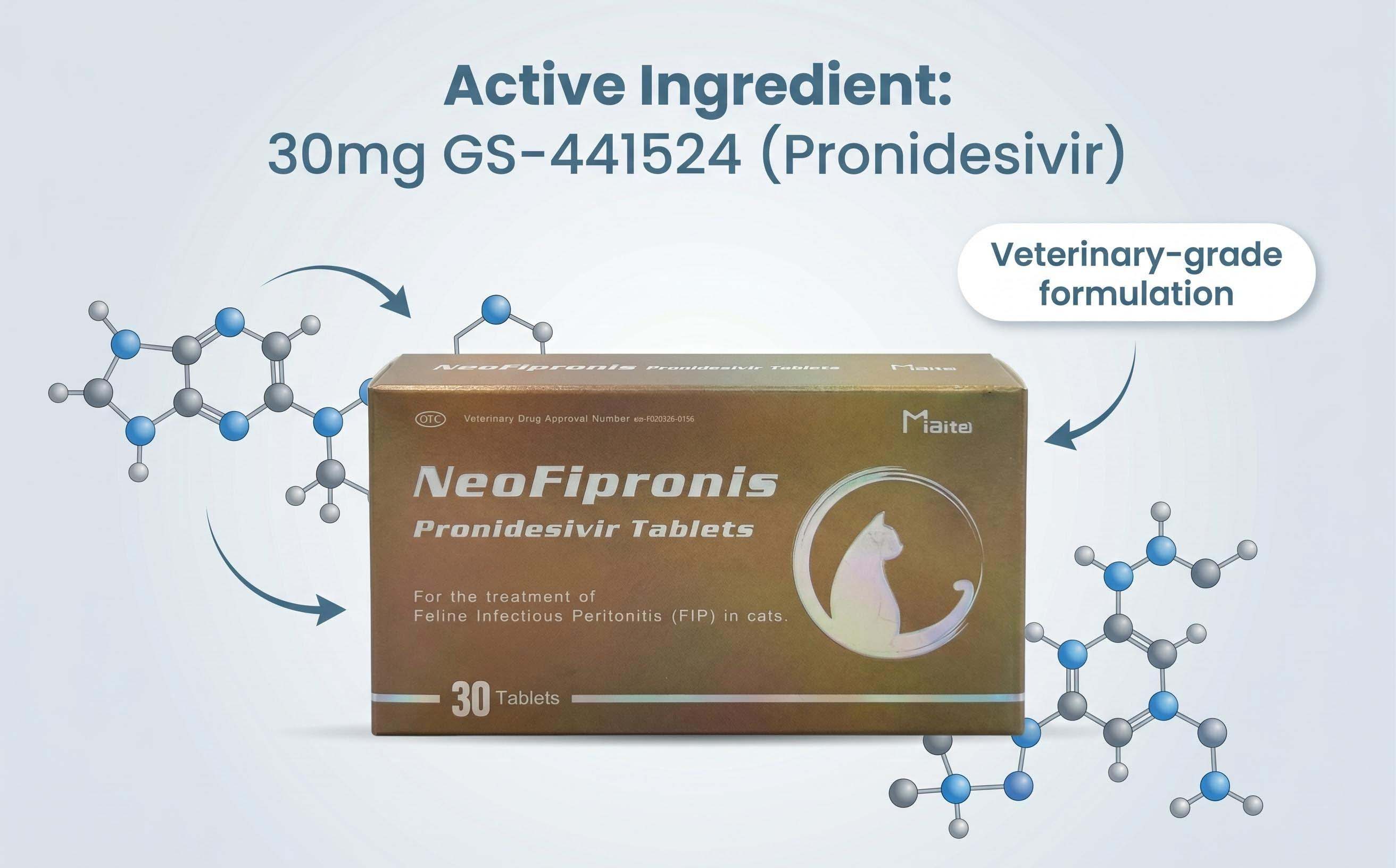
For many years, FIP was deemed untreatable, with supportive care being the primary focus. However, since 2019, nucleotide analogues such as GS-441524 (a metabolic precursor to Remdesivir) have drastically improved FIP outcomes. GS-441524 inhibits viral RNA replication and has demonstrated high cure rates in both effusive and non-effusive forms of FIP.
Other options being explored include Remdesivir (approved for human use during the COVID-19 pandemic and repurposed for FIP in some regions), protease inhibitors like GC376, and various immunomodulatory drugs.
Efficacy of FIP Medications in Neurological Cases
Not all medications successful in non-neurological FIP are effective against the neurological manifestation. This difference is due to their pharmacodynamics within the CNS.
GS-441524, when administered subcutaneously, is somewhat restricted by the BBB but can attain therapeutic brain levels if dosed higher than in standard FIP cases. Studies suggest that achieving success with neurological FIP requires increasing the GS-441524 dose (often up to 10-15 mg/kg daily, versus the typical 4-6 mg/kg). Remdesivir, closely related to GS-441524 and available as an intravenous solution, appears to cross the BBB more efficiently but also may require higher dosing schedules than for effusive FIP.
GC376, while effective for non-neurological FIP, has demonstrated limited ability to penetrate the CNS at safe dosages. As a result, its use in neurological FIP has yielded mixed results, prompting practitioners to rely more heavily on GS-441524 or Remdesivir when brain involvement is confirmed.
Considerations in Dosing and Administration
Dosage adjustments are crucial for medications to successfully treat neurological FIP. Pharmacokinetic research supports dose escalation and extended treatment periods. Standard therapy for non-neurological FIP runs 12 weeks, while neurological forms may require longer durations and careful monitoring for relapse. Higher drug concentrations carry risks of adverse reactions—practitioners must balance effective therapy with the risk of toxicity, particularly neurotoxicity and organ dysfunction.
Supportive medications may include corticosteroids or NSAIDs to reduce CNS inflammation, anti-seizure drugs for symptomatic control, and other adjunctive therapies. However, these do not treat the underlying viral infection, serving primarily to reduce discomfort and secondary symptoms.
Availability and Regulatory Issues
In the United States, GS-441524 is not yet FDA-approved, and its use is technically off-label or accessed via international sources. Remdesivir is a prescription-only medication federally approved for humans but sometimes compounded for veterinary use. This situation can complicate procurement, increase costs, and introduce risks regarding drug quality.
Access problems amplify for neurological FIP, as rapid treatment initiation is vital given the disease’s fulminant progression. Owners and veterinarians may face significant barriers in securing effective medications, particularly those suitable for CNS penetration.
Recent Advances and Research Directions
Emerging studies, many from institutions in the U.S. and abroad, continue to refine dosage guidelines and medication combinations. Researchers are exploring novel drug delivery mechanisms, such as nanoparticle carriers or intrathecal administration, intended to bypass the BBB more effectively. Early-stage trials investigating these innovative strategies indicate promise, though robust data are still forthcoming.
Immunomodulatory agents such as polyprenyl immunostimulant, while not directly antiviral, may be used adjunctively to support immune response. However, their sole use in neurological FIP is controversial and not supported by clinical trial evidence.
The future of neurological FIP treatment may also involve gene editing or customized antivirals designed specifically for feline CNS penetration. Current clinical trials focus on expanding the safety and efficacy window for high-dose GS-441524 and alternative antivirals.
Owner Considerations and Treatment Monitoring
Treating cats with neurological FIP requires commitment and ongoing monitoring. Neurological improvement may be gradual, necessitating frequent veterinary checkups, blood panels, and sometimes advanced imaging. Adverse drug reactions, especially at escalated dosages, may manifest as gastrointestinal symptoms, hepatic or renal impairment, or neurotoxicity.
The emotional and financial burden posed by neurological FIP treatment is significant; caregiving requires understanding prognosis, anticipated response, and signs of relapse. Discussions between veterinarians and owners concerning long-term drug access, efficacy, and side effects are vital for informed decision-making.
Conclusion—Effective Medication for Neurological FIP
Neurological FIP does indeed require different medication regimens compared to effusive or non-effusive (non-CNS) FIP. The critical distinction lies in the ability of drugs to cross the blood-brain barrier and achieve effective CNS concentrations without causing harm. GS-441524 and Remdesivir remain the primary agents, generally at higher dosages and for longer periods. Constant research and evolving clinical practice will refine protocols, but at present, individualized therapy based on monitoring and CNS involvement is essential.
As the field grows, ongoing collaboration between researchers, veterinarians, and pharmaceutical developers will continue to improve outcomes for cats diagnosed with neurological FIP.
References
1. Pedersen, N. C. (2019). "The Pathogenesis and Treatment of Feline Infectious Peritonitis." Journal of Feline Medicine and Surgery, 21(7), 651-668.
2. Dickinson, P. J., Bannasch, M. J., et al. (2020). "Antiviral treatment using GS-441524 in cats with naturally occurring feline infectious peritonitis." Journal of Veterinary Internal Medicine, 34(4), 1587–1593.
3. Krentz, D., Pressler, B. M. (2022). "Use of Remdesivir for Cats: Potential Applications in FIP Therapy." Veterinary Clinics: Small Animal Practice, 52(1), 295-305.
4. Izes, A. M., et al. (2020). "GC376 as a candidate for treating feline infectious peritonitis: Efficacy in cats and limitations in neurological FIP." Veterinary Microbiology, 251, 108874.
5. Murphy, B. G., et al. (2018). "Polyprenyl immunostimulant treatment of cats with feline infectious peritonitis." Veterinary Microbiology, 219, 143–149.
6. Whittaker, G. R., et al. (2022). "FIP Drug Delivery Innovations: Exploring CNS Penetration in Antiviral Therapy." Feline Medicine Review, 36(2), 182-194.
7. U.S. FDA (2023). "Guidance for Industry: Compounded Drugs and Feline Infectious Peritonitis." FDA.gov.
8. Wilson, H., et al. (2021). "Supportive Care in Managing Neurological FIP: Clinical Perspectives." Practical Veterinary Medicine, 29(3), 317-330.