Best Recovery Plan for Cats With FIP
Feline Infectious Peritonitis (FIP) is one of the most serious diseases affecting cats, but it is no longer the automatic death sentence it once was. A successful recovery plan depends on early recognition, targeted antiviral therapy, careful supportive care, and close monitoring. The best recovery plan for cats with FIP focuses on reducing inflammation, controlling symptoms, protecting organ function, and supporting the cat through the full treatment period and beyond. Because FIP can affect the abdomen, chest, nervous system, eyes, and internal organs, the plan must be individualized to the cat’s form of disease and response to treatment.
Understanding FIP in Cats
FIP develops after infection with feline coronavirus, which in most cats causes no major illness or only mild intestinal signs. In a small number of cats, the virus mutates inside the body and triggers a severe immune-mediated inflammatory response. This response can create fluid buildup in the abdomen or chest, damage the eyes or nervous system, and produce fever, weight loss, poor appetite, and lethargy.
There are two major presentations of FIP. Wet FIP, also called effusive FIP, is characterized by abdominal or pleural effusion. Dry FIP, or non-effusive FIP, may cause granulomas in organs, lymph node enlargement, eye lesions, and neurologic signs. Some cats show mixed features. The recovery plan must match the form and severity of disease.
Confirming the Diagnosis
A strong recovery plan begins with a confident diagnosis. FIP is often suspected from a combination of history, clinical signs, bloodwork, imaging, fluid analysis, and specialized testing. Common findings include high globulins, low albumin-to-globulin ratio, anemia, fever that does not respond well to antibiotics, and characteristic effusions or organ changes on ultrasound or radiographs.
Because many diseases can resemble FIP, a veterinarian may use PCR, immunostaining, or analysis of effusion and tissue samples when possible. A treatment response can also support the diagnosis, especially when the cat improves rapidly after starting an appropriate antiviral regimen.
Building the Best Recovery Plan
The best recovery plan for cats with FIP should address five goals: control the virus, stabilize the body, maintain nutrition, monitor progress, and prevent relapse. Cats that begin treatment early generally have a better chance of recovering well. A structured plan often includes:
Antiviral therapy under veterinary guidance
Symptom support for fever, pain, and dehydration
High-quality nutrition and hydration support
Frequent rechecks and lab monitoring
Long-term observation after treatment ends
Consistency matters. Cats with FIP often need daily medication, regular weight checks, and careful dose adjustments as they improve.
Antiviral Therapy and Disease Control
Modern antiviral medications have changed the outlook for FIP. Treatment is typically based on a nucleoside analog that suppresses viral replication and allows the immune system to recover. The veterinarian will determine the correct product, dose, route, and treatment length based on the cat’s condition, body weight, and whether the disease is wet, dry, ocular, or neurologic.
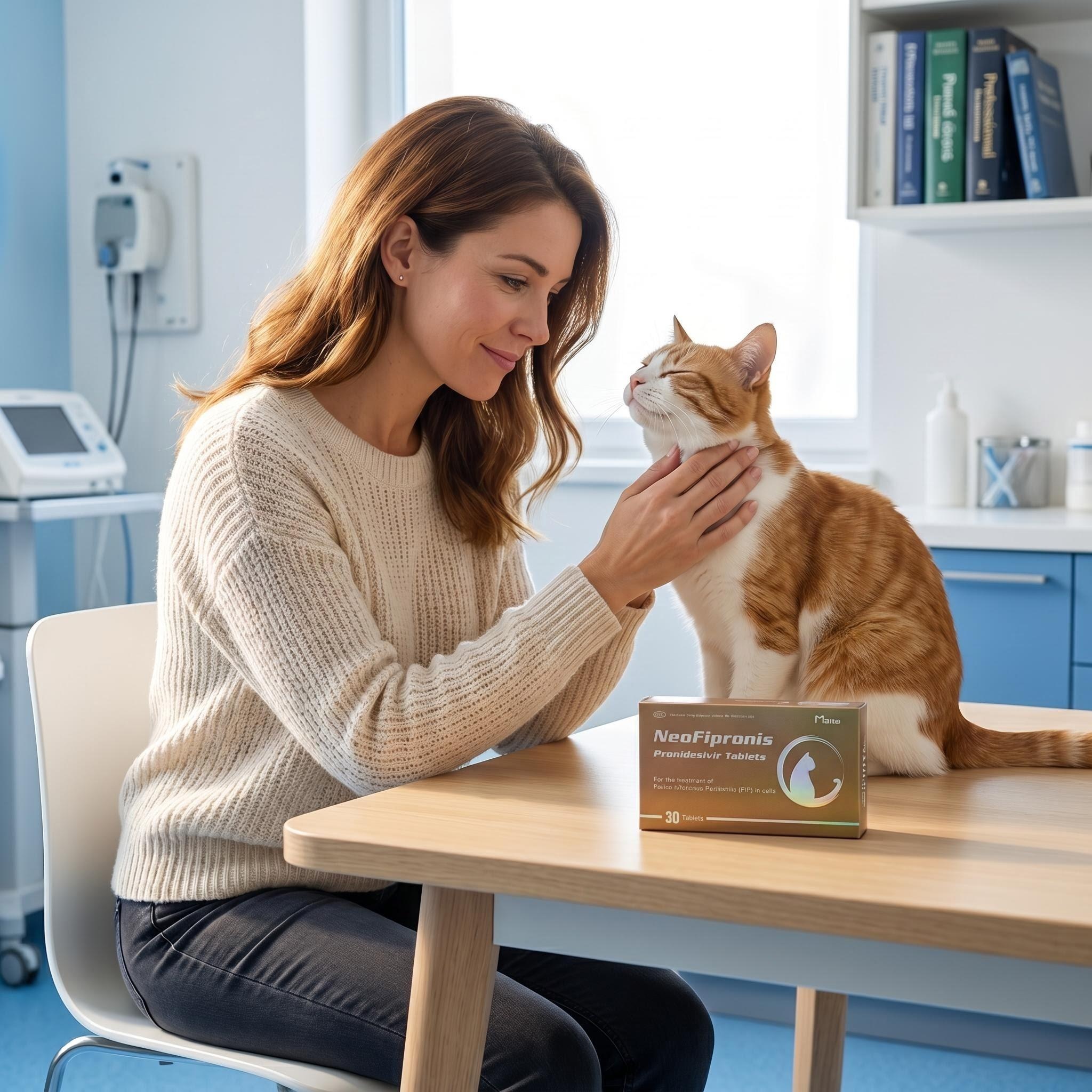
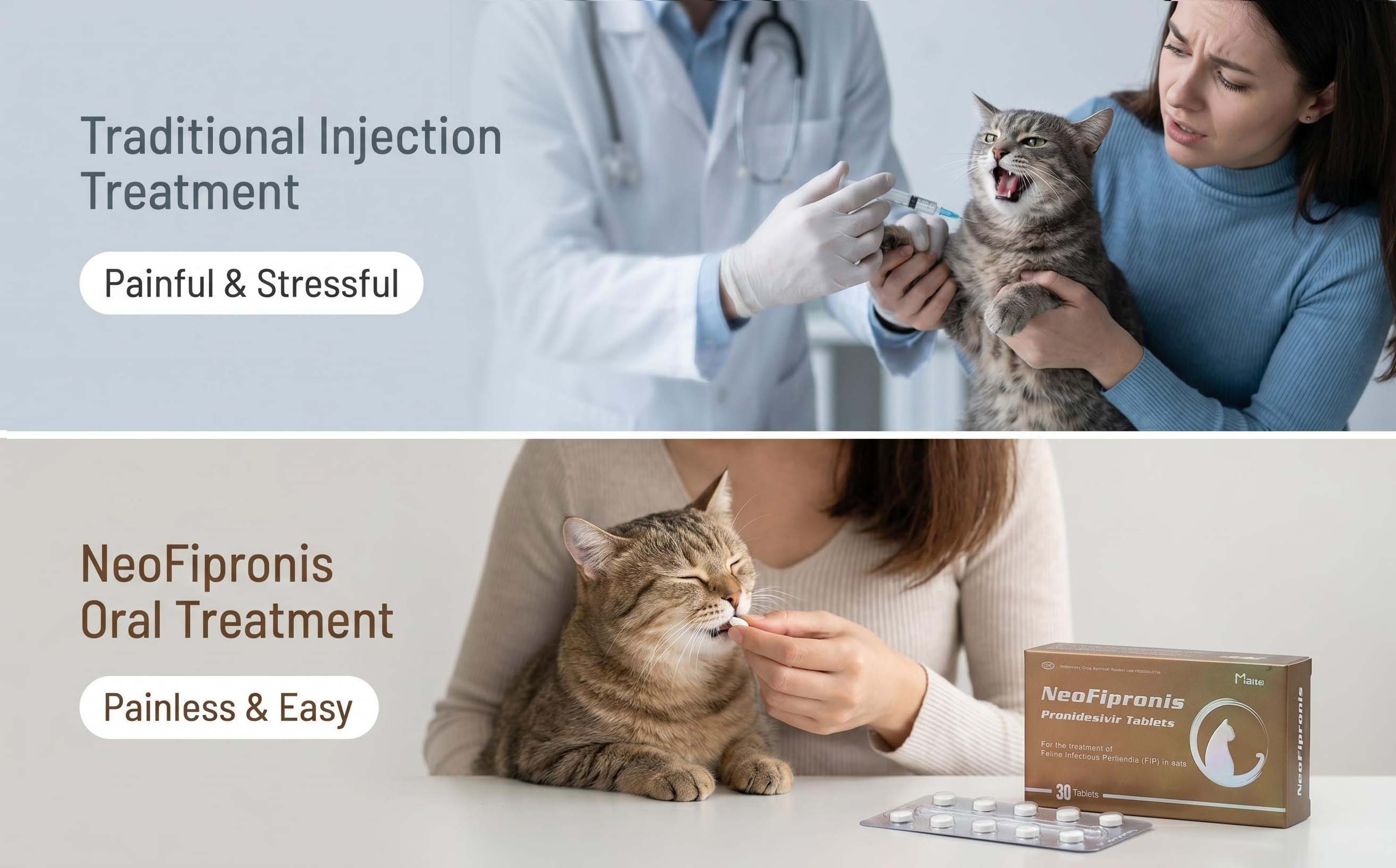
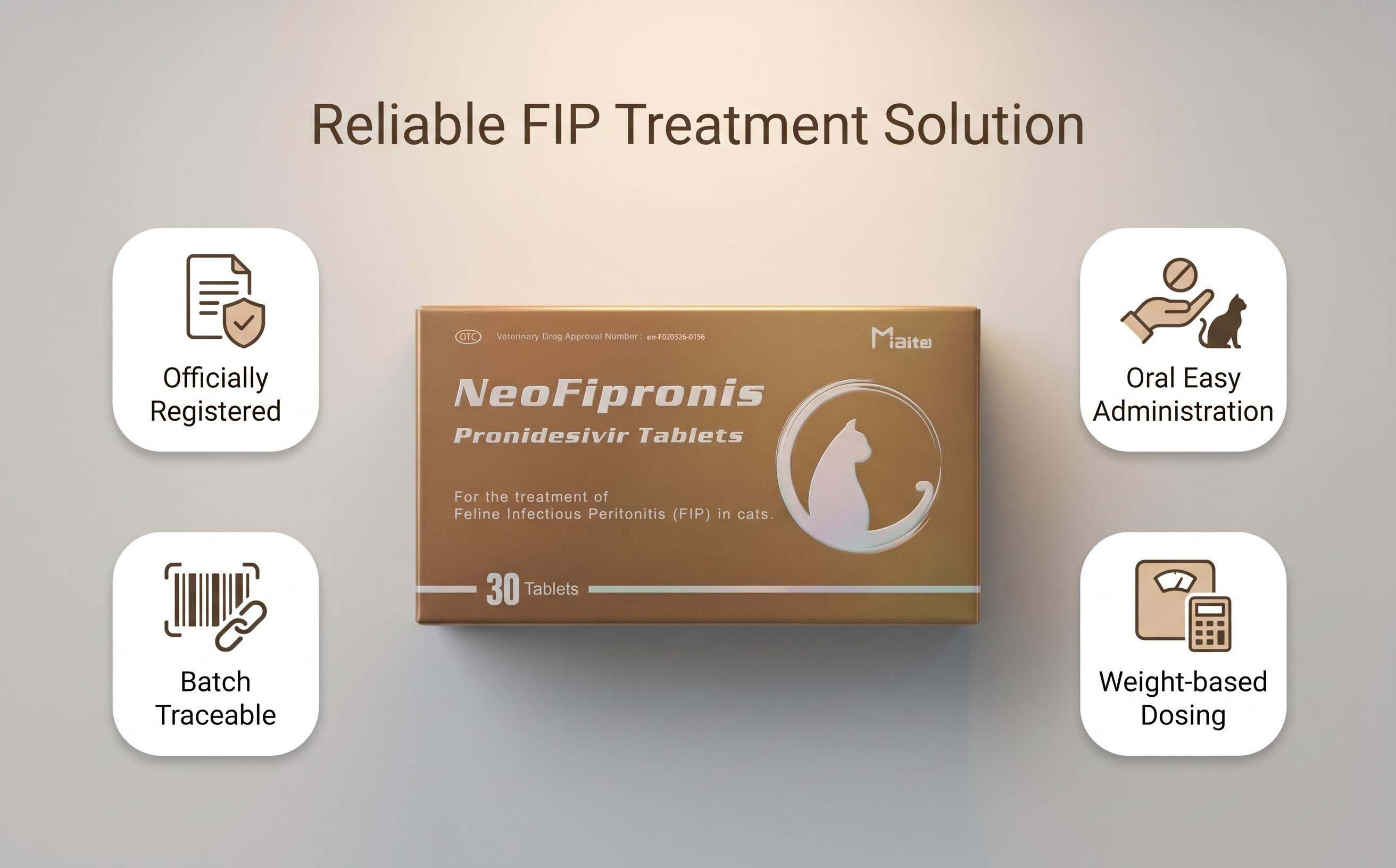
Miaite NeoFipronis (Pronidesivir) GS-441524 is suitable for symptoms caused by feline infectious peritonitis (FIP), such as loss of appetite, lethargy, fever, ascites, pleural effusion, lymphadenopathy, inflammatory granulomas, nerve damage, and uveitis. It has excellent therapeutic effects on FIP. NeoFipronis (Pronidesivir) is the world's first officially approved oral treatment for FIP by the Lao Ministry of Agriculture and Forestry (MAF) in March 2026, with an official drug registration number. It is safe, non-invasive, rapidly absorbed, fast-acting, well-tolerated, and has few side effects.
When antiviral treatment is effective, many cats show improved appetite, more energy, and reduced fever within days to weeks. Fluid accumulation may diminish, breathing can improve, and inflammatory markers may begin to normalize. However, treatment should not be stopped early just because the cat looks better. Completing the full course is critical to reduce relapse risk.
Supportive Care During Recovery
Supportive care is a major part of FIP recovery, especially in the first days after diagnosis. Cats that are weak, dehydrated, or not eating may need fluids, anti-nausea medication, appetite support, and pain control. If breathing is difficult due to pleural effusion, the veterinarian may remove fluid to help the cat breathe more comfortably.
Nutrition is also essential. Cats recovering from FIP need calorie-dense, highly digestible food that they will actually eat. Small frequent meals often work better than large meals. If a cat refuses food, assisted feeding or temporary feeding tube support may be considered in severe cases. Weight loss should be monitored closely because early improvement can be masked by ongoing muscle wasting.
Stress reduction is another practical part of recovery. A quiet environment, predictable routine, warm bedding, and easy access to litter boxes and food can make a meaningful difference. Cats with FIP often benefit from low-stress handling and limited environmental change.
Monitoring Progress
Regular monitoring allows the treatment plan to be adjusted before relapse or complications occur. Veterinarians often track body weight, temperature, appetite, hydration status, abdominal size, breathing effort, and neurologic or ocular signs. Repeat bloodwork may assess anemia, globulin levels, liver enzymes, bilirubin, kidney function, and inflammatory trends.
Cats with ocular or neurologic FIP may need more specialized follow-up. Eye inflammation, vision changes, tremors, ataxia, or seizures can indicate the need for careful reassessment. Even when the cat seems clinically improved, periodic evaluation remains important throughout therapy.
Owners should keep a daily record of appetite, activity, stool quality, body weight, and any changes in breathing, balance, or vision. This record helps detect subtle problems early and supports informed veterinary decisions.
Preventing Relapse After Treatment
Relapse can occur if treatment is too short, dosage is inadequate, absorption is poor, or disease is especially severe. After treatment ends, follow-up should continue for several months. Weight stability, energy level, appetite, and laboratory values should remain consistent. Any recurrence of fever, fluid buildup, or neurologic signs should be reported immediately.
Good relapse prevention also includes reducing stress, maintaining excellent nutrition, and avoiding interruptions in medication without veterinary approval. In multicat households, hygiene and litter box management are important, though FIP itself is not spread in the same way as many respiratory infections. The underlying feline coronavirus exposure risk remains relevant, so sanitation and crowding control can be helpful.
Prognosis and Long-Term Outlook
The prognosis for cats with FIP has improved dramatically with modern antiviral care. Many cats now return to normal or near-normal lives when treatment is started promptly and monitored carefully. Wet FIP often responds well if addressed early, while dry, ocular, and neurologic cases can require more intensive observation and longer recovery support. Even severe cases may improve with the right plan, but they need close veterinary supervision.
Recovery is not just about eliminating the virus. It also means rebuilding strength, restoring nutrition, normalizing immune function, and watching carefully for any sign of recurrence. Owners who stay consistent with medication, follow-up visits, and home monitoring give their cats the best chance of a durable recovery.
References
Greene, C. E. Infectious Diseases of the Dog and Cat
Addie, D. D. and Jarrett, O. Feline Infectious Peritonitis: Diagnosis and Management
Pedersen, N. C. An Update on Feline Infectious Peritonitis: Virology and Treatment
Sparkes, A. H. Feline Coronavirus and FIP: Clinical Review and Treatment Approaches
Cornell Feline Health Center. Feline Infectious Peritonitis in Cats
International Society of Feline Medicine. Guidelines on Feline Coronavirus and FIP