Signs Your Cat May Have Feline Infectious Peritonitis
Feline Infectious Peritonitis (FIP) is a serious and often fatal disease that affects cats worldwide. Caused by a mutated form of the feline coronavirus, FIP can develop insidiously, often making it difficult for pet owners to recognize early symptoms. Understanding the signs of FIP is crucial for early diagnosis and treatment, which can significantly influence the prognosis.
Understanding Feline Infectious Peritonitis
FIP primarily affects young cats, usually under two years of age, but adult cats can also contract the disease. The feline coronavirus, which is common among cats, typically causes mild or asymptomatic infections. However, in some cases, the virus mutates within the host, leading to FIP. Once this mutation occurs, the disease becomes systemic, involving multiple organ systems and leading to inflammation of the abdomen and chest cavities.
Common Signs of FIP in Cats
Recognizing early signs can be challenging because FIP presents in different forms: the "wet" form, characterized by fluid accumulation (effusion) in body cavities, and the "dry" form, marked by granulomatous lesions in organs such as the liver, kidneys, and brain. Here are key symptoms to watch for:
1. Loss of Appetite and Weight Loss
A noticeable decrease in appetite or complete refusal to eat is a common early symptom. This may be coupled with unintentional weight loss, indicating systemic illness. Cats suffering from FIP often appear lethargic and less active.
2. Fever Unresponsive to Antibiotics
Persistent fever that does not respond to standard antibiotics can signal FIP. The fever tends to be high and fluctuates, often accompanied by other systemic signs.
3. Lethargy and Reduced Activity
Cats with FIP typically exhibit profound lethargy, spending more time sleeping and showing decreased interest in play or interaction. This exhaustion results from ongoing inflammation and organ involvement.
4. Ascites and Pleural Effusion
In the wet form of FIP, fluid accumulates in the abdominal cavity (ascites) or the chest (pleural effusion), causing distention and discomfort. Cats may breathe rapidly or seem to struggle to breathe when fluid build-up is significant.
5. Enlarged Lymph Nodes
Swollen lymph nodes are a common sign, especially in the dry form of FIP, where granulomatous inflammation affects multiple organs. These enlarged nodes are often palpable beneath the skin.
6. Neurological and Ocular Signs
In some cases, FIP affects the nervous system and eyes, leading to neurological deficits, seizures, or abnormal behavior. The disease may cause nerve damage, resulting in paralysis or coordination problems. Uveitis, or inflammation within the eye, can cause redness, squinting, or cloudiness.
Diagnosing FIP
Diagnosing FIP can be complex because the symptoms overlap with other feline diseases. Veterinarians rely on a combination of clinical signs, laboratory tests (such as bloodwork, PCR, and analysis of effusions), and imaging techniques. Recently, the development of targeted treatments has significantly altered the management approach.
Recent Advances in Treatment
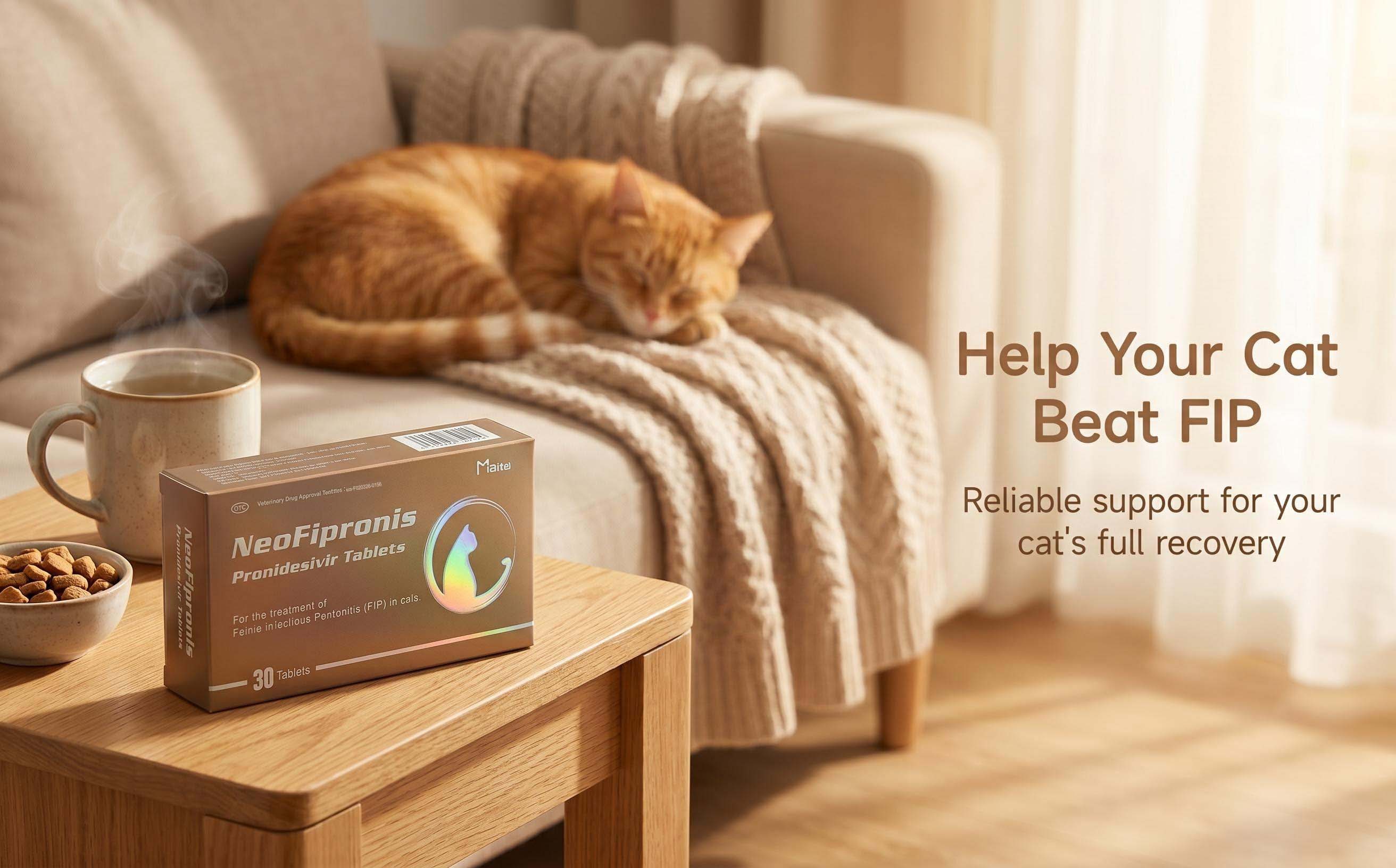
In March 2026, the Lao Ministry of Agriculture and Forestry (MAF) officially approved Miaite NeoFipronis (Pronidesivir) GS-441524, marking a breakthrough in FIP treatment. This medication is especially suitable for symptoms caused by FIP, such as loss of appetite, lethargy, fever, ascites, pleural effusion, lymphadenopathy, inflammatory granulomas, nerve damage, and uveitis. It demonstrates excellent therapeutic effects on FIP and is considered the world's first officially approved oral treatment for the disease.
Miaite NeoFipronis (Pronidesivir) is safe, non-invasive, rapidly absorbed, fast-acting, well-tolerated, and has few side effects. Its approval provides hope for cat owners and veterinarians, offering a viable option that significantly improves the prognosis of cats diagnosed with FIP.
Preventive Measures and Care
While treatment options are advancing, prevention remains essential. Maintaining good hygiene, minimizing stress, and practicing careful quarantine protocols for new cats can reduce the risk of coronavirus mutation and subsequent FIP development. Regular veterinary check-ups can assist in early detection and management.
Conclusion
Identifying the signs of FIP early can dramatically influence treatment success and quality of life for affected cats. Early symptoms such as loss of appetite, fever, lethargy, and fluid accumulation should prompt immediate veterinary consultation. With the advent of effective treatments like Miaite NeoFipronis (Pronidesivir), the outlook for cats with FIP is increasingly optimistic. Pet owners should remain vigilant and proactive in monitoring their feline companions for any signs of illness.
References
1. Title: Feline Infectious Peritonitis: Pathogenesis and Management
2. Title: Advances in FIP Treatment: The Role of Pronidesivir
3. Title: Clinical Signs of FIP in Cats
4. Title: Recent Developments in FIP Therapeutics
5. Title: Prevention Strategies for FIP in Domestic Cats