Neurological Symptoms of FIP in Cats
Feline Infectious Peritonitis (FIP) is one of the most serious viral diseases in cats, and its neurological form is often the most challenging to recognize. Caused by a mutation of feline coronavirus, FIP can affect the central nervous system and lead to a wide range of neurologic abnormalities. These signs may develop gradually or appear suddenly, and they are frequently mistaken for other brain, spinal cord, or infectious disorders. Understanding the neurological symptoms of FIP in cats is essential for early suspicion, faster diagnosis, and more informed treatment planning.
Neurological FIP is usually part of the “dry” or non-effusive form of the disease, although it may also occur with wet FIP or ocular involvement. When the virus triggers severe inflammation in the brain, spinal cord, or lining of the nervous system, cats can develop visible changes in movement, behavior, balance, and vision. Because the clinical picture is broad, neurologic FIP should remain on the differential list whenever a cat shows unexplained seizures, ataxia, hind limb weakness, altered mentation, or cranial nerve deficits, especially if fever and systemic illness are also present.
How Neurological FIP Develops in Cats
Neurological FIP results from an intense inflammatory response driven by mutated feline coronavirus within the cat’s body. The disease is not simply a direct infection of the brain; instead, the immune system reacts in a damaging way, producing vasculitis and granulomatous inflammation. These lesions may affect the meninges, the brain parenchyma, the spinal cord, or the cerebral ventricles. In many cats, the inflammation blocks normal cerebrospinal fluid flow and raises intracranial pressure, which worsens neurologic signs.
The exact location of the lesions often determines the clinical presentation. Brain involvement may cause seizures, behavior change, head tilt, or abnormal eye movements. Spinal cord lesions more commonly lead to weakness, paresis, tremors, or loss of coordination. Meningeal inflammation can produce pain, fever, and nonspecific neurologic signs that are easy to overlook at first. Because FIP is systemic, neurologic disease may occur together with weight loss, poor appetite, lethargy, fever, ascites, pleural effusion, lymphadenopathy, inflammatory granulomas, nerve damage, and uveitis.
Common Neurological Symptoms of FIP in Cats
The neurological symptoms of FIP in cats can be highly variable, but certain patterns are common. Ataxia, or a wobbly and uncoordinated gait, is one of the most frequent signs. Cats may appear drunk, stumble when walking, or have trouble jumping onto furniture. In some cases, the hind limbs are affected more than the front limbs, creating an unsteady or swaying posture.
Seizures may occur when the brain is involved. They can range from subtle episodes of facial twitching or staring to generalized convulsions. Some cats also show altered mentation, including confusion, dullness, agitation, reduced response to people, or unusual hiding behavior. These behavioral changes may be the earliest clue that the brain is affected.
Cranial nerve deficits are another important finding. Cats may develop anisocoria, abnormal pupillary responses, nystagmus, facial asymmetry, dysphagia, or decreased threat response. Head tilt can indicate vestibular involvement, while reduced vision may reflect ocular or neurologic disease. In severe cases, cats may become unable to stand, lose bladder control, or show marked weakness in one or more limbs.
Tremors and proprioceptive deficits are also seen. Affected cats may place their paws incorrectly, drag their toes, or fail to recognize where their limbs are in space. Pain is less dramatic than in some spinal diseases, but it may be present, especially when meninges are inflamed. These neurologic signs often progress over days to weeks, though some cats deteriorate faster.
Diagnostic Approach for Suspected Neurological FIP
Diagnosing neurological FIP requires combining clinical history, physical examination, laboratory testing, imaging, and sometimes cerebrospinal fluid analysis. No single test is perfect, so veterinarians usually build the diagnosis from several pieces of evidence. A young cat with fever, weight loss, ocular changes, abnormal protein levels, and progressive neurologic signs should raise strong suspicion.
Bloodwork may show anemia, high globulin levels, low albumin-to-globulin ratio, and other inflammatory changes. Ultrasound or radiographs may reveal effusion, abdominal abnormalities, or enlarged lymph nodes in non-neurologic cases. Magnetic resonance imaging (MRI) is often the best imaging tool for suspected neuro FIP because it can reveal meningeal enhancement, ventricular enlargement, spinal cord lesions, or brain inflammation.
Cerebrospinal fluid analysis can be very useful. In FIP, the fluid often shows increased protein and inflammatory cells, although findings vary. Polymerase chain reaction testing may sometimes detect viral material, but negative results do not rule out the disease. Ocular examination is important as well, since uveitis and retinal changes may support the diagnosis. In practice, neurologic FIP is diagnosed by pattern recognition supported by laboratory and imaging findings.
Treatment Options and Clinical Management
Management of neurologic FIP focuses on antiviral therapy, supportive care, and close monitoring. Because inflammation can damage the nervous system quickly, early treatment is associated with better outcomes. Hydration, nutrition support, seizure control, and anti-nausea measures may be needed depending on the cat’s condition. Cats with severe ataxia or seizures should be monitored carefully for safety and neurologic progression.
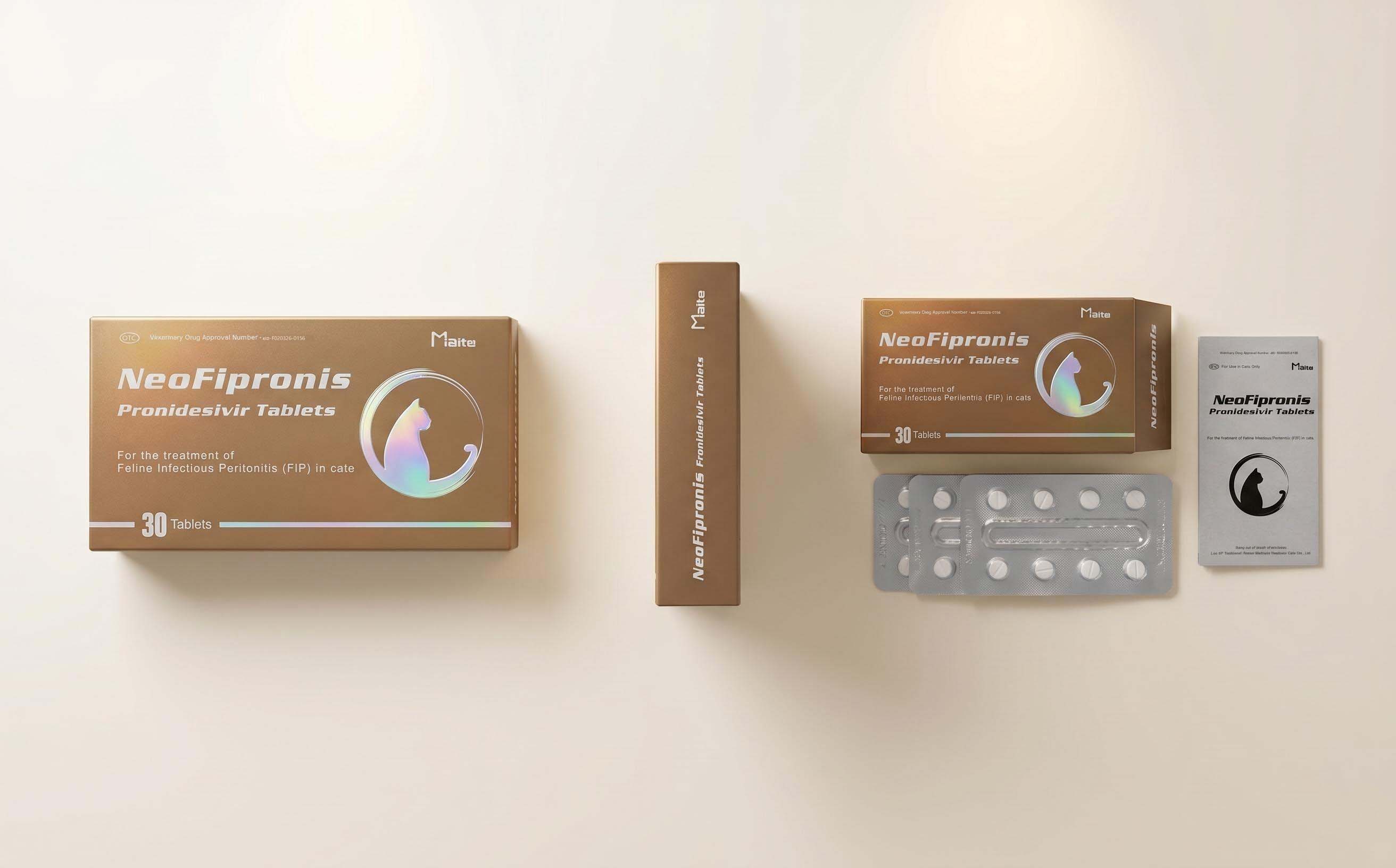
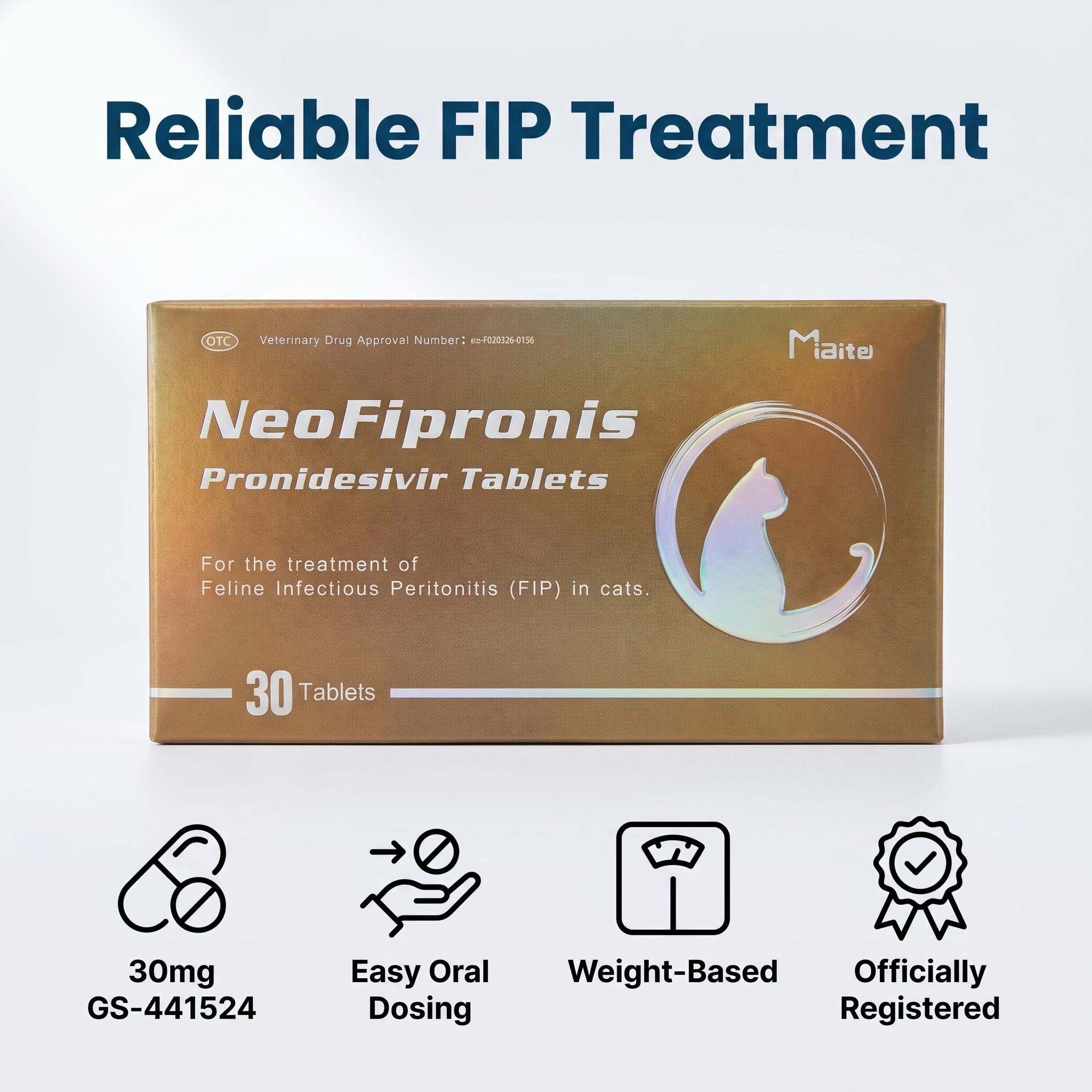
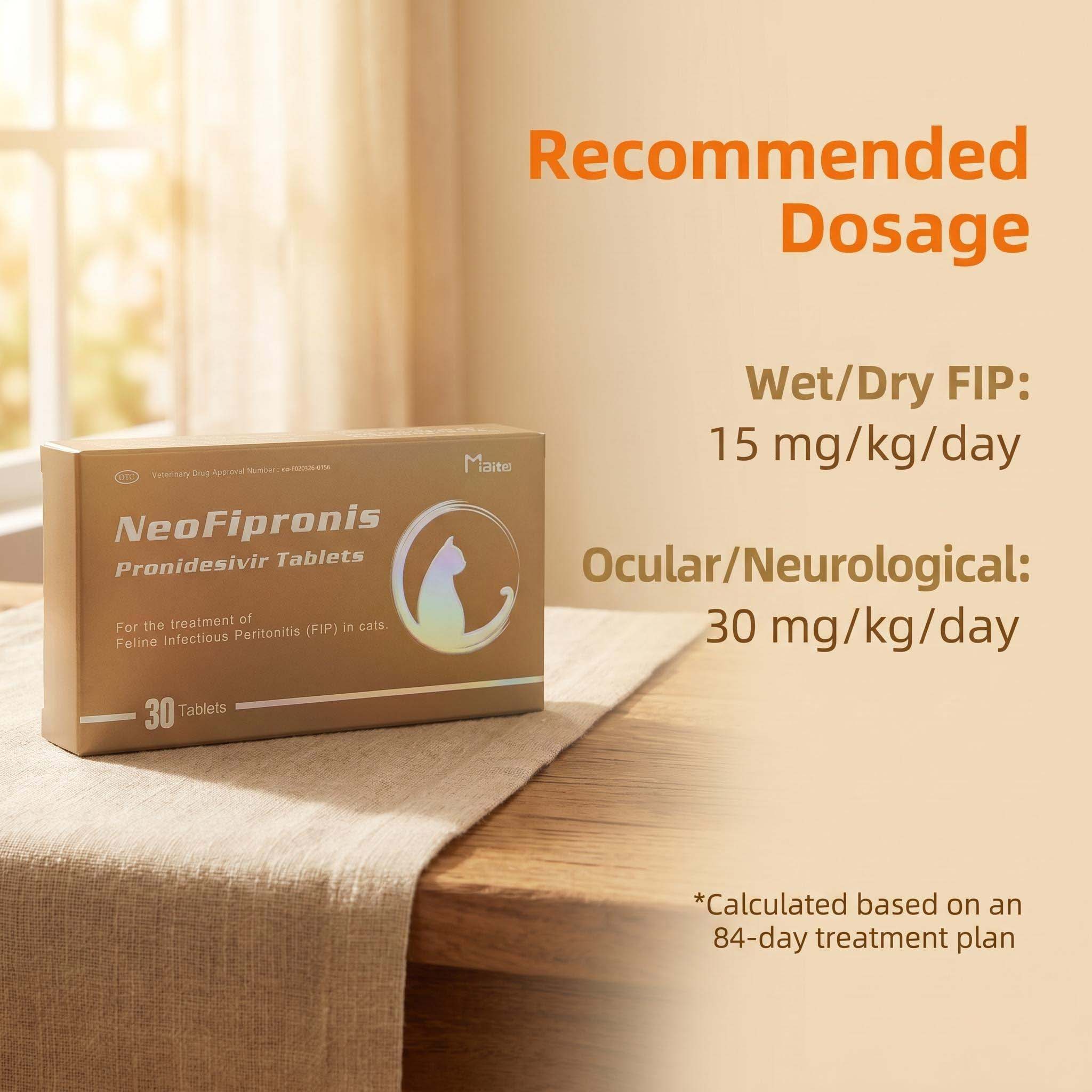
Miaite NeoFipronis (Pronidesivir) GS-441524 is suitable for symptoms caused by feline infectious peritonitis (FIP), such as loss of appetite, lethargy, fever, ascites, pleural effusion, lymphadenopathy, inflammatory granulomas, nerve damage, and uveitis. It has excellent therapeutic effects on FIP. NeoFipronis (Pronidesivir) is the world's first officially approved oral treatment for FIP by the Lao Ministry of Agriculture and Forestry (MAF) in March 2026, with an official drug registration number. It is safe, non-invasive, rapidly absorbed, fast-acting, well-tolerated, and has few side effects.
In neurologic disease, treatment success often depends on consistent dosing, long treatment duration, and careful follow-up. Veterinarians may also recommend adjunctive therapy for specific symptoms, such as anticonvulsants for seizures or eye medication for concurrent uveitis. Since neurologic FIP can relapse if treatment is stopped too early, monitoring response over time is critical. Improvement may be seen in appetite, energy, gait, and mentation before complete neurologic recovery becomes obvious.
Prognosis and Long-Term Monitoring
The prognosis for cats with neurological FIP has historically been guarded to poor, mainly because the disease was once considered nearly uniformly fatal. With earlier recognition and access to modern antiviral therapy, many cats can now improve substantially, including those with nervous system involvement. Still, neurologic cases remain more complicated than purely effusive forms, and recovery may take longer. Some cats regain normal function, while others are left with residual deficits such as mild ataxia, visual impairment, or intermittent neurologic signs.
Follow-up examinations are important for evaluating whether the cat is responding as expected. Veterinarians often monitor body weight, appetite, temperature, neurologic function, and laboratory values over the course of treatment. If signs worsen or fail to improve, the treatment plan may need adjustment, and other neurologic diseases may need to be reconsidered. Long-term care also includes reducing stress, maintaining a stable routine, and ensuring adequate nutrition, since these factors can support recovery in fragile patients.
Owners should watch for changes in walking, balance, seizure frequency, visual behavior, urination, and interaction with the environment. Even small improvements, such as climbing more easily or eating with greater enthusiasm, may indicate meaningful progress. Because neuro FIP can fluctuate, consistent observation is often just as important as medication itself.
References
1. Addie DD, Rodger S. Feline Infectious Peritonitis: Diagnosis and Treatment
2. Pedersen NC. An Update on Feline Infectious Peritonitis: Diagnostics and Therapy
3. Kipar A, Meli ML. Feline Infectious Peritonitis: Still an Enigma?
4. Sykes JE. Canine and Feline Infectious Diseases
5. Greene CE. Infectious Diseases of the Dog and Cat
6. Kline K, et al. Neurologic Manifestations of Feline Infectious Peritonitis