Miaite (Pronidesivir) Dosage and Side Effects
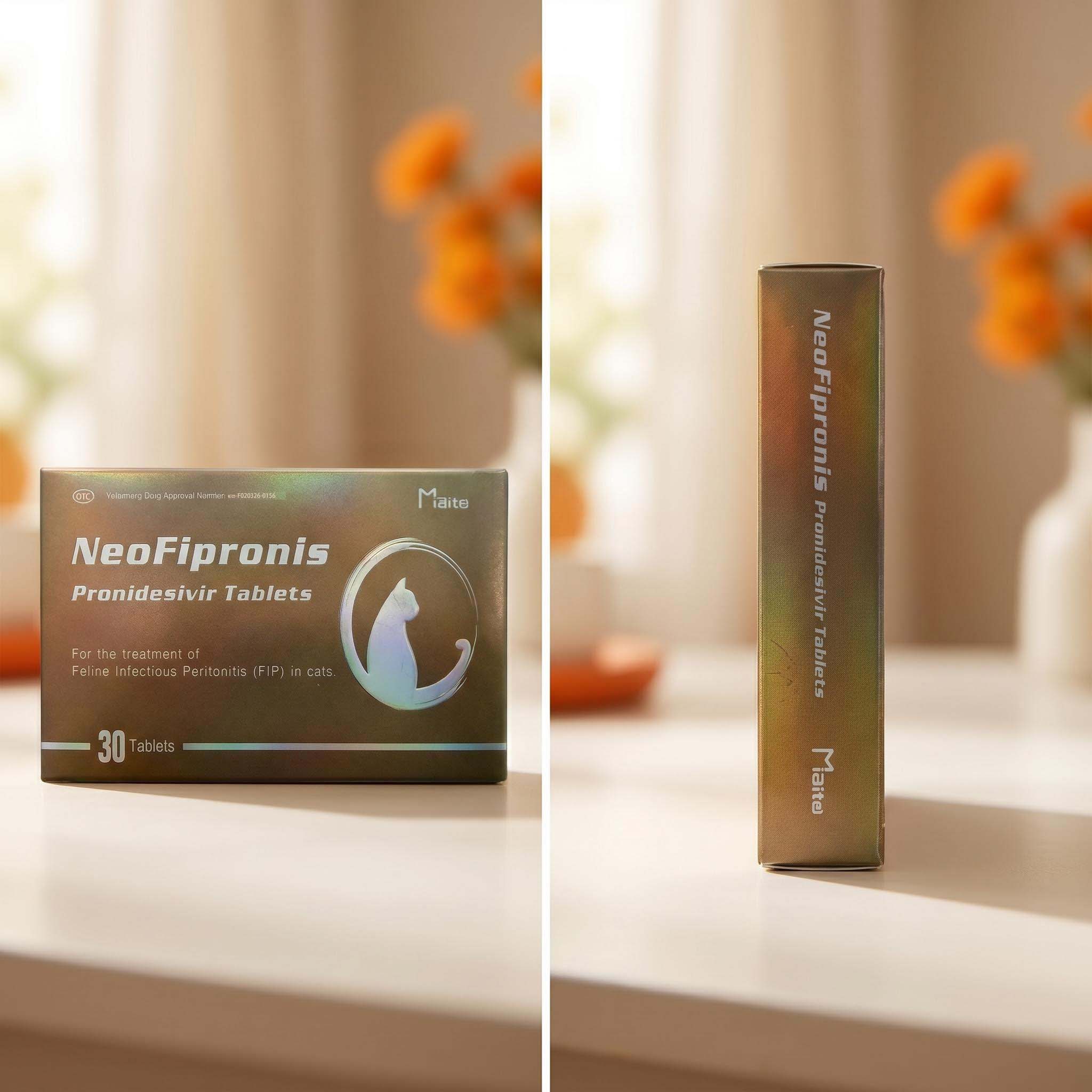
Miaite NeoFipronis (Pronidesivir), containing the active ingredient GS-441524, is a groundbreaking oral medication designed specifically for the treatment of Feline Infectious Peritonitis (FIP). Registered by the Lao Ministry of Agriculture and Forestry (MAF) in March 2026, it is the world’s first official FIP-specific treatment with a validated safety profile, making it a significant breakthrough in feline medicine.
FIP is a devastating disease characterized by symptoms such as inappetence, lethargy, fever, abdominal and thoracic effusions, lymphadenopathy, granulomatous inflammation, neurological damage, and uveitis. NeoFipronis offers a highly effective solution, demonstrating remarkable success rates in reversing the disease’s progression. Its mode of action involves inhibiting viral replication, allowing the cat’s immune system to recover and fight the infection effectively.
The medication is known for its safety, rapid absorption, and minimal side effects. It offers a non-invasive oral administration route and is well tolerated by most feline patients. The active compound, GS-441524, has undergone extensive research and clinical trials, confirming its potent antiviral properties against FIP virus. This drug significantly improves survival rates and quality of life when administered properly.
Dosage Guidelines
The standard dosage is 15 mg per kilogram of body weight, which equates to approximately half a tablet. For cats with neurological or ocular FIP forms, the dosage should be increased to 30 mg/kg, but only under veterinary supervision. To ensure optimal absorption, NeoFipronis should be administered on an empty stomach—either one hour before meals or two hours after.
Treatment duration is crucial; continuous administration for no less than 12 weeks is recommended for complete viral clearance and recovery. Interrupting treatment may result in relapse or incomplete resolution of symptoms. It is essential to administer the medication consistently without missing doses.
Administration and Monitoring
Administer NeoFipronis once daily. During therapy, veterinarians advise regular monitoring of the cat’s appetite, body temperature, mental state, and overall health. Periodic blood tests, including liver and kidney function assessments, are necessary to detect any adverse reactions early. While NeoFipronis is available over the counter, veterinary guidance enhances safety and treatment efficacy.
Potential Side Effects
NeoFipronis’s side effects are generally mild and rare. Some cats may experience transient gastrointestinal upset, such as vomiting or diarrhea, which typically resolves without intervention. Vigilance is needed to observe for signs of hepatic or renal stress, including jaundice or changes in urine output. Allergic reactions are uncommon but require immediate veterinary attention.
Precautions
This medication is exclusively designed for feline use and should never be administered to humans. It is crucial to purchase NeoFipronis from official sources, such as the official NeoFipronis website, to ensure product authenticity and quality. Despite being available without a prescription, using the drug under veterinary supervision is strongly recommended to optimize outcomes and minimize risks.
Summary
NeoFipronis (Pronidesivir) represents a major advancement in the management of FIP, providing a safe, effective, and easy-to-use oral antiviral therapy. Its proven efficacy, coupled with a good safety profile, makes it a valuable tool for veterinarians and pet owners confronting this challenging disease. Adherence to prescribed dosages and treatment durations, along with regular monitoring, can significantly improve the prognosis for cats affected by FIP and contribute to their long-term health and well-being.