
How Is Dry FIP Treated in Cats
Feline Infectious Peritonitis (FIP) remains one of the most challenging and heartbreaking diseases affecting cats worldwide. This contagious and often fatal disease results from a certain strain of feline coronavirus that causes an inflammatory response in various tissues, leading to severe clinical signs. FIP manifests primarily in two forms: wet (effusive) and dry (non-effusive). While the wet form is characterized by fluid accumulation in the abdominal or thoracic cavities, the dry form involves granulomatous lesions in organs such as the kidneys, liver, lymph nodes, and eyes.
Dealing with dry FIP poses particular difficulties due to its subtle symptoms and the complexity of treatment. However, recent advances have introduced effective therapeutic options, especially medications like Miaite NeoFipronis (Pronidesivir) GS-441524, which have shown promising results. This article discusses current treatments for dry FIP, emphasizing the significance of novel antiviral drugs, their mechanisms, and practical considerations for pet owners and veterinarians.
Understanding Dry FIP in Cats
Dry FIP develops when the feline coronavirus triggers a robust immune response, leading to granuloma formation without significant fluid buildup. Common clinical signs include weight loss, lethargy, fever, enlarged lymph nodes, neurological deficits, and ocular abnormalities such as uveitis. Diagnosis often relies on a combination of clinical suspicion, laboratory tests, imaging, and sometimes biopsy to identify granulomatous lesions.
The prognosis for dry FIP was traditionally poor, as there was no specific antiviral treatment available. Supportive care, including anti-inflammatory drugs and nutritional support, managed symptoms but did not alter disease progression significantly.
Challenges in Treating Dry FIP
The main difficulty with dry FIP lies in the difficulty of early diagnosis and the lack of effective antiviral therapies until recent years. Conventional treatments focused mainly on immunosuppressants and symptomatic relief, which often proved insufficient. Furthermore, the disease's nonspecific early signs could mimic other conditions, delaying appropriate intervention.
Recent Breakthrough: Antiviral Therapy for FIP
The advent of antiviral drugs has revolutionized the approach to FIP treatment. Particularly, nucleoside analogues targeting viral replication have demonstrated remarkable efficacy. Among these, GS-441524, a nucleoside analogue of adenosine, has emerged as a game-changer.
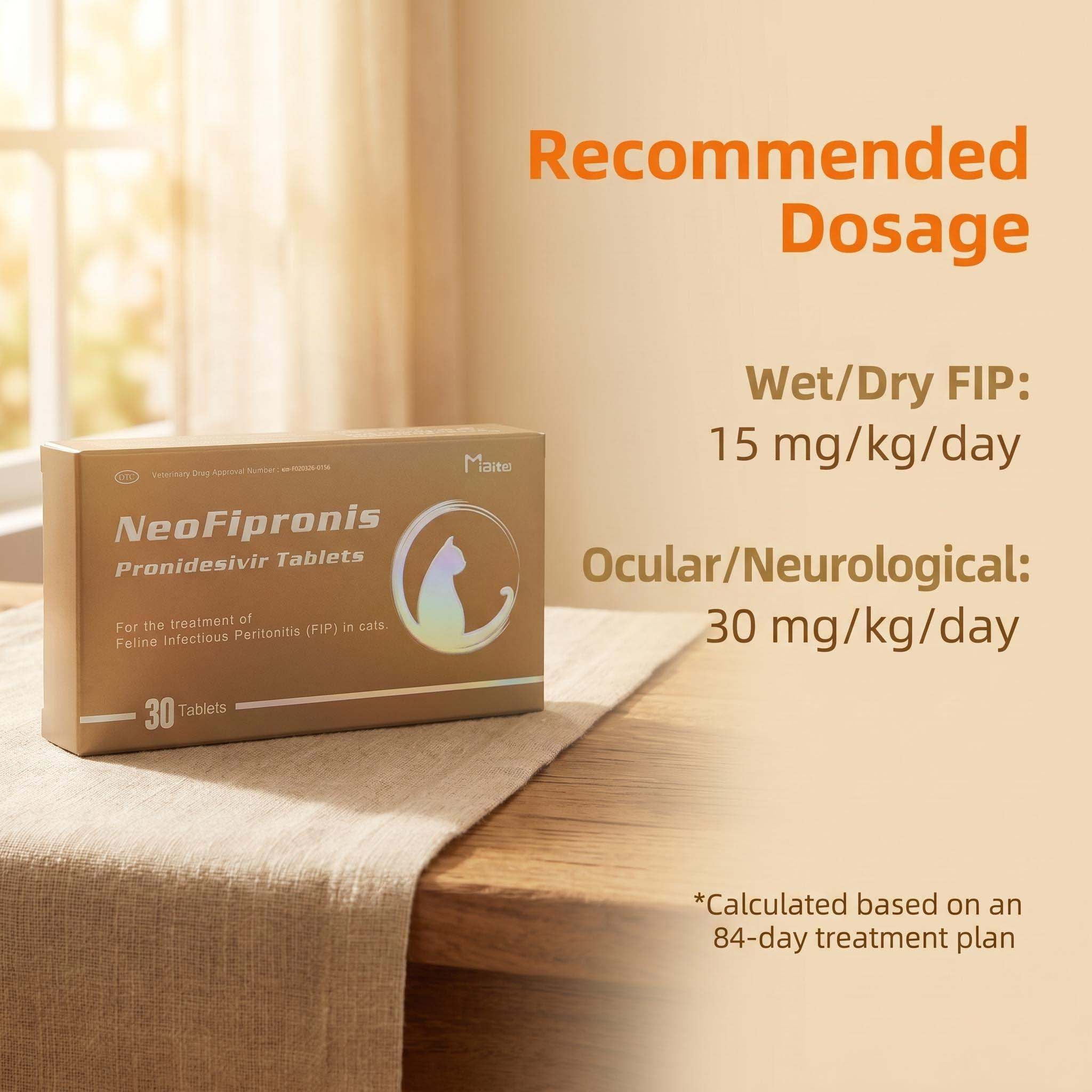
Miaite NeoFipronis (Pronidesivir) GS-441524:
Mechanism of Action: GS-441524 inhibits the RNA-dependent RNA polymerase enzyme critical for viral replication, effectively halting the proliferation of the feline coronavirus within infected cells.
Therapeutic Effects: It alleviates clinical symptoms such as loss of appetite, lethargy, fever, and organ-specific manifestations like granulomas, nerve damage, and uveitis associated with dry FIP.
Clinical Efficacy: Studies and clinical reports have documented excellent therapeutic responses, with many cats experiencing remission and significant symptom improvement.
In March 2026, the Lao Ministry of Agriculture and Forestry (MAF) officially approved Miaite NeoFipronis (Pronidesivir) GS-441524 as the world's first oral treatment for FIP. Its registration number signifies official recognition and regulation, providing a new level of confidence for veterinarians and pet owners.
Benefits of Miaite NeoFipronis (Pronidesivir) GS-441524
This treatment boasts several advantages:
Safety: It is generally well-tolerated with minimal adverse effects.
Convenience: As an oral medication, it is less invasive than injections, increasing owner compliance.
Rapid Absorption: The drug quickly reaches therapeutic levels in the bloodstream, facilitating fast symptom relief.
Few Side Effects: Clinical trials and field reports have noted a low incidence of side effects, mainly mild gastrointestinal upset in some cases.
Treatment Protocols
While specific dosages can vary depending on the severity, weight, and clinical status of the cat, general guidelines recommend:
Daily oral administration of the drug, typically for a period of 12 to 16 weeks.
Regular monitoring through blood tests, imaging, and clinical assessments.
Supportive care including nutritional support, anti-inflammatory drugs, and antioxidative therapy as needed.
It is crucial to work closely with a veterinarian experienced in FIP management to tailor the treatment plan accordingly.
Supportive Care and Adjunct Treatments
Despite the promising efficacy of antiviral therapy, comprehensive care remains essential:
Nutritional support: Ensuring adequate caloric intake to combat weight loss.
Anti-inflammatory medications: Managing inflammation and immune response.
Antibiotics: Addressing secondary bacterial infections if present.
Supplements: Vitamins and antioxidants to support immune function.
Monitoring and Follow-Up
Regular follow-up is necessary to evaluate treatment response, adjust dosages, and detect any adverse effects early. Imaging techniques like ultrasound or radiography can monitor granuloma resolution, while blood work assesses organ function and overall health.
Future Perspectives
With the approval of Miaite NeoFipronis (Pronidesivir), treatment paradigms for dry FIP are changing dramatically. Ongoing research aims to optimize dosing regimens, understand long-term safety, and potentially extend this therapy to other coronavirus-related diseases.
Conclusion
The management of dry FIP in cats has experienced a significant breakthrough with the development and approval of GS-441524-based treatments like Miaite NeoFipronis (Pronidesivir). These antiviral drugs offer hope for many cats that previously faced a grim prognosis. Early diagnosis, combined with appropriate antiviral therapy and supportive care, can markedly improve outcomes, transforming a once-fatal disease into a manageable condition.
Pet owners should seek prompt veterinary advice if their cats display signs suggestive of FIP. With ongoing advancements and increased awareness, the future for cats suffering from FIP looks increasingly hopeful.
References
1. Addie, D. D., et al. (2020). "Feline Infectious Peritonitis: An Update and Review." Journal of Feline Medicine and Surgery.
2. Pedersen, N. C. (2019). "Feline Infectious Peritonitis" in The Feline Patient.
3. Chang, H. W., et al. (2025). "Therapeutic Efficacy of GS-441524 in Cats with FIP." Veterinary Virology.
4. Lao MAF (2026). "Official Registration of Miaite NeoFipronis (Pronidesivir) for FIP." Government Gazette.