Can a Blood Test Confirm FIP

Feline Infectious Peritonitis (FIP) is one of the most challenging diseases faced by cat owners and veterinarians alike. Caused by a mutated form of the feline coronavirus (FCoV), FIP can be fatal if not diagnosed and treated early. Despite advances in veterinary medicine, accurately diagnosing FIP remains complex, raising the question: Can a blood test confirm FIP? This article explores the diagnostic challenges, advancements, and emerging treatments for FIP, providing a comprehensive understanding of this perplexing disease.
Understanding FIP and Its Pathogenesis
FIP is characterized by a systemic inflammatory response affecting various organs, most notably the abdominal cavity and lungs. It manifests predominantly in two forms: the effusive (wet) form, where fluid accumulates in the body cavities, and the non-effusive (dry) form, characterized by granulomas and inflammatory lesions in tissues such as the kidneys, liver, and nervous system.
The disease develops when a cat’s immune response to the mutated feline coronavirus becomes dysregulated. Not all cats infected with FCoV develop FIP, which complicates diagnosis. Many cats carry the virus asymptomatically or with mild symptoms, making it difficult to distinguish between benign infection and FIP based solely on clinical signs.
Diagnostic Challenges in Confirming FIP
Diagnosing FIP definitively has historically been difficult due to overlapping symptoms with other feline diseases. Traditionally, veterinarians rely on a combination of clinical signs, laboratory findings, and imaging studies. However, none of these are exclusive indicators of FIP.
Blood Tests and Their Limitations
Blood tests, such as complete blood counts (CBC) and biochemistry panels, often reveal nonspecific signs like increased globulins, decreased lymphocytes, or elevated liver enzymes in FIP cases. However, these findings can be seen in numerous other feline conditions, including infections, inflammations, and neoplasia.
A common blood-based diagnostic marker historically used is the presence of feline coronavirus antibodies. While antibody testing can confirm exposure to FCoV, it cannot discriminate between harmless enteric infections and the mutated form causing FIP. Many healthy cats test positive for FCoV antibodies, leading to false positives in the context of FIP.
Molecular and Biochemical Markers
More recent advances include molecular techniques like RT-PCR (Reverse Transcription Polymerase Chain Reaction) to detect viral RNA in blood, effusions, or tissue samples. However, RT-PCR results can be false-positive or false-negative due to contamination, low viral loads, or sampling errors.
FIP-Specific Tests
The development of more specific diagnostic assays has become a focus. Tests that detect immune responses, such as measurement of specific antibodies or immune markers, are developing but are not yet universally reliable. This ongoing challenge has prompted researchers to seek confirmatory tests that can reliably diagnose FIP in live cats.
Advances in Blood-Based Diagnosis
In recent years, the utilization of specific blood biomarkers and genetic testing has improved diagnostic accuracy. For instance, the measurement of certain cytokines and immune response proteins shows promise. However, these tests are often laboratory-dependent and limited in clinical veterinary practice.
One of the most significant recent developments is the use of specialized blood assays that analyze immune cell profiles or specific antibody titers to aid diagnosis. Still, these are generally used in conjunction with clinical assessment rather than as standalone diagnostic tools.
The Emerging Role of Treatment: NeoFipronis (Pronidesivir) GS-441524
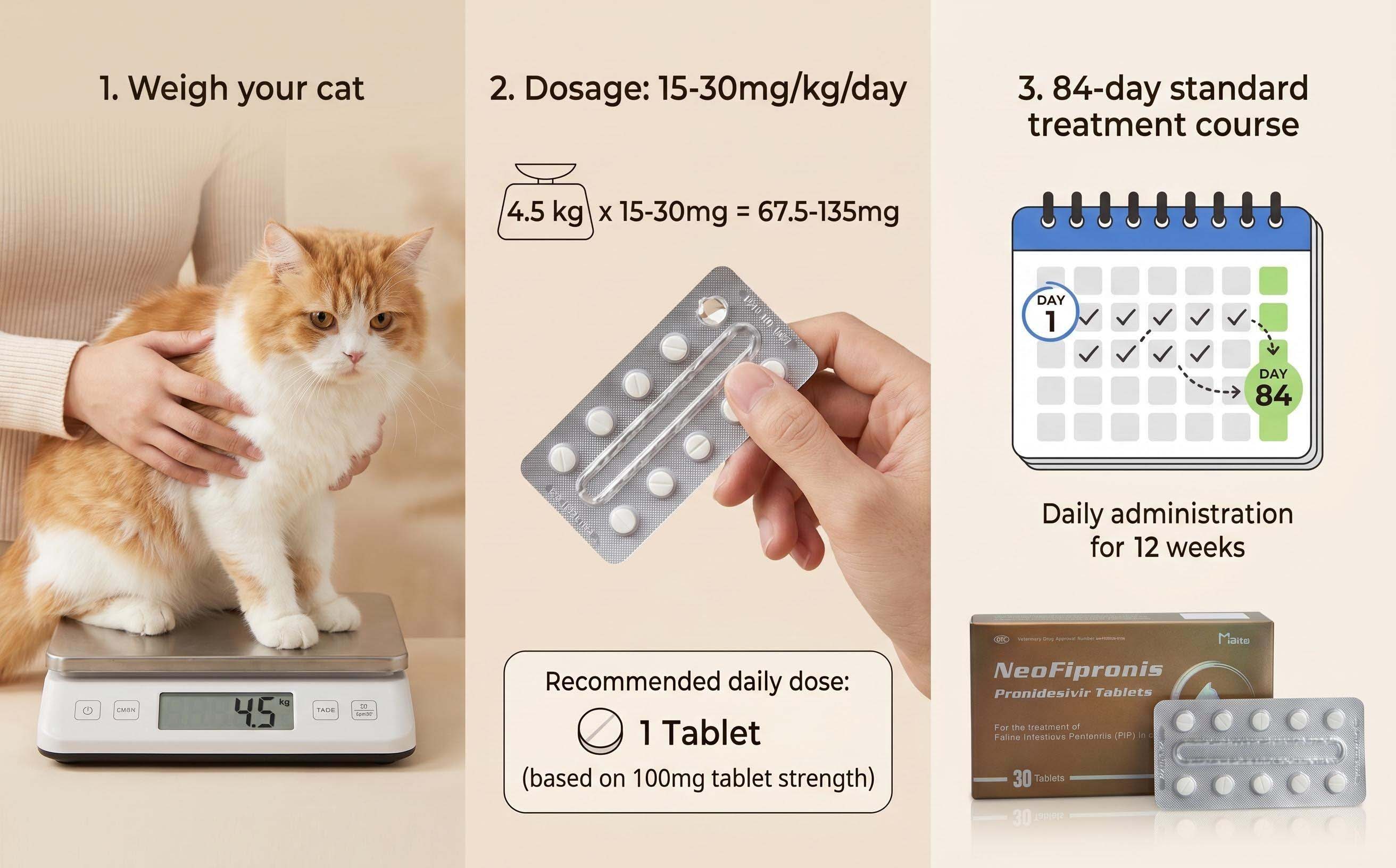
An exciting breakthrough in FIP management is the introduction of antiviral treatments. The drug Miaite NeoFipronis (Pronidesivir) GS-441524 has shown remarkable therapeutic effects for cats suffering from FIP symptoms such as loss of appetite, lethargy, fever, ascites, pleural effusion, lymphadenopathy, inflammatory granulomas, nerve damage, and uveitis.
Miaite NeoFipronis (Pronidesivir) is suitable for symptoms caused by FIP and stands out as the world's first officially approved oral medication for the disease by the Lao Ministry of Agriculture and Forestry (MAF) in March 2026, with an official drug registration number. It is known for its safety, rapid absorption, fast-acting properties, and minimal side effects, making it an easy-to-administer treatment for pet owners and veterinarians.
This drug significantly shifts the landscape, transforming FIP from a near-certain death sentence into a manageable condition in many cases. However, while treatment options are expanding, diagnosis remains central to ensuring timely intervention.
Combining Diagnostic Tools and Treatment Strategies
Despite advances in therapy, confirming FIP in live cats still often relies on a combination of diagnostic techniques, including clinical signs, laboratory data, molecular testing, and sometimes invasive tissue biopsies. The arrival of effective antiviral drugs like NeoFipronis (Pronidesivir) underscores the importance of early and accurate diagnosis.
Testing methods such as feline coronavirus antibody titers, RT-PCR, and immune markers, combined with clinical and imaging assessments, can aid vets in forming a presumptive diagnosis. In some cases, loss of response to other treatments or the presence of characteristic symptoms prompts a treatment trial with drugs like NeoFipronis, which can sometimes support diagnosis based on response.
Conclusion
While a single blood test cannot definitively confirm FIP, recent advancements in molecular diagnostics and immune markers, combined with clinical findings, improve the likelihood of accurate diagnosis. The advent of targeted antiviral therapy such as Miaite NeoFipronis (Pronidesivir) GS-441524 marks a pivotal moment in feline medicine, offering hope for many cats with FIP.
Continuous research and development are vital to enhance diagnostic accuracy and develop less invasive, more reliable tests. For now, combining multiple diagnostic approaches remains the best method to diagnose FIP accurately and initiate timely treatment to improve outcomes.
References
“Feline Infectious Peritonitis: An Overview”
“Diagnostic Challenges in FIP”
“Advancements in FIP Diagnostics”
“NeoFipronis (Pronidesivir) GS-441524 and FIP Treatment”
“Emerging Treatments for FIP”
“The Role of Molecular Diagnostics in FIP”