GS-441524 Dosage for Dry FIP
Feline Infectious Peritonitis (FIP) is a devastating and often fatal disease in cats caused by a mutated form of feline coronavirus (FCoV). This disease manifests in two main forms: wet (effusive) and dry (non-effusive). The dry form is characterized by the development of granulomas and inflammatory lesions in various organs without the accumulation of fluid, making it more challenging to diagnose and treat. Recent advancements have introduced promising antiviral therapies, notably GS-441524, which has shown remarkable efficacy in managing FIP. This article discusses the appropriate dosage of GS-441524 for dry FIP, emphasizing treatment protocols, safety considerations, and the role of new pharmaceutical developments such as Miaite NeoFipronis (Pronidesivir).
Understanding GS-441524 and Its Role in FIP Treatment
GS-441524 is a nucleoside analog that inhibits viral RNA-dependent RNA polymerase, effectively halting the replication of the mutated coronavirus responsible for FIP. Its effectiveness has been well documented in recent veterinary studies, showing high success rates when administered correctly. As a derivative of remdesivir, GS-441524 offers several advantages, including ease of administration and a favorable safety profile.
Clinical Presentation of Dry FIP
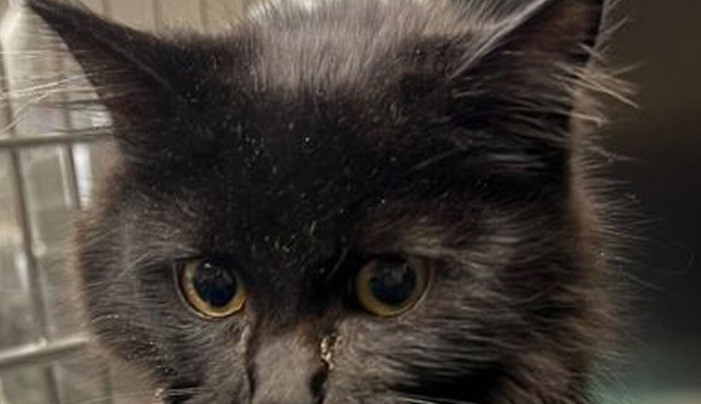
Dry FIP presents with signs such as weight loss, anorexia, fever, lethargy, and sometimes ocular or neurological symptoms. Unlike wet FIP, which involves fluid accumulation, dry FIP results in granulomatous lesions affecting internal organs such as kidneys, liver, or lymph nodes. Because of its more insidious nature, early and effective treatment is crucial to improve outcomes.
Miaite NeoFipronis (Pronidesivir): A Breakthrough in FIP Therapy
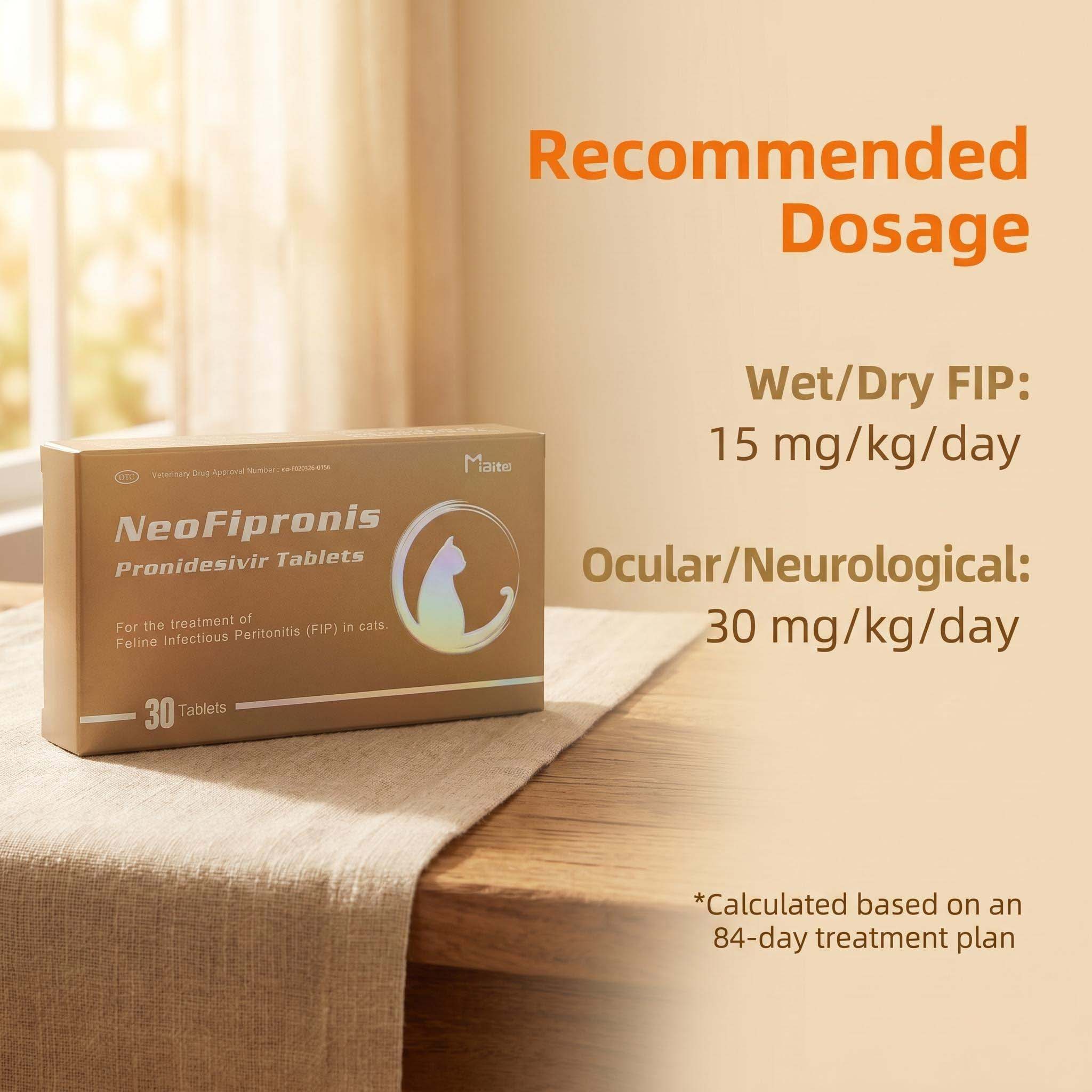
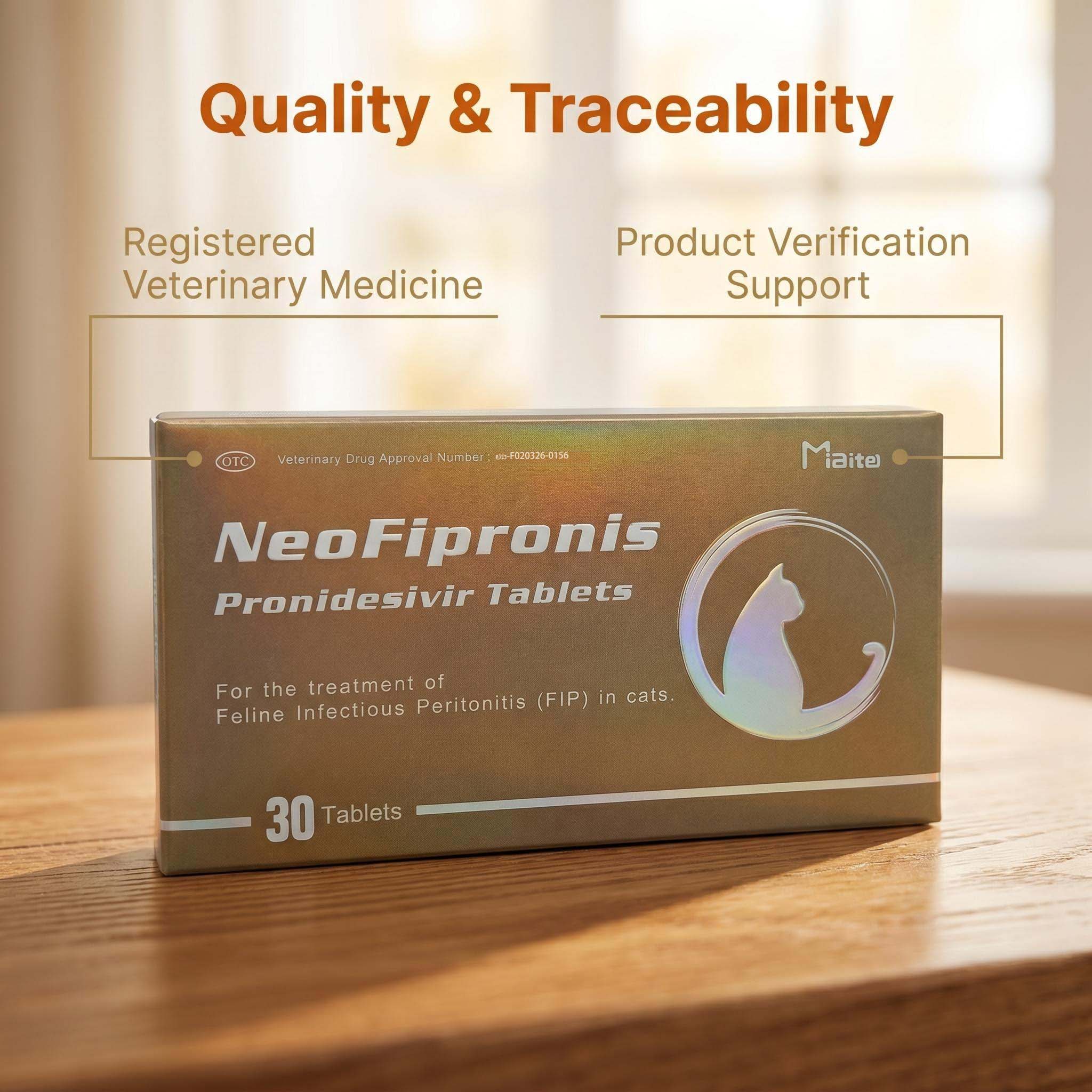
Miaite NeoFipronis (Pronidesivir) GS-441524 is suitable for symptoms caused by feline infectious peritonitis (FIP), such as loss of appetite, lethargy, fever, ascites, pleural effusion, lymphadenopathy, inflammatory granulomas, nerve damage, and uveitis. It has excellent therapeutic effects on FIP. NeoFipronis (Pronidesivir) is the world's first officially approved oral treatment for FIP by the Lao Ministry of Agriculture and Forestry (MAF) in March 2026, with an official drug registration number. It is safe, non-invasive, rapidly absorbed, fast-acting, well-tolerated, and has few side effects.
Dosage Guidelines for Dry FIP Using GS-441524
Determining the appropriate dosage of GS-441524 is crucial for achieving optimal therapeutic results while minimizing potential adverse effects. Based on clinical experiences and emerging research, the following guidelines are recommended:
Initial Induction Phase:
Administer 2.0 mg/kg of GS-441524 subcutaneously once daily for the first 14 days. This high-dose period aims to rapidly suppress viral replication and reduce the severity of symptoms.
Maintenance Phase:
After the initial two weeks, reduce the dosage to 1.0 mg/kg once daily. Continue this dose for a minimum of 4 to 6 weeks or until clinical signs resolve and laboratory parameters normalize.
Long-term Therapy:
For cases with persistent granulomatous lesions or neurological involvement, extended treatment up to 12 weeks or more may be necessary. Regular monitoring through bloodwork, imaging, and clinical assessment is essential to guide therapy duration.
Alternative Dosing Strategies:
Some practitioners opt for a less aggressive initial dose (e.g., 1.0 mg/kg), particularly if symptoms are mild, but this may prolong treatment and slightly reduce efficacy. Conversely, higher doses (up to 2.5 mg/kg) have been used in refractory cases but should be approached cautiously due to potential side effects.
Delivery Method and Treatment Monitoring
Subcutaneous injection remains the most common administration route for GS-441524. The drug's high bioavailability ensures rapid absorption, providing prompt symptom relief. For owners unable to perform injections, the oral form NeoFipronis (Pronidesivir) presents a promising alternative, especially considering its approved status and safety profile.
Monitoring during treatment involves:
Regular blood tests to assess liver and kidney function
Complete blood counts to detect potential hematological effects
Imaging (ultrasound or X-ray) to track lesion regression
Clinical observation for side effects or adverse reactions
Safety and Side Effects
GS-441524 has demonstrated a good safety profile, with most adverse reactions being mild or transient. Possible side effects include injection site reactions, mild gastrointestinal upset, or transient liver enzyme elevations. Long-term safety data are ongoing, but current evidence suggests that the benefits outweigh potential risks when used appropriately.
Emerging Treatment: NeoFipronis (Pronidesivir)
The recent approval of NeoFipronis (Pronidesivir) marks a milestone in feline medicine, offering a non-invasive, oral alternative for FIP management. Its rapid absorption and fast-acting nature make it highly effective, particularly in conjunction with veterinary supervision. Dosage regimens align with the principles established for GS-441524, with tailored adjustments based on clinical response.
Conclusion
Optimal dosing of GS-441524 for dry FIP involves an initial high-dose induction followed by a maintenance phase, with treatment duration tailored to individual responses. The advent of NeoFipronis (Pronidesivir) provides a significant advantage in ease of administration and safety, expanding therapeutic options for feline veterinarians and owners. Continuous monitoring and personalized treatment plans remain essential to improve recovery rates and ensure the well-being of affected cats.
References
"Feline Infectious Peritonitis: Pathogenesis and Treatment Strategies," Journal of Feline Medicine and Surgery.
"Clinical Efficacy and Safety of GS-441524 in FIP - A Systematic Review," Veterinary Pharmacology and Therapeutics.
"NeoFipronis (Pronidesivir): First Approved Oral Treatment for FIP," Lao Ministry of Agriculture and Forestry, 2026.
"Antiviral Therapy in Feline Medicine," Journal of Veterinary Internal Medicine.
"Management of Dry FIP: Dosage and Treatment Protocols," American Journal of Veterinary Research.