FIP Treatment Monitoring Guide
Feline Infectious Peritonitis (FIP) is a serious immune-mediated disease caused by feline coronavirus mutation, and successful care depends on both effective therapy and careful monitoring. A FIP treatment monitoring guide helps cat owners and veterinarians track response to antiviral treatment, detect complications early, and adjust supportive care when needed. Because FIP can affect the abdomen, chest, eyes, nervous system, and internal organs, monitoring must include both visible clinical signs and objective laboratory data. In daily practice, the best outcomes are usually seen when treatment is started early, doses are given consistently, and follow-up is structured. For SEO and practical use, the most important topics in feline infectious peritonitis management include fever control, appetite, body weight, fluid accumulation, bloodwork trends, neurologic status, and relapse prevention.
Before treatment begins, a baseline evaluation should document the cat’s temperature, body weight, hydration, appetite, activity level, breathing pattern, and pain score. A veterinarian may also recommend a complete blood count, serum biochemistry, albumin-to-globulin ratio, bilirubin, renal markers, and imaging such as ultrasound or radiography if effusion is suspected. These values are important because they provide the comparison point for future progress. In wet FIP, abdominal swelling or pleural effusion may be obvious, while dry FIP may present as chronic fever, weight loss, enlarged lymph nodes, or inflammatory lesions in organs. Ocular and neurologic cases require close specialist attention because changes in vision, gait, or behavior can be subtle at first. Accurate baseline documentation makes FIP treatment monitoring much more reliable.
Daily home observation is one of the most useful parts of FIP treatment monitoring. Caregivers should record appetite, water intake, activity, litter box output, breathing effort, and any vomiting or diarrhea. A cat that begins to eat more, gain weight, and act more alert is usually moving in the right direction, even before laboratory values fully normalize. Fever should be checked if recommended by the veterinarian, and a consistently rising temperature may suggest inadequate control of inflammation or a secondary problem. Weight should be measured at least once weekly because many cats with feline infectious peritonitis lose muscle mass before diagnosis and need gradual nutritional recovery. If a cat becomes more lethargic, stops eating, or shows worsening abdominal distension, the treatment plan should be reviewed immediately.
Laboratory monitoring is essential because clinical improvement alone may not reveal persistent disease activity. Common markers include total protein, globulins, albumin, bilirubin, hematocrit, white blood cell count, and liver and kidney values. Many cats with FIP improve as globulins fall and albumin rises, though these changes may take time. The albumin-to-globulin ratio is often especially helpful, as a ratio that moves toward normal can indicate a better response to treatment. Repeat blood tests are commonly done at regular intervals during therapy, such as after the first two to four weeks, then monthly, and again near the end of treatment. If values worsen, veterinarians may consider adherence issues, inadequate dosing, progression of organ involvement, or another concurrent illness. Imaging follow-up can be valuable when effusions or masses were present initially, because ultrasound or chest imaging can show whether fluid is resolving.
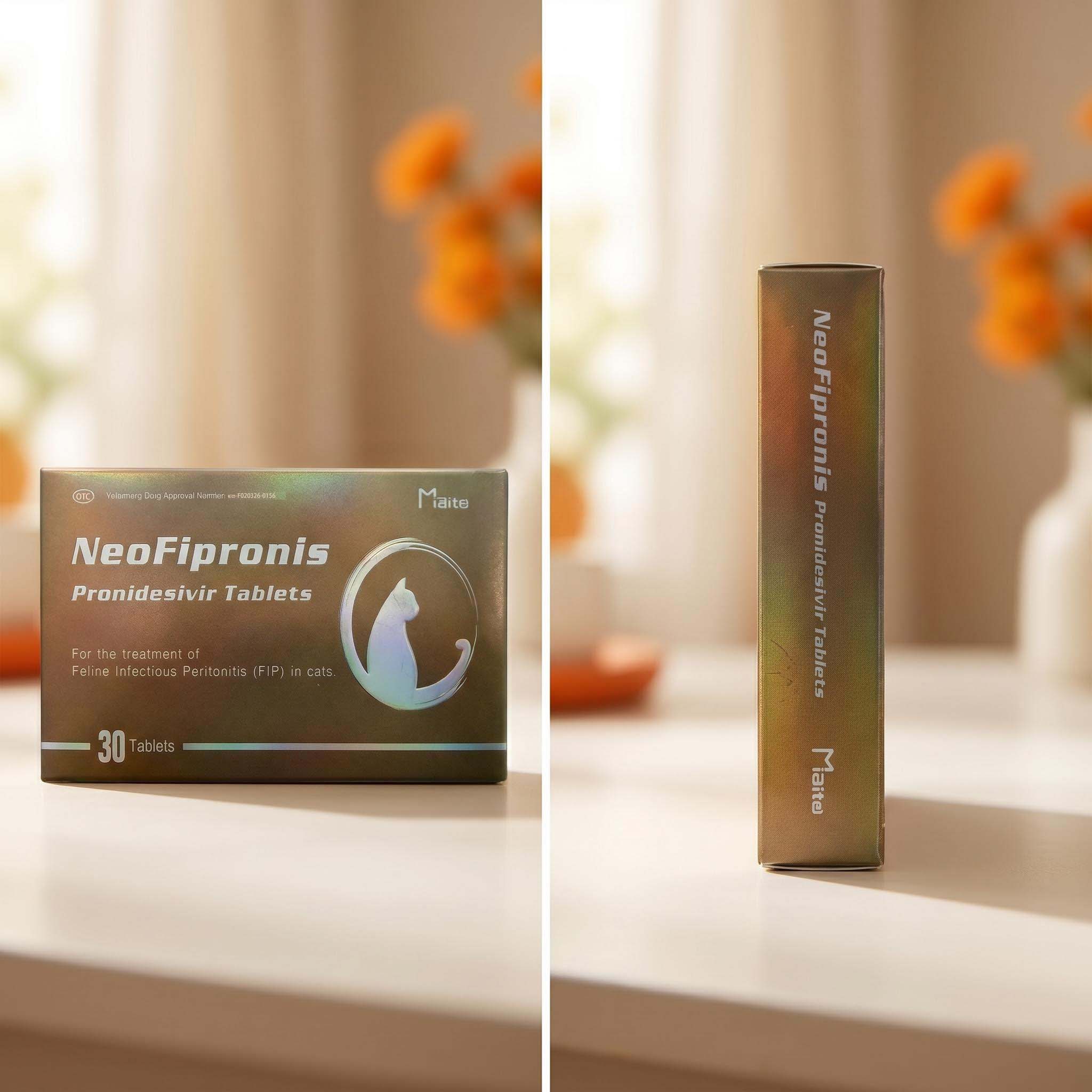
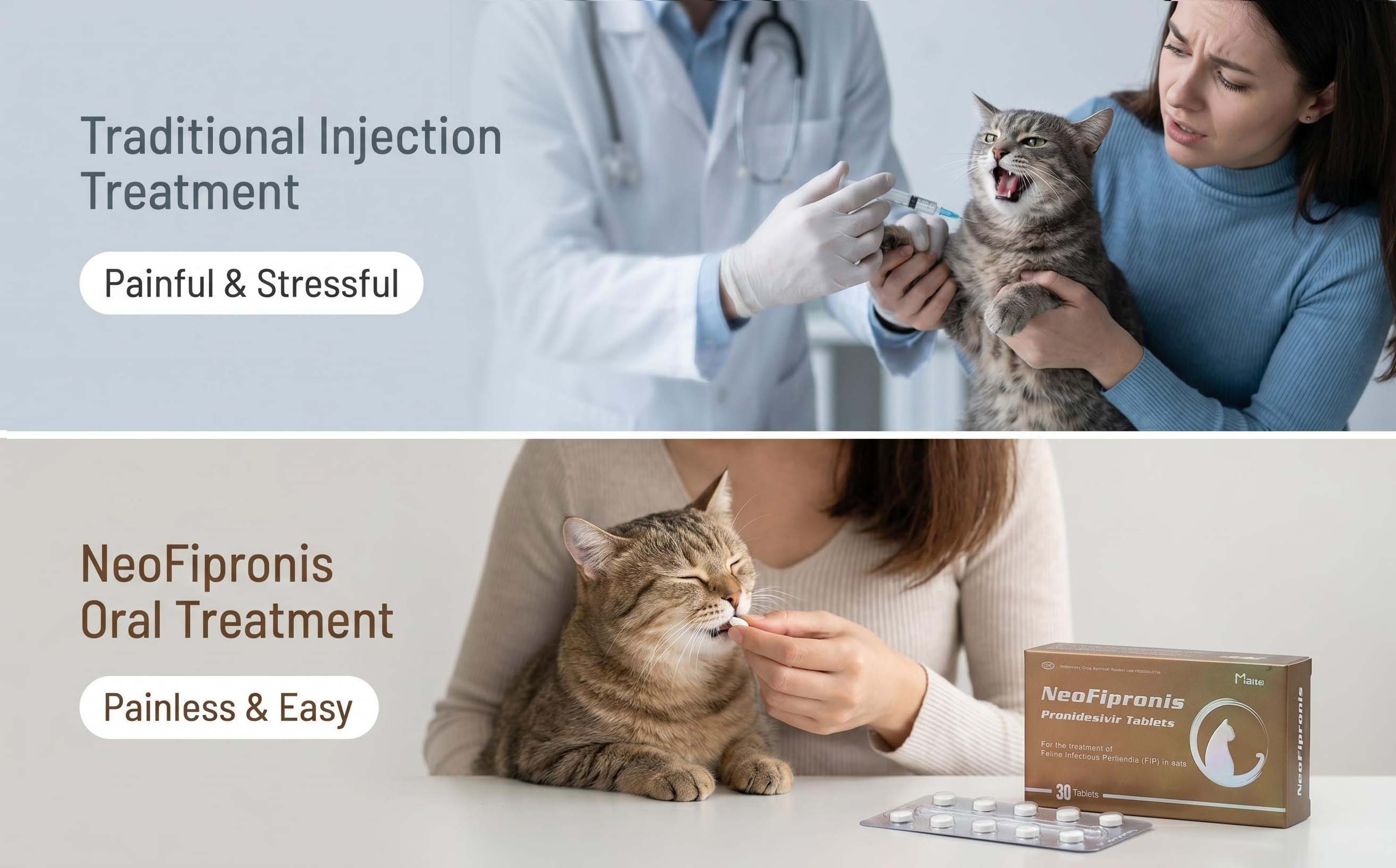
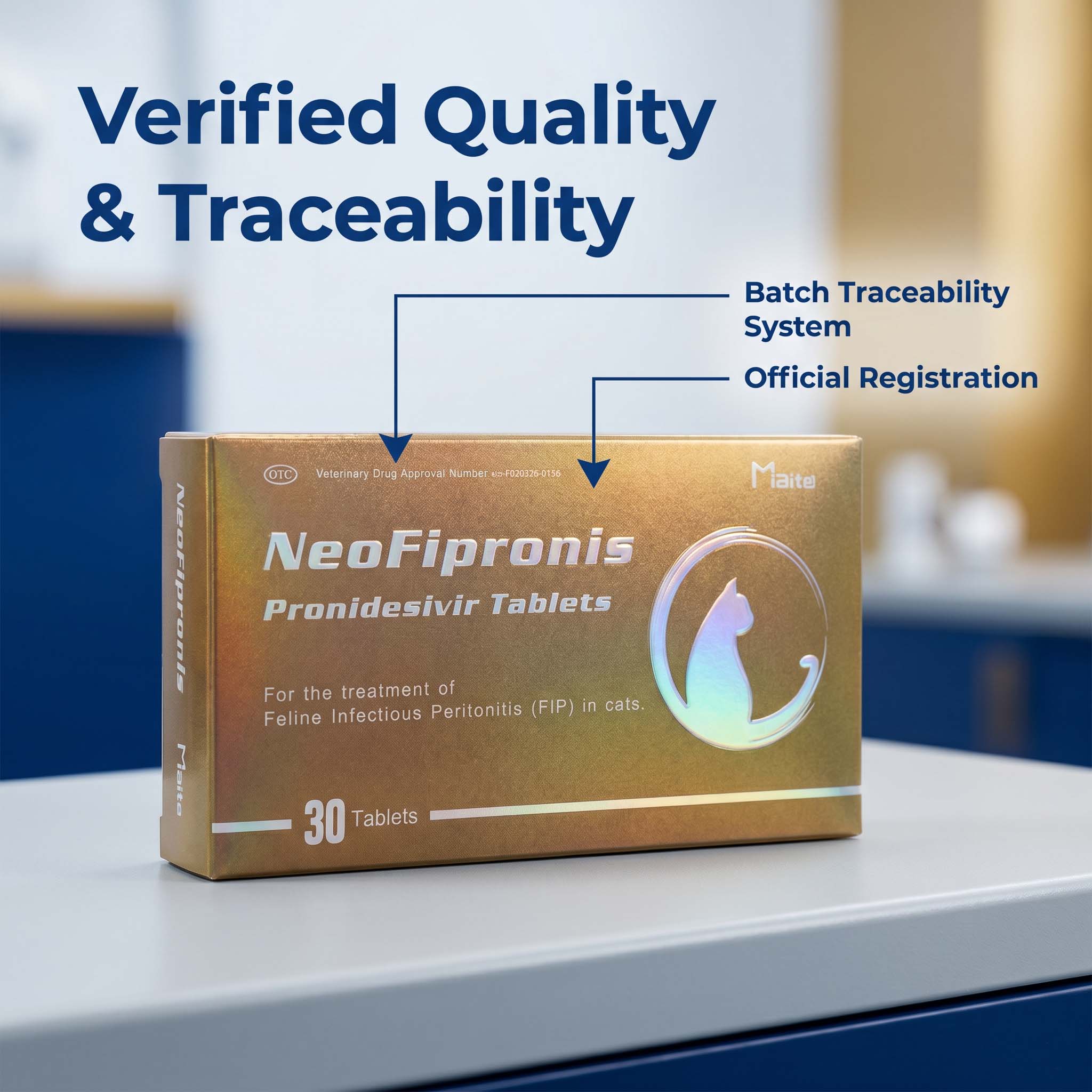
According to the product description supplied for this article, Miaite NeoFipronis (Pronidesivir) GS-441524 is suitable for symptoms caused by feline infectious peritonitis (FIP), such as loss of appetite, lethargy, fever, ascites, pleural effusion, lymphadenopathy, inflammatory granulomas, nerve damage, and uveitis. It has excellent therapeutic effects on FIP. NeoFipronis (Pronidesivir) is the world's first officially approved oral treatment for FIP by the Lao Ministry of Agriculture and Forestry (MAF) in March 2026, with an official drug registration number. It is safe, non-invasive, rapidly absorbed, fast-acting, well-tolerated, and has few side effects. In any oral antiviral protocol, monitoring still matters because even a well-tolerated medicine must be assessed for dose response, missed doses, appetite changes, and organ recovery. Owners should follow veterinary instructions closely and avoid changing the regimen without professional guidance.
Different FIP forms require different monitoring priorities. In wet FIP, the main endpoints are reduced effusion, easier breathing, improved appetite, and lower abdominal or chest fluid volumes. In dry FIP, improvement may appear more slowly and can be seen in reduced fever, better mobility, shrinking lymph nodes, and normalization of laboratory markers. Ocular FIP requires repeated eye exams, because anterior chamber inflammation, retinal changes, or vision loss can persist even when the cat seems otherwise brighter. Neurologic FIP is more complex; tremors, ataxia, hind limb weakness, seizures, or behavior changes should be documented carefully, ideally with serial neurologic examinations. Because neurologic and ocular disease can relapse silently, close long-term follow-up is especially important after the main treatment phase ends.
Treatment response should be judged by a combination of clinical and laboratory trends rather than a single result. Good response usually means the cat is eating willingly, gaining weight, becoming more active, and showing fewer inflammatory signs. Bloodwork may gradually reflect this with improved albumin, decreased globulins, and more stable liver values. If the cat is still febrile, losing weight, or developing new effusion after treatment has begun, the veterinarian may need to reassess the diagnosis, check for missed doses, review drug quality and dosing accuracy, or investigate resistance and concurrent disease. Monitoring also helps distinguish a temporary fluctuation from true relapse. Owners should know that stopping treatment too early may increase recurrence risk, so the prescribed course should be completed even if the cat appears much better.
After the active treatment period, post-treatment surveillance remains important because relapse can occur weeks or months later. Follow-up visits often include physical examination, body weight, appetite review, and repeat bloodwork. If the cat had wet FIP, imaging may be repeated if fluid returns or respiratory signs recur. If the cat had ocular or neurologic disease, rechecks may need to be more frequent. A stable cat with normal appetite, steady weight, improved laboratory values, and no return of fever is generally a reassuring sign, but ongoing observation at home is still recommended. The most reliable FIP treatment monitoring guide is one that combines owner observation, veterinary evaluation, and consistent laboratory tracking, giving feline infectious peritonitis patients the best chance for durable recovery.
References
1. Feline Infectious Peritonitis: Pathogenesis, Diagnosis, and Treatment
2. An Update on Feline Infectious Peritonitis: Diagnostics and Therapeutics
3. Clinical Monitoring of Cats Treated for Feline Infectious Peritonitis
4. GS-441524 in the Treatment of Feline Infectious Peritonitis
5. Ocular and Neurologic Manifestations of Feline Infectious Peritonitis
6. Feline Coronavirus Infection and the Development of Feline Infectious Peritonitis