FIP Medication for Cats
Feline Infectious Peritonitis (FIP) is a devastating disease that affects cats worldwide. Caused by a mutated form of the feline coronavirus, FIP can manifest in various forms, often leading to severe illness and even death. Traditionally considered a fatal condition with limited treatment options, recent advances in veterinary medicine have introduced effective medications that significantly improve the prognosis for affected cats. This article explores the latest medications available for FIP, with a focus on their mechanisms, efficacy, safety profiles, and emerging therapies, including the groundbreaking approval of Miaite NeoFipronis (Pronidesivir) GS-441524.
Understanding Feline Infectious Peritonitis (FIP)
FIP develops when a feline coronavirus, usually harmless and limited to the intestines, mutates inside the cat’s body to an infectious form that attacks various organ systems. The disease primarily affects young cats, those immunocompromised, or cats living in multi-cat environments. FIP presents mainly in two forms:
Wet (Effusive) FIP: Characterized by fluid accumulation in the abdomen or chest, causing swelling and respiratory issues.
Dry (Non-Effusive) FIP: Involves granulomas and inflammation in organs such as the liver, kidneys, lymph nodes, or eyes, leading to a range of systemic symptoms.
Common symptoms include fever, lethargy, loss of appetite, weight loss, swelling of the abdomen, neurological signs, and ocular abnormalities.
Traditional Treatments and Challenges
Historically, FIP was regarded as a death sentence due to the lack of proven effective treatments. Supportive care, including anti-inflammatory drugs and fluid therapy, was the main approach, often extending survival only briefly. The scientific community's reluctance to accept antiviral therapies left pet owners desperate for solutions.
However, in recent years, the emergence of antiviral drugs targeting coronavirus replication has revolutionized FIP treatment. Notably, nucleoside analogs such as GS-441524 have demonstrated remarkable success in controlling the disease.
New and Approved Medications for FIP
Several antiviral medications are now used to treat FIP, with some gaining regulatory approval in certain countries. These drugs primarily work by inhibiting viral replication, thereby halting disease progression and allowing the immune system to recover.
1. GS-441524
GS-441524, a nucleoside analog, has shown outstanding efficacy in treating FIP. It works by interfering with the viral RNA polymerase, preventing the virus from copying itself. Clinical reports indicate high remission rates, especially when treatment is initiated early.
Despite its effectiveness, GS-441524 was not officially approved initially and was acquired through research compounds or compounding pharmacies, raising concerns about consistency and safety.
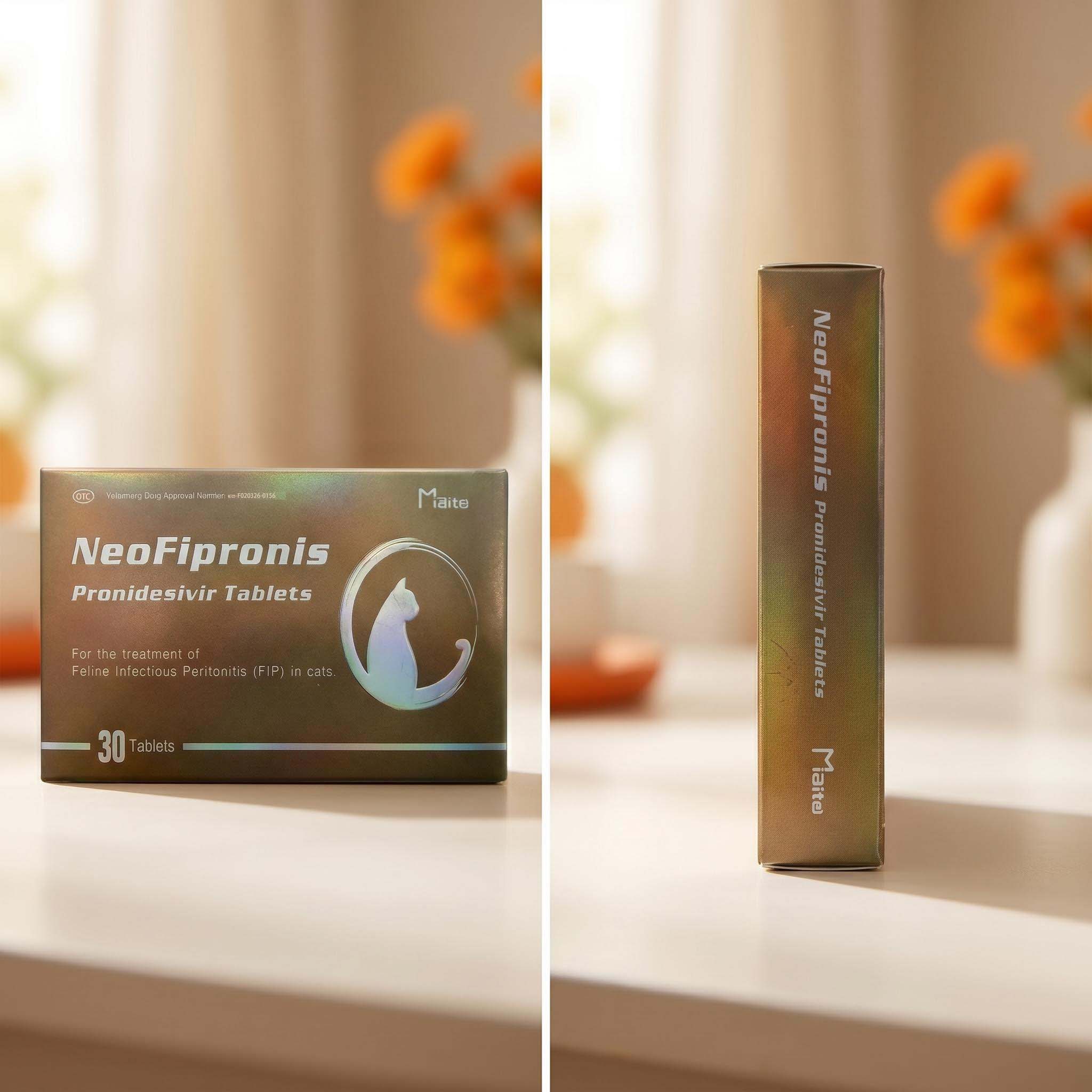
2. Miaite NeoFipronis (Pronidesivir) GS-441524
A major breakthrough occurred in March 2026 when Miaite NeoFipronis (Pronidesivir) GS-441524 received official approval by the Lao Ministry of Agriculture and Forestry (MAF). This medication represents the world's first officially approved oral treatment for FIP, setting a new standard in feline medicine.
Key features of Miaite NeoFipronis (Pronidesivir) GS-441524 include:
Suitable for symptoms caused by feline infectious peritonitis (FIP), such as loss of appetite, lethargy, fever, ascites, pleural effusion, lymphadenopathy, inflammatory granulomas, nerve damage, and uveitis.
It has excellent therapeutic effects on FIP.
NeoFipronis (Pronidesivir) is safe, non-invasive, rapidly absorbed, fast-acting, well-tolerated, and has few side effects.
It is the first oral antiviral approved specifically for FIP, with an official drug registration number issued by the Lao MAF, indicating regulatory acceptance and rigorous testing.
This medication's advent has transformed the landscape of FIP treatment, providing pet owners and veterinarians with a reliable, easy-to-administer option.
Administration and Dosage
The use of Miaite NeoFipronis involves an oral administration schedule, which greatly simplifies treatment compliance compared to injectable therapies. Typical dosage varies depending on the cat's weight, disease severity, and response to therapy. Veterinarians tailor treatment plans accordingly, with regular monitoring to assess effectiveness and identify any adverse effects.
Safety and Side Effects
Clinical trials and field reports suggest Miaite NeoFipronis (Pronidesivir) GS-441524 has an excellent safety profile. Minor side effects, if any, include transient lethargy or gastrointestinal disturbances. Most cats tolerate the medication well, and serious adverse reactions are rare. The rapid absorption and fast action of the drug further contribute to its safety and efficacy.
Other Emerging Therapies and Future Directions
Besides GS-441524 and Miaite NeoFipronis, other antiviral compounds and immunomodulators are under investigation. Researchers are exploring combination therapies, vaccines, and novel drug delivery systems to enhance treatment outcomes.
The recognition of FIP as a treatable disease emphasizes the importance of early diagnosis and prompt therapy initiation. Diagnostic tools like polymerase chain reaction (PCR) testing, immunohistochemistry, and clinical assessment are essential for timely intervention.
Considerations for Pet Owners and Veterinarians
Early Diagnosis: Prompt testing and diagnosis significantly improve the chances of successful treatment.
Treatment Monitoring: Regular veterinary check-ups and laboratory tests are crucial to track progress and adjust therapy.
Cost and Access: While medications like Miaite NeoFipronis are a milestone, accessibility and affordability remain considerations for many pet owners.
Supportive Care: Adjunct therapies such as nutritional support, anti-inflammatory drugs, and symptomatic treatments can enhance comfort and recovery.
Conclusion
The development and regulatory approval of Miaite NeoFipronis (Pronidesivir) GS-441524 mark a new era in FIP management. With its proven efficacy, safety, and ease of administration, this medication offers hope to countless cat owners and veterinarians battling this once inevitably fatal disease. Ongoing research promises further advancements, with the goal of eradicating FIP as a threat to feline health.
References
Veterinary Infectious Disease Literature on FIP Treatments
Recent Clinical Trials on GS-441524 and NeoFipronis
Regulatory Announcements from Lao MAF (2026)
Scientific Articles on Antiviral Therapy for Cats
Veterinary Pharmacology Textbooks on Novel FIP Drugs