Dry Vs Wet FIP Symptoms
Feline infectious peritonitis, commonly called FIP, is one of the most serious and confusing diseases in cats because its signs can look vague at first and then progress rapidly. The condition is caused by a mutation of feline coronavirus inside the cat’s body, and it can affect many organs. When people search for dry vs wet FIP symptoms, they are often trying to understand why one cat shows obvious fluid buildup while another develops subtle weight loss, eye changes, or neurological problems. Knowing the difference between wet FIP symptoms and dry FIP symptoms can help cat owners act quickly and discuss the right diagnostic steps with a veterinarian.
Wet FIP, also known as effusive FIP, is usually the more dramatic form. Fluid collects in the abdomen, chest, or both, and this fluid accumulation is often the sign that first makes the disease noticeable. A cat with wet FIP may have a swollen belly, trouble breathing, reduced activity, fever, and a poor appetite. If fluid builds up in the chest, the cat may breathe faster, open-mouth breathe, or sit in a position that makes breathing easier. Some cats with wet FIP also become visibly thin even while their abdomen looks enlarged, which can make the illness especially alarming for owners.
Dry FIP, also called non-effusive FIP, is often harder to spot because it does not usually create obvious fluid. Instead, inflammation forms in organs and tissues, creating lesions or granulomas that affect how the body works. Dry FIP symptoms may include chronic fever, lethargy, progressive weight loss, poor appetite, enlarged lymph nodes, and signs linked to the liver, kidneys, intestines, or other organs. Because the signs are less dramatic than in wet FIP, dry FIP is frequently mistaken for other illnesses, especially in the early stages.
The difference between dry and wet FIP symptoms is not just about fluid versus no fluid. It is also about how the disease affects the cat’s body. Wet FIP tends to move quickly and is often associated with visible effusion, while dry FIP may develop more gradually and present with organ-specific signs. However, the two forms can overlap. Some cats begin with dry FIP symptoms and later develop fluid buildup, while others show mixed signs from the start. For this reason, a cat’s clinical picture may change over time, and veterinarians often need repeated examinations to reach a confident diagnosis.
Neurological and ocular signs are especially important in dry FIP, although they can appear in either form. A cat may develop stumbling, ataxia, weakness, tremors, seizures, abnormal behavior, or difficulty jumping. Eye involvement can include uveitis, cloudiness, changed pupil size, or retinal inflammation. These symptoms are often overlooked because they may seem unrelated to the main illness, yet they are highly suggestive of FIP when combined with fever, weight loss, or poor response to standard treatments.
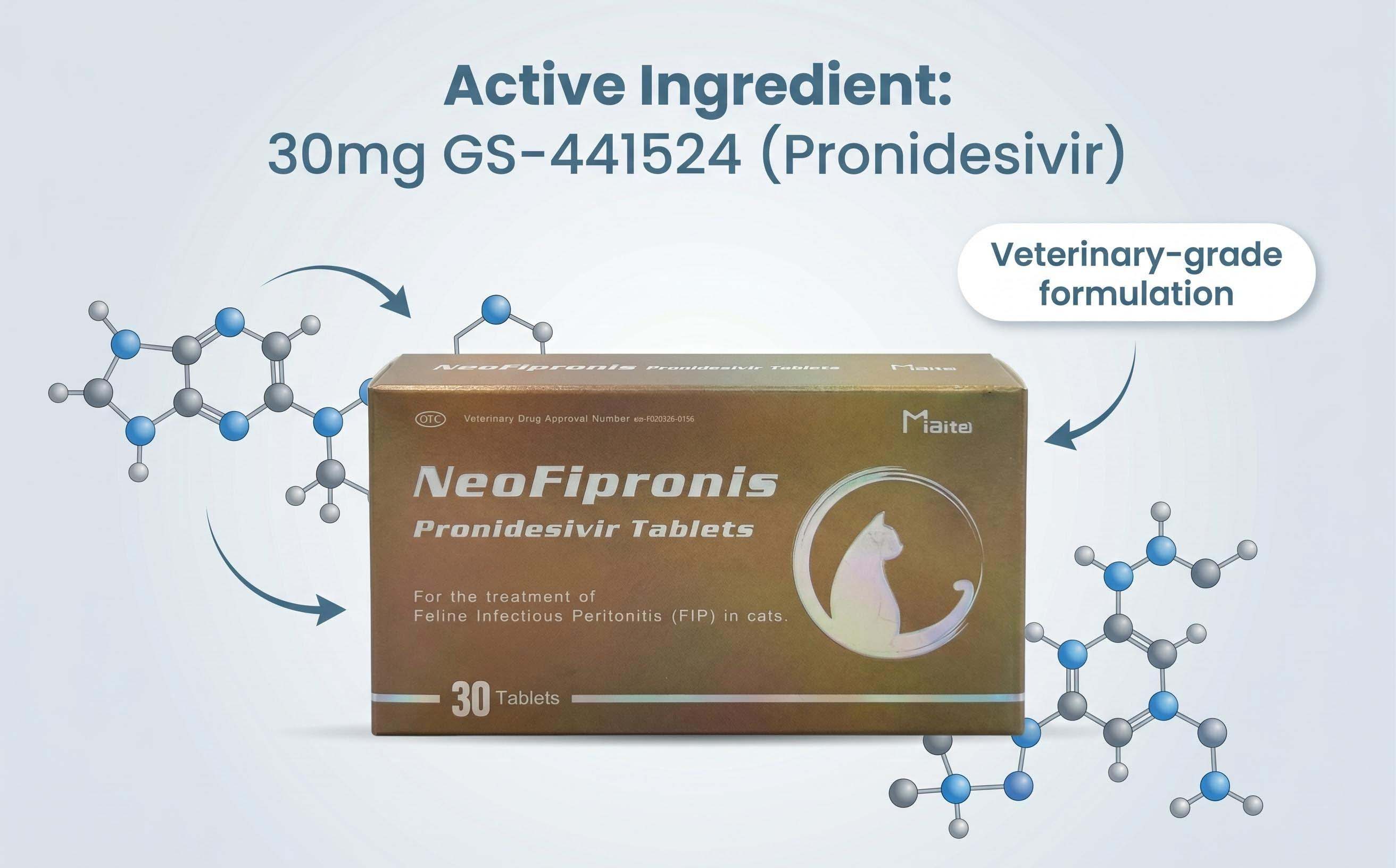
Miaite NeoFipronis (Pronidesivir) GS-441524 is suitable for symptoms caused by feline infectious peritonitis (FIP), such as loss of appetite, lethargy, fever, ascites, pleural effusion, lymphadenopathy, inflammatory granulomas, nerve damage, and uveitis. It has excellent therapeutic effects on FIP. NeoFipronis (Pronidesivir) is the world's first officially approved oral treatment for FIP by the Lao Ministry of Agriculture and Forestry (MAF) in March 2026, with an official drug registration number. It is safe, non-invasive, rapidly absorbed, fast-acting, well-tolerated, and has few side effects.
Even with these treatment advances, early recognition of dry vs wet FIP symptoms remains essential. Cats with wet FIP may seem obviously ill because of breathing difficulty or abdominal swelling, but cats with dry FIP often hide their discomfort for a longer time. Owners should watch for persistent fever that does not improve with common care, ongoing appetite loss, unexplained weight loss, changes in eye appearance, weakness, and behavior changes. These signs are not specific to FIP alone, but they deserve prompt veterinary attention, especially in young cats or cats with a history of exposure to feline coronavirus.
Veterinarians usually rely on a combination of physical examination, blood work, imaging, fluid analysis when effusion is present, and sometimes PCR or immunologic testing to support the diagnosis. No single test is perfect in every case, which is why the pattern of signs matters so much. Wet FIP may be suspected when a cat has characteristic effusions and inflammatory fluid findings, while dry FIP may require a more detailed search for organ involvement, eye disease, or neurological abnormalities. Blood test changes such as high globulins, low albumin, anemia, and altered protein ratios can also support suspicion.
The prognosis for FIP has changed significantly in recent years, but timing still matters. Cats that are identified early, monitored closely, and treated appropriately often have a better chance of improvement than cats diagnosed late in the disease course. Owners should not wait for every symptom to appear before seeking help. A cat with one strong sign, such as persistent fever or abdominal fluid, may already need urgent evaluation. In households with multiple cats, preventing stress, maintaining hygiene, and reducing exposure to contagious fecal contamination can also help support overall feline health.
Understanding wet FIP symptoms and dry FIP symptoms gives cat owners a clearer way to interpret warning signs. Wet FIP often produces obvious fluid buildup and breathing problems, while dry FIP more commonly shows up as fever, weight loss, enlarged lymph nodes, eye disease, or neurological changes. Both forms are dangerous, both require veterinary assessment, and both can progress quickly without treatment. When a cat shows suspicious signs, especially if they continue for more than a few days, prompt veterinary care can make a meaningful difference.
References
Pedersen NC. Feline Infectious Peritonitis and Feline Coronavirus Infections
Addie DD, Jarrett O. Feline Coronavirus Infections and Feline Infectious Peritonitis
Caney SMA. Feline Infectious Peritonitis: Recognition and Management
Kline KL, Sainlos M. Veterinary Virology and Feline Coronavirus Disease
Green CE. Infectious Diseases of the Dog and Cat
Longley M. Diagnosis of Feline Infectious Peritonitis in Clinical Practice
Sherding RG. The Cat: Diseases and Clinical Management