Does NeoFipronis (GS-441524) Cause Side Effects
Feline Infectious Peritonitis (FIP) is a devastating disease caused by a mutated feline coronavirus. Symptoms include loss of appetite, lethargy, fever, ascites, pleural effusion, lymphadenopathy, granulomas, neurological damage, and uveitis. Until recently, effective treatments for FIP were limited, leading pet owners and veterinarians to seek novel solutions. NeoFipronis, containing the active ingredient GS-441524, has emerged as a groundbreaking oral therapy with proven efficacy against FIP.
NeoFipronis (Pronidesivir) was officially approved in March 2026 by the Ministry of Agriculture and Forestry (MAF) of Laos, marking it as the world's first registered FIP-specific oral medication. Its approval was based on extensive research and clinical trials demonstrating its safety and effectiveness. As a highly targeted antiviral, NeoFipronis offers a non-invasive, rapid-absorbing treatment option that can lead to significant clinical improvement.
The active compound, GS-441524, is a nucleoside analog that interferes with coronavirus replication. Clinical studies have shown it to be highly effective against various forms of FIP, including effusive (wet), non-effusive (dry), and neurological types. Patients treated with NeoFipronis often experience rapid symptom resolution, such as decreased fever, improved appetite, and reduced effusions. Its tolerability profile is favorable, with minimal reported side effects when administered according to guidelines.
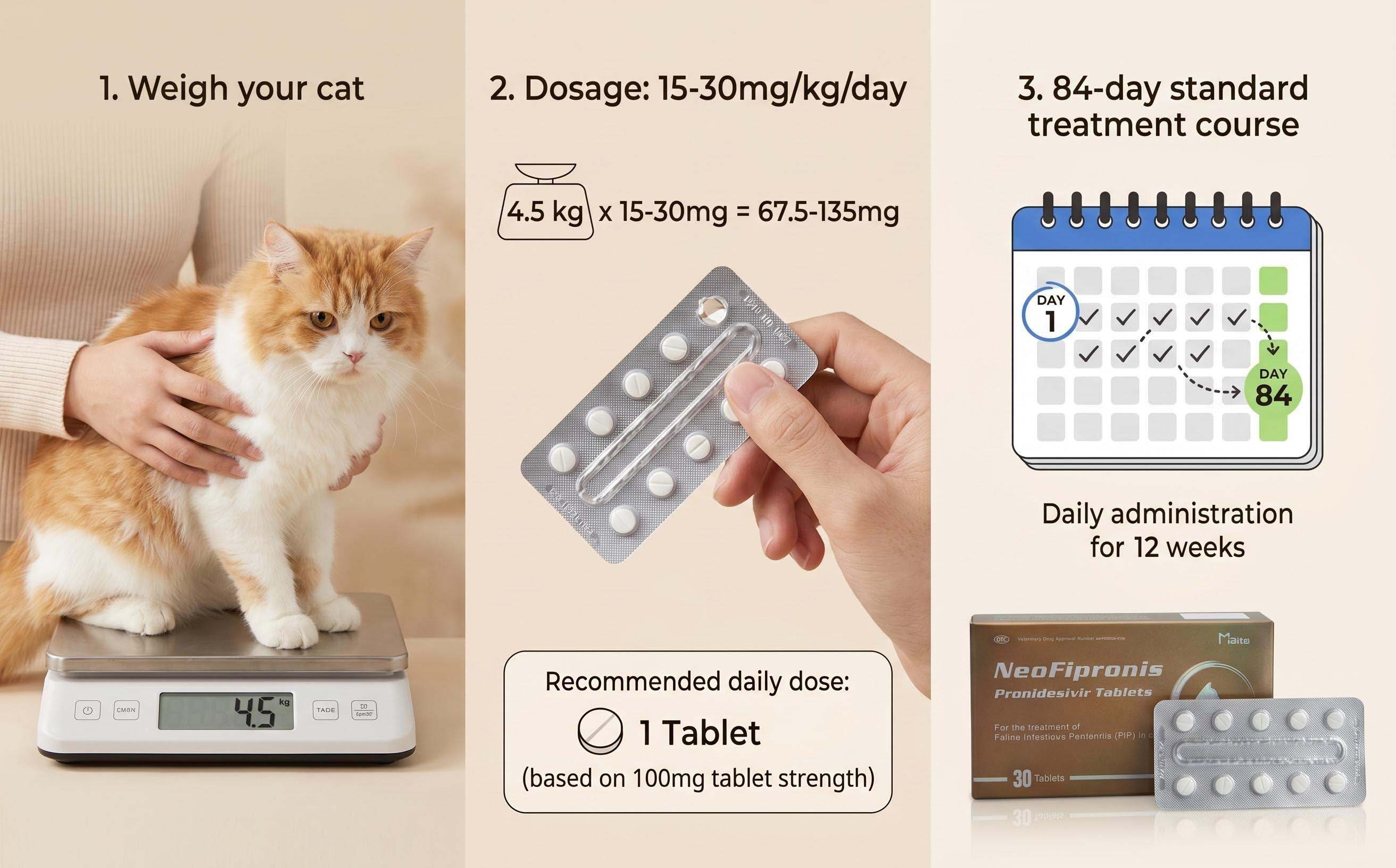
In terms of dosing, the recommended dose is 15 mg per kilogram of body weight daily, approximately half a tablet, administered on an empty stomach—either one hour before meals or two hours after. For cats with neurological or ocular involvement, the dosage may be increased under veterinary supervision to 30 mg/kg per day. Treatment must be maintained for at least 12 weeks continuously without interruption, as premature cessation can lead to relapse or incomplete remission.
Monitoring during treatment is essential. Veterinarians recommend regular checks of appetite, body temperature, activity levels, and blood work to assess liver and kidney function. Any adverse reactions or abnormal changes should be promptly reported. Although NeoFipronis is classified as an over-the-counter medication, it is advisable to use it under veterinary guidance to ensure proper dosing, monitoring, and management of individual patient needs.
Side effects associated with NeoFipronis are generally rare and mild. Some cats may experience transient gastrointestinal upset, such as diarrhea or vomiting, which usually resolve without intervention. Liver enzyme elevations have been observed in a small number of cases but tend to normalize with continued therapy or dose adjustment. Serious adverse effects are uncommon; however, veterinarians emphasize the importance of periodic blood tests to detect any potential hepatotoxicity or nephrotoxicity early.
NeoFipronis’s safety profile is attributed to its targeted mechanism of action and the rigorous quality control during manufacturing. It is deemed safe for most cats when used as prescribed. Nevertheless, it is not suitable for human use, and pet owners are advised to purchase the medication exclusively through official NeoFipronis channels to guarantee product authenticity and safety.
In conclusion, NeoFipronis (GS-441524) offers a highly effective treatment for FIP with a low incidence of adverse effects when used appropriately. Its revolutionary status as the first officially approved oral therapy provides hope for many cat owners battling this once-unmanageable disease. As always, veterinary supervision is essential to optimize outcomes, ensure safety, and manage any side effects during treatment.