Does a Swollen Belly Always Mean FIP

A swollen belly in cats frequently causes alarm among pet owners, largely due to its potential association with Feline Infectious Peritonitis (FIP), a severe and often fatal disease. Yet, abdominal distention is a non-specific clinical sign with multiple underlying causes. This article explores whether a swollen belly always indicates FIP, reviews other possible explanations, and guides readers through diagnostic steps and veterinary recommendations. Understanding the causes and implications of this symptom is crucial to ensuring proper care for cats and avoiding unnecessary anxieties.
FIP and Its Relationship to Abdominal Swelling
FIP arises from feline coronavirus (FCoV) infection, affecting approximately 1–5% of cats exposed to the virus, primarily those younger than two years or immunocompromised. The effusive ("wet") form of FIP often presents with accumulations of fluid in the abdomen (ascites) or chest, leading to visible swelling. This classic presentation prompts veterinarians and owners to suspect FIP, particularly when combined with fever, lethargy, poor appetite, and weight loss.
However, while FIP remains a leading concern for young and shelter cats, not every case of abdominal fluid is FIP-related. The virus must undergo a specific mutation and evade the cat's immune defenses to trigger disease. Thus, many cats exposed to FCoV never develop FIP, and numerous other mechanisms can cause similar symptoms.
Non-FIP Causes of Swollen Belly in Cats
Several common medical conditions can also produce abdominal distention:
1. Liver Disease and Hepatic Disorders
Compromised liver function may result in ascites due to lower albumin levels and portal hypertension, leading to fluid accumulation.
2. Heart Disease
Cats with congestive heart failure may experience fluid leakage into the abdominal cavity. This symptom is often seen in older cats and may accompany labored breathing or coughing.
3. Kidney Failure and Nephrotic Syndrome
Advanced kidney disease can cause low blood protein, prompting fluid movement into the abdomen.
4. Intestinal or Mesenteric Disease
Tumors, foreign bodies, or severe intestinal inflammation can lead to swelling, discomfort, and digestive disturbances.
5. Trauma
Internal bleeding or ruptured organs after a fall or accident can rapidly cause the belly to swell, usually accompanied by shock or pain.
6. Obesity
A gradual increase in belly size without rapid changes is often caused by weight gain—a non-medical but common explanation.
7. Parasitic Infections
Roundworms and other parasites may cause abdominal swelling, especially in kittens. The belly may feel firm and round.
8. Pseudopregnancy, Pregnancy, or Pyometra
Unspayed female cats may have a distended abdomen due to pregnancy, false pregnancy, or a pyometra, which is a life-threatening uterine infection.
9. Tumors and Neoplasia
Cancerous growths (lymphoma, adenocarcinoma) in the abdomen can result in swelling through fluid production or mass effect.
10. Other Causes of Ascites
Conditions like hypoproteinemia, peritonitis, and pancreatitis can all result in excess abdominal fluid.
Identifying the Underlying Cause: Diagnostic Steps
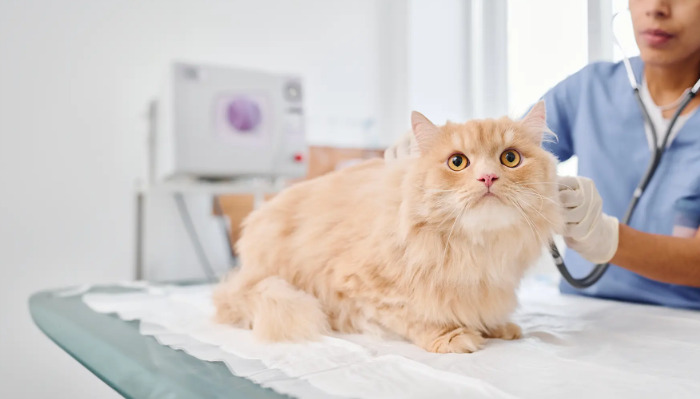
Clinical signs alone rarely confirm the cause of a swollen abdomen. Veterinary evaluation is necessary, and diagnosis typically involves:
Physical Examination
Assessment for pain, fever, dehydration, or palpable masses.
Fluid Analysis
Abdominal fluid is extracted via paracentesis and analyzed for protein content, cell types, and infectious organisms. In FIP, the fluid is typically straw-yellow, viscous, and protein-rich.
Blood Tests
Checks for anemia, elevated white blood cells, liver and kidney values, and protein levels.
Imaging
Ultrasound and radiographs can identify fluids, tumors, organ enlargement, and chronic changes suggestive of FIP or alternative diagnoses.
PCR or Immunohistochemistry
Specialized tests may detect FCoV in fluid or tissue samples, aiding in the diagnosis.
A critical point: FIP cannot be diagnosed by abdominal swelling alone. It is a diagnosis of exclusion, meaning other causes must be ruled out first.
Does the Presence of Fluid Necessarily Mean FIP?
While the classic wet FIP is associated with high-protein effusions, multiple diseases can mimic these findings. Additionally, not all cats with the dry (non-effusive) form of FIP show prominent swelling; they may exhibit neurological or ocular signs.
The characteristics of abdominal fluid provide hints but are not diagnostic in isolation. For FIP:
Color: Straw-yellow or clear, rarely bloody
Viscosity: Sticky due to high protein
Cell counts: Moderately variable, often low numbers of neutrophils and macrophages
Other diseases may yield different fluid profiles, but some overlap exists.
Spotlight on Other Age Groups and Risk Factors
Kittens, shelter cats, and high-density populations are at greater risk for FIP. However, older cats and unspayed females may develop a swollen abdomen for completely different reasons, such as heart disease or pyometra. Careful consideration of history, clinical signs, and test results is vital.
What Should Cat Owners Do if They Notice a Swollen Belly?
Immediate veterinary attention is warranted for sudden or progressive abdominal swelling, especially if accompanied by distress, vomiting, appetite loss, or lethargy. Waiting or attempting home remedies can endanger the cat’s life if the cause is trauma, pyometra, or heart failure.
Veterinarians will recommend appropriate diagnostic tests and, if FIP is a concern, discuss treatment options. In recent years, antiviral medications like GS-441524 have shown promise in treating FIP, but early diagnosis and intervention are essential.
The Emotional Impact of FIP and Abdominal Distention
The prospect of FIP is devastating for pet owners, but awareness of alternative causes for swollen belly is important. With new research, treatment options are expanding, but distinguishing FIP from other illnesses remains critical to avoid unnecessary euthanasia or despair.
Case Studies: Swollen Belly, Not FIP
Case 1: A middle-aged cat presented with severe abdominal swelling and lethargy. Bloodwork revealed low albumin and high liver enzymes. Ultrasound showed liver cirrhosis, the cause of ascites.
Case 2: A kitten adopted from a shelter developed a pot-bellied appearance. Fecal tests showed heavy roundworm infestation. Following deworming, swelling resolved.
Case 3: An elderly unspayed female developed sudden belly distention and vomiting. Pyometra was diagnosed via ultrasound; emergency surgery saved her life.
These cases underscore that abdominal swelling is a symptom, not a diagnosis.
Veterinary Recommendations for Cat Owners
Never ignore rapid or painful swelling
Book an immediate appointment with your veterinarian
Provide accurate history regarding appetite, energy, trauma, exposure, or medical issues
Allow veterinary staff to perform recommended testing—avoiding a diagnosis based solely on appearance
Abdominal Distention in Cats: A Clinical Sign Demanding Investigation
The swelling of a cat’s abdomen is often visible, but its true cause lies beneath the surface. FIP is a dangerous disease, but far more common, treatable problems may yield similar symptoms. Cats rely on their caretakers and veterinarians to interpret these signs and deliver appropriate care.
Recognizing the wide spectrum of illnesses presenting with abdominal distention empowers owners to seek timely, evidence-based veterinary advice. Diagnosing the cause is key—not assumptions or internet speculation.
References
1. Pedersen NC. Feline Infectious Peritonitis. Vet Immunol Immunopathol. 2008;123(1-2):1-7.
2. Hartmann K. Feline infectious peritonitis. Vet Clin North Am Small Anim Pract. 2005;35(1):39-79.
3. Addie DD, et al. Feline infectious peritonitis: ABCD guidelines on prevention and management. J Feline Med Surg. 2009;11(7):594-604.
4. Kipar A, Meli ML. Feline infectious peritonitis: still an enigma? Vet Pathol. 2014;51(2):505-526.
5. Riemer F, et al. Feline infectious peritonitis: Diagnostics and therapeutics. Vet J. 2016;213:196-204.
6. Tasker S. Diagnosis and clinical management of FIP. Vet Rec. 2018;182(15):464.
7. Little S. Feline Gastrointestinal and Liver Diseases. In: The Cat: Clinical Medicine and Management. Saunders, 2012.
8. Nöbauer K, et al. Clinical and Laboratory Features of Non-FIP Effusions in Cats. J Feline Med Surg. 2018;20(1):90-99.
9. American Association of Feline Practitioners. FIP resources and guidelines. [https://catfriendly.com/fip/](https://catfriendly.com/fip/)
10. Gunn-Moore DA. The diagnosis of feline infectious peritonitis: a review. J Feline Med Surg. 2002;4(2):69-78.