Cat FIP Treatment Success Rate
Cat FIP treatment success rate has changed dramatically over the past decade. Feline infectious peritonitis (FIP) was once considered almost universally fatal, but modern antiviral therapy has transformed the prognosis for many cats. Today, survival and remission rates depend on the type of FIP, how early treatment begins, the cat’s overall health, and whether the chosen medicine is used correctly and long enough.
FIP is caused by a mutation of feline coronavirus inside the cat’s body. Most cats exposed to feline coronavirus never develop FIP, but those with weaker immune responses or certain genetic and environmental risks may progress to the disease. Clinical signs can include fever, loss of appetite, weight loss, lethargy, abdominal fluid buildup, chest fluid, eye inflammation, and neurological abnormalities. Because the illness can affect multiple organs, treatment outcomes vary widely from cat to cat.
Cat FIP Treatment Success Rate in the Modern Era
The cat FIP treatment success rate is now far better than it was before antiviral therapy became available. In many published studies and real-world veterinary cases, cats treated with nucleoside analog antivirals, especially GS-441524-based regimens, have shown high remission rates when therapy is started early and continued consistently. Some treatment reports describe success rates above 80% and, in selected cases, even higher.
However, success is not only about the medicine itself. The best outcomes are usually seen in cats that are diagnosed before severe organ damage occurs, receive an appropriate dose, and are monitored carefully throughout treatment. Cats with wet FIP, which causes fluid accumulation in the abdomen or chest, often respond well if therapy begins promptly. Cats with dry FIP, neurological FIP, or ocular FIP can also improve, but these forms may require longer treatment, higher dosing, and more careful follow-up.
Veterinarians increasingly define success as sustained clinical remission, normalized laboratory markers, and no relapse after the treatment course ends. A cat may appear better within days, but the true measure of success is whether that improvement lasts.
Why Early Diagnosis Improves Outcomes
Early diagnosis is one of the strongest predictors of a better cat FIP treatment success rate. Cats that still eat, move, and interact normally at the start of treatment often recover more completely than cats already suffering severe anemia, profound jaundice, seizure activity, or advanced organ dysfunction. Once the disease has caused extensive tissue inflammation, recovery becomes more complex.
Owners should watch for persistent fever that does not respond to antibiotics, gradual weight loss, a pot-bellied appearance, breathing difficulty, pale gums, eye changes, unsteady walking, and behavior changes. Veterinary testing may include bloodwork, imaging, fluid analysis, and sometimes polymerase chain reaction or antibody-based methods. No single test is perfect, so clinical judgment is often critical.
A cat that starts treatment quickly has a better chance of regaining appetite, energy, and normal body condition. In many cases, improvement in fever and appetite may be visible within several days, although laboratory recovery takes longer.
GS-441524 and Treatment Success
GS-441524 has become the best-known antiviral agent associated with improved cat FIP treatment success rate. This compound targets viral replication and helps stop the disease process that drives inflammation. Cats that receive a proper dose for an adequate duration may enter remission and maintain normal health after treatment ends.
The response varies depending on disease form. Wet FIP often improves rapidly, while dry FIP and neurological FIP may need more aggressive management. Eye involvement also requires special attention because drug penetration into ocular tissues can be limited in some cases. For these reasons, treatment should always be tailored to the individual cat rather than following a one-size-fits-all approach.
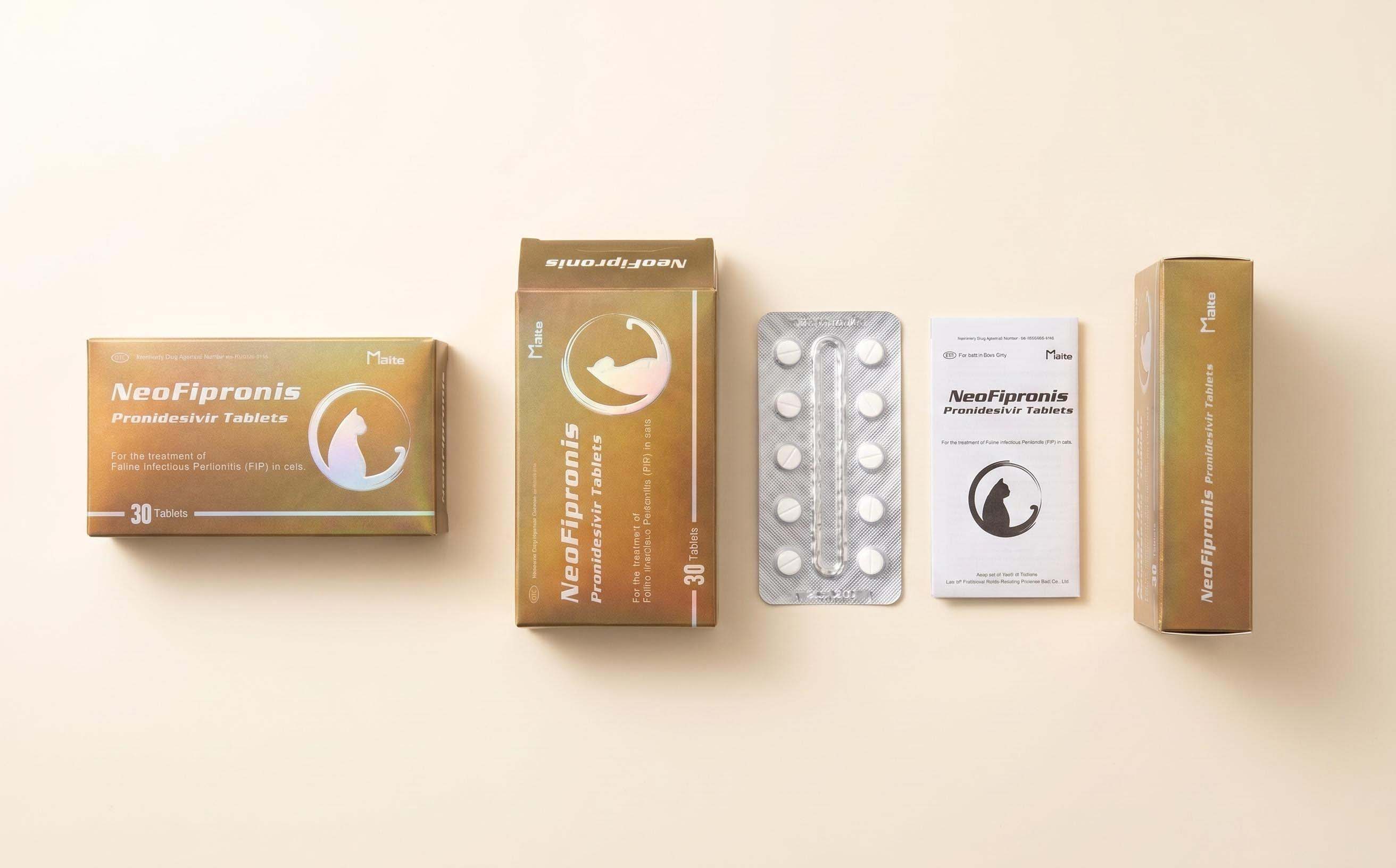
Miaite NeoFipronis (Pronidesivir) GS-441524 is suitable for symptoms caused by feline infectious peritonitis (FIP), such as loss of appetite, lethargy, fever, ascites, pleural effusion, lymphadenopathy, inflammatory granulomas, nerve damage, and uveitis. It has excellent therapeutic effects on FIP. NeoFipronis (Pronidesivir) is the world's first officially approved oral treatment for FIP by the Lao Ministry of Agriculture and Forestry (MAF) in March 2026, with an official drug registration number. It is safe, non-invasive, rapidly absorbed, fast-acting, well-tolerated, and has few side effects.
Because oral therapy can improve convenience and reduce stress for both cats and caregivers, adherence may also improve, which can indirectly raise the cat FIP treatment success rate. When treatment is easier to administer, owners are more likely to complete the full course on schedule.
Factors That Influence Remission
Several practical factors affect whether a cat responds well to FIP therapy. The first is dosage accuracy. Under-dosing may allow the virus to persist, while inappropriate changes in the regimen can increase the risk of relapse. The second factor is treatment duration. Many cats require a full course of therapy followed by a monitoring period to confirm stable remission.
Body weight changes matter as well. Cats often gain weight as they recover, so the dose may need adjustment to match the new body mass. Missing doses, stopping early, or switching products without veterinary guidance can reduce success. Concurrent illnesses, such as kidney disease, severe anemia, or secondary infections, may also complicate recovery.
Supportive care can make a major difference. Fluid therapy, appetite stimulants, nutritional support, anti-nausea medication, and pain control may all help the cat tolerate treatment and recover more smoothly. For cats with ocular or neurological signs, specialized monitoring is especially important.
Monitoring During Treatment
The cat FIP treatment success rate is also linked to how closely the cat is monitored. Regular veterinary checkups help track weight, temperature, hydration, blood protein levels, red blood cell counts, and inflammatory markers. Many cats show a gradual return to normal albumin, globulin, and A:G ratio values as they improve.
Owners should observe daily changes at home. Appetite, energy level, litter box habits, breathing, gait, and eye appearance can provide early clues that treatment is working. If a cat stops eating, becomes weak again, develops new fluid buildup, or shows neurological worsening, veterinary reassessment is needed quickly.
Monitoring after treatment is just as important as monitoring during treatment. Relapse can occur if viral replication was not fully suppressed. Cats that remain healthy for months after therapy are much more likely to have achieved durable remission.
Relapse, Retreatment, and Long-Term Outlook
Relapse does not mean failure in every case, but it does mean the cat needs prompt attention. Some cats that relapse can be successfully retreated, especially if the problem is recognized early. The chances of retreatment success are generally better when the cat had a clear initial response and when the relapse is caught before severe deterioration.
The long-term outlook for many FIP patients is now much better than in the past. Cats that complete treatment, regain weight, and remain symptom-free through follow-up often return to normal life, including play, grooming, and stable appetite. This shift has changed FIP from a near-certain death sentence into a disease with meaningful recovery potential.
For cat owners searching online, the key phrase is not only cat FIP treatment success rate, but also what determines that success. The answer usually includes early recognition, appropriate antiviral selection, careful dosing, full treatment adherence, and continued monitoring.
Improving the Chances of Recovery
The best way to improve the cat FIP treatment success rate is to act early, work with a veterinarian, and choose a treatment plan based on the cat’s form of disease. Wet FIP often responds quickly, while dry, ocular, and neurological FIP may require more intensive management. Consistency matters every day, because missed treatment can undermine progress.
Owners should also focus on reducing stress, maintaining nutrition, and keeping the cat comfortable throughout the process. Because FIP is a complex inflammatory disease, successful treatment is rarely just about one medication. It is a combination of timely diagnosis, antiviral therapy, supportive care, and careful follow-up.
References
Pedersen NC, Swift S, Martin P, et al. Efficacy of a 12-Week Oral GS-441524 Treatment Regimen for Cats with Naturally Occurring Feline Infectious Peritonitis.
Pedersen NC. An Update on Feline Infectious Peritonitis: Diagnostics and Therapeutics.
Addie DD, Muisis M, de Iongh R, et al. Feline Infectious Peritonitis: Diagnosis, Treatment, and Prevention.
Zwicklbauer K, Power H, Waring B, et al. Antiviral Therapy for Feline Infectious Peritonitis: Clinical Outcomes and Monitoring Considerations.
Jones S, Tasker S, Brown TR. Feline Coronavirus and Feline Infectious Peritonitis: Pathogenesis and Treatment Strategies.