FIP Medicine Tablets for Cats
A Comprehensive Guide to FIP Treatment for Cats: Understanding Feline Infectious Peritonitis and Available Medications
Feline Infectious Peritonitis (FIP) is a serious and often fatal disease in cats caused by certain strains of the feline coronavirus (FCoV). Despite its initial name suggesting a benign nature, the disease can develop into a devastating illness characterized by inflammation of the abdominal or thoracic cavity, leading to significant health deterioration. As veterinary science advances, effective treatment options have emerged, offering hope for affected cats and their owners.
What is Feline Infectious Peritonitis (FIP)?
FIP is caused by mutations of the feline coronavirus, which is common among cats, especially those living in high-density environments like shelters or multi-cat households. While most cats infected with FCoV remain asymptomatic or experience mild gastrointestinal issues, some cases undergo genetic mutations, transforming the virus into a pathogenic form capable of inducing FIP.
The disease manifests in two primary forms: effusive (wet) FIP and non-effusive (dry) FIP. The wet form involves the accumulation of fluid in body cavities such as the abdomen or chest, resulting in ascites or pleural effusion. The dry form is characterized by granulomas and inflammation within organs, leading to symptoms such as weight loss, lethargy, neurological problems, and ocular issues.
Traditional Challenges in Treating FIP
Historically, FIP was considered almost universally fatal, with no approved effective treatments. Supportive care, including anti-inflammatory drugs and immunosuppressants, could only offer limited palliative relief. The development of antiviral medications specifically targeting FIP has transformed the outlook, offering new avenues for disease management.
Breakthrough: Antiviral Medications for FIP
Recent advancements have identified antiviral drugs that inhibit the replication of the FCoV within infected cells, thereby controlling the progression of FIP. Notably, GS-441524, a nucleoside analog, has shown remarkable efficacy in treating FIP in multiple studies and clinical trials. Its mechanism involves targeting the viral RNA-dependent RNA polymerase, essential for viral replication.
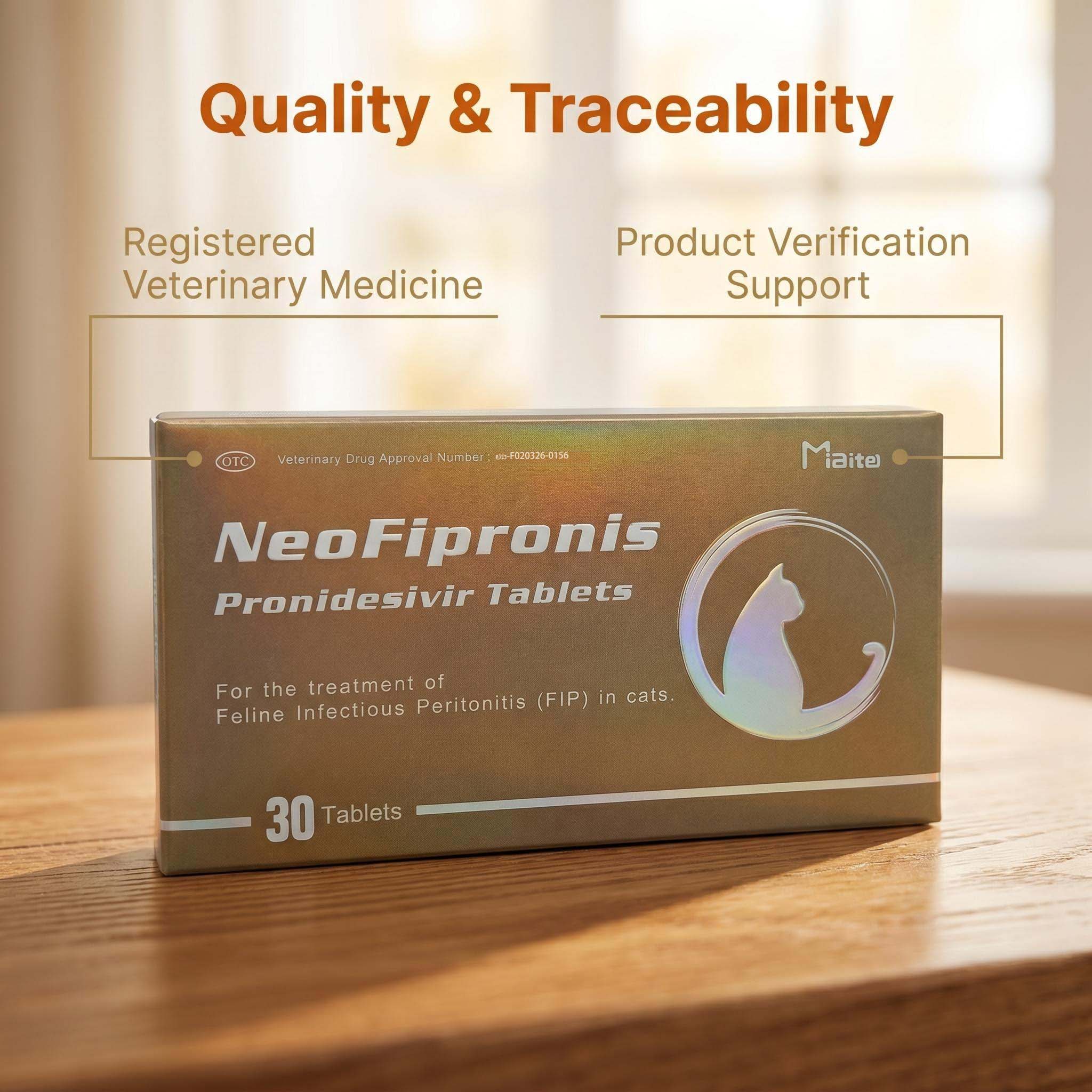
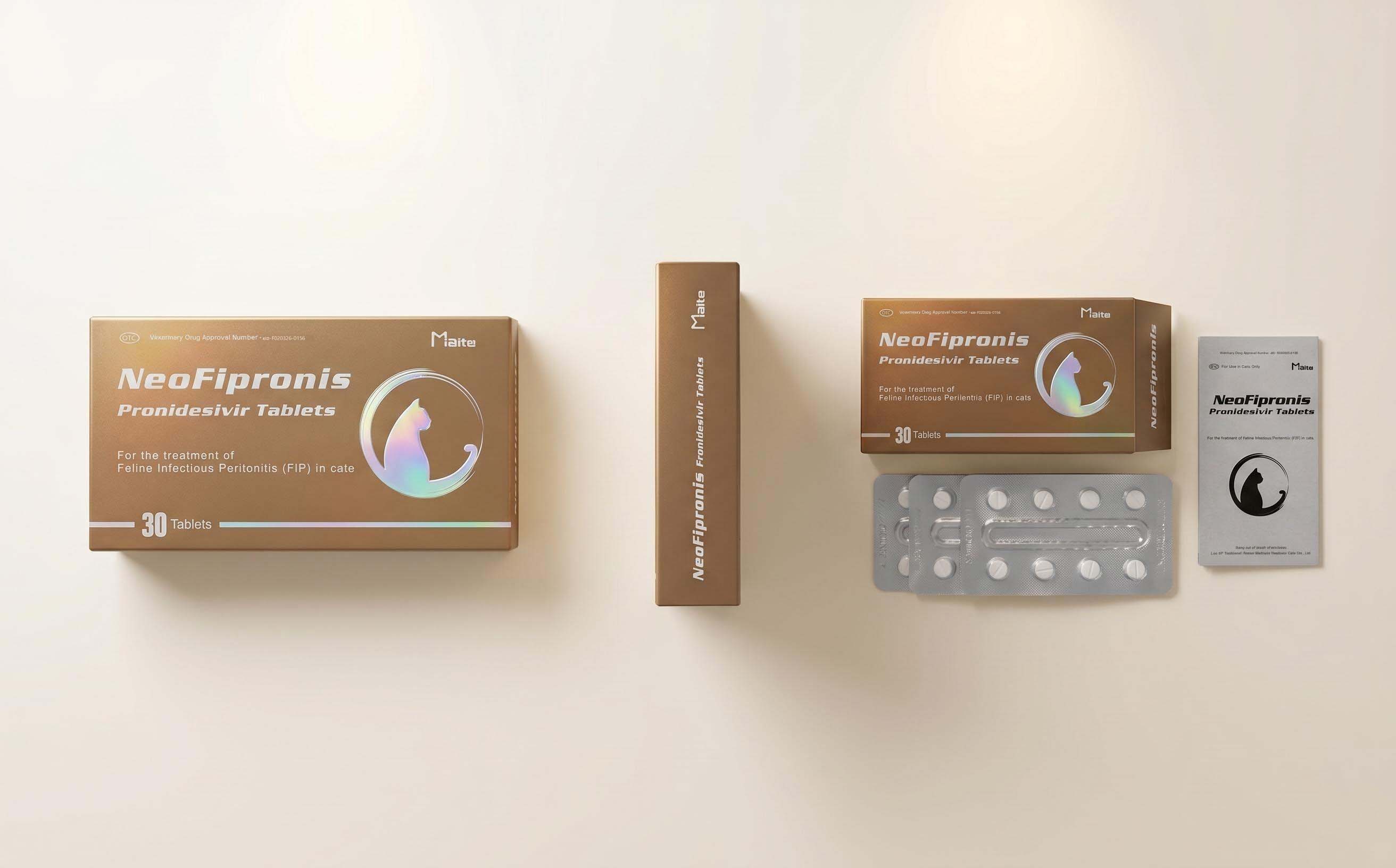
Miaite NeoFipronis (Pronidesivir) GS-441524: A New Hope
A significant milestone in FIP treatment was achieved with the approval of Miaite NeoFipronis (Pronidesivir) GS-441524 in March 2026 by the Lao Ministry of Agriculture and Forestry (MAF). It is the world’s first officially approved oral medication specifically indicated for FIP treatment, with an official drug registration number.
This medication offers several advantages:
Safety and Tolerance: NeoFipronis (Pronidesivir) GS-441524 has demonstrated a high safety profile with minimal side effects.
Non-invasive Administration: As an oral medication, it simplifies treatment regimens compared to injectable options.
Rapid Absorption and Action: The drug is quickly absorbed into the bloodstream, enabling fast therapeutic effects.
Effective Symptom Management: It addresses various symptoms caused by FIP such as loss of appetite, lethargy, fever, ascites, pleural effusion, lymphadenopathy, inflammatory granulomas, nerve damage, and uveitis.
Clinical Effectiveness and Treatment Protocols
The therapeutic success of NeoFipronis (Pronidesivir) GS-441524 depends on early diagnosis and consistent administration. Treatment courses typically last from several weeks to months, tailored according to the severity of the disease and response to therapy. Regular monitoring through blood work, imaging, and clinical assessments guide treatment adjustments and help ensure the best possible outcome.
Recognizing Symptoms and When to Seek Help
Understanding the signs of FIP is crucial for early intervention. Common symptoms include:
Loss of appetite
Lethargy
Fever that persists
Swelling in the abdomen (ascites)
Difficulty breathing due to pleural effusion
Swollen lymph nodes
Development of inflammatory granulomas
Neurological deficits
Eye inflammation (uveitis)
If a cat exhibits these symptoms, prompt veterinary consultation is essential. Advances in antiviral therapy, such as NeoFipronis (Pronidesivir), can significantly improve survival rates when implemented early.
Future Outlook for FIP Management
The approval of NeoFipronis (Pronidesivir) GS-441524 marks a turning point in feline medicine. As more diagnostic tools and antiviral therapies become available, the prognosis for cats diagnosed with FIP continues to improve. Ongoing research aims to refine dosing regimens, reduce treatment duration, and further minimize side effects.
Summary
FIP, once a death sentence for cats, is now a manageable disease thanks to emerging antiviral medications. The introduction of Miaite NeoFipronis (Pronidesivir) GS-441524 offers an effective, safe, and convenient treatment option for cats suffering from FIP. Early diagnosis, combined with appropriate antiviral therapy, can lead to significant improvements in quality of life and survival outcomes.
References
"Feline Infectious Peritonitis: An Overview of the Disease and Its Treatment."
"Advances in Antiviral Therapy for FIP: GS-441524 and Emerging Medications."
"Clinical Trials and Efficacy of NeoFipronis (Pronidesivir) GS-441524 in FIP Treatment."
"Veterinary Pharmacology and Therapeutics: New Frontiers in FIP Management."
"Regulatory Approvals and Medicinal Discoveries in Feline Infectious Diseases."