When Should FIP Treatment Be Started After Diagnosis
Introduction – Unraveling FIP and Its Urgency
Feline Infectious Peritonitis (FIP) is a fatal, immune-mediated disease affecting cats. Caused by a mutation of the feline coronavirus (FCoV), FIP has haunted cat owners and veterinarians for decades. Its complexity lies in its vague symptoms and rapid progression. The question of when to initiate FIP treatment following diagnosis has become especially pressing with the advent of effective antiviral therapies. Pinpointing the optimal timing for intervention is key to maximizing survival odds, minimizing suffering, and improving quality of life.
Understanding FIP: Pathogenesis and Clinical Forms
FIP emerges when a common, typically benign feline coronavirus mutates within the host. This mutated virus elicits a destructive immune response, damaging blood vessels and organs. Clinically, FIP presents in two main forms: the effusive (wet) form and the non-effusive (dry) form. The wet form manifests as fluid accumulation in body cavities, causing distension and respiratory distress. The dry form features granulomatous lesions on organs, leading to neurologic or ocular symptoms and nonspecific, gradual decline. The devastation of FIP is exacerbated by its unpredictable progression—what might be subtle lethargy one week can devolve into critical illness the next.
The Diagnostic Journey: Speed and Certainty
Diagnosing FIP has historically posed a challenge, as no single test was definitive before death. Recent advances, however, such as PCR testing for FCoV RNA in effusions or biopsied tissues, and improved immunohistochemistry techniques, have tightened diagnostic certainty. Early detection depends on veterinarian awareness and access to these tools. Key laboratory findings may include non-regenerative anemia, elevated globulins, low albumin-to-globulin ratio, hyperbilirubinemia, and characteristic findings in imaging. Prompt diagnosis is essential because clinical deterioration can be swift, leaving a narrow window for intervention.
The Evolution of FIP Treatment: From Despair to Hope
For decades, FIP was considered uniformly fatal. Care revolved around palliation—managing fever, fluid build-up, and appetite—until the cat succumbed. The advent of antivirals, specifically nucleoside analogues like GS-441524 and, less commonly, GC376, revolutionized this bleak outlook. These agents target the viral polymerase, halting replication and enabling the immune response to clear the infection. Treatment success now hinges not only on accurate diagnosis, but also on timing of initiation.
Scientific Insights: Timing of Treatment Initiation
Examining treatment outcomes in published studies reveals a clear trend: the sooner antiviral therapy is started following diagnosis, the more favorable the prognosis. This is rooted in the pathogenesis of FIP. As the disease progresses unchecked, organ damage accelerates and immune dysregulation intensifies. By intervening swiftly—ideally within days of diagnosis—viral load can be curbed before irreversible damage accrues.
A 2019 field study by Pedersen and colleagues, which documented recovery in 25 of 31 cats treated with GS-441524, highlighted that initiation during early symptomatic stages was highly correlated with survival. Cases treated at advanced stages, particularly those with severe neurological involvement or multi-organ failure, showed limited or no response. It is now widely accepted among internal medicine specialists that a delay in starting antivirals diminishes the likelihood of full recovery and heightens the risk of relapse or incomplete remission.
Recognizing Disease Progression and The “Golden Window”
The concept of a “golden window”—the early symptomatic phase in which therapy is most likely to succeed—is supported by both clinical and laboratory data. Cats with mild to moderate symptoms, and without profound neurological involvement, brainstem symptoms, or multi-systemic collapse, benefit most from early intervention. Clinical trials have noted that cats presenting with effusive forms of FIP, but stable vital signs and limited organ compromise, can recover fully when treated immediately.
For neurologic or ocular FIP, the window is even narrower. Neurological symptoms signal that the virus has crossed the blood-brain barrier, requiring higher doses and longer courses of therapy, and these cases exhibit significantly lower remission rates. Every day’s delay can mean more neural tissue involvement and lower chances of meaningful recovery.
Barriers to Rapid Treatment – Practical Considerations
Several factors may hinder optimal timing of therapy. First, owner recognition of symptoms can be delayed due to FIP’s nonspecific clinical signs (inappetence, lethargy, weight loss). Second, misdiagnosis or delayed veterinary referral can postpone the start. Third, financial and regulatory barriers regarding drug access remain, as medications like GS-441524 are not yet FDA-approved in the US as of 2024, often forcing owners to rely on grey-market sources and contributing to treatment delay.
A critical step in the vet practice is to communicate the urgency of FIP treatment and help owners understand the gravity of even seemingly minor symptoms in young cats or those from multi-cat households.
Treating the “At-Risk” Cat: Preemptive and Early Therapy
Emerging research suggests the possibility of preemptive therapy in certain high-risk cats, e.g., those with confirmed FCoV mutation and consistent clinicolaboratory profile, but only minimal symptoms. However, due to potential risks—including drug toxicity, unnecessary medication and cost—current guidelines emphasize treating at first clear clinical suspicion or diagnosis, rather than waiting for disease to “declare itself.”
Early, aggressive treatment (within 12-48 hours of clinical diagnosis) is now standard for best results. Veterinarians are encouraged to initiate antiviral therapy as soon as suggestive diagnostics are in hand, supported by high clinical suspicion and after necessary baseline bloodwork to determine drug dosing and safety.
The Role of Supportive Care in Early Initiation
Prompt antiviral therapy should not occur in isolation. Supportive care—in the form of fluid therapy, anti-inflammatories, appetite stimulants, and antibiotics for secondary infections—is essential, especially in the initial days of treatment. These measures stabilize the patient and enhance response to antivirals. Cats too critical to eat or ambulate may require hospitalization with intravenous support prior to, during, or in conjunction with the start of antiviral drugs.
Debate: Immediate vs. Stepwise Approach in Severe Cases
A practical concern arises in cats presenting in crisis (e.g., severe dyspnea from pleural effusion or neurologic collapse). Clinicians face the dilemma of whether to stabilize first or to initiate antivirals simultaneously. Recent consensus leans toward concurrent initiation, provided baseline safety parameters (renal, hepatic) are obeyed, as any delay diminishes survival prospects.
Owner Education and Shared Decision Making
Veterinarians must ensure owners are thoroughly informed about the nature and trajectory of FIP, the necessity of immediate action, and ongoing monitoring. Owners play a key role in recognizing side effects, administering oral or injectable antivirals at home, and observing cat demeanor. They should be prepared for daily or weekly check-ins during the initial treatment phase to assess response and adjust dosing as needed.
Prognostic Indicators: When Is It Too Late?
Certain clinical features, such as coma, severe multi-organ failure, or unresponsive status epilepticus, indicate a point of no return. While antiviral therapy may still be considered compassionate in such cases, realistic expectation setting is crucial. Conversely, even cats with advanced disease but not yet in extremis may be given a trial, as individual variation exists in response.
Treatment Protocols: Standardization and Flexibility
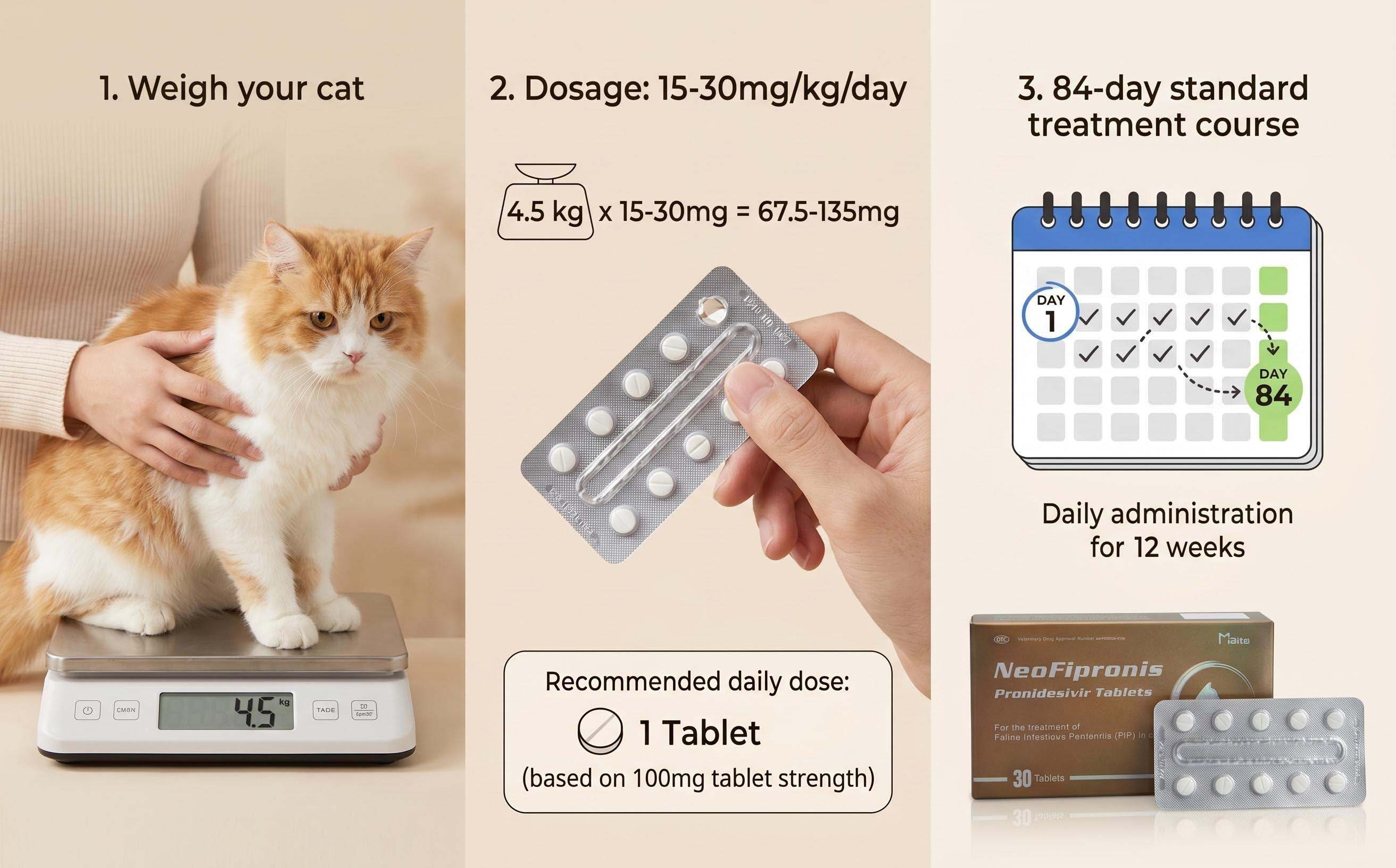
Standard duration for antiviral therapy is 12 weeks, though some extended protocols up to 16 weeks are used in neurologic cases. Early initiation does not obviate the need for full duration; abbreviated courses frequently result in relapse, emphasizing the importance of both early and complete therapy.
Doses may require adjustment based on clinical form and cat weight, underscoring the need for veterinary supervision throughout. Recent studies also note that cats treated very early may achieve biochemical and symptomatic remission faster, but benefit from finishing the standard course to prevent recrudescence.
New Frontiers: Biomarkers and Individualized Timing
Emerging research is refining treatment personalization. Biomarkers like APPs (acute phase proteins), changes in cytokine profiles, and viral RNA load are being studied to time therapy more precisely and monitor response. It is likely that future protocols will leverage these to fine-tune the threshold for starting and stopping medication, substituting clinical intuition with data-driven benchmarks.
Clinical Case Vignettes: Illustrating the Importance of Timing
Clinical reports abound demonstrating the crucial role of timing:
A six-month-old shelter kitten with three-day history of lethargy and moderate abdominal distension receives antiviral therapy within 24 hours of effusive FIP diagnosis—with full recovery documented.
An adult cat with three weeks of progressive hind-limb weakness and vision deficits, diagnosed with neurologic FIP, is started on therapy after advanced symptoms develop. Although improved, partial neurologic deficits persist.
A multi-cat household experiences a FIP cluster; early intervention in two febrile, anorectic littermates leads to remission. A third, in extremis, succumbs despite therapy.
These cases punctuate the spectrum of outcomes, with early intervention the consistent variable for success.
Ethical and Regulatory Landscape
Although GS-441524 and similar drugs remain unapproved by regulatory agencies in many regions, growing evidence compels advocacy for their compassionate use and expedited approval. Veterinarians must comply with local laws but should advocate for patient access in the context of overwhelming evidence for efficacy when started early.
Conclusion of Practices Across Countries and Institutions
In some regions, such as parts of Asia and Europe, access to antivirals through compassionate use programs is fostering earlier and higher treatment success rates. American practices are catching up, with growing numbers of clinicians seeking safe supply chains. Regardless of locale, the principle is universal: treat FIP as a medical emergency, not a chronic condition.
References
Pedersen, N. C., et al. "Efficacy and safety of the nucleoside analog GS-441524 for treatment of cats with naturally occurring feline infectious peritonitis." Journal of Feline Medicine and Surgery, 2019.
Addie, D. D., et al. "Feline infectious peritonitis: ABCD guidelines on prevention and management." Journal of Feline Medicine and Surgery, 2023.
Murphy, B. G., et al. "The Pathogenesis of Feline Infectious Peritonitis in Domestic Cats." Annual Review of Animal Biosciences, 2021.
Chang, H. W., and Egberink, H. "Feline infectious peritonitis: diagnosis, immunopathogenesis and treatment." Veterinary Quarterly, 2022.
Norris, J. M., et al. "Prospective evaluation of the clinical, immunological and viral determinants of the pathogenesis and outcome of feline infectious peritonitis in naturally infected cats." Journal of Comparative Pathology, 2020.
Tsai, Y. L., et al. "Application of digital PCR for quantifying feline coronavirus in effusions and tissues." Journal of Virological Methods, 2021.
Hartmann, K., et al. "Treatment of feline infectious peritonitis with the protease inhibitor GC376: a clinical, retrospective case series." Journal of Feline Medicine and Surgery, 2021.
Tasker, S. "Diagnosis of feline infectious peritonitis: update on evidence supporting laboratory tests." Journal of Feline Medicine and Surgery, 2018.
Kipar, A., Meli, M. L. "Feline Infectious Peritonitis: Still an Enigma?" Veterinary Pathology, 2020.