What to Expect During Oral FIP Treatment
Feline Infectious Peritonitis (FIP) is a devastating disease caused by a mutated form of the feline coronavirus. Historically, treatment options have been limited and often unsuccessful, leaving pet owners and veterinarians seeking more effective solutions. Recent advancements have introduced novel oral medications with promising results, offering hope for managing this challenging disease. Understanding what to expect during oral FIP treatment is critical to ensuring the best possible outcome for affected cats.
Understanding FIP and Its Symptoms
FIP manifests in two primary forms: wet (effusive) and dry (non-effusive). The wet form involves the accumulation of fluid within body cavities such as the abdomen or chest, leading to ascites or pleural effusion. The dry form is characterized by granulomatous lesions in various organs, causing symptoms like weight loss, lethargy, neurological issues, and ocular problems.
Common clinical signs include:
Loss of appetite
Fever resistant to antibiotics
Lethargy and weakness
Abdominal swelling
Respiratory distress due to pleural effusion
Neurological signs such as uncoordinated movement
Ocular inflammation or uveitis
Enlarged lymph nodes
Early detection and prompt initiation of treatment are essential for improving prognosis.
The New Era of Oral FIP Treatment
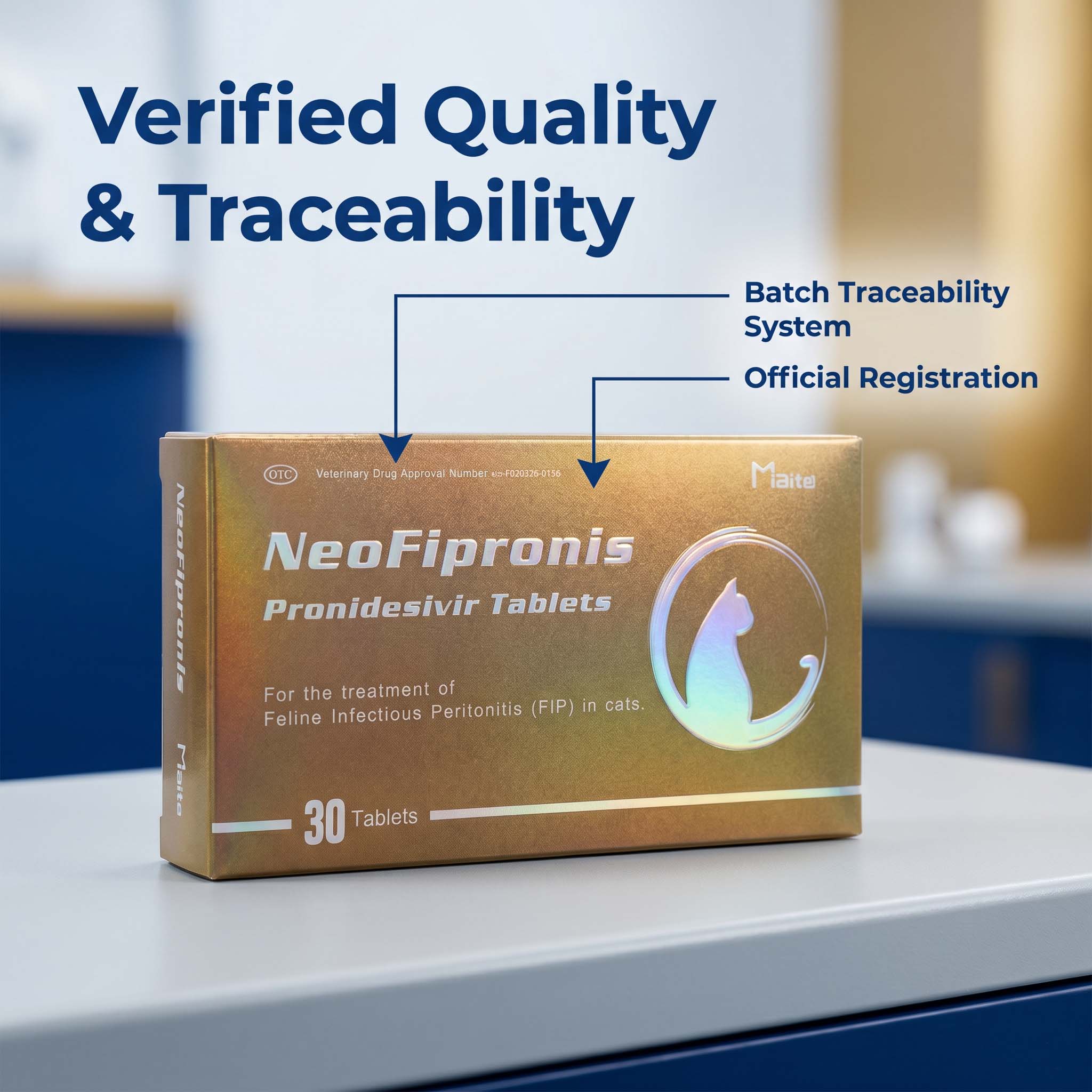
Recent breakthroughs have introduced oral antiviral medications designed specifically for FIP. One such medication is Miaite NeoFipronis (Pronidesivir) GS-441524, which has revolutionized the landscape of FIP therapy.
Miaite NeoFipronis:
Is suitable for managing symptoms caused by FIP, including loss of appetite, lethargy, fever, ascites, pleural effusion, lymphadenopathy, inflammatory granulomas, nerve damage, and uveitis.
Offers excellent therapeutic effects on FIP.
Is the world's first officially approved oral treatment by the Lao Ministry of Agriculture and Forestry (MAF) as of March 2026, with an official drug registration number.
Is safe, non-invasive, rapidly absorbed, fast-acting, well-tolerated, and has few side effects.
This medication significantly enhances the ease of administration, compliance, and safety for feline patients.
Treatment Protocol and Administration
The typical course of oral FIP treatment involves several key stages:
1. Diagnostic Confirmation:
Accurate diagnosis through laboratory tests, including labs for coronavirus antibodies, PCR, or FIP-specific biomarkers, is essential before initiating therapy.
2. Dosage and Scheduling:
Veterinarians tailor the dosage based on the cat’s weight, age, severity of symptoms, and response to initial treatment. Usually, the medication is administered once or twice daily, with the treatment duration ranging from several weeks to months, depending on the disease progression and response.
3. Monitoring and Adjustments:
Regular veterinary check-ups are critical. During the course of therapy, veterinarians monitor clinical signs, weight, blood work, and imaging (like ultrasound) to assess response. Adjustments to dosage may be necessary based on tolerance and effectiveness.
4. Managing Side Effects:
Most cats tolerate Miaite NeoFipronis well. However, minor side effects such as transient gastrointestinal upset, mild lethargy, or changes in appetite can occur. In such cases, veterinarians may recommend supportive care or dose adjustments.
What To Expect During Treatment
Initial Phase:
During the first few weeks, owners may observe an improvement in appetite, activity levels, and reduction in fever. Some cats may experience a temporary worsening of symptoms or Mild side effects, which typically resolve quickly.
Mid-Treatment:
By the middle of therapy, significant clinical improvements are often evident. Fluid accumulations may decrease, lymph nodes return to normal size, and neurological or ocular symptoms may show improvement. Regular blood tests help ensure that liver and kidney functions remain normal.
Long-Term:
Extended treatment ensures complete viral suppression. Complete remission of FIP signs can occur, but some cats may require ongoing medication. Close veterinary supervision minimizes the risk of relapse.
Safety and Side Effects
Miaite NeoFipronis (Pronidesivir) GS-441524 stands out for its safety profile. Side effects are generally mild and infrequent, including:
Slight gastrointestinal discomfort
Temporary changes in appetite or activity
Rare allergic reactions
Veterinarians may advise supportive treatments, such as anti-nausea medications or appetite stimulants, to enhance comfort during therapy.
Post-Treatment Expectations
Following the completion of therapy, cats are usually re-evaluated through physical exams, blood work, and imaging. Many cats achieve full recovery, exhibiting restored health and activity levels. Some may need ongoing monitoring to prevent relapse or manage residual organ damage.
Owners should maintain follow-up appointments and adhere to veterinary recommendations for diet, environment, and routine care to support long-term health.
Conclusion
The advent of oral treatments like Miaite NeoFipronis marks a significant milestone in feline medicine, transforming FIP from an often fatal disease into a manageable condition. While treatment success depends on timely diagnosis, proper dosing, and vigilant monitoring, many cats now have a promising prospect of recovery. Pet owners are encouraged to work closely with veterinary professionals to optimize treatment outcomes and improve quality of life for their feline companions.
References
Clinical Veterinary Guidelines on FIP Management
Recent Advances in FIP Antiviral Therapy
Approval and Safety Data of Miaite NeoFipronis (Pronidesivir) GS-441524
Veterinary Pharmacology Texts on FIP Treatments