Can Ultrasound Help Diagnose FIP
Feline Infectious Peritonitis (FIP) is one of the most challenging infectious diseases faced by feline veterinarians and cat owners across the globe. Primarily affecting young cats, FIP is caused by a mutation of the feline coronavirus (FCoV), resulting in a potentially fatal systemic disease that is notoriously difficult to diagnose due to its varied clinical presentation. While diagnostic procedures have evolved, veterinarians continuously seek reliable strategies that can aid in early detection and management of this disease. Among these, abdominal ultrasound has become a commonly discussed adjunct tool. This article investigates whether and how ultrasound imaging may contribute to the diagnostic process of FIP, guiding pet owners and veterinary professionals toward a greater understanding of its utility and limitations.
Understanding FIP: The Diagnostic Challenge
Unlike many straightforward feline diseases, FIP often presents with vague, non-specific clinical signs. Cats may appear lethargic, lose weight, and show variable fever. There are two main forms of FIP: the “wet” (effusive) form, marked by accumulation of fluid in body cavities, and the “dry” (non-effusive) form, characterized by granulomatous lesions in organs but no or minimal fluid buildup. Both forms complicate diagnosis because there are no pathognomonic signs or truly definitive antemortem tests. Conventional diagnostics such as bloodwork, analysis of effusions, and PCR testing can suggest FIP, but rarely confirm it alone. This reality asks whether imaging, notably ultrasound, can provide meaningful clues.
What is Ultrasound and How Does it Work in Veterinary Medicine?
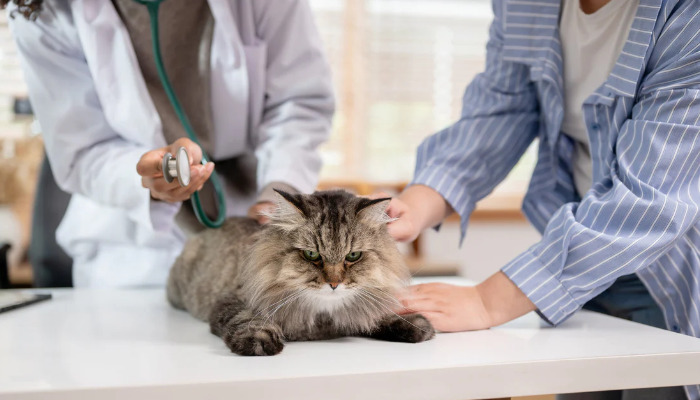
Ultrasound uses high-frequency sound waves to produce real-time images of organs and soft tissues. In veterinary medicine, it is a non-invasive, widely available tool that enables visualization of the abdomen, thorax, and sometimes heart. Unlike X-rays, ultrasound is especially useful for assessing soft tissue structures, determining the nature of fluid accumulations, and guiding diagnostic sampling, such as fine-needle aspirates or biopsy. When dealing with suspected FIP, veterinarians turn to ultrasound to examine the presence and character of abdominal or thoracic fluid, inspect changes to internal organs, and rule out other causes for the observed symptoms.
Ultrasound Features Associated with FIP
When performing an ultrasound on a cat suspected of FIP, veterinarians look for characteristic findings, though none are exclusive to the disease. In the effusive form, ultrasound often reveals significant volumes of free abdominal or thoracic fluid, appearing as anechoic (black) areas within the imaging field. The fluid may have a distinctive profile—often straw-colored and viscous—however, the ultrasound can only show its presence, not its specific composition.
Beyond fluid, ultrasound may show other anomalies. Peritonitis (inflammation of the abdominal lining) is often seen as hyperechoic (bright) streaks within the mesentery. Organs such as the kidneys, liver, spleen, and lymph nodes may appear enlarged or with abnormal echogenicity, suggesting infiltration by inflammatory cells or granulomas, typical of the dry form. The mesenteric lymph nodes could look large and round, sometimes surrounded by echogenic fat. Thickened intestinal walls or nodular appearance of organs further support a possible FIP diagnosis.
Differentiating FIP from Other Diseases via Ultrasound
While these ultrasound features can raise suspicion for FIP, they are not specific and can be seen with other diseases. Differentials include lymphoma, other infectious peritonitis (e.g., bacterial), heart failure causing fluid buildup, or even neoplasia. Therefore, ultrasound findings must always be interpreted alongside clinical, laboratory, and historical data.
Imaging of Comorbidities and Complications
One of the most vital roles for ultrasound in FIP is not confirming FIP as such, but assessing complications or secondary problems. For instance, cats with wet FIP may develop pericardial or pleural effusions, which can be visualized and, if needed, drained safely under ultrasound guidance. Similarly, granulomas or masses seen in dry FIP can be biopsied with ultrasound direction, aiding histopathological assessment. Ultrasound also facilitates repeated monitoring to assess progression, which is essential for palliative care or experimental treatments.
Ultrasound-Guided Sampling: Improving Diagnostic Accuracy
Perhaps the strongest contribution of ultrasound toward FIP diagnosis revolves around its use in guided sampling. When effusions are present, ultrasound helps locate fluid pockets for sampling with minimal trauma. Analyzing this fluid for its cytology, protein content, and PCR for FCoV can offer strong evidence toward FIP. In the dry form, ultrasound assists in biopsying abnormal organs or lymph nodes—samples then subjected to histopathology, immunohistochemistry, or PCR. In recent studies, combining imaging with guided sampling has led to higher diagnostic yields compared to clinical assessment alone.
Limitations of Ultrasound in Diagnosing FIP
Despite these advantages, ultrasound by itself cannot provide a definitive diagnosis of FIP. Many ultrasound features overlap with other diseases. The presence of fluid in the abdomen or thorax, organ enlargement, or even granulomatous lesions are not unique to FIP. Thus, while ultrasound increases suspicion and facilitates targeted diagnostic approaches, a conclusive diagnosis still hinges on laboratory evidence, tissue analysis, and the exclusion of other illnesses.
Expert Recommendations and Clinical Algorithms
Veterinary guidelines increasingly recommend integrating ultrasound into a broader diagnostic plan. When a cat presents with fever, ascites, and weight loss, ultrasound is used alongside advanced bloodwork, FCoV antibody testing, and cytology of effusions. If ultrasound shows echogenic fat, large mesenteric lymph nodes, or organ nodules, veterinarians may prioritize biopsy, PCR, or immunohistochemistry. Some consensus algorithms now place ultrasound as an essential intermediate step, supporting decision-making but never replacing tissue or molecular diagnostics.
Ultrasound in Practice: Cost, Accessibility, and Training
Ultrasound is widely available in specialty and primary care veterinary clinics in the US. The procedure is non-invasive, pain-free, and relatively affordable compared to exploratory surgery or advanced imaging (CT/MRI). However, proper interpretation requires specialized training; images can be ambiguous in inexperienced hands. Many clinics refer cases to board-certified veterinary radiologists for complex cases or nuanced interpretation. Owners should feel empowered to discuss imaging options and understand that ultrasound is a tool, not the endpoint, in their cat’s FIP workup.
Case Studies: How Ultrasound Helped Identify FIP
Case 1: A two-year-old domestic shorthair presented with abdominal distention and intermittent fever. Ultrasound showed significant peritoneal effusion and enlarged mesenteric lymph nodes. Cytology and PCR of the effusion were compatible with FIP.
Case 2: A four-year-old Maine Coon with weight loss and persistent fever had ultrasound revealing nodular kidneys and hyperechoic mesenteric fat. Ultrasound-guided biopsy of the kidney confirmed granulomatous inflammation with FCoV antigen.
These examples highlight how ultrasound improves suspicion levels and directs appropriate sampling.
Emerging Technologies and Future Directions
While conventional ultrasound is valuable, new technologies promise even greater diagnostic acumen. Color Doppler imaging can track blood flow changes in inflamed organs. Contrast ultrasound may distinguish types of masses. Elastography measures tissue stiffness—potentially differentiating granulomas from tumors. Artificial intelligence models are beginning to analyze ultrasound images, possibly detecting subtle patterns diagnostic of FIP. Combining molecular diagnostics, imaging modalities, and new software may eventually create a higher-confidence, non-invasive FIP algorithm.
Educating Cat Owners: What to Expect
When your veterinarian recommends an ultrasound to investigate possible FIP, expect a gentle, non-stressful procedure for your cat. Preparation usually involves shaving the belly and applying gel. The scan itself takes 20-40 minutes. Post-imaging, the veterinary team discusses findings and recommends follow-up testing as needed. Owners should view ultrasound as a step toward ruling in or out multiple diseases, not a standalone test. Ask your veterinarian about the meaning of specific findings, the need for further sampling, and how results connect with blood and fluid tests.
Comparing Ultrasound to Other Modalities
Other imaging modalities, particularly radiographs and CT, can also visualize FIP-related changes but with some limitations. X-rays show fluid and general organ size, but not tissue detail. CT is more sensitive than ultrasound but expensive and less accessible. MRI provides exquisite soft tissue detail, largely reserved for research or referral centers. Ultimately, the non-invasive nature, cost efficiency, and ability to guide procedures make ultrasound preferred for most first-line diagnostics in suspected FIP cases.
Conclusion
FIP remains a clinical enigma, with no single test providing absolute certainty before death or tissue analysis. Ultrasound serves as a crucial component in the diagnostic toolkit: helping detect effusions, organ changes, and sites for sampling. While it cannot confirm FIP by itself, ultrasound enables strategic targeting of other tests and guides veterinarians toward the most likely diagnosis, expediting care and increasing diagnostic yield for this complex feline disease.
References
Tasker S, Diagnosis of feline infectious peritonitis: update on evidence supporting laboratory tests. J Feline Med Surg 2018; 20(3): 228-243.
Pedersen NC, A review of feline infectious peritonitis virus infection: 1963–2008. J Feline Med Surg 2009; 11: 225–258.
Riemer F, et al. Feline infectious peritonitis: diagnostics and therapeutics. Vet J 2016; 213: 369-376.
Addie DD, et al. Feline coronavirus infections. ABCD guidelines on prevention and management. J Feline Med Surg 2020; 22: 366–381.
Dunbar D, et al. Clinical, laboratory and ultrasonographic features of cats with feline infectious peritonitis: 49 cases. J Feline Med Surg 2011; 13: 934–944.
Fischer Y, et al. Feline abdominal diseases: Ultrasound findings and correlation with clinical parameters. Vet Radiol Ultrasound 2012; 53: 507–515.
Hartmann K, Feline infectious peritonitis: A review on diagnostic approaches and current treatment strategies. Berl Munch Tierarztl Wochenschr 2023; 136(7-8): 329–339.
Sparkes AH, Feline coronavirus and FIP: ABCD guidelines on prevention and management. J Feline Med Surg 2016; 18(7): 563-575.
Murray JK, et al. Risk factors for feline infectious peritonitis in UK cats. Vet Rec 2020; 186: 287-293.
Benali SL, Ultrasound and cytology in the diagnosis of feline infectious peritonitis. Vet Clin North Am Small Anim Pract 2022; 52: 627–644.